


Grasslands National Park protects one of the largest remaining blocks of native mixed‑grass prairie in Canada, a vast, wind‑swept landscape of badlands, coulees and wide open skies in southern Saskatchewan near the United States border. It is also one of the country’s most remote and lightly developed parks, divided into two non‑contiguous areas known as the West Block, near the village of Val Marie, and the East Block, near the rural community of Wood Mountain. Visiting Grasslands requires more forethought than a typical scenic drive, but with realistic expectations and careful planning it can be one of the most memorable stops on a prairie road trip.
Get the latest updates straight to your inbox!
Where Grasslands Is and How To Get There
Grasslands National Park lies in southwestern Saskatchewan along the United States border, roughly south of Swift Current and east of the Alberta boundary. The park is split into two separate units that are not connected by internal roads. The West Block centres on the Frenchman River Valley and the park’s main visitor centre, while the East Block protects an eroded plateau and badlands overlooking the Rock Creek valley. Because there is no direct road within the park between these two blocks, travellers need to treat them as distinct destinations with separate access planning.
The West Block is commonly accessed from the small gateway village of Val Marie. From Regina, the drive to Val Marie is roughly 330 kilometres and typically takes about three and a half to four hours by paved highway, depending on route and conditions. From Saskatoon, expect a distance of about 400 kilometres and at least four and a half hours of driving. Routes from both cities are primarily on provincial highways, but the final approach to park facilities and the Ecotour Scenic Drive includes stretches of gravel and dirt roads where speeds are lower and conditions can vary after rain.
The East Block, associated with the Rock Creek area, is reached by rural roads south of Wood Mountain and north of the United States border. Distances are similar from Regina, but driving times are often longer because the last segments involve narrower rural highways and gravel access roads. Travellers should allow at least four hours from Regina and more from Saskatoon, and build in extra time for wildlife on the road, slow farm equipment and weather. Before departure, visitors should confirm current directions and road conditions with Parks Canada and local authorities, as signage is limited and some minor roads can become impassable in heavy rain or winter storms.
Because of these long approaches and the separation between blocks, Grasslands works best as part of a multi‑day road trip rather than a short day outing from a city. Drivers should begin the day with a full fuel tank, download offline maps or carry paper maps, and be prepared for limited services and spotty mobile coverage once they leave larger towns.
Setting Expectations: A Remote Dark‑Sky Prairie Park
Grasslands National Park is the opposite of a bustling resort destination. Facilities are modest, distances are significant and most of the appeal lies in its sense of open space and isolation. The park is recognized for exceptional night skies, with very little artificial light, and visitors who stay after dark can see an impressive display of stars, the Milky Way and occasional meteor showers when conditions are clear. This dark‑sky character also means that outside the few developed nodes, there are no lit pathways and virtually no evening services, so travellers should bring reliable headlamps and be comfortable moving around in the dark.
Services in and around the park are limited. The village of Val Marie, just outside the West Block, offers basic accommodation, fuel at certain times of year, limited groceries and a small selection of visitor‑oriented businesses. Around the East Block, services are even sparser, with small seasonal operations and long distances between fuel pumps and restaurants. Inside the park, there are frontcountry campgrounds, day‑use areas and information points, but no towns, large gift shops or full‑service restaurants.
This environment suits self‑sufficient travellers who are comfortable with long drives, basic facilities and planning ahead. Road trippers, photographers, hikers, birders and campers will likely find Grasslands rewarding. Casual visitors seeking a quick scenic stop with extensive amenities may be surprised by the remoteness and lack of convenience. The most successful trips are those where visitors embrace the park’s quiet, prepare to be away from urban comforts for at least a full day, and arrive ready to be flexible with plans if weather or road conditions change.
When To Go: Seasons, Weather and Operating Periods
Grasslands experiences a continental prairie climate with wide temperature swings and powerful weather systems. Summer, from roughly late June through August, brings the warmest temperatures and the most predictable access to park roads and facilities. Daytime highs can be hot, often well above 25 degrees Celsius and sometimes higher, especially in exposed lowlands. Thunderstorms are common in mid to late summer, building quickly in the afternoon and occasionally bringing lightning, hail and heavy rain. This season is also when most visitors arrive, so campgrounds and popular drives are at their busiest, although the park rarely feels crowded compared with mountain destinations.
Spring and autumn shoulder seasons, typically May to early June and September into early October, offer cooler temperatures that many hikers find more comfortable. Wildflowers often peak in late spring, and fall colours can add subtle tones to the grasslands. However, some facilities and programs operate on a shorter schedule in these periods. Visitor centres, campgrounds and scenic drives may open later in spring or close earlier in autumn depending on weather and operational needs. Before a visit, travellers should check the latest seasonal operating schedules for the Val Marie visitor centre, West Block and East Block campgrounds, and any interpretive programs or guided activities.
Winters in Grasslands, generally November through March, can be harsh. Temperatures can drop well below freezing, winds are strong and snow or blowing snow can reduce visibility and close roads for periods of time. Park access may be limited to day use with very few, if any, services available, and campgrounds typically close for the season. Winter visits are possible for well‑prepared travellers, but conditions vary dramatically and weather‑related road closures or travel advisories are not uncommon. Anyone considering a winter trip should confirm in advance which roads are maintained, what facilities are open, and whether local accommodations and fuel stations are operating.
Because operating dates, construction projects and route advisories change from year to year, all seasonal details should be verified directly with Parks Canada shortly before travel. This includes the status of scenic drives, campgrounds, visitor centres and any special events.
What To Do: Drives, Trails, Wildlife and Night Skies
For many visitors, the signature experience in the West Block is the Ecotour Scenic Drive, a self‑guided driving loop that explores the Frenchman River valley and surrounding prairie. This route features viewpoints, trailheads and interpretive stops that explain the area’s natural and cultural history, including the region’s ranching heritage and Indigenous connections to the land. The full drive with photo stops can easily take two to four hours, more if visitors add short walks or linger at viewpoints. The road surface is a mix of gravel and packed earth, suitable in dry conditions for most passenger vehicles driven cautiously, but potentially muddy and rutted after heavy rain. Drivers should confirm whether the complete loop is open and whether any sections have vehicle restrictions or temporary closures in the current season.
In the East Block, the main scenic route is the Badlands Parkway, a road along the plateau edge that accesses several lookouts over the Rock Creek badlands and surrounding prairie. This drive is shorter than the West Block loop but rewards slow travel and time at each viewpoint, particularly around sunrise and sunset when light sculpts the eroded formations below. As with the Ecotour route, visitors need to check whether all viewpoints are accessible to private vehicles, whether trailers or large recreational vehicles face restrictions, and if any part of the parkway is temporarily closed for maintenance or wildlife management.
Hiking options in both blocks range from short signed trails near campgrounds and viewpoints to longer routes that require strong navigation skills and a willingness to travel across open country with few landmarks. Well‑marked trails close to the road system can often be completed in one to three hours and tend to be moderate in difficulty, though heat, wind and uneven ground can make them feel more strenuous than their distances suggest. Beyond these, the park also offers more remote hiking experiences across native prairie and coulees where route finding may depend on following faint tracks or natural features rather than continuous signage. These outings are best tackled by hikers who are comfortable with map reading, carrying adequate water, and turning back if weather shifts.
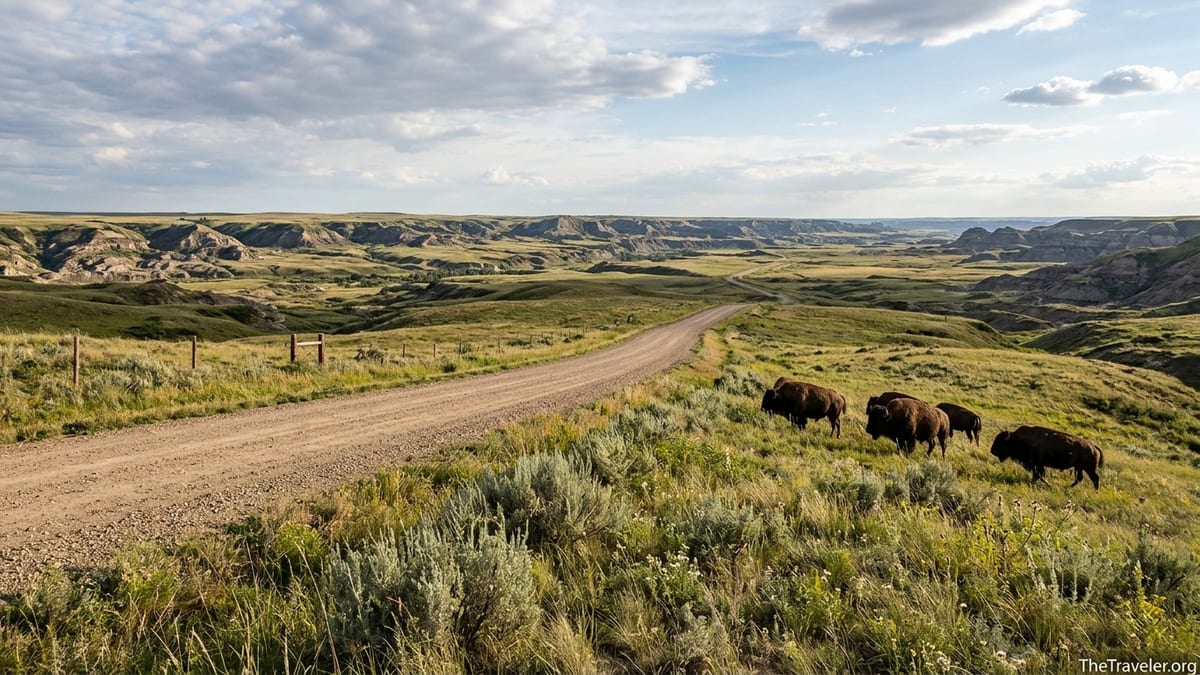
Wildlife viewing is a major draw. Grasslands is home to a free‑ranging plains bison herd in the West Block, along with colonies of black‑tailed prairie dogs, pronghorn antelope, mule deer, coyotes and numerous bird species, including raptors and grassland songbirds. Early mornings and late evenings are often the most productive times to see wildlife from the road or on foot. Visitors should always observe animals from a safe distance, stay in vehicles when viewing larger mammals from roadsides, and follow Parks Canada guidance on wildlife encounters.
Nighttime brings some of the most memorable experiences. With minimal light pollution, the park offers outstanding stargazing from pullouts, campgrounds and day‑use areas. On clear, moonless nights, the Milky Way is easily visible, and photographers can experiment with long‑exposure images over silhouetted prairie horizons. Travellers should pack warm layers even in summer, as temperatures can drop sharply after sunset, and use red‑filtered lights to preserve night vision and minimize disturbance to other visitors.
Parks Canada sometimes offers ranger‑led programs such as guided walks, evening talks, or special dark‑sky events, especially in peak season. The timing, frequency and themes of these programs change from year to year, so anyone interested should check the current schedule close to their visit and be prepared that offerings may be limited on weekdays or outside midsummer.
Camping and Accommodation Options
Grasslands National Park provides frontcountry camping in both the West Block and East Block, giving visitors the chance to experience prairie nights and early mornings without long daily drives. In the West Block, the main campground is situated near the Frenchman River valley and is typically accessible via the same network of gravel access roads that lead to the Ecotour Scenic Drive. Sites generally accommodate tents and small to mid‑sized recreational vehicles. Facilities usually include basic amenities such as pit or vault toilets, picnic tables and fire pits where permitted. Potable water and other services may be limited or seasonal, and electrical hookups are not guaranteed, so visitors should confirm which services are available for the year they plan to travel.
In the East Block, camping focuses on the Rock Creek area at the edge of the badlands. This campground offers a comparable rustic experience with prairie and valley views, a mix of unserviced sites and basic infrastructure, and ready access to the Badlands Parkway viewpoints and local trails. Because of the park’s evolving facilities, travellers should verify whether any roofed accommodations such as oTENTik units or other structures are currently offered in either block for the upcoming season, and what features those units include in terms of beds, heating, lighting or cooking arrangements.
Reservations are strongly recommended during the main season, particularly on weekends and for any roofed or specialty units. Parks Canada operates a centralized reservation system, and dates when bookings open can vary. Many campgrounds in the national park system open for reservations several months before the operating season, and popular weekends can fill quickly. In Grasslands, some sites may remain available on a first‑come basis outside peak demand, but travellers should not rely on last‑minute availability during busy periods.
Services at these campgrounds are intentionally simple. Modern washroom buildings with running water or showers may not be present, and electrical power is generally not provided at sites. Travellers should plan to be largely self‑contained, bringing sufficient drinking water or a way to treat water if allowed, along with stoves or grills where open fires are restricted. Before departure, it is essential to check the current season’s campground descriptions for each block, including exact opening and closing dates, reservation requirements, fire regulations and any facility upgrades or construction closures.
Outside park boundaries, small communities serve as gateways. Val Marie, adjacent to the West Block, typically offers a modest selection of motels or guesthouses, a few dining options and basic supplies, all independent of Parks Canada. Around the East Block, visitors may find simple lodging and services in Wood Mountain or in other nearby rural centres, but choices are limited and operating seasons can be short. Travellers who prefer indoor accommodation should book ahead and confirm check‑in times, as local businesses may not keep late evening hours.
Fees, Fuel, Supplies and Connectivity
Like other national parks in Canada, Grasslands charges entry fees that vary by age category, group type and pass option. Travellers can pay a daily entry fee or use national park passes valid for a longer period. Specific prices can change from year to year, so anyone writing or using this guide should confirm current figures on Parks Canada’s official fee information page before quoting amounts. Separate fees apply for camping, roofed accommodations and any reservation or firewood purchases.
Careful fuel planning is essential. There are no full‑service fuel stations within the park’s interior, and pumps in nearby villages operate on limited schedules or close seasonally. Visitors should top up in larger centres before heading into the region and verify the latest information on the nearest fuel locations around Val Marie, Wood Mountain and any alternative access corridors. Carrying extra fuel in proper containers can be prudent on longer trips, but drivers must follow safety regulations and never refuel in dry grass or near open flames.
Food and water supplies also require attention. With no supermarkets and only a few small shops in nearby towns, it is best to bring the bulk of groceries from larger cities. Travellers should carry more drinking water than they think they will need, especially in hot weather, as exertion and dry winds can quickly lead to dehydration. Parking lots and day‑use areas may have picnic tables but rarely have food vendors, so picnics or self‑catered meals are the norm. In campgrounds, secure food storage is important to avoid attracting wildlife and to keep supplies safe from rodents and birds.
Mobile phone coverage is limited and inconsistent across both blocks. Some higher points or locations nearer to highways may provide a signal, but visitors should expect long stretches without reliable connectivity. Navigation apps may not function well once offline, so travellers are wise to download maps in advance or carry printed maps and written directions. Friends or family at home should be given a general outline of the planned itinerary and dates in case of communication delays, especially for trips that involve backcountry hiking or remote camping.
Staying Safe: Weather, Wildlife and Prairie Etiquette
Safety in Grasslands begins with respect for prairie weather. Conditions can change suddenly, with strong gusts of wind, fast‑moving thunderstorms and intense sun exposure. Even on seemingly mild days, winds can be strong enough to affect driving on gravel roads and to make walking more tiring. Visitors should secure tents and gear carefully, close vehicle doors firmly and be cautious when opening car doors in high winds. When thunderstorms threaten, it is wise to avoid exposed ridgelines and open hilltops and to postpone hikes until cells have passed.
Sun exposure is a constant factor. Shade is scarce in the open prairie, and ultraviolet radiation can be strong even on cooler days. Wide‑brimmed hats, high‑SPF sunscreen, sunglasses and long, breathable clothing provide important protection. Hikers should drink water frequently, recognizing that the dry air can mask sweating and that early signs of heat stress may include headache, dizziness or unusual fatigue. Carrying more water than usual, and turning back earlier than planned if anyone in the group shows signs of heat‑related strain, is good practice.
Wildlife encounters in Grasslands are usually positive when visitors keep a respectful distance. Bison, if present along roads or trails, should be given a wide berth; they are large, powerful wild animals that can move quickly when disturbed. Approaching for photographs or attempting to walk through a herd is unsafe and contrary to park regulations. Smaller animals such as prairie dogs, ground squirrels and birds should never be fed, as human food can harm them and alter their behaviour. At campsites and picnic areas, all food, garbage and scented items should be stored securely to avoid attracting animals.
The prairie ecosystem is surprisingly fragile. Native grasses and soils can be damaged by off‑road driving or by repeated trampling away from established paths. Visitors are expected to stay on designated roads and respect all closures and private land boundaries, which sometimes intersect the park’s patchwork of holdings. Gates across ranch tracks should be left as found, and any signage indicating private property or access restrictions must be observed. Practising low‑impact travel, such as packing out all garbage and minimizing campfire impacts where fires are allowed, helps protect the landscape for wildlife and future visitors.
How Long To Stay and Trip‑Planning Ideas
Because Grasslands is divided into two distinct blocks, a meaningful visit usually requires at least one full day for each area, not including travel to and from major cities. In the West Block, a day allows time to drive the Ecotour Scenic Drive, stop at viewpoints, watch wildlife and enjoy a short hike or two. An overnight stay in the nearby campground or in Val Marie adds the possibility of stargazing and a sunrise or sunset excursion. The East Block benefits similarly from at least one full day to explore the Badlands Parkway viewpoints and local trails, with time to appreciate the unique erosional landscapes in changing light.
Travellers on a tight schedule might choose to focus on a single block, typically the West Block because of its visitor centre and easier access from Val Marie. Those with three or more days can plan a loop that includes both blocks, overnighting in campgrounds or small motels en route. Because the internal driving time between blocks usually passes outside park boundaries on rural roads, it is wise to treat this transfer as part of the experience, allowing for photo stops and fuel or supply breaks in small communities.
Grasslands also fits naturally into broader Saskatchewan or cross‑border itineraries. Road trippers can link the park with visits to Swift Current, Moose Jaw or Regina to experience museums, galleries and urban amenities before or after their time on the prairie. To the south, border crossings into Montana allow connections with American prairie landscapes and historic sites, though travellers must ensure they carry appropriate travel documents and understand customs requirements. Longer routes might combine Grasslands with other prairie and badlands attractions across the northern Great Plains, building a thematic journey focused on open skies, ranching culture and Indigenous history.
Ultimately, whether visitors spend a single day or several, success at Grasslands depends on going in with clear expectations. This is a place of space and subtlety rather than dramatic mountain peaks or resort villages. For those willing to slow down, plan ahead and accept the park on its own terms, the reward is a rare sense of solitude on the great northern prairie and some of the darkest, quietest nights left on the continent.