


More news on this day
South Korea’s expanded KTX-Eum service on the Donghae Line is transforming the country’s rugged East Coast into one of Asia’s most accessible rail-to-beach playgrounds, connecting Seoul and Busan with pine-fringed bays, surf towns, and fishing harbors in between.
Get the latest news straight to your inbox!
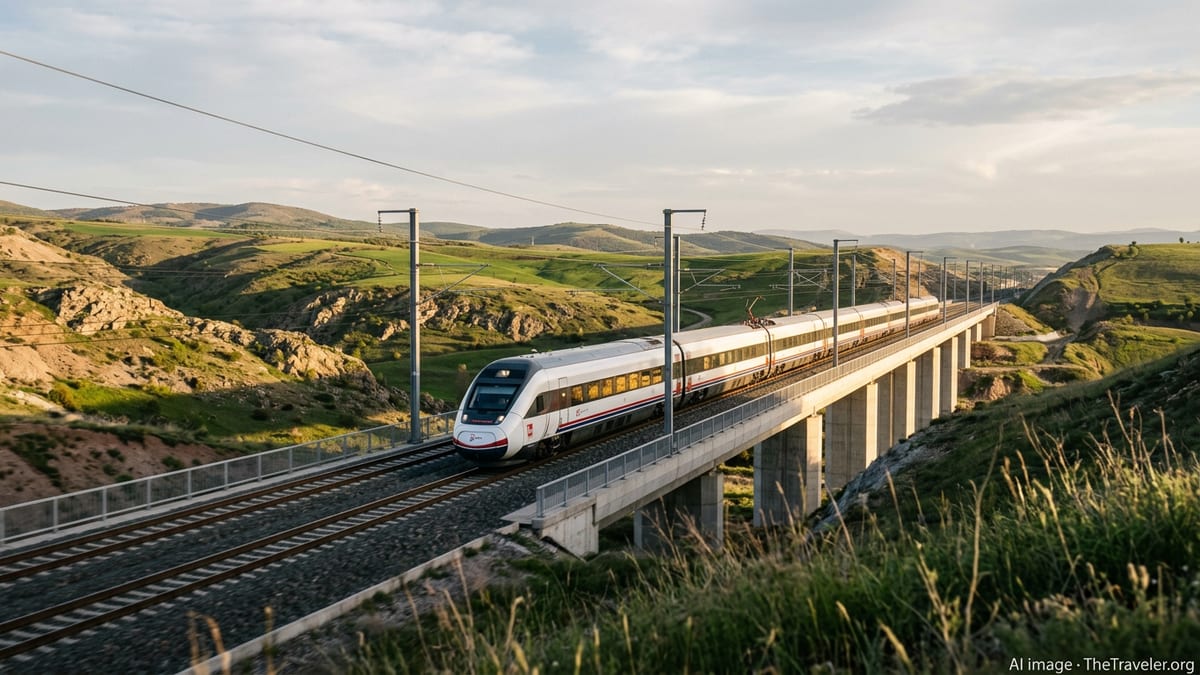
High-Speed Rail Finally Hugs Korea’s East Coast
The semi-high-speed KTX-Eum, operated by national rail company Korail, has been steadily expanding since its debut on inland corridors. Now it has taken a decisive turn toward the sea, running along the Donghae Line and giving travelers a continuous rail link between Gangneung in the northeast and Bujeon in Busan in the southeast. Publicly available information describes KTX-Eum as a modern electric multiple-unit train designed for comfortable medium- and long-distance journeys at up to 260 kilometers per hour.
According to published coverage from the Korea Tourism Organization, the opening of the full Donghae Line KTX-Eum route on December 30, 2025, significantly improved travel convenience along the East Coast by stitching together 11 key stations: Gangneung, Jeongdongjin, Mukho, Donghae, Samcheok, Uljin, Yeongdeok, Pohang, Gyeongju, Taehwagang in Ulsan, and Bujeon in Busan. Travel that once required a patchwork of buses and slow trains now becomes a single rail journey with sea views for much of the way.
Local and regional reports indicate that the completion of previously missing coastal segments between Pohang and Samcheok was a turning point, providing a continuous spine for high-speed and semi-high-speed services. Transport-focused outlets note that this filled a 166-kilometer gap on the east coast mainline, enabling new KTX-Eum services that link Busan and Daegu directly to Gangneung and intermediate cities.
From a traveler’s perspective, the upgrade reshapes east–west movement as well. Visitors can reach Gangneung from the greater Seoul area via existing high-speed routes and then continue down the coast by KTX-Eum, turning what used to be a complicated routing into a straightforward, scenic rail itinerary.
Beach Towns Turned into Easy Coastal Rail Hops
The new service is particularly significant for smaller seaside communities that previously relied heavily on road access. Tourist information materials emphasize that Jeongdongjin, Donghae, and Samcheok, long known domestically for sunrise views, beaches, and coastal hiking, now sit on a single through-route that continues all the way to Busan. This enhances the appeal of multi-stop coastal trips instead of the traditional point-to-point journey.
Jeongdongjin Station, already famous for being one of Korea’s closest stations to the shoreline, benefits from frequent KTX-Eum calls that place travelers within minutes of beach promenades and sunrise viewpoints. Travel promotion content highlights the station as a jumping-off point for rail-biking, sea-facing cafes, and shoreline walking routes that have become popular weekend escapes for residents of Seoul and other major cities.
Farther south, Donghae and Samcheok serve as gateways to quieter stretches of sand and sheltered coves. Recent travel features on the East Coast point to the pine-lined waterfront near Mukho and scenic spots such as Gungchon Harbor and Munam Beach as now being more realistically reachable for short trips, including day and overnight itineraries that combine surf, seafood, and coastal hiking.
On the southern end of the route, connections through Pohang, Gyeongju, and Taehwagang in Ulsan tie the beach corridor into some of Korea’s most prominent cultural and industrial cities. Visitors can move between historic Gyeongju, the cliffs and inlets of the Gyeongbuk coast, and urban Busan using a single rail network, with KTX-Eum services overlapping with other intercity and high-speed trains.
Samcheok and Gyeongbuk Coast See Tourism Momentum
Among the destinations most visibly reshaped by the new KTX-Eum access is Samcheok, a compact coastal city framed by karst cliffs and sandy bays. Local news reports describe commemorative events at Samcheok Station marking both the first anniversary of the Donghae Line opening and the start of KTX-Eum operations at the station, underscoring expectations that improved rail links will support a new phase of tourism-led growth.
Samcheok city authorities and tourism bodies have responded by overhauling their visitor offerings. Regional economic coverage indicates that from March 2026, an upgraded “Samcheok City Tour” bus network has been operating in full, timed to meet KTX arrivals and redesigned to serve newly popular coastal attractions. The revamped routes are positioned to improve satisfaction for rail users by simplifying onward travel to beaches, caves, and viewpoints without requiring private cars.
Along the Gyeongbuk East Coast, which includes Uljin, Yeongdeok, and Pohang, rail-linked tourism products have also begun to emerge. Business media reports point to the launch of an integrated tour pass focused on the Donghae Line, created in cooperation with regional partners to bundle train travel, local transport, and discounted attractions. Early promotional material frames the pass as a way to encourage multi-day, “stay-type” tourism rather than quick stopovers, making more extensive use of smaller ports, fishing villages, and coastal hiking routes.
Travel commentators and user-generated accounts increasingly describe the KTX-Eum East Coast journey itself as a highlight, recommending itineraries that string together stops such as Yeongdeok, Uljin, Samcheok, Donghae, and Gangneung for a gradual progression of beaches and small towns between Busan and the northern coast.
From Sunrise Beaches to Coastal Trails on a Single Line
The new KTX-Eum corridor overlaps with some of Korea’s best-known coastal landscapes, many of them previously perceived as requiring a dedicated road trip. Tourism content about the Donghae Line highlights the way it intersects with the Haeparang Trail, a long-distance route that follows the East Coast, allowing visitors to combine segments of rail and walking between harbors and beaches.
Sections around Gangneung and Samcheok are particularly noted for their variety: from cafe-lined Anmok Beach and the harborfront at Gyeongpo to quieter sands and fishing ports farther south. Reports on the newly fully connected Donghae Line point out pine-forested paths near Gungchon Harbor and Munam Beach, regarded as among the most scenic stretches of the broader coastal hiking network.
For rail-focused travelers, the line also intersects with existing tourist services such as the Sea Train between Gangneung, Donghae, and Samcheok. While the KTX-Eum provides fast intercity movement, slower sightseeing trains and local buses can fill the gaps, allowing visitors to hop off at one station for a dedicated scenic ride before rejoining the high-speed network further along.
The result is a layered transport ecosystem in which high-speed, regional, and heritage-style trains work together to open up a coastline of small coves, surfing beaches, and seaside temples that once required lengthy road journeys or tour packages.
Practical Access for International Visitors
For travelers arriving from overseas, the expanded KTX-Eum network simplifies itinerary planning. Visitors can reach Gangneung from the Seoul metropolitan area on existing high-speed lines operated with both KTX-Sancheon and KTX-Eum trains, then transfer directly to the Donghae Line KTX-Eum services that hug the coast to Busan. Travel planners and official tourism channels present this as a streamlined way to link two of Korea’s most popular cities while experiencing lesser-known coastal regions along the way.
Journey times vary by departure point and specific service, but rail schedules published by Korail and event organizers show that KTX and KTX-Eum links between Seoul and Gangneung typically require under two hours, while the newly connected Donghae segment allows travelers to continue south in stages or in a single through-trip. This positions the East Coast as a viable option for long-weekend getaways as well as part of longer cross-country routes.
Ticketing and timetable information is available through Korail’s official channels, including its English-language booking site and mobile app, which list KTX-Eum services alongside conventional KTX and ITX trains. Travel advisories commonly suggest reserving seats in advance during peak summer and major holidays, when demand for beach destinations and coastal festivals tends to spike.
As Korea continues to expand and refine its high-speed and semi-high-speed rail network, the KTX-Eum’s reach along the East Coast is emerging as one of the country’s most compelling examples of rail infrastructure directly reshaping leisure travel, bringing isolated beaches, fishing harbors, and coastal trails into easy reach of major urban centers.
Korea Tourism Organization overview of Donghae Line KTX-Eum
KTX-accessible East Coast beaches guide (VisitKorea)
Gyeongbuk East Coast rail tourism pass coverage