


More news on this day
Thanksgiving week air travel is ramping up across Florida on Tuesday, November 24, 2026, with Tampa, Orlando, Miami and other major airports reporting largely normal operations so far, even as heavy holiday crowds, lingering effects from recent nationwide disruptions and a stormy Southeast forecast keep the risk of flight delays and cancellations elevated for travelers.
Get the latest news straight to your inbox!
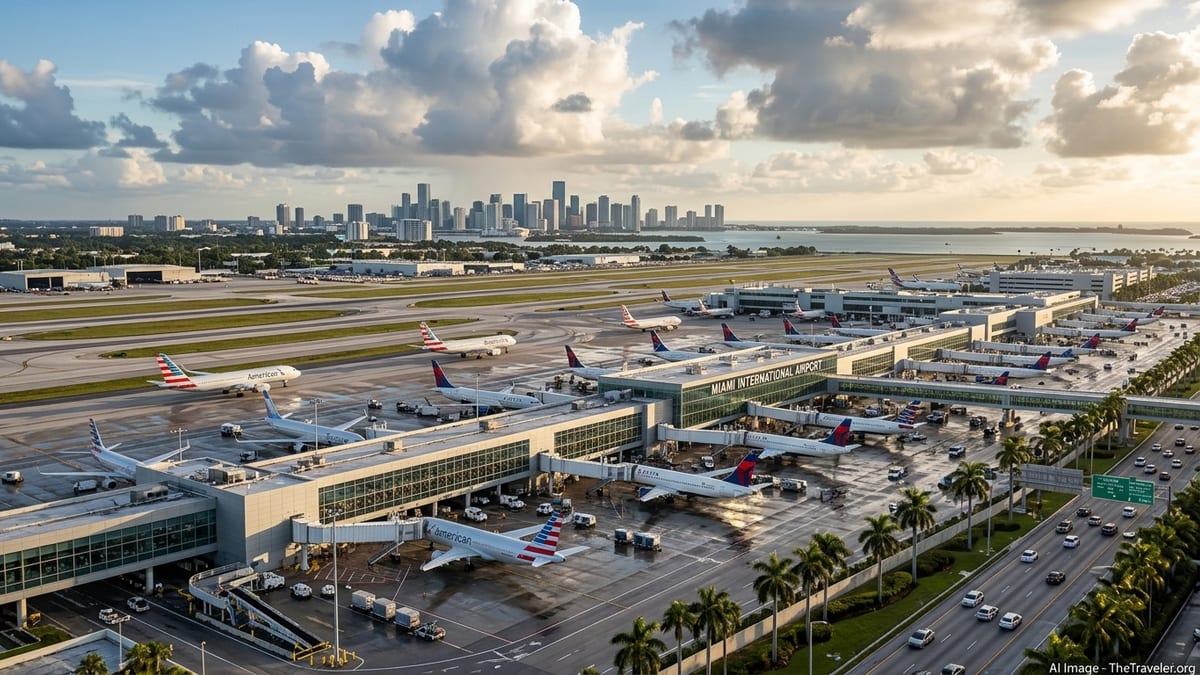
Busy but mostly normal operations at major Florida hubs
As of Tuesday morning on November 24, federal air traffic data show no airportwide ground stops or formal delay programs in place for Florida’s primary commercial airports, including Orlando International (MCO), Miami International (MIA), Tampa International (TPA) and Fort Lauderdale–Hollywood International (FLL). That means flights are generally operating under standard procedures, although individual delays and cancellations are occurring as traffic builds into the Thanksgiving peak.
Live FAA status pages indicate Florida facilities are currently classified as experiencing normal operations, with no systemwide weather or volume restrictions specific to the state in effect in the early part of the day. However, the agency’s national operations plan for November 24 flags the potential for route restrictions this evening in South Florida, which could slow some departures or arrivals if convective weather develops along key traffic flows.
On Monday, November 23, local media and flight-tracking services reported more than one hundred delayed departures and arrivals apiece at both Fort Lauderdale and Miami, along with a smaller number of outright cancellations, underscoring how quickly conditions can tighten when weather, high passenger volumes and aircraft repositioning collide. By Tuesday morning, those disruptions had eased to a more routine pattern, but airlines are still working through the ripple effects of earlier schedule issues elsewhere in the national network.
Record holiday crowds and recent system shocks shape today’s risk
Even with generally normal airport status in Florida, travelers flying on November 24 are part of one of the busiest Thanksgiving air travel periods in more than a decade. The Federal Aviation Administration has projected roughly 417,000 flights systemwide over the nine days from November 23 to December 1, describing Thanksgiving 2026 as the most active holiday period in about 16 years. TSA screening data in the days leading up to the holiday show nationwide checkpoint volumes consistently above 2.5 million passengers a day, suggesting terminals will remain crowded throughout the week.
AAA expects about 81.5 million Americans to travel at least 50 miles from home between November 24 and November 30, with nearly 6 million of them flying. In Florida, Orlando International alone is preparing for around 1.9 million passengers over its 12-day Thanksgiving travel window, a total that is similar to last year’s near-record numbers. Local reports from Jacksonville and South Florida airports also point to passenger volumes that approach or exceed pre-pandemic Thanksgiving norms.
This year’s Thanksgiving travel is unfolding just days after a series of high-profile technology and air traffic disruptions that created backlogs across the country. A nationwide ground stop earlier in November forced thousands of cancellations and mispositioned aircraft and crews, followed by a Delta Air Lines automation failure that delayed weight-and-balance calculations and disrupted departures, particularly at hubs such as Atlanta. While airlines and the FAA say schedules have largely recovered, these events have left tighter margins in crew and equipment availability as the holiday rush peaks, which can magnify the impact of any new weather or airspace constraint on November 24 and the days that follow.
Stormy Southeast forecast could slow flights into and out of Florida
Weather is a central variable for Tuesday’s Thanksgiving travelers. The FAA’s current operations advisory for November 24 notes the potential for thunderstorms across Florida and the broader Gulf Coast during the afternoon and evening, including a specific mention that coded departure routes in South Florida may be required later in the day. These reroutes are designed to keep traffic away from hazardous weather cells but can lengthen flight times and reduce airport throughput when they are in effect.
Regional forecasts from National Weather Service offices in Jacksonville, Tampa and Miami call for a cold front and associated bands of showers and storms to push through parts of the peninsula on Tuesday. In northeast Florida, scattered storms are expected along and ahead of the front, while central Florida, including the Orlando and Tampa metro areas, is likely to see periods of rain and thunderstorms before conditions improve closer to Thanksgiving Day itself. Private forecast services have highlighted the possibility of significant rain on Wednesday for portions of the state, warning that airline delays are possible in Orlando and Miami if convective activity intensifies during peak travel hours.
Importantly for Florida flyers, not all delay risk originates within the state. Airlines serving Tampa, Orlando, Miami and Fort Lauderdale rely heavily on connections through major out-of-state hubs such as Atlanta, Charlotte, Dallas–Fort Worth, Chicago and various airports in the Northeast corridor. Forecasts for the broader eastern United States indicate additional storm systems and residual impacts from earlier disruptions could still trigger ground delay programs or spacing measures at these hubs, which would then cascade into late-arriving aircraft and missed connection windows for passengers starting or ending their journeys in Florida on November 24.
Which Florida airports have seen the most holiday pressure?
Looking at recent and historical data helps put Florida’s November 24 operations into context. Department of Transportation statistics for previous Thanksgiving periods show that some Florida airports experience higher-than-average shares of delayed flights during the holiday week. Public analyses of that data identify Fort Lauderdale and Miami among the more delay-prone large U.S. airports around Thanksgiving, with significant proportions of departures and arrivals arriving more than 15 minutes behind schedule in certain years. Orlando and Tampa typically perform somewhat better but still record substantial holiday congestion compared with quieter parts of the calendar.
Preliminary figures from Monday, November 23, illustrate how those patterns can play out in practice. Flight-tracking tallies cited by local media indicated on the order of 130 delayed flights and around a dozen cancellations at Fort Lauderdale, alongside a similar number of delays and several cancellations at Miami. West Palm Beach, a smaller regional gateway used by some Florida-bound travelers, logged dozens of delays as well but relatively few cancellations that day. By Tuesday morning, November 24, these numbers had eased sufficiently that none of the major Florida fields were subject to special FAA-wide delay classifications, although individual flights at each airport continued to shift as weather and air traffic volume evolved.
In central Florida, Orlando International’s challenge this week is less about current system outages and more about sheer passenger throughput. With nearly 2 million travelers expected to pass through MCO over its Thanksgiving window, the airport is facing sustained crowds at airline counters, security checkpoints and baggage claim areas. Tampa International, while smaller, has also seen rising Thanksgiving volumes, and both airports are advising passengers to arrive earlier than they might for a typical Tuesday departure, particularly for morning and early afternoon flights on November 24 when banks of departures are thickest.
What Florida-bound travelers should check on November 24 and beyond
For travelers flying to, from or within Florida on Tuesday, November 24, the immediate takeaway is that operations remain broadly functional, but conditions can change quickly as the day progresses and as weather lines move across the Southeast. The FAA itself urges passengers to monitor both their departure and connecting airports for changing ground stop or delay program status, especially this evening when thunderstorm-related restrictions in South Florida are a possibility. Because some airlines are still fine-tuning aircraft rotations after earlier nationwide disruptions, even minor delays at upstream hubs can snowball into longer waits later in the day.
Airlines and airports continue to recommend that domestic passengers plan to reach the terminal at least two hours before scheduled departure and that international travelers allow three hours or more, guidance that takes on extra significance when parking facilities, check-in counters and security lanes are all busy. TSA has flagged the Thanksgiving period as one of the busiest stretches of the year and is staffing up in expectation of daily volumes that could reach or surpass record levels. At Orlando, Miami and other large Florida airports, that translates into the likelihood of full checkpoints through much of Tuesday and Wednesday, even if flights themselves are taking off relatively close to schedule.
Looking ahead to Wednesday, November 25 and the weekend return rush, forecast models suggest improving weather across much of Florida for Thanksgiving Day itself but the potential for heavier rain and storms in parts of the state and along key out-of-state routes before and after the holiday. Travelers with flexible plans may want to build in extra buffer time for connections or consider earlier flights in the day, which historically have better on-time performance than late-evening departures during busy periods. Regardless of airport, the most practical steps for Florida-bound passengers on November 24 are to keep close watch on airline notifications, check live status tools from the FAA or airport operators, and prepare for the possibility that already crowded terminals could become even more congested if weather or airspace constraints tighten as the Thanksgiving week continues.