


More news on this day
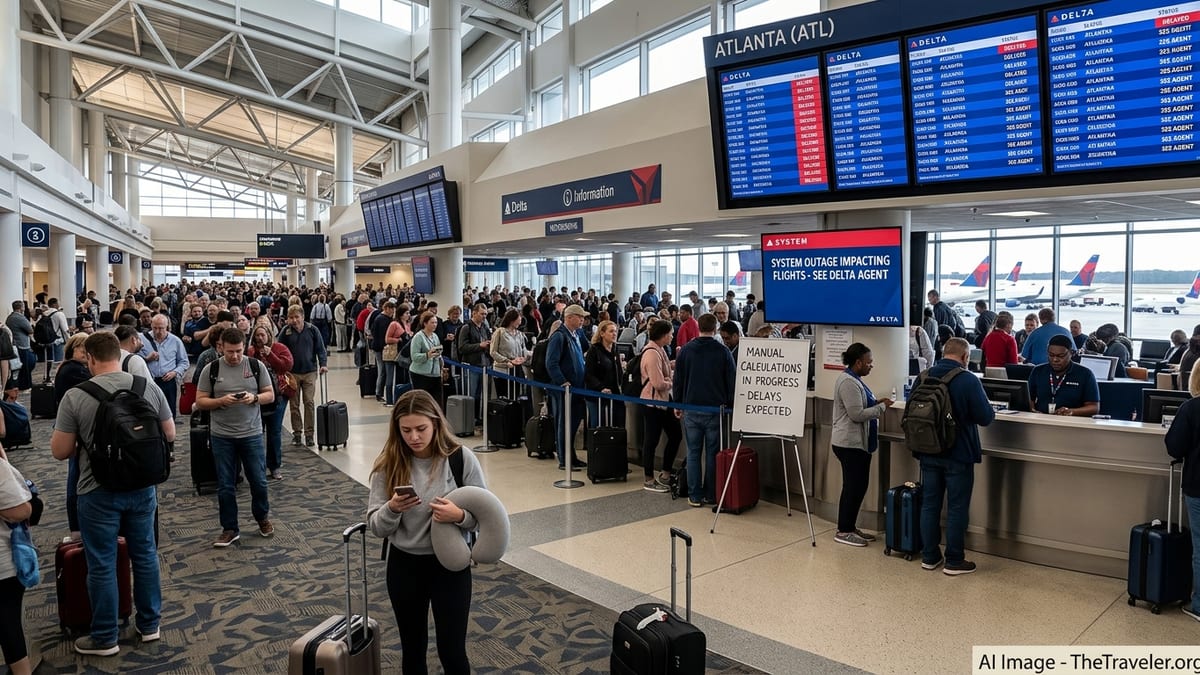
Delta Air Lines says it has restored an automated system used for aircraft weight and balance calculations after a technical outage centered on its Atlanta hub caused widespread delays heading into the busy U.S. Thanksgiving travel period. While the airline reports operations are now stable, travelers are still seeing residual disruptions across parts of the network.
Get the latest news straight to your inbox!
What happened to Delta’s system in Atlanta
The disruption began on the morning of Sunday, November 22, 2026, when Delta experienced problems with the automated system it uses to calculate weight and balance figures for departing flights. The issue primarily affected operations at Hartsfield-Jackson Atlanta International Airport, the airline’s largest hub, but also impacted flights heading into Atlanta from other airports that rely on the same system.
Weight and balance systems provide data that pilots and dispatchers need to safely determine takeoff performance, including how an aircraft’s load is distributed and what power settings are required. When automation is unavailable, those calculations can be completed manually, but the process is slower and typically restricts how many flights can be dispatched per hour.
As Delta worked to identify and resolve the problem, the Federal Aviation Administration briefly halted some Delta flights bound for Atlanta at the carrier’s request before shifting to a ground delay program designed to regulate the flow of traffic into the already congested hub. By late Sunday morning, a significant portion of the airline’s schedule was affected, with flight tracker data later showing that nearly half of Delta’s departures that day operated late.
Scale of delays and how quickly operations recovered
By Sunday evening, flight-tracking services reported that more than 1,600 Delta flights had been delayed at least 15 minutes, with nearly half of all Delta-operated services that day affected. The heaviest concentration of disruptions was at Atlanta, where long lines formed at departure gates and customer service desks as travelers tried to rebook missed connections or secure hotel accommodation for overnight stays.
Delta said that about 70 percent of the reported delays and cancellations were directly related to the automation outage, while the remainder stemmed from weather and air traffic control programs elsewhere in the United States, particularly in the Northeast. As the system outage coincided with one of the busiest travel periods of the year, even a few hours of constrained departures led to extensive knock-on impacts, including missed connections and aircraft and crew being out of position.
The airline reported on Sunday afternoon that the weight-and-balance automation had been restored and that it expected to move the remaining backlog of delayed flights into the air by the end of the day. However, residual disruption carried into Monday, November 23. Data from flight-tracking sites indicated several hundred additional Delta flights were delayed on Monday and dozens were canceled as the airline worked to realign aircraft and crew and accommodate travelers who had been stranded overnight.
How Delta and regulators responded
Throughout the disruption, Delta said its operations team was using manual workarounds to keep some flights moving. In practical terms, that meant dispatch, station and flight crews had to calculate weight, balance and performance numbers by hand or with backup tools for each aircraft before departure. That approach is standard in contingency situations, but the extra time needed for each flight significantly constrained throughput, particularly at a complex hub like Atlanta with tightly spaced departure banks.
The airline coordinated with the FAA to manage traffic into and out of Atlanta while the technical team worked on restoring full automation. The agency initially implemented a brief, Delta-specific ground stop for some Atlanta-bound services, which was later eased to a ground delay program that spaced arrivals to match the reduced capacity of the airport and the airline’s slower departure rate. The FAA emphasized that its own air traffic systems were operating normally and that the constraints were intended to prevent gridlock at the hub while Delta handled the outage.
By Monday morning, both Delta and local Atlanta media were reporting that operations at Hartsfield-Jackson had stabilized. Most flights were departing with standard automated weight-and-balance data once again available to flight crews. However, passengers continued to report longer-than-normal lines at customer service counters, and some travelers posted that they were still experiencing delays due to the lingering effects of Sunday’s disruptions on aircraft rotations and crew scheduling.
Impact on travelers and what support is available
The outage affected passengers in several ways, from relatively minor departure delays to missed long-haul connections and overnight stays in Atlanta or other hub cities. Travelers connecting through Atlanta were among the most exposed, as even short delays on feeder flights led to missed onward departures in banks that were already heavily disrupted. Some passengers reported being rebooked many hours later than their original itineraries or moved to alternate routings on subsequent days.
Delta said that customers impacted by cancellations were being rebooked on the next available itinerary and that the airline was providing hotel rooms and meal vouchers where necessary. While the exact level of accommodation varied by location and circumstances, the airline’s public statements and local reports from Atlanta indicated that Delta was treating the event as a controllable disruption rather than a pure weather issue for many of the affected services.
Under U.S. Department of Transportation rules, passengers are entitled to a refund when an airline cancels a flight and the traveler chooses not to travel or declines alternative transport. In practice, many affected Delta customers opted to accept rebooking on later flights during the busy Thanksgiving period, but those preferring not to fly can typically request a refund for the unused portion of their ticket if their flight was canceled. For lengthy delays without cancellation, eligibility for compensation or vouchers depends on airline policy rather than federal regulation, and travelers should verify what was offered at the time of disruption.
What travelers should expect over the next few days
With the automated weight-and-balance system now restored and Delta describing its operations as stable as of Monday, November 23, the main technical cause of the disruption has been resolved. However, large-scale schedule interruptions tend to have lingering effects as aircraft and crews return to their regular rotations and as the airline works through rebooked customers. Industry guidance and previous disruption patterns suggest that irregular operations can continue for a day or two after the underlying issue is fixed, especially during peak travel periods.
Travelers booked on Delta and flying through Atlanta or other major hubs in the first half of the Thanksgiving week should therefore continue to monitor their flight status closely, using both the Delta app and airport departure boards on the day of travel. Where possible, passengers with tight connections may wish to look for earlier feeder flights or request adjustments from the airline if initial itineraries appear particularly vulnerable to residual delays.
Looking ahead, there is no indication at this stage that the weight-and-balance issue will recur, and Delta has not published technical details beyond describing the problem as an automation outage. Any broader regulatory review or internal investigation into the root cause would typically take place after operations fully normalize. For now, the practical next step for travelers is to verify their upcoming flights, allow additional time at the airport in case of longer lines, and be prepared for some remaining schedule adjustments as the airline completes its recovery.