


Colorado is famous for glamorous ski destinations like Vail, Aspen Snowmass and Telluride, but those marquee names come with marquee prices. For many skiers and snowboarders, the real goal is maximum time on snow without blowing the travel budget. That means looking beyond headline day-ticket rates to the full cost picture: lift tickets or passes, lodging, transport, parking, rentals and food. Fortunately, Colorado also offers a network of smaller, more local mountains that consistently deliver good snow and varied terrain at a lower overall price point.
Get the latest updates straight to your inbox!
How Budget Skiing in Colorado Really Works
When most people compare ski costs, they focus on the window price of a single day lift ticket. In Colorado’s big destination resorts, that walk up rate can approach or exceed the cost of an entire season pass at some smaller hills. Yet the better way to think about affordability is total trip cost. Someone who buys a value oriented season or multi day pass, stays in a simple motel 20 to 40 minutes from the mountain, brown bags lunch and parks for free can often ski multiple days for less than a single splurge day at a major resort.
Colorado’s more affordable ski areas tend to share a few traits. Many are independent or locally owned rather than part of a large destination portfolio. Several avoid expensive base villages in favor of simple day lodges and parking lots close to the lifts. Most sit near working towns like Leadville, Salida or Georgetown where motels and vacation rentals are generally cheaper than in purpose built resort villages. Most importantly, several offer comparatively low regular ticket prices or value oriented passes that keep per day costs modest, even in high season.
Prices for the 2026 to 2027 ski season are still shifting, and most mountains use some form of dynamic or date based pricing that changes throughout winter. What follows are typical ranges and patterns drawn from current season information and recent years, not guaranteed numbers. Travelers should always recheck official resort information close to their trip, but these profiles give a realistic sense of which Colorado hills regularly sit at the more affordable end of the spectrum and why.
Loveland Ski Area: High Alpine Feel Without Resort Prices
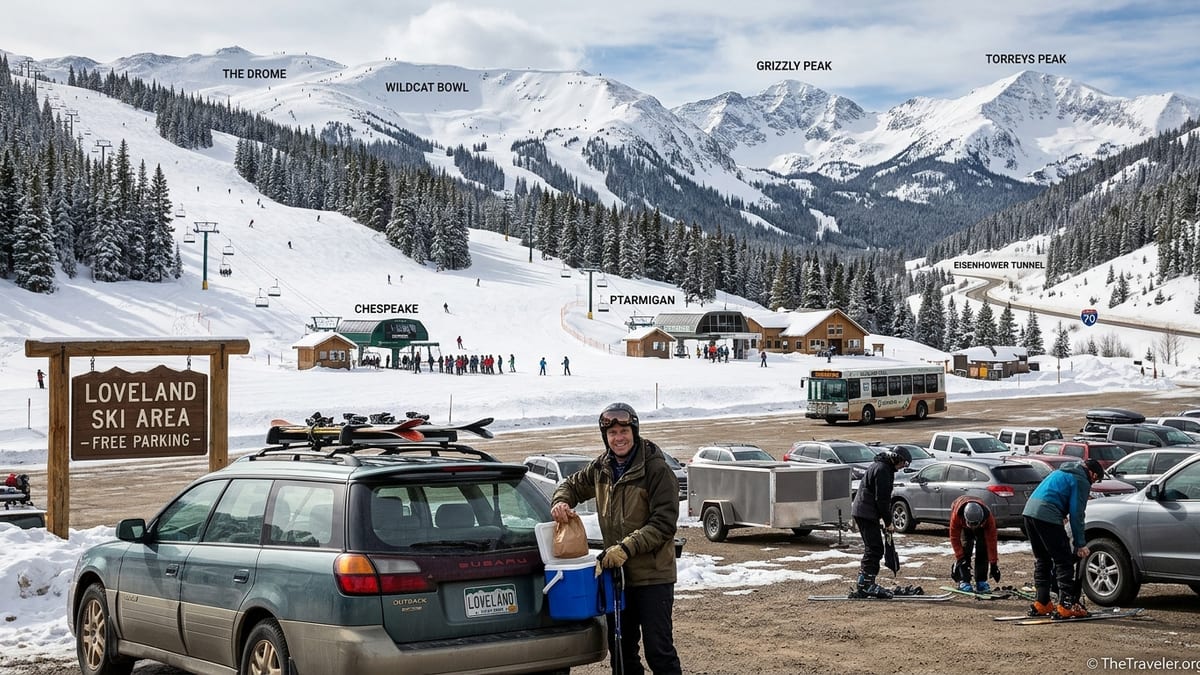
Loveland Ski Area sits at the Continental Divide at the east portal of the Eisenhower Tunnel, roughly a 60 to 75 minute drive from downtown Denver in normal winter conditions. The mountain is known for its high elevation, with a summit over 13,000 feet and base areas above 10,000 feet, which usually translates into a long season and reliable natural snow. Terrain ranges from gentle beginner slopes in the separate Loveland Valley learning area to bowls and ridge accessed runs favored by advanced skiers. The mix is best suited to solid intermediates and experts, though complete beginners can progress comfortably in the valley area.
Loveland’s window lift ticket prices tend to be significantly lower than the top tier resorts, often falling in a broad range around the low to mid hundred dollar mark for adults depending on date and advance purchase, with discounts for buying online and multi day products. The ski area also promotes bus and lift ticket combination deals from Denver that can cut transportation and ticket costs for those who do not want to drive themselves. While exact 2026 to 2027 prices are dynamic and should be confirmed close to travel, Loveland has consistently positioned itself as a below mega resort alternative.
One of Loveland’s biggest cost advantages is parking. The ski area advertises free parking right at the base, eliminating the paid parking or remote lot fees that are now common at many larger destinations. There is no slopeside lodging or village, which keeps the on mountain scene simple but pushes visitors to nearby communities. Budget minded travelers typically stay in motels or vacation rentals in towns like Georgetown, Silver Plume or Idaho Springs, which can be cheaper than Summit County lodging while still giving access to restaurants and groceries.
Winter driving on Interstate 70 can be slow or stressful during storms or heavy weekend traffic, and the final approach to Loveland involves mountain grades and potential snowpacked surfaces. However, proximity to the Front Range means day trips are very feasible for Denver area residents. For locals who plan several days on snow, Loveland’s season pass is often priced at only a few times the cost of a single walk up day at a marquee resort, which can dramatically reduce per day costs over a season.
Arapahoe Basin: Steep Terrain and Pass Based Value
Arapahoe Basin, commonly called A Basin, has long been popular with expert skiers for its steep, above treeline terrain and extended spring seasons. It sits on U.S. Highway 6 in Summit County, roughly 1 hour and 15 minutes to 1 hour and 30 minutes from Denver in typical winter conditions, with the final stretch involving a somewhat narrower, curving mountain road. The base elevation is high, and the summit approaches 13,000 feet, which usually delivers strong snow coverage and some of the state’s latest closing dates.
For purely walk up lift tickets, A Basin is no longer a bargain basement hill, and its single day dynamic ticket prices can reach levels not far off larger Summit County neighbors on busy dates. However, the mountain intentionally controls daily skier numbers to keep parking and terrain uncrowded, and it concentrates its value in passes and multi day products. The resort sells its own season passes and limited day passports and also participates in the Ikon system, where pass holders get a set number of days, often around five at the basic level in recent seasons. For skiers who plan several visits, these passes significantly reduce the effective per day rate compared with paying full price each day.
There is no large base village and no traditional slopeside lodging at A Basin itself, which keeps infrastructure and overhead lower than at a destination resort. Budget travelers often stay in Dillon, Silverthorne or Keystone, where they can shop around among motels, chain hotels and rentals, then drive or take local transportation to the mountain. Parking at A Basin includes free options in its surface lots, though spaces can fill and some premium locations or weekends may come with tighter rules, so visitors should confirm details before driving up.
The tradeoff for budget conscious travelers choosing A Basin is that it is best for confident intermediates and experts. Beginners have a small learning zone at the base, but the mountain’s appeal is off piste terrain, bumps, chutes and wide open alpine bowls. Those who already ski or ride at an advanced level and can make good use of an Ikon or local pass will find strong value, especially late in the season when passes can deliver many spring days for a relatively low upfront cost.
Monarch Mountain: Low Key Vibe and Free Parking off Monarch Pass
Monarch Mountain is perched on Monarch Pass between Salida and Gunnison in southern central Colorado. The drive from Colorado Springs typically runs about 2.5 to 3 hours in good winter conditions, while the trip from Denver is often around 3 to 3.5 hours. The road includes significant elevation gain and classic high mountain curves, and it can be snowpacked or icy during storms, so drivers should be comfortable with winter mountain driving and check weather and road reports carefully.
Monarch operates entirely on natural snowfall, which the pass usually delivers in generous amounts, and has a summit around 11,960 feet with a base above 10,000 feet. Terrain is weighted toward intermediates, with a healthy selection of groomed blues, some steeper black runs and hike to or cat served expert terrain for those who want more challenge. There is a well regarded ski school and beginner area that caters to new skiers and families.
On the cost side, Monarch is one of Colorado’s more consistently affordable lift ticket options among established resorts. Recent public information and promotions suggest that advance purchase or flash sale multi day products can bring the per day adult rate into the double digit range, and regular single day adult tickets commonly sit noticeably below the top tier resort prices, with lower midweek rates. Precise 2026 to 2027 numbers vary by date and should be checked directly, but Monarch markets itself as a value oriented alternative, bolstered by various 4 pack and special sale offers each season.
Parking at Monarch is free in surface lots close to the main lodge, with no large village or on mountain hotels. Visitors typically base in Salida or Buena Vista, both authentic river towns with motels, locally owned inns and vacation rentals that tend to be far cheaper than rooms in major destination resorts. Eating in town rather than on the mountain and making use of Monarch’s brown bag friendly base areas can further trim costs. For Front Range skiers willing to trade a longer, more weather sensitive drive for lower prices, Monarch delivers strong value and a relaxed, locals focused atmosphere.
Ski Cooper: Classic Colorado and Some of the Lowest Ticket Ranges
Ski Cooper, often simply called Cooper, sits above Leadville off Tennessee Pass and is one of Colorado’s most old school, low frills ski areas. The mountain is about a 2 to 2.5 hour drive from Denver in normal conditions and roughly 1.5 hours from Colorado Springs via U.S. Highway 24. The roads climb high but are generally less traffic choked than Interstate 70 corridors, though they can still be snowpacked or slick during storms. The base elevation is high even by Colorado standards, and Cooper exclusively uses natural snow, which contributes to a soft, forgiving feel on groomers when coverage is good.
Terrain at Cooper is heavily oriented toward beginners and lower intermediates, with wide, gentle front side slopes, some tree skiing and a growing backside area that adds more advanced pitches and glades. The vibe is relaxed and family friendly, and high end amenities are minimal. That simplicity is a big part of why prices tend to be lower than at most Colorado resorts with comparable vertical and acreage.
Current season information and recent visitor reports indicate that weekday adult lift tickets at Cooper can fall in the relatively low double digit range, with weekend rates still considerably under the prices charged by major Epic or Ikon destination hills. Exact numbers shift each season, but this pattern of significantly cheaper tickets has been consistent, and Cooper is widely cited as one of the state’s best values. The area also sells reasonably priced season passes and special products that can bring the per day cost for frequent skiers down to a fraction of a single day walk up ticket at destination resorts.
Cooper offers free parking close to the base lodge and has no slopeside lodging complex, which keeps the scene quiet and the cost structure lean. Most visitors stay in Leadville, a historic mining town with a mix of budget motels, small inns and rental homes that often price lower than comparable rooms in Summit County or Vail Valley. For families and beginners who value low crowds, mellow terrain and one of the lowest realistic daily cost ranges in Colorado, Ski Cooper is a standout choice.
Eldora: Front Range Convenience over Euro Style Village
Eldora Mountain sits just outside the town of Nederland, about 21 miles west of Boulder and typically around a 1 to 1.5 hour trip from central Denver depending on traffic and road conditions. The access road is shorter and less exposed than some high alpine passes, but it still involves winter driving on a two lane mountain highway, so caution is necessary when conditions deteriorate. Eldora’s summit reaches over 10,800 feet and its base sits lower than some high alpine areas, but its location in the Indian Peaks region often produces reliable snowfall combined with extensive snowmaking on key runs.
Terrain at Eldora includes a learning area and gentle runs near the base for beginners, a solid network of intermediate groomers and steeper advanced terrain off lifts like Corona and the Alpenglow high speed chair. Tree skiing and some bump runs round out the offering, making Eldora well suited to everyone from first timers to advanced weekend warriors, though true extreme lines are limited compared with big alpine basins farther west.
On price, Eldora is not the absolute cheapest hill in Colorado, but it is usually more affordable than major destination resorts when you factor in transport and lodging. Single day lift ticket rates are dynamic and can move around the low to mid hundred dollar range for adults, especially on weekends and holidays, but advance purchase products and multi day or season passes can lower the effective cost. Eldora participates in larger pass networks as well as its own local pass options, so Boulder and Denver residents who ski regularly often find passes far more economical than repeated single day purchases.
The key affordability lever at Eldora is access. Many Front Range skiers can drive up for the day without paying for lodging at all. The Regional Transportation District’s bus service from Boulder to Nederland, with connections from Denver, provides a transit alternative that can be combined with day passes to avoid parking hassles. For those who stay overnight, lodging in Boulder or Nederland spans from basic motels to midrange hotels and rental cabins. On mountain amenities remain modest compared with resort villages, and parking policies have evolved to manage peak crowds, so travelers should review any reservation or paid parking requirements before arrival.
Wolf Creek: Chasing Snow and Value in Southern Colorado
Wolf Creek Ski Area sits near the top of Wolf Creek Pass in the San Juan Mountains, between Pagosa Springs to the west and South Fork to the east. The drive from Denver typically takes 4.5 to 5.5 hours depending on route and conditions, while Colorado Springs skiers can expect around 4 to 4.5 hours. The approach crosses high, winding passes that can be very snowy and occasionally require chain laws or temporary closures, so this option is best for confident winter drivers with flexible schedules.
Wolf Creek is famous for receiving some of the highest average snowfall totals in Colorado, a reputation supported by years in which it has led the state in snowfall and base depth. The mountain’s summit is over 11,900 feet with a base around 10,300 feet, and most of its terrain is on natural snow. The mix of runs includes forgiving groomed blues for intermediates, meandering beginner runs and substantial off piste, tree and hike to lines for advanced and expert skiers. For those who prioritize deep powder days rather than extensive on mountain amenities, Wolf Creek is a strong draw.
In pricing terms, Wolf Creek remains one of the more affordable larger scale ski areas in Colorado. Its published adult day ticket rates in recent seasons have typically been in the mid double digit to low hundred dollar range for regular days, with slightly higher peak rates around major holidays and spring break. The area frequently offers specific discount days, such as reduced rates for college students with ID on designated dates, and maintains a comparatively uncomplicated ticket structure without the extreme dynamic pricing sometimes seen elsewhere. As always, travelers should verify current season numbers, but the broad pattern of sub big resort pricing is consistent.
Wolf Creek has no slopeside lodging and only modest day lodge facilities, which helps keep costs down but means visitors need to stay in nearby towns. Pagosa Springs and South Fork both offer a range of simple motels, cabin rentals and midrange hotels that usually price well below the big ski towns. Parking at the ski area is generally free in surface lots, and brown bagging is common inside the base lodges. For advanced skiers willing to commit to a longer drive and potentially challenging winter roads in exchange for deep snow and lower costs, Wolf Creek is hard to beat.
Key Cost Factors Compared
While exact 2026 to 2027 numbers will shift throughout the season, it is possible to compare typical affordability patterns across Colorado’s value oriented resorts. The table below summarizes approximate ranges and qualitative impressions for major cost drivers. All travelers should recheck official resort details shortly before departure to confirm current prices and policies.
Resort | Approx adult single day ticket range* | Typical budget lodging option | Approx drive time from Denver in good conditions | Key pros for budget travelers | Key limitations
Loveland Ski Area | Generally lower than major destination resorts, often around the low to mid hundred dollar range with online discounts | Motels and rentals in Georgetown, Silver Plume or Idaho Springs in the lower to mid price bands | About 1 to 1.25 hours | Free close in parking, separate beginner area, strong snow and terrain variety, feasible day trips | No slopeside lodging or village, I 70 traffic can be heavy on weekends and holidays
Arapahoe Basin | Dynamic pricing, but day tickets can be relatively high unless using Ikon or local passes | Chain hotels and rentals around Dillon, Silverthorne and Keystone in midrange brackets | About 1.25 to 1.5 hours | Excellent expert terrain, strong value through Ikon or local season products, free surface parking options | Limited beginner terrain, no base village or lodging, per day cost high without a pass
Monarch Mountain | Typically among the lower priced Colorado resorts, especially with advance purchase or multi day deals | Budget motels and rentals in Salida and Buena Vista | About 3 to 3.5 hours | Free parking, low key atmosphere, natural snow, lower lodging and food costs in nearby towns | No slopeside lodging, purely drive to, road over Monarch Pass can be snowpacked
Ski Cooper | Frequently some of the lowest lift ticket prices in the state, especially midweek | Simple motels and rentals in historic Leadville, often at budget rates | About 2 to 2.5 hours | Very low ticket prices, free parking, mellow beginner friendly terrain, uncrowded slopes | Limited advanced terrain compared with big resorts, minimal amenities and nightlife
Eldora | Dynamic pricing that can approach larger resorts on busy dates, though passes improve value | Motels and rentals in Boulder or cabins and lodges near Nederland in the midrange | About 1 to 1.5 hours | Close to the Front Range, no need for resort lodging, transit options reduce driving and parking costs | Parking management can be strict on peak days, smaller acreage and more basic facilities
Wolf Creek | Regular day ticket prices typically in mid double digit to low hundred dollar range, with some discount days | Motels and rentals in Pagosa Springs or South Fork skewing toward budget and midrange | About 4.5 to 5.5 hours | Very reliable snowfall, free parking, no resort village premiums, comparatively simple ticket structure | Long drive and challenging winter roads, no slopeside lodging, limited non snow amenities
*Approximate ranges based on current season patterns and recent years rather than fixed prices. Always reconfirm numbers and policies before booking.
Understanding the Trade offs of Budget Friendly Ski Areas
Choosing a more affordable Colorado ski area usually means trading some high end amenities for lower prices and a different style of mountain experience. Most of these hills have functional but basic day lodges rather than expansive, architect designed base villages. Fine dining options and nightlife are limited or absent, and après ski may consist of a local bar, a casual pub in town or a quiet evening in a rental rather than a bustling pedestrian plaza with live music.
On mountain facilities at budget oriented areas are often simpler. Food courts tend to focus on hearty basics like burgers, chili and grab and go items, and prices are still higher than off mountain meals, though often a bit lower than at luxury resorts. These mountains are generally more accommodating of brown bag lunches, with areas in lodges where guests can eat their own food, which can significantly reduce daily costs for families and groups if they shop at local supermarkets and pack meals.
Many of the most affordable ski areas in Colorado are also pure drive to destinations. That keeps real estate and operating costs down but places more responsibility on visitors to manage winter travel. Access roads may be narrower or steeper than interstate routes, and heavy snow can slow travel or close passes altogether. Travelers need to budget time for cautious driving, carry proper winter tires or chains where required and allow flexibility in their plans to wait out storms instead of pressing on in unsafe conditions.
On the upside, these budget focused mountains frequently feel less crowded than mega resorts, particularly on non holiday weekdays. Lift lines are often short, runs can be quieter and locals may be more relaxed and welcoming. For many skiers and riders, especially those focused on improving skills or maximizing time on snow rather than social scenes, these trade offs are well worth the savings.
Which Colorado Budget Resort Fits Your Travel Style
Families learning to ski often benefit most from places with gentle terrain, reasonable lesson pricing and a relaxed atmosphere. Ski Cooper and Monarch both shine in this category, thanks to mellow front side runs, manageable size and comparatively low ticket prices. Loveland’s separate Loveland Valley learning area is also attractive for beginners, especially for Front Range families able to drive up for day trips and avoid lodging costs. Parents should factor in not just lift tickets but lesson packages that bundle instruction, rentals and beginner area access, which can significantly reduce the total for a first timer weekend.
Students and young adults watching every dollar often prioritize cheap tickets, free parking and the chance to share budget lodging with friends. Ski Cooper, Monarch and Wolf Creek all stand out, as do pass based strategies like buying a local season pass at Loveland or A Basin or using an Ikon pass for multiple days at A Basin and other included resorts. Carpooling to split fuel and staying in simple motels or rental houses in Leadville, Salida, Pagosa Springs or Georgetown can make a weekend of skiing comparatively affordable even in high season.
Advanced skiers chasing snow and challenge may gravitate toward A Basin and Wolf Creek. Both consistently deliver deep, interesting terrain with relatively low base area frills, and both pair well with season or multi day passes that reward repeat visits. Loveland is another excellent choice for experienced riders who enjoy high alpine bowls and do not miss luxury villages. For these travelers, the biggest expenses are often travel and lodging, so they may choose to time trips to storm cycles and stay in modest accommodations, maximizing the value of days with exceptional snow.
Weekend warriors from Denver and along the Front Range are typically most constrained by time rather than distance. For them, Loveland and Eldora offer the shortest drives door to door, making true day trips realistic. Eldora can be particularly attractive to Boulder residents who can ride public transit instead of paying for gas and parking. Those willing to drive farther for quieter slopes and lower ticket prices can look to Monarch or Ski Cooper for occasional long weekend getaways. No single resort is best or cheapest for everyone, but understanding how lift pricing, access, lodging and amenities interact at these smaller mountains makes it easier to match a destination to your budget and the experience you want on and off the snow.