


Parking at New York’s John F. Kennedy International Airport can feel confusing and expensive, especially with construction, changing rates, and a maze of color-coded lots. As of mid-2026, daily maximums at the closest terminal garages can top the price of a mid-range hotel night, while off-site lots just a few minutes away advertise rates closer to what you might pay for street parking in the suburbs. This guide breaks down how JFK parking really works today, what you can expect to pay, and concrete strategies New York–area travelers are using to avoid overpaying for their trip.
Get the latest updates straight to your inbox!
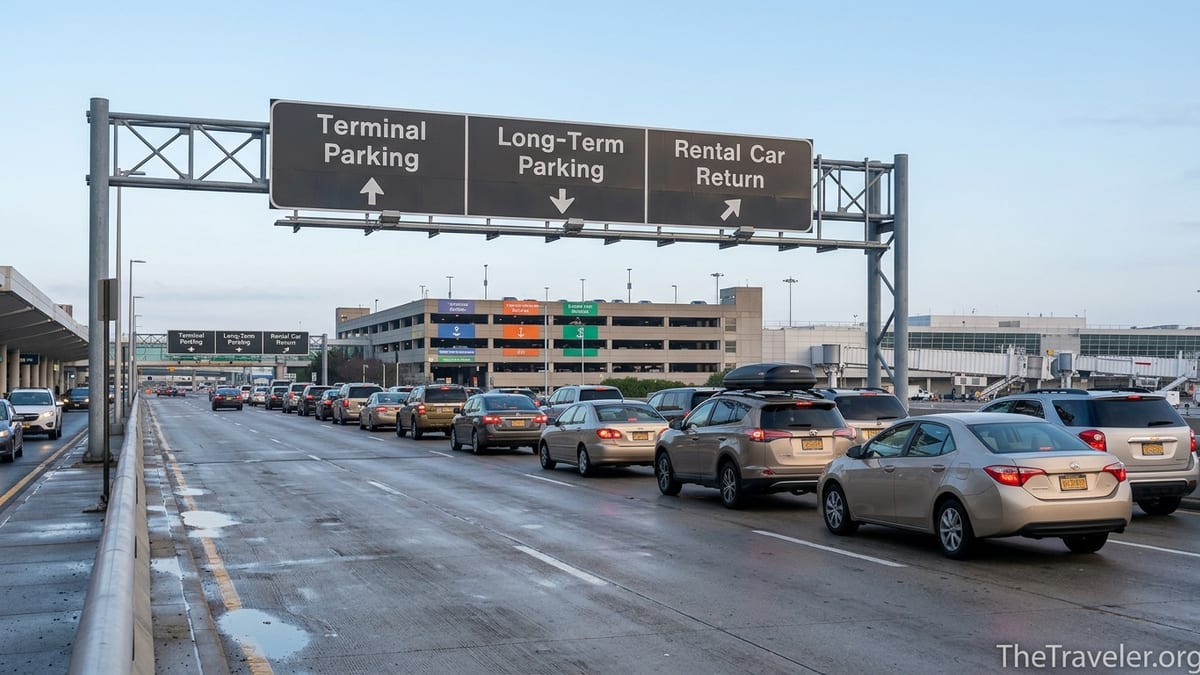
How JFK Parking Is Organized in 2026
JFK’s official parking is managed by the Port Authority of New York and New Jersey and is organized into two broad categories: terminal-area daily parking and long-term economy parking. The terminal lots sit next to or very close to the terminals and are color-coded (Green, Blue, Yellow, Orange, Red) so drivers can associate a lot with a specific terminal. Long-term parking is concentrated at the Lefferts Boulevard area, commonly known as the economy or Lot 9 facility, connected to the terminals by the free AirTrain loop inside the airport zone.
In practice, this means you have three basic choices when you drive to JFK. You can pay a premium to park in a terminal garage within a few minutes’ walk of check-in, opt for the cheaper on-airport long-term lot and ride the AirTrain, or park at an off-site facility and take a dedicated shuttle. A fourth option, increasingly popular with families and international travelers, is to book a hotel park-and-fly package that bundles a one-night stay with extended parking for the length of the trip.
Layout matters at JFK because it directly affects how much buffer time you should build into your schedule. Someone parking in the Yellow Garage next to Terminal 5 for a two-hour JetBlue departure might only add 15 minutes to their normal arrival routine. By contrast, a Queens resident leaving their car in an off-site lot near South Conduit Avenue for a 10-day trip to Europe needs to allow time to check in at the lot, load bags onto a shuttle, and ride into the airport, which can add 30 to 45 minutes depending on traffic.
On-Airport Short-Term & Daily Parking: Convenience at a Price
The terminal-area garages and surface lots are designed for short stays, pickups, drop-offs, and quick business trips. In 2026, several independent parking guides report that daily maximums at the closest JFK garages can reach roughly 70 to 90 dollars per 24 hours, depending on the specific color-coded facility and demand. For example, Blue and Yellow garages, which serve Terminals 4 and 5, are often cited as the highest-priced options because they offer covered parking and direct pedestrian access into heavily used terminals.
Typical pricing follows an "increment plus cap" model: you pay a set amount for each 30- or 60-minute block up to a published maximum for a 24-hour period. A common pattern at JFK is a charge of a few dollars per half hour, rising to a daily cap that can exceed 70 dollars in the more premium garages. This structure means a 45-minute pickup can still cost under 15 dollars, but leaving your car for a full workday or an overnight layover escalates quickly into hotel-level pricing.
These short-term options are best used for same-day trips or brief holds rather than week-long parking. A traveler from Brooklyn driving in for a one-day client meeting in Boston might reasonably choose the Orange or Red lot for a 10-hour stay and budget around the daily cap for simplicity. On the other hand, a family parking in the same garage for a seven-night Caribbean vacation could easily face a bill over 500 dollars, which is why most long-trip travelers look elsewhere.
Economy & Long-Term Parking at JFK: When Staying On-Airport Makes Sense
For longer trips, JFK’s on-airport economy parking at Lefferts Boulevard, still often referred to as Long-Term Lot 9, is the main official alternative. This facility is set back from the terminals on the airport’s western perimeter and connects to all terminals via the AirTrain JFK, which is free to ride within the airport zone, including between the long-term lot, Federal Circle, and the terminal loop. You only pay a separate fare if you continue onward to Jamaica or Howard Beach stations on the subway or commuter rail.
Recent parking guides in 2026 describe economy lot pricing in the rough range of high twenties to mid-thirties per 24 hours. One independent site notes a representative figure of about 29 dollars per day, while another aggregates Port Authority updates and references an effective long-term rate structure topping out around the high 40s, with the possibility of slightly lower "as low as" daily rates when you pre-book. Because rates can shift with Port Authority decisions and ongoing construction, travelers should treat published numbers as ballpark figures and verify the exact rate when reserving.
To see how this plays out, consider a Queens couple leaving their car in the Lefferts Boulevard long-term lot for a 10-night trip to Italy. At an approximate average of 30 to 40 dollars per day, their total parking bill would likely sit between 300 and 400 dollars. That is still substantial, but often meaningfully cheaper than paying 70 to 90 dollars per day at a terminal garage. The trade-off is time: they must ride the free AirTrain from the lot into the terminal loop, which can add 15 to 25 minutes depending on wait time and walking speed.
The long-term lot is a good middle ground for drivers who want the perceived security of staying on Port Authority property, plus predictable access via AirTrain, without paying the highest premium for an attached garage. It is especially attractive for solo travelers coming from areas where taxis or app-based rides might be expensive, such as Long Island suburbs, parts of New Jersey, or upstate New York, and who prefer the control of driving their own car.
Off-Site Parking Near JFK: How Much Can You Really Save?
Beyond the airport perimeter, a cluster of independent lots and hotel-managed facilities along South Conduit Avenue, Rockaway Boulevard, and nearby side streets cater to flyers willing to park off-site in exchange for lower prices. Aggregator services and discount sites in 2026 commonly advertise daily rates around 9 to 18 dollars for these lots, depending on whether you choose outdoor self-park, covered parking, or valet service. Some facilities, like those affiliated with national brands, promote shuttle rides of around 5 to 10 minutes to the terminals.
As an example, a well-known hotel near JFK, the Radisson-branded property roughly 2 miles from the terminals, has published daily parking from about 18 dollars through a third-party reservation platform, including an on-demand shuttle that operates most of the day. Another online parking marketplace highlights options like DoubleTree JFK airport parking and Purchase Park 2 Fly, often starting near the low double digits per day, occasionally dipping lower during off-peak seasons or with special promo codes.
Run the numbers for a typical one-week trip: at 10 dollars per day, seven days of off-site parking totals about 70 dollars. Compare that with a hypothetical 30 to 40 dollars per day in the on-airport long-term lot, which would cost 210 to 280 dollars for the same period, or the 70-plus dollars per day common at terminal garages, which can exceed 500 dollars. Even after factoring in gratuities for shuttle drivers and a modest booking fee, many travelers save well over 100 dollars by choosing off-site parking for a week-long vacation.
The main trade-offs are shuttle dependency and perceived convenience. In heavy traffic or during peak departure waves, a 5-minute shuttle ride can stretch to 20 minutes, and some lots run scheduled shuttles rather than on-demand service. Travelers with large ski bags, pet carriers, or bulky strollers may also find the shuttle boarding process more cumbersome than walking directly from a garage. Still, for budget-conscious flyers, the off-site ecosystem around JFK is often the single biggest lever for cutting parking costs.
Hotel Park-and-Fly Packages: Combining a Room with Parking
Park-and-fly, or park-sleep-fly, packages have become an appealing alternative for travelers who live far from JFK or have early-morning flights. These deals bundle one night of hotel accommodation near the airport with several days of parking and round-trip shuttle transfers to the terminals. A typical offer in 2026 from a JFK-area hotel might advertise "1 night plus up to 7 or 14 days of parking" for a combined rate that can be competitive with or even cheaper than a week in the on-airport long-term lot.
For example, a family from Hartford catching a 7:00 a.m. international departure could book a Queens hotel package that includes one overnight stay, up to 10 days of parking, and shuttle service for a total in the low to mid hundreds of dollars. If they instead drove down at 3:00 a.m. and used the Lefferts Boulevard long-term lot at a rough estimate of 30 to 40 dollars per day, their parking alone would likely match or exceed the total cost of the hotel package, without the benefit of a full night’s rest.
Older examples from JFK’s TWA Hotel, which has historically offered park-and-fly-style day and multi-day parking at set daily rates, illustrate how this model works. Travelers pay a per-day parking fee tied to a minimum stay length and receive access to the hotel’s on-airport location next to Terminal 5. Similar packages across the JFK hotel market are now widely listed through comparison sites, where you can filter for the number of parking days required, shuttle frequency, and whether parking is covered or open-air.
Park-and-fly options tend to be best suited for travelers living several hours from JFK, such as those driving from upstate New York, Connecticut, or Pennsylvania, and for families who prefer to break up the trip. Business travelers who need to be rested for a morning meeting in Europe often find that combining the hotel stay with parking provides both comfort and cost efficiency, particularly when compared with premium on-airport parking.
Using AirTrain JFK and Ground Transport to Reduce or Avoid Parking Costs
One of the most effective ways to slash JFK parking costs is to skip airport parking altogether and rely on public transit or a mix of transit and rideshare. AirTrain JFK connects all terminals to the Jamaica and Howard Beach stations, where passengers can transfer to the Long Island Rail Road, the E, J, and Z subway lines, or the A train. Within the airport’s internal loop, AirTrain rides between terminals, the long-term parking area, and Federal Circle are free, while trips to and from Jamaica or Howard Beach require a separate fare collected through standard payment systems.
For many New York City residents, the most economical option is to leave the car at home and take the subway or commuter rail to Jamaica, then transfer to AirTrain for the final leg. A Brooklyn traveler might take the A, C, or J train to Broadway Junction and connect through to Jamaica, then ride AirTrain into JFK, paying only transit fares instead of daily parking. From Manhattan, the Long Island Rail Road from Penn Station or Grand Central Madison to Jamaica often provides a faster but slightly more expensive trip that still undercuts most parking options for stays longer than a couple of days.
Another hybrid strategy common among suburban travelers is to park at a commuter rail or subway station that allows extended parking at lower daily rates, then take transit into Jamaica or Howard Beach and ride AirTrain from there. For instance, a family from Nassau County may park at a Long Island Rail Road station with daily parking in the teens, ride the train into Jamaica, and avoid JFK parking entirely. While this adds complexity and requires careful planning around schedules and security, it can be a worthwhile trade-off for longer trips or during peak summer weeks when JFK parking is tight.
Finally, car services and app-based rides can be cost-effective substitutes for parking, especially for shorter trips. A round-trip rideshare from much of Queens or Brooklyn might cost roughly what two or three days of airport long-term parking would, which makes door-to-door service attractive for weekend getaways. For travelers from farther out on Long Island, New Jersey, or upstate, one-way car service can be more expensive, but still comparable to the total of gas, tolls, and several days of premium parking at JFK.
Real-World Money-Saving Strategies for JFK Parking
Travelers who consistently pay less for JFK parking tend to follow a few practical strategies. The first is to compare on-airport and off-site prices as early as possible, especially for trips during major holidays or school vacations. Independent cost trackers in 2026 suggest that reasonable expectations for on-airport parking run from the high teens to around 60 dollars per day, depending on the lot, while well-reviewed off-site facilities with shuttle service often cluster around 6 to 12 dollars per day. Even a modest difference of 15 to 20 dollars per day adds up quickly on a 10-day trip.
Pre-booking off-site parking can yield further savings. Third-party sites and dedicated JFK parking services frequently offer coupon codes that take a fixed amount off an entire reservation. For example, a widely circulated code might discount an off-site booking by about 8 dollars total. On a seven-day stay at 10 dollars per day, that coupon effectively brings the average down to just over 9 dollars a day. Occasional seasonal promotions can create even wider gaps, where off-site weekly parking comes in at a fraction of the long-term lot cost.
Another tactic is to match the parking product to the trip profile instead of defaulting to the closest garage. A solo traveler on a tight schedule for a same-day Boston shuttle flight might deliberately choose the expensive Yellow Garage for maximum convenience and accept a high one-day bill. By contrast, a family of four headed to Asia for two weeks can stretch their budget much further by parking at an off-site lot in the 10- to 15-dollar range or by booking a hotel park-and-fly package. The right answer depends on the length of stay, time of day, mobility needs, and how comfortable you are adding shuttle or AirTrain transfers.
Finally, always verify the latest parking status and consider capacity constraints. Construction and seasonal surges sometimes cause JFK’s long-term lot to fill or shift capacity between different areas. Some off-site operators also change shuttle hours or limit oversized vehicles. Checking the official airport advisories alongside recent reviews of specific off-site lots helps avoid unpleasant surprises like sold-out facilities, long shuttle waits, or temporarily suspended services.
The Takeaway
Parking at JFK in 2026 is no longer a one-size-fits-all decision. Terminal garages offer maximum convenience at premium rates that can rival a hotel bill, while the on-airport long-term lot at Lefferts Boulevard provides a more affordable, AirTrain-connected option for multi-day trips. Just beyond the airport boundary, a competitive ecosystem of off-site lots and hotel park-and-fly packages can cut weekly parking costs by half or more for travelers willing to use shuttles and plan ahead.
The right choice depends on your priorities. Business travelers and anyone on a tight schedule may decide that paying for a color-coded terminal garage is worth the time saved. Budget-focused families, long-haul vacationers, and travelers coming from outside the five boroughs often benefit more from off-site parking, hotel bundles, or a complete shift to transit and rideshare. By comparing these options using the real-world price ranges and scenarios outlined here, you can tailor your parking strategy to your trip, keep more money in your pocket, and make your next departure from JFK a little less stressful.
FAQ
Q1. How much should I budget per day for parking at JFK in 2026?
For on-airport parking, expect a broad range from roughly the high teens in the economy lot to 60 dollars or more per day in some terminal garages. Off-site lots with shuttle service commonly advertise daily rates in the 6 to 15 dollar range, depending on season, demand, and whether you pre-book.
Q2. Is it cheaper to park in the long-term lot at JFK or use an off-site lot?
In most cases, off-site lots are cheaper on a per-day basis than the official long-term lot at Lefferts Boulevard. Where the long-term lot often falls in the high twenties to mid-thirties per day, off-site facilities frequently cluster around 9 to 18 dollars daily. The trade-off is the need to rely on a shuttle rather than the on-airport AirTrain loop.
Q3. How early should I arrive if I am using off-site parking near JFK?
Plan to add at least 45 minutes to an hour to your normal airport arrival time when using an off-site lot. This extra buffer covers check-in at the parking facility, loading luggage onto the shuttle, the drive to the terminals, and possible traffic delays. During peak holiday periods or rush hour, some travelers prefer to add even more time.
Q4. Is the AirTrain free from the long-term lot to the terminals?
Yes. Within the airport, AirTrain rides between the long-term parking area, Federal Circle, and the terminal loop are free. You only pay a separate fare when entering or exiting at external stations such as Jamaica or Howard Beach, where you connect to the subway or commuter rail.
Q5. Are there secure or covered parking options near JFK?
Several terminal-area garages at JFK, including those serving Terminals 4 and 5, offer covered parking with lighting and surveillance. Off-site, many branded facilities and hotel lots provide fenced or gated areas, cameras, and attendant presence. When comparing options, look for descriptions mentioning covered parking, 24-hour staff, and security features if these are priorities.
Q6. Can I charge an electric vehicle while parked at JFK?
EV charging at JFK has historically been limited and subject to change as facilities are updated. Some official airport garages and a few off-site lots offer charging stations, but availability is not guaranteed and may be on a first-come, first-served basis. If you rely on charging, contact the specific garage or lot in advance to confirm current infrastructure.
Q7. Are hotel park-and-fly packages around JFK really a good deal?
They can be, especially for travelers who live several hours from the airport or have very early departures. A single hotel night bundled with up to 7, 10, or even 14 days of parking can rival or undercut the cost of parking alone in the on-airport long-term lot, while also providing a more relaxed start to the trip. Always compare the package total against what you would pay for stand-alone parking.
Q8. What is the best option for a quick overnight trip from JFK?
For a one- or two-night trip, many travelers choose either a nearby off-site lot with frequent shuttles or, if time is tight, a terminal-area garage. If the difference in total cost for two days is modest, some people opt to pay the premium for the closest garage to minimize walking and transfers, especially when carrying only a small bag.
Q9. How far in advance should I book JFK parking?
Booking at least one to two weeks ahead is a good rule of thumb, and even earlier for peak travel periods like summer holidays, Thanksgiving, and late December. Early reservations can secure lower off-site prices, help guarantee a spot during busy times, and reduce the risk of having to default to a more expensive lot at the last minute.
Q10. What should I do if the JFK long-term lot is full when I arrive?
If the on-airport long-term lot is full, the Port Authority typically posts alerts and directs drivers to alternative areas, which may include other official lots at different price points. You can also pivot to off-site parking, though availability there may be tight during peak periods. In such situations, checking live updates from the airport before you depart and having a backup off-site reservation or rideshare plan can prevent last-minute stress.