


More news on this day
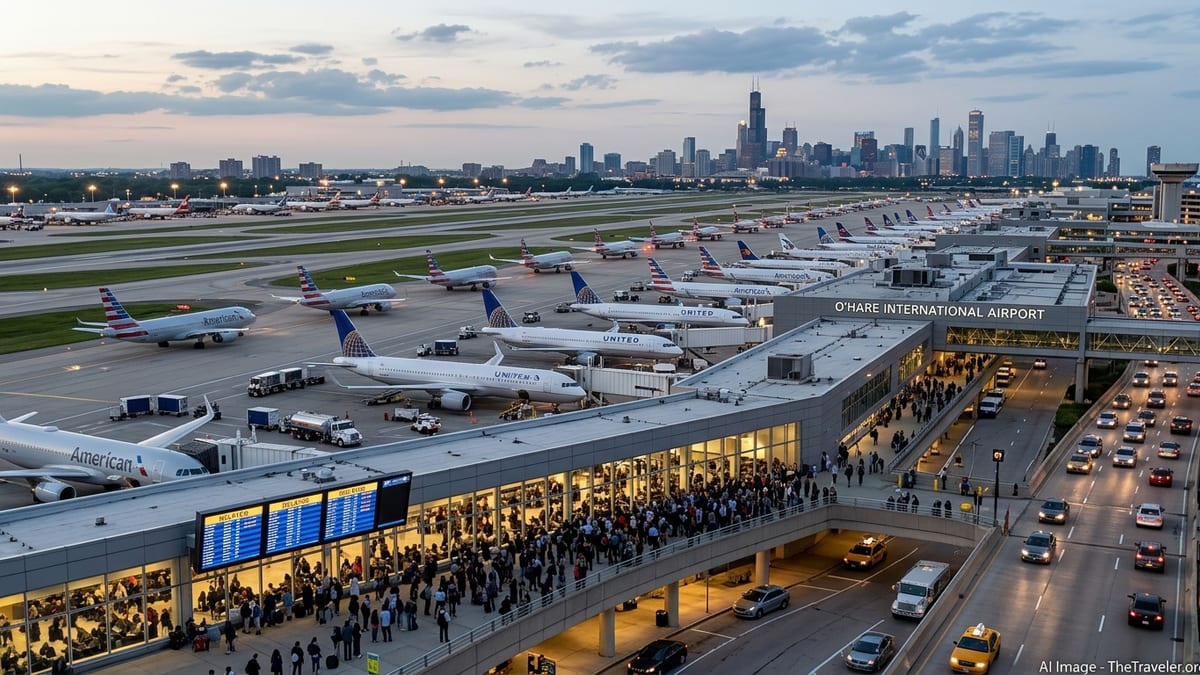
Chicago O’Hare International Airport faced a second day of serious disruption on Tuesday, November 24, after the Federal Aviation Administration ordered a ground stop because of an equipment outage, intensifying pressure on one of the world’s busiest hubs just as Thanksgiving travel peaks.
Get the latest news straight to your inbox!
What Happened At O’Hare On Tuesday
The Federal Aviation Administration issued a ground stop for flights bound for Chicago O’Hare International Airport on Tuesday afternoon, citing an “equipment/outage” affecting air traffic control systems serving the airport. According to an advisory published on the FAA’s air traffic control system command center website, the ground stop began in the midafternoon local time and initially applied to all traffic destined for O’Hare, requiring departing flights from other airports to remain on the ground until the restriction was lifted.
Local media in the Midwest reported that the alert referred specifically to an equipment outage impacting operations at O’Hare, with the FAA confirming the use of ground stop procedures to manage safety while the issue was addressed. Flight-tracking data from services such as FlightAware on Tuesday showed several hundred delays and a smaller number of cancellations associated with O’Hare, although many flights were still able to operate with extended taxi or holding times once the ground stop transitioned to other traffic management programs.
By early evening, the FAA had moved from a full ground stop into a more targeted ground delay program, under which flights are metered into the airport at set intervals. Travelers arriving in Chicago continued to face significant knock-on delays through the rest of the day, particularly on routes from other major hubs where congestion was already high for the Thanksgiving period.
Second Consecutive Day Of Ground Stops In Chicago
Tuesday’s disruption followed an FAA-imposed ground stop at O’Hare on Monday, November 23, that was attributed to staffing problems at air traffic control facilities serving the airport. In that earlier incident, the FAA temporarily halted most inbound flights until around 12:15 p.m. local time while it worked through a shortage of controllers, according to statements cited by Chicago television outlets. Departures already on the taxiways were able to continue in some cases, but flights bound for Chicago from other cities were held at their origin airports until the pause ended.
Chicago broadcasters reported that Monday’s staffing-related stop lasted roughly an hour before the restriction was lifted, but it was enough to ripple through the schedule for much of the day. Airlines worked to re-accommodate passengers whose connections in Chicago were jeopardized, with some travelers reporting extra hours in terminals or last-minute reroutes through alternate hubs such as Dallas–Fort Worth and Denver.
With Tuesday’s equipment-related outage arriving less than 24 hours later, O’Hare effectively experienced two separate FAA ground stops in as many days, each with a different trigger. For passengers, the distinction between a staffing-related hold and an equipment outage made little practical difference, as both resulted in late-arriving aircraft, tighter connection windows and, in some cases, missed flights that had to be rebooked onto later services.
Context: Nationwide Ground Stop Earlier In November
The twin ground stops at O’Hare come just 11 days after the United States experienced its most extensive aviation shutdown since the terrorist attacks of September 11, 2001. On Friday, November 13, the FAA ordered a nationwide ground stop on all U.S. departures following a telecommunications failure that destabilized communications and radar systems across much of the National Airspace System.
In an after-action explanation on its official website, the FAA said that a disruption on its telecommunications backbone led legacy equipment to become unstable as data flooded the network, forcing the agency to suspend most departures for safety reasons. The Department of Transportation later confirmed that the ground stop lasted for roughly four and three-quarter hours, affecting 17 of the FAA’s 22 air route traffic control centers and several approach control facilities and prompting more than 12,000 flight cancellations.
Documents released by the Department of Transportation and Congress in the days that followed, along with technical reporting by aviation and technology publications, indicated that issues at facilities in Arkansas and Texas, including malfunctioning communications hardware, contributed to the cascading failure. The event has already triggered calls in Washington for additional oversight of FAA modernization programs and a detailed review of the resilience of air traffic control communications.
Thanksgiving 2026 Travel Forecast And Impact
This cluster of disruptions is colliding with one of the busiest travel periods of the year. AAA’s national Thanksgiving 2026 forecast, published on November 16, projects that 81.5 million Americans will travel at least 50 miles from home between Tuesday, November 24 and Monday, November 30. The organization notes that this represents a marginal decline from the 81.6 million travelers it estimates made trips during the 2025 Thanksgiving period, ending a three-year run of new records but still leaving volumes near historic highs.
Within that total, AAA expects domestic air travel to ease slightly from last year, with a projected decline of about 0.2 percent in the number of people flying over the holiday. Even a small reduction, however, still translates into nearly 6 million air travelers nationwide, concentrated heavily on the Tuesday and Wednesday preceding Thanksgiving and the Sunday that follows, which are historically among the busiest days at security checkpoints and boarding gates.
FAA officials have separately indicated that the number of flights scheduled over the broader nine-day Thanksgiving travel window remains elevated compared with the mid-2010s. Industry data shared with national media outlets this week suggest that more than 400,000 flights are scheduled between November 23 and December 1, 2026, a level that could rival some pre-pandemic peaks. Against that backdrop, even localized interruptions at a major hub like O’Hare can have wider knock-on effects, as aircraft and crews fail to reach their next assignments on time.
Why O’Hare Matters For Travelers Across The Network
Chicago O’Hare’s role in the U.S. aviation system helps explain why two days of disruptions at the airport have attracted national attention. According to Airports Council International’s most recent data on aircraft movements, O’Hare handled roughly 860,000 takeoffs and landings in the latest full year, placing it among the top airports globally by flight operations. It also serves as a key hub for both American Airlines and United Airlines, meaning that delays in Chicago often cascade into missed connections across their domestic and international networks.
For connecting travelers, a ground stop at O’Hare tends to manifest as departure holds at their origin airport, elongated onboard waits before takeoff or last-minute gate changes on arrival as airlines shuffle aircraft to maximize available capacity. When a ground stop transitions to a ground delay program, the FAA assigns specific departure slots to inbound flights based on anticipated arrival capacity, which can result in new estimated departure times that differ significantly from the schedule originally printed on the boarding pass.
Although Tuesday’s equipment outage appears to have been shorter and more localized than the nationwide telecommunications failure earlier in the month, it landed at an especially sensitive moment. By midweek, many aircraft are already flying near full on key Thanksgiving routes, leaving airlines with relatively few open seats to rebook disrupted passengers. That raises the risk that even modest numbers of cancellations or substantial delays at a hub like Chicago could push some travelers’ arrivals into Thursday morning or later, particularly on longer-haul itineraries or for those booked on the last flights of the day.
What Travelers Should Do Next
With the immediate ground stop at O’Hare lifted and Tuesday’s operations shifting into delay management, the most important step for travelers is to monitor their flight status closely through airline apps, text alerts and airport information screens. Because ground stops and subsequent ground delay programs are implemented and adjusted in near real time by the FAA, departure and arrival times can change repeatedly within a few hours as conditions improve or congestion worsens.
Passengers scheduled to connect through Chicago over the next two days should check whether their layover times remain realistic in light of current delays. If a connection appears tight, some airlines will allow free same-day changes to earlier flights on the same route when operational disruptions are declared, especially during peak holiday periods. Travelers driving to O’Hare or to alternate airports in the region, such as Chicago Midway, Milwaukee or Indianapolis, should leave extra time for road congestion, as AAA expects peak highway volumes near major cities on Wednesday afternoon and Sunday.
Looking beyond this week, the FAA and Department of Transportation have pledged to release more detailed findings from the nationwide ground stop on November 13 and to review the combination of hardware, software and staffing factors that contributed to subsequent localized disruptions. For travelers, the key practical takeaway is that while the U.S. air traffic control system generally operates with high reliability, unexpected pauses remain possible, particularly during periods of heavy demand. Checking flight status before leaving for the airport, avoiding the last flight of the day when schedules allow, and ensuring that any checked baggage is properly tagged and tracked can all help mitigate the impact of similar events in the weeks ahead.