


More news on this day
Nearly 6 million Americans are expected to fly for Thanksgiving this year just as storms, king tides and recent technology outages raise fresh doubts about how smoothly the holiday rush will run, particularly at coastal hubs such as San Francisco International Airport.
Get the latest news straight to your inbox!
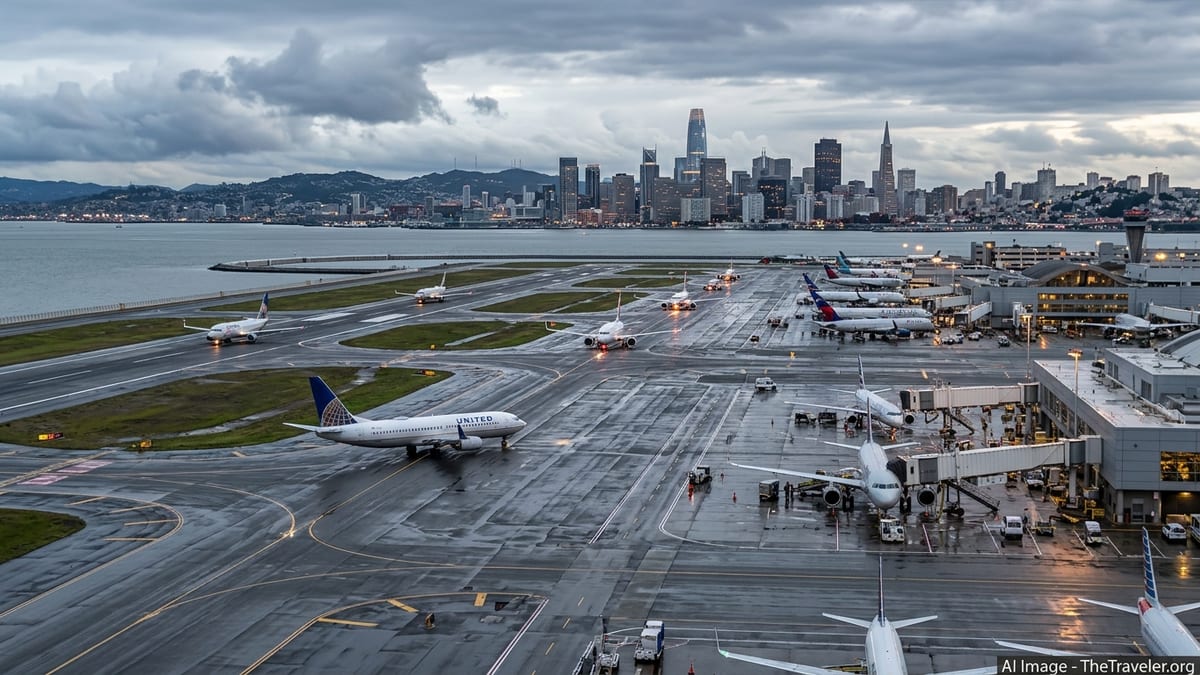
Busy skies, fragile systems and a changing forecast at SFO
AAA now projects that about 81.5 million Americans will travel at least 50 miles from home for Thanksgiving 2026, with nearly 6 million of them flying between November 24 and November 30. That is slightly fewer air travelers than last year but still close to record levels, meaning most mainline and regional carriers will run near capacity throughout the week.
The holiday rush comes on the heels of a string of high profile technology failures. A Federal Aviation Administration communications upgrade triggered a nationwide ground stop earlier in November, halting most departing flights for several hours while engineers rolled back the change. Within days, United Airlines suffered what it described as a “widespread system outage” tied to weight and balance calculations, temporarily preventing some departures, before restoring normal operations the same day.
Weather and sea conditions are adding another layer of risk in Northern California. Forecasters expect unusually high king tides and a Pacific storm to coincide with peak travel days, prompting warnings that low lying areas around San Francisco Bay, including airport perimeters, could see coastal flooding. Ahead of the week, San Francisco officials worked with San Francisco International Airport and Oakland International Airport to reinforce flood barriers, deploy pumps and clear drainage channels.
By Monday evening, San Francisco Mayor Daniel Lurie said SFO no longer expects king tide flooding to breach its seawalls or trigger preemptive ground stops, based on updated National Weather Service modeling. Officials still caution that high winds and heavy rain could require temporary pauses in arrivals and departures, as is routine in strong storm systems, and that travel conditions can change quickly if the track or intensity of the storm shifts.
How king tides and storms can disrupt Bay Area flights
San Francisco International is particularly exposed to sea level and wind because its runways sit on bay fill that extends into the water. The National Weather Service has warned that tide levels around Thanksgiving could reach more than two feet above normal, and that onshore winds could push additional water up against coastal defenses. While SFO’s seawalls are designed to withstand such events, even minor overtopping or flooding around access roads, tunnels or electrical infrastructure can slow airport operations.
In practice, Thanksgiving week disruptions at SFO are more likely to come from wind, rain and low clouds than from water actually covering the runways. The airport’s intersecting runway layout limits how many planes can land when visibility drops or crosswinds increase. In poor conditions, controllers often must space arrivals farther apart, which quickly cascades into delays and, if queues grow too long, temporary ground stops for inbound or outbound flights.
Nearby Oakland International Airport and San Jose Mineta International Airport tend to be less affected by fog and certain wind patterns, and their runway layouts can be more forgiving when weather deteriorates. That can make them attractive backups if a storm snarls SFO, but they have fewer flights and seats overall. In a week when most aircraft are already close to full, that limits the number of stranded SFO passengers who can realistically be rebooked onto alternate Bay Area departures.
What counts as a “significant” delay under new U.S. refund rules
For passengers facing lengthy disruption, one of the biggest recent changes is a new Department of Transportation rule that defines when a delay or schedule change requires airlines to offer a cash refund. The rule, finalized in 2024 and fully in effect for this holiday season, covers both domestic and international itineraries operated to, from or within the United States.
Under the rule, a delay is considered “significant” for refund purposes if a domestic flight departs or arrives three hours or more later than originally scheduled, or if an international flight departs or arrives at least six hours later. A change can also be significant if the airline moves a passenger to or from a different airport than originally booked in the same metropolitan area, adds extra connection points compared with the original itinerary, or substantially downgrades the class of service or type of onboard product that was purchased.
When a flight is cancelled or significantly changed and a traveler chooses not to take the revised itinerary, the airline must provide a “prompt” refund of the fare and any related taxes and government fees. The DOT’s guidance specifies that this refund must be issued within seven business days for purchases made by credit card and within 20 calendar days for tickets bought with cash, check or other payment methods.
The rule also extends refund rights to certain ancillary fees. If services like advance seat selection, onboard Wi Fi or inflight entertainment that were separately charged are not provided on the rebooked or delayed flight, passengers are entitled to get those specific fees back. Checked baggage fees must be refunded when bags are lost, or when they are delivered significantly late relative to the arrival of the flight, with different thresholds based on whether the itinerary is domestic or international and on the length of the flight.
Refunds, waivers and rebooking: choosing your next move
Even under the strengthened rule, refunds are not automatic in every disruption. To keep the right to a cash refund when a significant delay or cancellation occurs, a passenger must decline both travel credits and any rebooked itinerary the airline offers. Accepting a voucher, credit or alternate flight generally counts as agreeing to the change, which ends the airline’s obligation to return the original fare in cash.
That is why many carriers, including United during the recent FAA related ground stop, have invited affected customers to use special travel waivers. These waivers temporarily relax change fees, minimum fare rules or same city restrictions and can make it easier to reschedule trips within a defined window. They can be useful tools for travelers who still want to fly but need flexibility. However, using a voluntary waiver rather than having a flight cancelled outright may mean a traveler is modifying their own plans rather than declining a significant schedule change, and therefore may not qualify for a refund of the original ticket.
Whether to wait at the airport, accept rebooking or ask for a refund often comes down to the purpose and timing of the trip. For a short Thanksgiving visit, it may make sense to work with the airline to secure the earliest possible alternate flight, especially when other carriers’ options are already sold out or very expensive. For a trip that can easily be postponed, a refund might be more attractive, allowing the traveler to rebook later at a time of their choosing.
Travelers considering cancelling should line up a backup plan before giving up their seat. During peak holidays, spare capacity on other airlines is limited, so switching carriers at the last minute can be costly and uncertain. For some, driving or taking rail or intercity buses may be a more realistic fallback. If an overnight stay near the airport becomes unavoidable and the disruption is caused by weather or air traffic control rather than an airline controlled issue, travelers should be prepared to pay for hotels and meals themselves, as U.S. carriers are generally not required by law to cover those costs.
Maximizing your chances of getting where you need to go
For those determined to travel, timing and information are critical. As soon as an alert appears in an airline app or departure boards hint at a delay, passengers should check whether the problem appears local to their flight or part of a wider operational slowdown. Technology related ground stops, air traffic control restrictions and storms often ripple across networks for hours, affecting flights that are not yet listed as delayed.
If a delay is modest, such as 30 minutes, experts generally advise staying calm, remaining near the gate and monitoring status updates rather than immediately trying to switch flights. Passengers with tight connections, however, should proactively ask agents whether they are still expected to make their onward flights or whether rebooking through another hub or later connection might be wiser while options remain available.
When delays lengthen, it is worth asking agents not only about other flights on the same airline but also about options through that airline’s partners. Some large U.S. carriers maintain interline or codeshare agreements that allow them to move passengers to another airline’s flight in irregular operations, although this is discretionary and subject to seat availability. Others, notably point to point carriers, typically can rebook customers only on their own services, which narrows the range of alternatives in a disruption.
Passengers placed on standby for a full flight can improve their odds by being physically present and ready to board once agents start clearing the list, often in the final 20 minutes before departure. If a traveler is not at the gate when their name is called, agents will usually move immediately to the next standby customer, and it can be difficult to regain priority. Travelers should also keep in mind that airlines may deny boarding to customers who appear intoxicated or disruptive, even after a long wait, which makes moderation at airport bars and lounges important during extended delays.
What travelers should watch for through the rest of the holiday season
Looking beyond Thanksgiving week, forecasters expect additional rounds of high tides along the California coast through the winter, and San Francisco’s mayor has warned that the city could see dozens of king tide events between November and February. Airport operators around the bay say they are using the current episode as a test of their flood defenses and emergency pumping capacity ahead of more frequent extreme water levels in coming years.
Nationwide, regulators are watching closely how airlines implement the new refund rules during the busy holiday period. The Department of Transportation has signaled that it expects carriers to honor requests for cash refunds when significant delays or cancellations occur and customers choose not to travel, and it has created online tools explaining passengers’ rights. Consumers who believe an airline is not complying can file a complaint directly with the agency, which can investigate patterns of noncompliance.
For now, passengers flying through Thanksgiving and the December holidays should pay attention to updated weather forecasts, particularly if they are using coastal or hub airports that are prone to congestion in storms. Checking airline apps for schedule changes, verifying that contact details are up to date so alerts arrive promptly, and reviewing the terms of any travel waivers offered for their route can help travelers respond quickly if plans shift.
Before heading to the airport, it is also worth confirming the latest status of connecting flights, especially in regions still working through backlogs from earlier ground stops or outages. As the season progresses, schedules and conditions will evolve, but the core protections around refunds for cancelled and significantly delayed flights are now established in federal regulation, giving U.S. passengers clearer rights than in previous Thanksgiving rushes.