


Galleon Beach, tucked inside English Harbour on Antigua’s south coast, offers one of the island’s most accessible shore snorkels: calm water, easy entries from soft sand, a fringing reef close to shore and a small wreck often referred to as the Andes. It is a rewarding place to get in the water if you are staying near English Harbour or visiting on a day trip or cruise stop, but its sheltered bay setting also means coral and visibility are more modest than at Antigua’s standout offshore reefs, which are usually reached by boat. Knowing what to expect, and how Galleon fits into the wider Antigua snorkeling picture, helps you decide whether to pack that mask and fins.
Get the latest updates straight to your inbox!
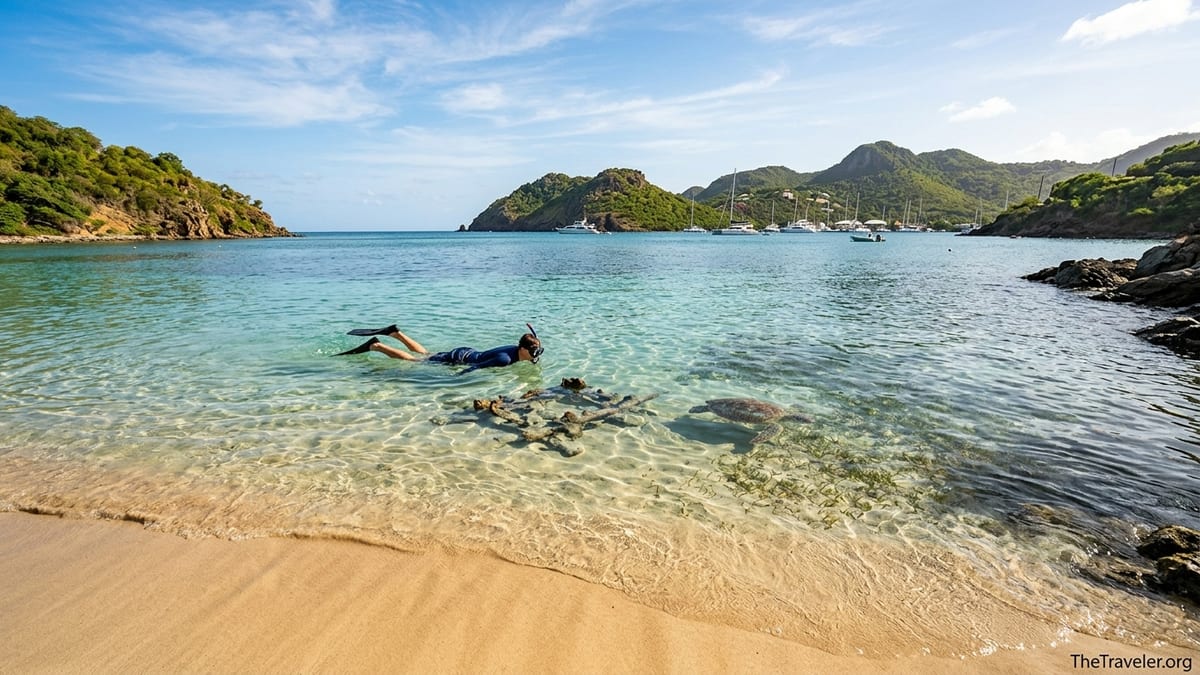
Galleon Beach at a Glance: What to Expect
From a snorkeler’s perspective, Galleon Beach is best thought of as a friendly, easy-access bay rather than a wild coral garden. It sits inside Freeman’s Bay at the mouth of English Harbour, with hills and headlands providing shelter from prevailing swell. That protection usually keeps the water relatively calm and makes it straightforward to swim out from the sand, but the same harbour geography can leave visibility affected by recent rain, boat traffic and fine sediment held in the water. On a good day you can expect clear, inviting conditions; on others the water may look slightly milky compared with offshore reefs.
The headline features here are a near-shore reef that starts just off the right-hand side of the beach when looking out to sea, and a small, shallow wreck that gathers shoals of reef fish. The wreck is commonly called the Andes, although the historical Andes lies deeper off nearby Pillars of Hercules, and what most casual snorkelers see from Galleon is likely scattered wreckage rather than a single intact hull. Either way, it creates structure that attracts fish and offers something more to explore than bare sand. For many visitors, particularly families and first-time snorkelers, that combination of gentle entry, reef edge and wreck makes Galleon feel like a manageable adventure rather than an extreme outing.
It is also worth setting expectations about marine life. Local reports and operator accounts describe regular sightings of green and hawksbill turtles cruising the bay and feeding around the seagrass and reef, along with a resident stingray that patrols the sandy bottom. Shoals of sergeant majors, brown chromis and other small reef fish are common around the rocks and wreck pieces. That said, wildlife cannot be guaranteed. Sightings vary with time of day, season, the number of people in the water and simple luck. Coming here with a sense of possibility rather than certainty tends to lead to happier snorkel stories.
Layout and Entry: From Sand Shelf to Reef Edge
Walking along Galleon Beach, you will notice different zones that matter for how you enter the water. Toward the central part of the bay there are wide swathes of soft sand and a gently shelving bottom. Around the large anchor that serves as a landmark near the middle of the beach, and along toward the section fronting The Inn at English Harbour, the seabed is mostly sand with scattered patches of seagrass. These areas are ideal for slipping in with minimal fuss, especially for newer snorkelers who prefer to stand in waist-deep water to adjust masks and fins before swimming out.
As you move toward the margins of the bay and closer to the reef, the character changes. The bottom becomes patchier, with more rock, coral heads and occasional sea urchins tucked among crevices. This is where the underwater scenery gets more interesting, but it is also where you need to watch your footing. To protect both yourself and the reef, it is best to float rather than stand once you are in water deep enough to swim. If you must put your feet down, look carefully for dark, spiky shapes that may indicate urchins, and avoid stepping on any coral formations.
Most independent snorkelers swim out from the sandy section and then angle toward the right-hand side of the bay when facing the open sea, where the reef thickens and the wreck fragments lie in relatively shallow water. The distances are modest for anyone comfortable in the ocean, but currents and wind chop can occasionally pick up if the weather changes. Before you set off, take a moment to note any moored boats, the location of the marked fairway into Nelson’s Dockyard and the general pattern of traffic so you can stay clear of moving vessels.
Marine Life: Reef Fish, Turtles and a Resident Ray
Galleon’s reef is a low-profile fringing system rather than towering coral walls. Expect patches of hard and soft corals, gorgonians waving in the current and rocky outcrops where sponges and algae have taken hold. Around these structures you are likely to find shoals of small reef fish grazing or darting among the crevices. Visitors often report sergeant majors, blue tang, wrasse and other common Caribbean species, along with occasional larger visitors such as bar jacks or trumpetfish hunting along the edge of the reef.
One of the big draws here is the prospect of turtle encounters. Guides and long-time local operators describe a couple of turtles that are particularly faithful to the bay, often seen gliding between the seagrass beds and the rocky sections of reef. Sightings are frequent enough that some guided trips from Galleon use turtles as a headline wildlife focus, but even in a spot with a strong track record, every snorkel is different. Cloudier water, a slightly busier day of boat activity or simply the animals deciding to feed elsewhere for a few hours can all reduce your chances on any single visit.
An added bonus is the presence of a resident stingray that is known to cruise the sandy patches near the reef. Rays often spend long periods partially buried, so you may need a keen eye to spot the outline against the sand. As with all marine life, observe from a respectful distance, avoid chasing or touching and let the animal control the interaction. Calm, slow movements and a horizontal swimming position are more likely to result in relaxed behaviour and memorable encounters than fast kicking or diving directly toward wildlife.
Access and Tour Options from Galleon Beach
For confident swimmers, the simplest way to experience Galleon’s reef and wreck is to walk in from the beach and snorkel independently. There is no requirement to join a boat tour to reach the main features, and many visitors staying in English Harbour or nearby accommodations treat Galleon as their everyday swim and snorkel spot. If you choose this route, you will need to bring your own gear or arrange it through your hotel, as on-the-beach rentals are limited and often linked to specific guided excursions rather than casual hourly hire.
If you would prefer to explore with a local guide, several operators base their activities directly at Galleon Beach or use it as a starting point. These include sea-scooter snorkeling experiences and more traditional guided snorkel outings that focus on turtles and the nearby reef and wreck. Current offerings may feature powered sea scooters to help you cover ground with less effort, small-group turtle-focused excursions or private charters that tailor the route and pace to your party. Exact products, schedules and group sizes change over time, so it is important to check what is currently running, along with age limits, swim requirements and safety briefings, before you book.
Galleon Beach is also commonly paired with nearby attractions on south-coast boat trips. Some excursions combine time in the bay with a scenic run along the coast to the Pillars of Hercules, a dramatic rock formation at the mouth of English Harbour where, on suitable days, guides may offer additional snorkeling in clearer, more oceanic water. Other trips head farther along the coast to less sheltered reefs, giving you a taste of both the calm bay and more open-water coral environments. For cruise visitors coming into St John’s, it is possible to join shore excursions that include transfers across the island to Galleon Beach and allow a structured window for snorkeling before returning to the ship.
Conditions, Safety and Best Time to Snorkel
Because Galleon Beach sits inside a harbour system that also serves as a major yachting hub, conditions here are shaped by both weather and maritime activity. On many days, particularly outside of strong swell events, the water stays relatively flat and inviting, with visibility that is good enough to enjoy the reef and fish from the surface. After heavy rain, runoff from the surrounding hills can add a brownish tinge near shore that takes time to clear. Likewise, a spell of stronger wind or unusual swell wrapping into the bay can reduce clarity and make surface conditions choppier, even if the beach still looks sheltered at first glance.
Early mornings often offer the calmest and clearest water, before the heat of the day builds and before most boats and day-trippers arrive. Starting soon after sunrise also reduces the risk of afternoon showers that can pass through during some seasons. Whenever you go, it is wise to ask a local operator, lifeguard if present or your accommodation for up-to-date insight on recent conditions, including any temporary advisories about anchorage zones, moorings or swimmer areas close to the reef.
One firm rule is to avoid snorkeling in or across the marked fairway that connects English Harbour and Nelson’s Dockyard with the open sea. This channel is used by yachts, tenders and service boats whose operators may not expect swimmers outside designated areas. Stay close to the natural arcs of the bay, give anchored and moored vessels a wide berth and surface regularly to check your surroundings. A brightly coloured float, tow buoy or snorkel vest increases your visibility to boaters and is strongly recommended anywhere that shares space with marine traffic.
Gear, Comfort and Confidence Levels
Galleon Beach rewards those who come prepared with their own mask, snorkel and fins. While some guided tours based here supply equipment as part of the package, casual rentals directly on the sand are limited and may not be available every day or outside of tour hours. Bringing gear from home or arranging it through your hotel ensures you can make the most of good conditions whenever they appear, without needing to match your plans to a particular operator’s schedule.
Fins are not absolutely essential in the very shallow, sandy shallows, but they become helpful once you reach the reef and wreck area, particularly if there is any breeze or residual swell. A lightweight rash guard or long-sleeved swim top provides sun protection without the need for constant sunscreen reapplication, while any products you do use should be labelled reef-safe to minimise chemical impact on corals and other marine life. Consider packing a compact dry bag to keep valuables together if you are entering the water directly from the beach without someone watching your belongings.
For less confident swimmers, Galleon’s gently sloping entry and proximity to shore can feel reassuring. You can stay within your depth over sand and gradually venture farther as your comfort grows, always with an easy retreat back to the beach. At the same time, standard open-water caution still applies. Avoid snorkeling alone, remain within your limits, and consider joining a guided experience that supplies flotation vests or noodles along with a watchful guide who can help manage group spacing and pace. Parents should keep children within arm’s reach in deeper water, even if the bay appears calm.
How Galleon Beach Compares to Other Antigua Snorkeling Spots
Within Antigua, snorkeling experiences vary significantly between sheltered bays, surf-facing beaches and offshore reefs accessed by boat. Galleon Beach sits toward the accessible, calm end of that spectrum. Compared with Pigeon Point, another south-coast beach near English Harbour, Galleon generally offers a more substantial reef and clearer water for snorkelers, particularly along its outer edges, while Pigeon Point is often treated primarily as a relaxed swim and hangout beach that can have some fish life near rocks but less extensive coral.
When you look at island-wide favourites such as Cades Reef and Long Bay, the trade-offs become clearer. Cades Reef is a boat-only offshore system where coral structure, diversity of fish and water clarity are often superior to what you will see from shore at Galleon, especially on days with light wind and good sunlight. Long Bay on the east coast, meanwhile, fronts a barrier reef that can deliver vibrant coral and fish life relatively close to a popular resort beach, but it is more exposed to Atlantic swell and wind, so conditions there can be rougher for inexperienced snorkelers.
A useful way to think about the options is in terms of convenience, coral richness and exposure. Galleon scores highly on convenience and shelter, particularly if you are already based in or near English Harbour or can reach it easily from a cruise ship or day tour. Offshore sites like Cades tend to win on coral drama and sometimes visibility, at the cost of needing to commit to a scheduled boat excursion and accept more open-sea motion. If your time in Antigua allows, many visitors enjoy combining a straightforward, low-effort snorkel at Galleon with at least one boat trip to a more remote reef to experience both sides of the island’s underwater character.
When Galleon Beach Is the Right Snorkel Choice
Putting all of this together, Galleon Beach is an excellent choice if you value ease and flexibility over chasing the very best coral Antigua has to offer. It works especially well for travellers staying in the English Harbour area who can stroll or take a short ride down to the sand whenever conditions look inviting. It is also convenient for cruise passengers and day visitors whose time window is limited but who still want a realistic chance of seeing turtles and reef fish without spending most of the day on transfers and boat rides.
On the other hand, dedicated snorkel enthusiasts whose priority is extensive coral gardens, larger fish and maximum visibility will usually want to include at least one dedicated boat excursion to offshore reefs or to selected Pillars of Hercules sites, conditions permitting. In that scenario, think of Galleon as a complementary spot: a calm bay for relaxed swims, sunset dips and easy-follow turtle searches between more ambitious outings further offshore.
Whichever camp you fall into, arriving at Galleon Beach with clear expectations makes a real difference. Bring your own gear if you can, pick your moment based on weather and sea state, stay well clear of the harbour fairway and treat any turtle or stingray encounters as a privilege rather than a promise. In return, this sheltered south-coast bay offers a gentle, engaging window into Antigua’s underwater world that fits comfortably into an English Harbour day and leaves many visitors keen to see what the rest of the island’s reefs can offer.