


Planning South Korea for 2027 means budgeting in a landscape of higher palace tickets, adjusted KTX fares and busy post-pandemic demand. This guide uses 2026 price evidence and currently published 2027 rules to sketch what one week in Seoul, Busan or a smart combination of both will really cost, with numbers grounded in concrete examples rather than guesswork.
Get the latest updates straight to your inbox!
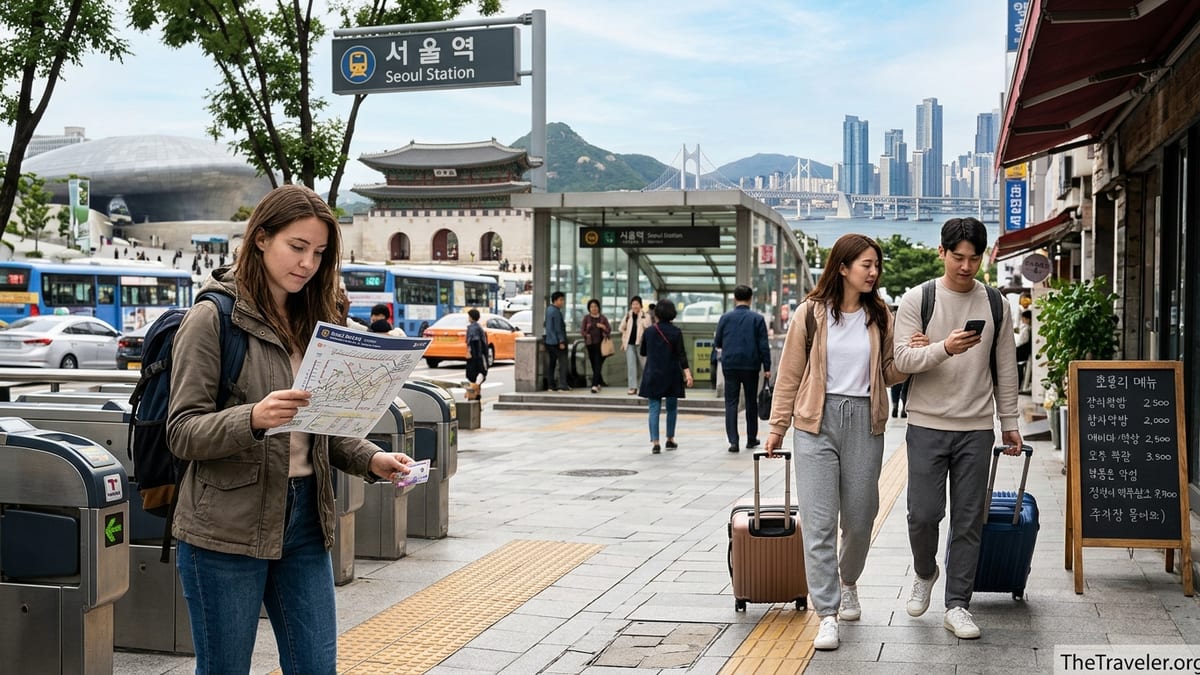
Seven day budget ranges in Korean won for 2027
Based on late 2026 price data and accommodation quotes for March and October 2027 weekday and weekend dates, a realistic seven day budget for Seoul or Busan can be framed in three bands. For a solo budget backpacker willing to stay in mixed dorms, lean on convenience store meals and base level attractions, a week in one city generally falls around 420,000 to 600,000 won, depending on season and how often longer day trips or nightlife are added. That range assumes hostel beds in the 22,000 to 38,000 won per night bracket and transit mostly by subway and buses using a transport card.
For a midrange couple sharing clean three star style rooms and eating one sit down meal most days, a seven day stay in either city typically sits near 1,000,000 to 1,500,000 won in total for two. That incorporates hotel quotes in 2026 and early 2027 around 90,000 to 160,000 won per night on weeknights in central districts, a mix of casual Korean restaurants, cafes and some paid city attractions. Splitting fixed costs like lodging and airport transfers between two travelers noticeably improves comfort at roughly the same per person cost as a solo backpacker.
Travelers looking for comfortable four star hotels, KTX between Seoul and Busan, prebooked tours and observatory decks at Lotte World Tower or N Seoul Tower should plan on roughly 1,300,000 to 2,000,000 won per person for a seven day holiday that includes both cities. For two people sharing a quality room in areas such as Myeongdong or Haeundae, this often works out near 2,400,000 to 3,200,000 won in total, with fluctuation driven by cherry blossom and autumn foliage weekends when nightly hotel rates climb sharply.
Families with two adults and one or two school age children will find that larger rooms and attraction tickets push weekly spending into the 2,000,000 to 3,500,000 won range for mainstream city sightseeing. Bigger family rooms around Seoul Station, Hongdae or Seomyeon in Busan often price around 160,000 to 260,000 won per night in 2026 searches, and while subway fares and some attraction discounts ease the child cost burden, food and occasional taxi use add up quickly, especially during high summer and national holidays.
Seoul vs Busan accommodation: areas, prices and why location matters
Accommodation prices vary more between neighborhoods and dates than between Seoul and Busan themselves. In Seoul, 2026 and early 2027 weekday quotes for basic but reputable hotels near Myeongdong Station cluster around 110,000 to 180,000 won for standard double rooms, with weekend and cherry blossom periods in late March and early April pushing popular names towards or above 200,000 won. Myeongdong commands these prices because it offers direct subway access to lines 2 and 4, easy airport limousine buses, late night food streets and walking access to Namsan trails.
Hongdae, centered on Hongik University Station, often shows slightly cheaper midrange options on weeknights, around 90,000 to 150,000 won for doubles outside festival weekends, reflective of its youthful but still very connected atmosphere. Jongno, including areas around Jonggak and Anguk Stations, mixes traditional hanok guesthouses and modern hotels; room prices span a wide range, from small hanok stays below 120,000 won on weekdays in low season to 200,000 won or more near peak foliage when people want walking access to Bukchon Hanok Village, Gyeongbokgung Palace and traditional markets. Gangnam across the river usually prices higher for equivalent quality, with business oriented four star hotels often quoting 180,000 to 260,000 won on weekdays and more during trade shows or K pop events, balanced by excellent subway coverage and airport bus connections.
In Busan, Seomyeon in the center of the city is both a transport hub and a value area. Weekday prices in 2026 and early 2027 searches frequently show modern, compact doubles in the 70,000 to 130,000 won range, making it cheaper than prime Seoul equivalents while still interchanging lines 1 and 2 of the subway. Nampo around Jagalchi Market and Yongdusan Park tends to sit slightly higher, especially for harbor view rooms, but travelers can still find midrange doubles under 130,000 won on many dates outside peak summer. Haeundae and Gwangalli, Busan’s main beach districts, exhibit the strongest seasonal swings: a sea view room that might quote at 130,000 to 200,000 won on a March weekday can exceed 250,000 won or more on a Saturday in late July, while budget motels a few blocks inland still fill up.
Choosing a slightly more expensive room in a well connected district often saves money and time overall. For example, a traveler arriving at Incheon International Airport who books a cheaper guesthouse far east of Seoul on a line requiring multiple transfers will pay repeated extra subway distance surcharges and spend more than an hour each way reaching central attractions. By contrast, paying 20,000 to 40,000 won more per night to stay near Seoul Station, Myeongdong or Hongdae can strip out several daily transfers, shorten airport rail journeys and make late night returns by taxi under 15,000 won feasible, which matters in a city where base taxi fares start near 4,800 won with late evening surcharges.
Transport costs in Seoul and Busan, including passes and airport links
Seoul’s subway base fare using a transport card such as T money is currently around 1,550 won for adults within 10 kilometers, according to late 2026 official fare tables, with an extra 100 won added in stages as distance increases. Paying cash or a single use paper ticket costs about 100 won more per ride. The same T money card can be tapped on most city buses, with integrated transfer discounts when changing between subway and bus within a time limit, ensuring that most inner city journeys cost between about 1,550 and 2,150 won when not traveling extreme distances. Seoul also introduced a flat fare “Climate Card” in 2026 for unlimited subway and bus use, priced in the tens of thousands of won per month rather than per day, which is useful mainly for long stays rather than one week visits.
In Busan, metro fares are similar but not identical. Late 2026 guidance shows adult card fares starting around 1,400 to 1,500 won for short hops, with incremental increases based on distance. Busan’s Hanaro Card and T money both work on subways and buses, and many travelers tap the same card purchased in Seoul. The practical result is that a visitor budgeting around 4,000 to 6,000 won per day per person for urban rail and bus travel in either city will cover most sightseeing days, excluding airport links and taxis. Those staying further from central hubs or combining evening river cruises, shopping and late meals may spend closer to 8,000 to 10,000 won daily on city transport.
Airport transfers represent a noticeable one off cost at the beginning and end of a trip. From Incheon International Airport to central Seoul, the all stops airport railroad train typically costs under 5,000 won to Seoul Station, taking about an hour, while the faster express service charges roughly double that. Several limousine bus routes to districts such as Gangnam and Jamsil generally price in the low teens of thousands of won for adults, with discounts for children. In Busan, travelers arriving at Gimhae International Airport can take the light rail line that connects to the metro; a card fare to Seomyeon or Nampo is usually in the low 2,000 won range, while taxis into central areas commonly cost between 15,000 and 25,000 won depending on distance and traffic.
Daily or multiday transport passes exist but are less universally advantageous than in some European capitals. Seoul sells versions of a day pass that offer unlimited subway rides within the city at a flat price in the several thousand won range, but travelers staying within a few neighborhoods often find that tapping with T money results in lower daily totals than the pass cost. Over one week, a visitor who averages four to six subway or bus rides per day might spend 60,000 to 80,000 won on local transport in Seoul and Busan combined, compared to more than 120,000 won if they replicated similar distances by taxi except for very short trips.
Seoul to Busan: KTX, express buses, flights and transfer costs
KTX remains the most efficient way to travel between Seoul Station and Busan Station for most visitors in 2027. After a fare adjustment by Korail in September 2026, recent sources note that a standard class adult return ticket for Seoul to Busan costs around 108,800 won at full fare, roughly 54,000 won one way, with travel times near two and a half hours. Online ticket sales open about two months before travel, usually at 7:00 in the morning Korean time, and popular weekend and holiday trains can sell out of favored departure times, although alternative slots typically remain available.
Express buses from Seoul’s bus terminals to Busan’s Central or Sasang terminals still provide a cheaper but slower alternative, commonly taking around four to five hours. 2026 schedules show standard adult fares often in the 25,000 to 35,000 won one way range, with a small premium for premium or business class buses that provide wider seats. Travelers must also factor in the cost and time of reaching and leaving the terminals: local subway or bus rides at 1,550 to 2,000 won at each end, and in some cases short taxi hops if departing early or late. Over a door to door trip, a budget minded traveler might pay roughly 30,000 to 40,000 won one way including connections.
Domestic flights connect Seoul’s Gimpo Airport with Busan’s Gimhae Airport in about an hour of air time, and 2026 data points suggest promotional one way fares can drop under the equivalent of 40,000 won for no frills tickets, while regular fares often run between 50,000 and 80,000 won. Once airport rail or light rail transfers at each end are included, it is common for a one way plane journey to add 10,000 to 20,000 won per person in local transport costs, especially if travelers choose taxis due to baggage or early departures. Many low cost carriers also charge extra for checked bags or seat selection, which narrows or eliminates the cost advantage relative to KTX unless a very low promotional fare is secured.
For two people traveling with luggage from a hotel in Myeongdong to a hotel in Haeundae, KTX usually balances cost and comfort most effectively. The pair might spend around 3,000 to 4,000 won on the Seoul subway to reach Seoul Station, 108,800 won for the return KTX tickets in standard class, another 3,000 to 4,000 won to connect by Busan metro to Haeundae, and perhaps a short taxi if arriving late at night. By contrast, a cheap flight with a headline fare of 45,000 won one way that requires paid baggage, a 15,000 to 20,000 won taxi from Haeundae to Gimhae on departure and an airport rail or taxi combination in Seoul can easily exceed the total KTX cost once all transfers and add ons are included.
Food and drink: from convenience stores to barbecue and cafes
Food spending in Seoul and Busan is where budgets diverge most sharply. Convenience stores such as GS25, CU and 7 Eleven commonly sell triangle kimbap for around 1,500 to 2,000 won, cup noodles for similar amounts, and simple lunchbox sets in the 4,000 to 7,000 won range, making it possible to keep a basic meal under 6,000 won. Street snacks in popular areas like Myeongdong or Nampo, including tteokbokki, hotteok or skewers, often cost 3,000 to 6,000 won per item as of 2026, so a light grazing style dinner stays around 10,000 to 15,000 won per person.
Sit down traditional Korean restaurants serving dishes such as kimchi jjigae, sundubu, doenjang jjigae or simple grilled fish frequently price main dishes around 8,000 to 12,000 won in local neighborhoods, with central tourist strips running a little higher. Korean barbecue is more expensive because meat is sold by portion weight: recent menus in Seoul and Busan show pork belly sets in the 13,000 to 18,000 won per person bracket, and beef significantly higher. Sharing side dishes and ordering moderate meat portions allows a barbecue meal with one drink to come in around 20,000 to 30,000 won per person, but it can easily rise above 40,000 won with premium cuts and alcohol.
Cafes are an important part of urban life in both cities. Chain coffee shops like Starbucks, A Twosome Place and local brands usually charge around 4,500 to 6,500 won for an Americano or latte as of 2026, with specialty drinks running higher. Dessert cafes offering bingsu, cakes or themed experiences often charge 10,000 won or more for shareable items. Tourist oriented venues, especially those with skyline views or in busy shopping areas, add a premium; a coffee at a rooftop cafe overlooking Gwangalli Bridge or Namsan can be closer to 8,000 won. Budgeting 25,000 to 35,000 won per day for food is realistic for frugal travelers, while midrange visitors who enjoy one restaurant meal, one casual cafe visit and a takeaway snack should expect around 40,000 to 60,000 won daily.
Alcohol prices also matter in evening plans. Bottled beer or soju in convenience stores often runs 2,000 to 4,000 won, while bars in Itaewon, Hongdae or Haeundae commonly charge 6,000 to 9,000 won for domestic beers and more for cocktails. Club entry fees for major venues can reach 20,000 to 30,000 won or include a first drink. Travelers looking to keep costs contained might limit bar nights to one or two evenings and lean on convenience store drinks enjoyed at public riverside spaces where appropriate and legal.
Attractions, free highlights and seasonal price swings
Several headline attractions in Seoul and Busan carry fixed ticket costs that are easy to build into a weekly budget. N Seoul Tower’s observatory ticket, based on 2026 checks of the official operator and major resellers, sits around 29,000 won for an adult, with combination packages including the cable car or fast track options priced higher. Lotte World Tower’s Seoul Sky observatory is similarly positioned, with late 2026 adult tickets around 33,000 won and a premium fast pass tier over 60,000 won. These prices may be adjusted modestly by 2027 but provide a realistic benchmark for planning.
Royal palaces are more affordable but subject to change. As of November 2026, Gyeongbokgung Palace still charges a relatively modest adult admission fee verified against official palace information, yet Korea’s heritage authorities have announced that admission fees for major royal palaces and Joseon royal tombs will rise from January 1, 2027, with the precise new amounts to be confirmed. Travelers visiting after the increase should allow some extra room, perhaps an additional few thousand won per palace ticket compared with 2026 levels, and consider combined tickets if offered. Other Seoul attractions such as museums run by the city or national government often remain free or low cost.
Busan’s main draws lean more heavily on free or low cost outdoor experiences. Access to Haeundae Beach, Gwangalli Beach and Songdo Beach is free, with optional paid extras like beach chair rentals, seasonal water sports, yacht tours from Haeundae and cable car rides at Songdo adding 15,000 to 30,000 won or more per person depending on the activity. Gamcheon Culture Village can be explored for free on foot, with occasional small fees for specific viewpoints or museum style spaces. Evening sightseeing such as Busan Harbor night cruises generally costs in the 20,000 to 30,000 won range per adult.
Accommodation and long distance travel prices move noticeably with the seasons. During cherry blossom weeks in late March and early April, particularly in districts with famous viewing spots like Yeouido in Seoul or along the Oncheoncheon stream in Busan, hotel rates often rise 20 to 50 percent for Friday and Saturday nights compared with early March weekdays, based on 2026 booking patterns. The late July and early August school vacation period can produce similar or greater peaks in beach districts, and KTX tickets on peak days may see discounted quotas disappear quickly even though the base fare remains constant. Autumn foliage from late October into early November is another busy window, especially near palace complexes and mountains, though sometimes slightly less intense than high summer at the beaches.
Visas, K ETA in 2027 and often overlooked expenses
Visa and electronic travel authorization costs sit outside daily spending but can affect total trip price. Through December 31, 2026, many nationalities, including travelers from the United States and several European countries, benefit from a temporary exemption from the Korean Electronic Travel Authorization requirement according to official notices. That exemption is scheduled to end on December 31, 2026, and while South Korea has extended it before, as of mid November 2026 there has been no confirmed announcement regarding an extension into 2027. Official foreign affairs and K ETA sources also note more generally that travelers arriving in South Korea from January 1, 2027 should expect to need K ETA approval before boarding unless another visa scheme applies.
The K ETA fee itself has historically been modest, previously set around 10,000 won, though the exact 2027 amount could change and should be checked directly at the time of application. Because the authorization remains valid for multiple entries over a period such as two years, it functions as a spread out cost for repeat visitors, but for a one week first time trip it is an upfront item similar in scale to one midrange restaurant meal. Other border related expenses include any biometric passport fees and potential transit costs if your itinerary uses multiple airports, which should be included when comparing the overall cost of flying into Seoul and out of Busan or vice versa.
Several smaller but common costs can surprise first time visitors. Luggage storage at Seoul Station or Busan Station coin lockers often runs around 3,000 to 5,000 won for several hours or up to a day depending on locker size, and private luggage storage shops near Myeongdong or Hongdae charge more but accept very large suitcases. Mobile data can be arranged via physical SIM cards, e SIMs or portable Wi Fi routers; weekly data focused plans with major Korean providers or resellers often fall in the 20,000 to 40,000 won range as of 2026, with airport counters sometimes pricing higher than online pre bookings.
Attractions using timed reservations or private tours, such as specialty palace night openings, guided food tours in Jongno or Busan’s Jagalchi Market, or full day excursions to nearby cities, can add another 60,000 to 150,000 won per person per activity. South Korea does not impose a culture of mandatory tipping, but informal rounding up or small gratuities for exceptional private services are appreciated and add modest amounts to budgets. Service charges are usually incorporated into restaurant and hotel menu prices rather than added as a visible line item.
Three realistic seven day itineraries and what they cost
A Seoul focused budget week for a solo traveler might involve seven nights in a hostel dorm in Hongdae at roughly 28,000 won per night for low season midweek dates in 2026 and early 2027 searches, totaling about 196,000 won. Daily local transport at around 6,000 won across subways and buses brings total city transit to roughly 42,000 won, while conservative food spending of about 30,000 won per day, mixing convenience store breakfasts, casual lunches and occasional simple restaurant dinners, reaches 210,000 won. Adding three paid attractions such as Gyeongbokgung Palace, N Seoul Tower observatory and Lotte World Tower’s Seoul Sky together for approximately 80,000 to 90,000 won, plus airport rail on arrival and departure around 10,000 to 20,000 won in total, yields an overall budget around 540,000 to 560,000 won for the week, excluding flights to Korea and any K ETA fee.
A balanced four night Seoul and three night Busan midrange trip for two people sharing might start with a midscale hotel in Myeongdong at 140,000 won per night, then a comparable hotel in Seomyeon for around 110,000 won per night on non peak weekdays. Lodging would then sum to roughly 770,000 won for seven nights. Two standard KTX return tickets between Seoul and Busan at about 108,800 won each come to 217,600 won, plus perhaps 30,000 to 40,000 won in subways and buses for station transfers in both cities. If the couple budgets 50,000 to 60,000 won per day for food, mixing barbecue one night, cafe culture afternoons and lighter meals on some days, total food costs for the week fall near 350,000 to 420,000 won.
Adding several key attractions, such as one palace day, an observatory in Seoul, a harbor night cruise in Busan and a few museum or cultural stops, could add 150,000 to 200,000 won for two. Airport transfers on both ends might add around 40,000 to 60,000 won depending on mode. All told, a realistic estimate for this midrange shared itinerary lands near 1,500,000 to 1,800,000 won for two, or roughly 750,000 to 900,000 won per person, before international flights and any K ETA costs.
A comfort oriented vacation that emphasizes central hotels, KTX and guided activities could see a solo traveler book four star properties in Jongno and Haeundae at a blended average of perhaps 210,000 won per night using 2026 weekend and shoulder season quotes. Seven nights would therefore cost about 1,470,000 won. Adding the standard KTX return at 108,800 won, a daily food budget of 70,000 to 90,000 won incorporating better restaurants and frequent cafes, and structured experiences such as two small group city tours and a full day excursion totaling perhaps 300,000 to 400,000 won in fees, pushes the overall tally into the 2,100,000 to 2,400,000 won zone before flights.
For a family of four following a similar comfort itinerary but sharing family rooms, costs shift. A larger family room in central Seoul and Busan might average around 240,000 won per night based on 2026 indications, totaling approximately 1,680,000 won for seven nights. Four KTX standard tickets add just over 200,000 won, but child discounts and occasional promotions can reduce that slightly. Family food budgets, depending on ages and appetites, often run 120,000 won or more per day, or about 840,000 won for the week, particularly if international restaurant meals and dessert stops are frequent. With attractions and airport transfers included, many families will see weekly on the ground expenses in the 2,800,000 to 3,300,000 won range before considering flights and any authorizations.
How seasonal prices and smart choices stretch your weekly budget
South Korea’s four season travel calendar strongly shapes how far your won will go. Visiting in late January or early February often yields some of the lowest hotel rates in both Seoul and Busan outside Lunar New Year itself, with midrange rooms sometimes quoted 20 to 30 percent under their spring and autumn peaks. At the same time, shorter daylight hours and cold temperatures might increase spending on indoor attractions and cafes. Shoulder weeks in early March and mid November can strike an effective balance between moderate prices and pleasant conditions, particularly when planning a split Seoul and Busan itinerary that favors city walking in Seoul and coastal views in Busan without summer crowds.
Cherry blossom season in late March and early April delivers some of the most photogenic scenes but also the sharpest weekend price jumps. Booking Seoul and Busan hotels several months in advance for those weeks can lock in better rates, yet even then, travelers should budget an extra 150,000 to 300,000 won over a seven day period compared with an identical itinerary in early March, primarily due to higher nightly room prices in popular areas like Yeouido, Seokchon Lake, Oncheoncheon and Dalmaji Hill. High summer in late July and early August carries similar or higher premiums in Haeundae and Gwangalli, combined with strong demand for KTX seats on Fridays and Sundays connecting the capital with the coast.
Autumn foliage from late October into mid November pushes demand around palaces, mountains and certain coastal walks, particularly at weekends, but the swings are sometimes slightly more moderate than cherry blossom or mid summer at the beaches. Winter outside holiday peaks can provide the best value combination of airfares and lodging for international visitors comfortable with colder weather. In every season, choosing a well connected district, using transport cards instead of taxis whenever practical, and mixing free attractions such as palace exteriors, urban hikes and beaches with a curated list of paid experiences is what allows a given weekly budget to stretch furthest in both Seoul and Busan.
For a solo traveler with around 500,000 to 600,000 won on the ground for a week, careful district choice, hostel accommodation and emphasis on free and low cost experiences will make Seoul or Busan rewarding, but not both with KTX unless some comforts are sacrificed. With 800,000 to 1,000,000 won, a visitor can comfortably combine both cities with at least one high profile observatory or similar paid activity. Budgets in the 1,300,000 to 2,000,000 won band per person, especially when shared between two people in midrange hotels, unlock flexible KTX travel, guided tours, quality dining and attractive districts at reasonable levels of comfort without worrying about every coffee.