


More news on this day
As an estimated 81.5 million Americans set out for Thanksgiving trips between November 24 and December 1, a new analysis of federal flight records highlights which airlines are historically most likely to run late over the holiday week, just as storms on both coasts and a major technology outage at Delta Air Lines threaten to compound delays in 2026.
Get the latest news straight to your inbox!
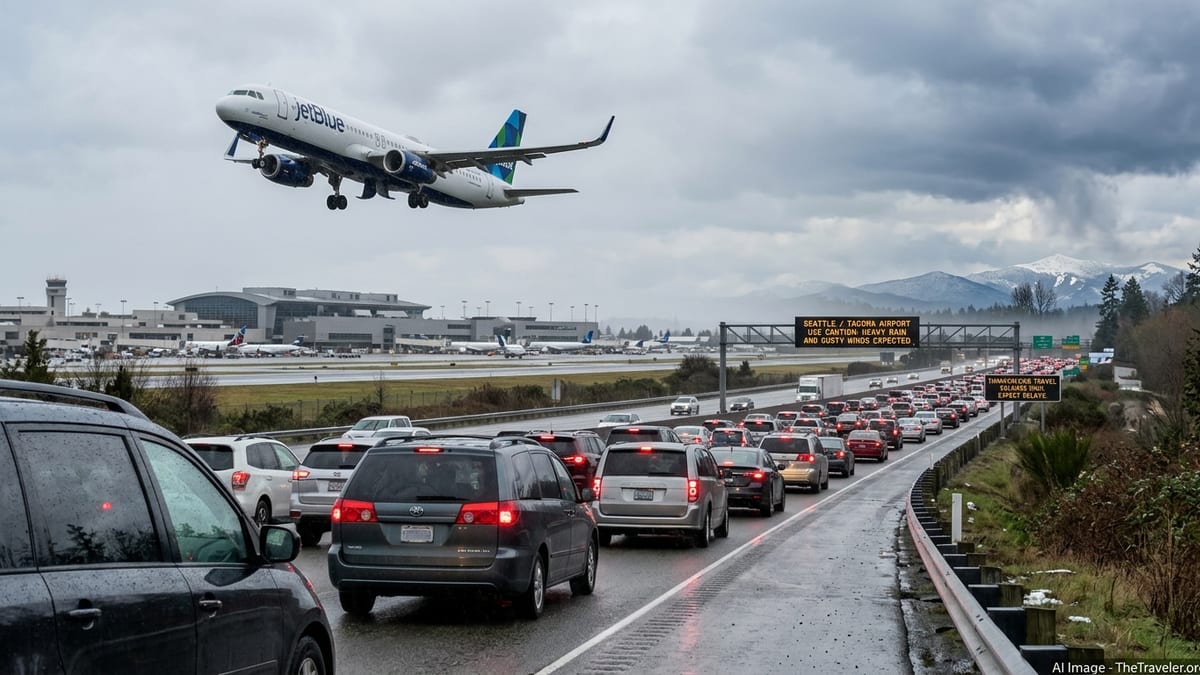
Holiday travel volume high as storms threaten both coasts
AAA projects that 81.5 million people in the United States will travel at least 50 miles from home for Thanksgiving this year, a marginal decrease of about 0.1% from the 81.6 million estimated in 2025. Most travelers are expected to drive, but air travel remains close to recent highs, with separate Federal Aviation Administration figures indicating more than 417,000 flights scheduled nationwide over the broader nine day period from November 23 through December 1.
Weather is emerging as the single biggest wild card for many of those journeys. Forecasts compiled by national outlets as of November 23 indicate that a strong storm in the Pacific Northwest could bring heavy rain, mountain snow and gusty winds that risk disrupting flights and road travel from northern California through Washington state early in the week. On the opposite coast, forecasters are tracking a developing system expected to bring periods of heavy rain, strong coastal winds and possible localized flooding to parts of the Mid Atlantic and Northeast on Thanksgiving Day itself.
Those twin systems raise the prospect of delays at several of the country’s busiest hubs. Major transcontinental flows that connect West Coast airports with New York, Boston and Washington are particularly vulnerable when storms are affecting both departure and arrival regions. Forecasters stress that the exact timing and intensity of specific impacts can still change, but airlines and airports have been urging passengers traveling between Tuesday, November 24, and Monday, November 30, to build in extra time and to pay close attention to evolving local forecasts that could trigger ground stops or flow control programs.
Study of 5 years of BTS data singles out JetBlue, Allegiant and Frontier
Against this backdrop of heavy demand and unsettled weather, newly updated research released by discount tracking site CouponFollow in November 2026 highlights how often different U.S. airlines ran late during recent Thanksgiving travel periods. The study analyzes on-time performance data from the U.S. Bureau of Transportation Statistics for every domestic flight operated by large reporting carriers in November and December from 2021 through 2025, focusing specifically on the nine day window spanning the Saturday before Thanksgiving through the Sunday after.
Across that multiyear period, JetBlue recorded the highest proportion of late arrivals over Thanksgiving week, with 28.2% of its flights reaching the gate at least 15 minutes behind schedule in the study window. Allegiant followed at 27.4% and Frontier at 26.5%, giving the three carriers the largest shares of delayed Thanksgiving arrivals among the airlines examined. The researchers defined delays using the BTS standard of arrivals later than 15 minutes beyond the published schedule, which is commonly used across the industry for on-time metrics.
At the other end of the spectrum, Delta Air Lines and Hawaiian Airlines had the lowest shares of late arrivals in the same dataset, at 13.7% and 14.8% respectively. Those figures mean that, averaged across the five holiday periods from 2021 to 2025, roughly one in seven Delta and Hawaiian flights arrived late over Thanksgiving week, compared with roughly one in four on JetBlue, Allegiant and Frontier. The study does not attempt to assign causes to individual delays, which can stem from weather, air traffic control programs, crew and aircraft positioning issues, mechanical checks and congestion on the ground, among other factors.
Methodology nuances and how 2026 compares so far
The underlying BTS database used for the CouponFollow analysis includes only reporting carriers above certain size thresholds and only domestic segments, which means some smaller operators and international-only routes are outside the scope of the statistics. In practice, however, the study covers the vast majority of flights taken by U.S. Thanksgiving travelers on large domestic airlines. The results are presented as aggregate percentages for the combined 2021 to 2025 holiday periods and are not broken out by individual year or by specific airport pairings.
Other recent analyses of the same federal records point to similar relative patterns, even when the exact percentages differ. A separate ranking published in mid November by Travel Bulletin, which scored major U.S. carriers on cancellations, delays, average delay length and mishandled bags during the November and December holiday periods from 2021 through 2025, likewise found that JetBlue had the highest share of late flights, followed by Allegiant and Frontier, while Delta sat toward the top for overall reliability with relatively few cancellations and a below average rate of mishandled baggage.
Those multiyear patterns are best viewed as indicators of historical performance rather than guarantees of what any one passenger will experience in 2026. This year’s Thanksgiving travel season has already been shaped by events that fall outside the 2021 to 2025 window, including a nationwide Federal Aviation Administration ground stop earlier in November that led to thousands of cancellations across multiple airlines and lingering crew and aircraft imbalances in the days that followed. Early season storms and any new technology issues can also cause specific days in 2026 to diverge from the historical averages captured in the study.
Delta’s pre-Thanksgiving outage complicates its strong on-time record
Delta’s historically strong Thanksgiving on-time performance has been tested by a significant technology problem just as the 2026 holiday rush began. On Sunday, November 22, the airline experienced an outage in one of its automated systems used to calculate aircraft weight and balance, a safety critical step in pre departure procedures. In response, Delta asked for a ground stop on its flights at Hartsfield-Jackson Atlanta International Airport, its largest hub, while technicians worked to restore the system and implement interim processes where necessary.
According to data compiled by aviation tracking service FlightAware and reported by multiple national outlets, the outage resulted in delays to more than 2,000 Delta flights on November 22, with some summaries citing more than 1,600 delayed Delta-operated segments nationwide depending on the time of measurement. Cancellations also rose as the day progressed, with estimates ranging from just over 270 to around 300 Delta flights canceled by the end of Sunday. Locally, more than 1,100 flights into or out of Atlanta were delayed and several dozen canceled while the ground stop and recovery efforts were underway.
The airline said on Sunday evening that the affected system had been restored and that its operation was stabilizing, but disruptions continued to spill into Monday, November 23, as aircraft and crews were repositioned. By Monday morning, FlightAware data cited by several travel and consumer publications showed around 300 additional delayed Delta flights and roughly 90 cancellations. The company has stated publicly that the safety of flights was not compromised and that the automated tool was taken offline while alternative procedures were put in place. Passengers affected by cancellations were offered refunds if they chose not to travel, and the airline worked with hotels and food providers in certain locations to assist those facing overnight disruptions.
What travelers can reasonably infer from the data this week
The combination of historical performance figures, active weather systems and the recent technology outage at a major carrier gives Thanksgiving travelers a better sense of where risks may lie, but it does not allow for precise predictions of individual journeys. The five year BTS-based study indicates that, over past holiday periods, flights operated by JetBlue, Allegiant and Frontier were statistically more likely to arrive late during Thanksgiving week than those operated by Delta or Hawaiian. However, the same federal data also show that all large U.S. airlines experience significant numbers of delays during peak travel windows, particularly when weather or air traffic constraints affect major hubs.
Travel experts analyzing the current forecasts note that the greatest weather related risks between Tuesday, November 24, and Monday, November 30, are concentrated in specific regions and timeframes rather than uniformly across the entire country. For example, early week storms in the Pacific Northwest could disrupt flights involving Seattle, Portland and surrounding airports, particularly on routes with tight aircraft turns. Later in the week, heavy rain and strong winds associated with a coastal system could slow operations at Northeast airports, affecting flights into and out of New York City, Boston, Philadelphia and Washington on Thanksgiving Day and the immediate overnight period.
The overarching implication is that travelers should treat the historical percentages as one factor in planning and expectation setting, alongside route choice, connection timing and the latest operational updates from airlines and airports. Flights scheduled early in the day, on routes less exposed to forecast weather and with longer connection buffers may be less vulnerable to cascading delays than tightly timed evening itineraries through busy hubs, regardless of carrier. Similarly, an airline with an overall strong record can still suffer a high impact disruption, as demonstrated by Delta’s experience on November 22.
Practical steps passengers can take over Thanksgiving week
With elevated demand, active weather systems and recent technology incidents in mind, transportation agencies and airlines are offering consistent practical advice for those still preparing to travel. The Transportation Security Administration is projecting that Sunday, November 29, could be one of the busiest air travel days of the year, with the potential to screen more than 3 million passengers nationwide based on recent statements. Both TSA and airport operators recommend that passengers arrive at least two hours before scheduled departure for domestic flights and at least three hours before international departures during the Thanksgiving period, allowing extra margin at hubs that are already reporting longer security lines.
Airlines and regulators are also stressing the importance of real time communication. Travelers are being urged to confirm that their contact details are correct in airline profiles and reservations so they can receive text or app notifications about gate changes, rolling delays and rebooking options. Given the experience of the FAA ground stop earlier in November and the Delta outage on November 22, aviation authorities have additionally advised passengers to verify flight status repeatedly on the day of travel using airline websites or apps and, when appropriate, airport specific information screens rather than relying on day old assumptions about schedules.
For those yet to book or still weighing itinerary choices, both historical performance and current forecasts may factor into decisions. Travelers connecting through hubs most exposed to this week’s storms or still working through operational recovery may consider building in longer connection times or opting for itineraries that avoid the tightest peaks, such as the busiest mid afternoon bank of departures on the Wednesday before Thanksgiving or the Sunday after. Whether flying with an airline that has historically run early or late over Thanksgiving week, the combination of preparation, schedule awareness and flexibility remains the most practical buffer against the delays that the data and the current conditions suggest are likely for at least some portion of the 81.5 million Americans on the move this holiday.