


More news on this day
Thanksgiving week 2026 is shaping up as one of the busiest and most complicated U.S. travel periods in years, with record numbers of scheduled flights, higher airfares, a recent series of aviation technology outages and coastal storms forecast to bring heavy rain, high winds and flooding on both coasts just as millions of people try to reach holiday gatherings.
Get the latest news straight to your inbox!
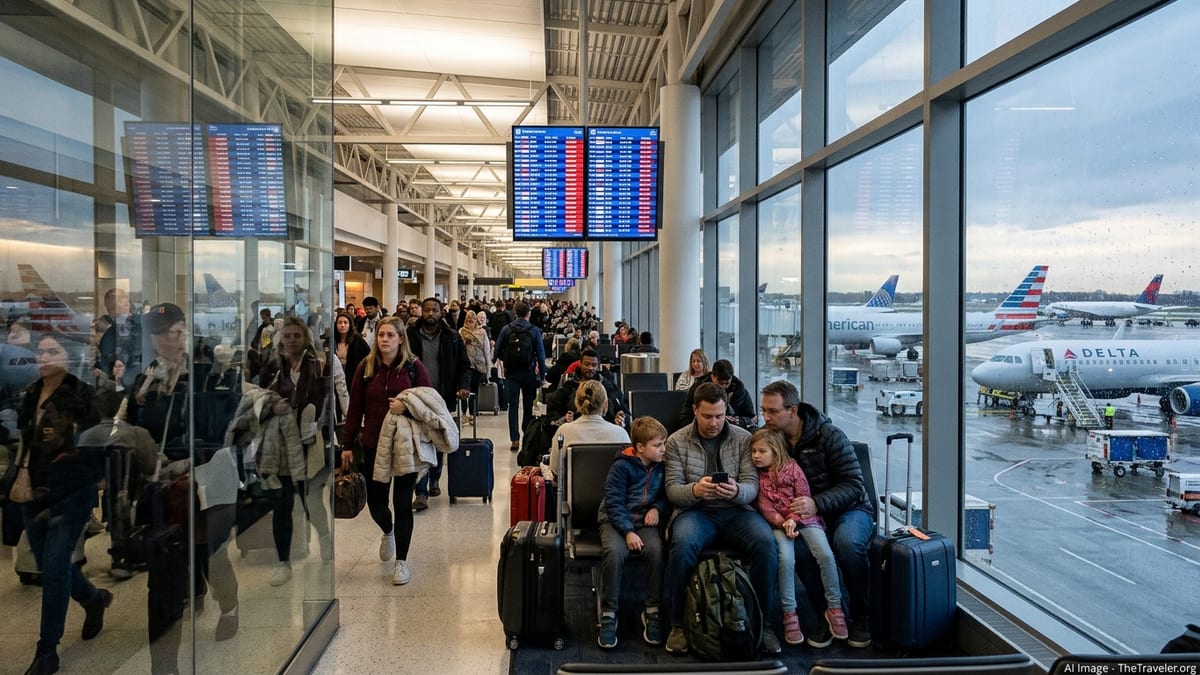
After historic FAA ground stop, airlines race to stabilize operations
This year’s Thanksgiving travel crunch comes less than two weeks after the Federal Aviation Administration ordered the longest nationwide ground stop in roughly a quarter century, halting most U.S. departures for more than four hours while engineers traced a failure in a key network router. The outage, linked to work replacing older copper wiring with fiber-optic cable, disrupted more than 18,000 flights and stranded passengers across the country before normal operations were restored.
United Airlines then experienced a separate, widespread system outage on November 16 that affected multiple applications used by flight crews and delayed departing flights at hubs including Chicago, Denver and San Francisco. The disruption lasted a little over an hour before United restored its systems and lifted a temporary pause on departures. Although flights already in the air were not affected, schedules for the rest of the day were knocked off balance by several hundred delays.
On November 22, Delta Air Lines suffered its own technology problem, when an automated system used to calculate aircraft weight and balance malfunctioned during one of the busiest Sundays before Thanksgiving. The airline resorted to manual workarounds until the system was restored later in the day, but not before more than 1,300 Delta flights were delayed across the United States and some services were cancelled. Delta said on Monday its operation had stabilized, yet the episode highlighted how dependent holiday travel has become on complex automation that can ripple through the network when it fails.
The U.S. Department of Transportation and the FAA say they have deployed special teams and newer forecasting tools ahead of the holiday to reduce knock-on disruption from weather and technology issues. Even so, officials are urging travelers to check flight status frequently, allow extra time at airports and be prepared for schedule changes on short notice if further system problems or severe weather emerge.
Record holiday flight volume meets tight capacity and higher fares
Federal forecasts indicate that U.S. skies over the Thanksgiving period will be busier than at any point since before the 2008 financial crisis. The FAA expects roughly 417,000 commercial flights between November 23 and December 1, a 16-year high for the nine-day holiday window, as airlines respond to sustained demand for family and leisure trips. The Transportation Security Administration, which screens passengers at U.S. airports, projects about 17.6 million travelers will pass through its checkpoints between November 24 and the Monday after Thanksgiving.
Major carriers have expanded schedules to capture demand but are not restoring capacity to pre-pandemic peaks in every market. American Airlines says it plans more than 8 million customers on about 85,000 flights from November 19 to December 1, the busiest Thanksgiving program in the company’s history. Delta and United are also operating aggressive holiday schedules focused on key hubs, while low-cost and ultra-low-cost carriers are concentrating on high-yield routes rather than thinly served secondary airports.
At the same time, airfares remain elevated compared with recent years. Data from travel booking platforms suggest average domestic roundtrip ticket prices for Thanksgiving departures booked by late October were more than one-third higher than at the same point last year, reflecting higher jet fuel costs and strong demand on constrained capacity. Some last-minute deals still exist on less popular days or from smaller airports, but travelers booking within days of departure on peak dates such as Wednesday, November 25, and Sunday, November 29, face particularly steep prices and limited seat availability.
Industry and federal statistics from last year show that nearly one in four U.S. flights in November and December 2025 arrived at least 15 minutes late, with late-arriving aircraft accounting for about 40 percent of total delay minutes and carrier-related factors such as maintenance and staffing contributing roughly one-third. While those historical figures do not guarantee a repeat this year, they illustrate how a tightly wound system can struggle once disruption begins. With 2026 volumes higher and the network still absorbing the effects of this month’s outages, passengers on full flights may have fewer rebooking options if things go wrong.
East Coast storm threatens parade winds and driving conditions
Beyond technology concerns, an evolving coastal storm is shaping up as the main weather story for Thanksgiving itself, especially along the Eastern Seaboard. Forecasters at the National Weather Service and private outlets expect a low-pressure system to intensify off the Southeast coast on Wednesday, November 25, then track northward along the Atlantic seaboard through Thursday. The system is forecast to bring periods of heavy rain, gusty onshore winds and coastal flooding from the Carolinas to New England between Wednesday evening and Friday morning.
Rain is expected to begin along parts of the Carolina coast by late Wednesday, with the heaviest precipitation and strongest winds reaching the Mid-Atlantic and New York City region on Thursday. Forecast models suggest sustained winds in New York could stay below the city’s legal limit for operating large parade balloons, which is 23 miles per hour with gusts under 35 miles per hour, but meteorologists warn that a relatively small change in the storm’s track or intensity could push gusts into a range that forces organizers to lower or ground balloons for safety. As of Tuesday morning, forecasters generally expected the heaviest rain to hold off in New York City until later in the day Thursday, which would favor completing the 100th Macy’s Thanksgiving Day Parade before the worst of the weather arrives, although confidence in that timing remains only moderate.
Elsewhere along the East Coast, the combination of strong onshore winds, already elevated tides associated with the full moon and the approaching storm is likely to cause moderate to locally major coastal flooding in low-lying areas, including parts of Charleston, South Carolina, and vulnerable sections of the Mid-Atlantic shoreline. Inland, heavy downpours could lead to ponding on roads and localized flash flooding, particularly where leaves continue to clog drains in urban corridors from the Carolinas to southern New England. Travelers driving to and from coastal destinations on Wednesday night, Thursday or early Friday should check updated forecasts and allow additional time for reduced visibility and potential detours around flooded stretches.
For aviation, crosswinds and low clouds associated with the storm may reduce arrival rates at busy Northeast hubs on Thanksgiving Day, especially during the afternoon and evening. Airlines and air traffic managers often respond to such conditions with ground delay programs that slow the flow of incoming flights to match available capacity, which can translate into multi-hour delays for passengers even in the absence of severe thunderstorms or snow. Because Thursday itself is less of a peak departure day than the Wednesday beforehand or the Sunday afterward, some disruption may be absorbed, but travelers with tight connections at East Coast hubs should be prepared for possible missed flights and schedule adjustments.
West Coast king tides, rain and mountain snow add regional risks
On the opposite side of the country, Pacific storms and some of the highest astronomical tides of the year are expected to complicate coastal and mountain travel from Washington state through Southern California. The National Weather Service has highlighted a period of king tides peaking Tuesday and Wednesday that could challenge or exceed water levels seen at many West Coast tide gauges in the past 40 years, especially when combined with locally strong surf and pockets of heavy rain.
Forecasters anticipate moderate to major coastal flooding in some low-lying neighborhoods and transportation corridors adjacent to bays, estuaries and river mouths, including roads leading to popular beaches and waterfront districts. In the San Francisco Bay Area, officials have warned of potential inundation of sections of the Embarcadero and other shoreline routes during the highest tides, with possible impacts on ferry terminals that typically see heavy holiday ridership. Farther north and south, communities near river mouths and coastal highways may experience short-term closures if water overtops seawalls or encroaches on lanes.
At the same time, a frontal system will bring rain into the Pacific Northwest early in the week, spreading south toward northern and central California by Wednesday. While most lowland areas are expected to see rain rather than snow, the higher elevations of the Cascades and Sierra Nevada could receive significant snowfall, creating hazardous driving conditions on key passes just as many residents set out or return from holiday trips. Chains or winter tires may be required at times, and travelers crossing mountain corridors are advised to monitor state transportation alerts for real-time restrictions and delays.
Major West Coast airports such as Seattle, Portland, San Francisco and Los Angeles typically handle rain and low clouds without severe disruption, but a combination of reduced runway capacity, strong winds and occasional convective showers can still slow operations. With terminals already busy, even modest weather-related delays may result in longer-than-usual lines at check-in, security and immigration for international arrivals, particularly on the Sunday and Monday after Thanksgiving.
Practical steps for travelers in a volatile Thanksgiving week
With multiple risk factors converging, from recent technology failures to coastal storms and near-record traffic volumes, officials and travel planners are emphasizing preparation and flexibility. The Transportation Security Administration continues to recommend that passengers arrive at least two hours before domestic flights and three hours before international departures, while also leaving extra time for parking or public transport to and from airports, which are expected to be busier than usual from Tuesday through the following Monday.
Given the recent series of system outages, passengers may benefit from using multiple channels to monitor their journeys, including airline mobile apps, text alerts and airport status boards, rather than relying on a single source of information. For those with tight connections, especially through East Coast and Midwest hubs where weather-related ground delay programs are common, considering longer planned layovers or earlier flights on the same day can reduce the risk of misconnecting if an initial segment runs late.
On the ground, drivers along both coasts should review updated weather forecasts from the National Weather Service before setting out, paying particular attention to coastal flooding advisories, wind alerts and mountain snow warnings. In flood-prone areas, flexible timing can help avoid travel during peak tide cycles when water levels are highest. For mountain routes, carrying appropriate winter equipment and emergency supplies remains important, even if conditions at departure appear mild.
For those yet to book travel, flying on Thanksgiving Day itself or on less popular days such as Friday, November 27, often provides slightly lower fares and lighter crowds compared with the traditional peaks of Wednesday and Sunday, although this year’s strong demand and weather pattern mean that no day is completely risk-free from disruption. Whatever the itinerary, travelers are being advised to build in contingency plans, such as knowing alternative flights on the same route, confirming hotel reservations with flexible cancellation policies and keeping essential items in carry-on bags in case checked luggage is delayed. With record holiday traffic, constrained capacity and unsettled weather, the most reliable strategy for reaching Thanksgiving gatherings in 2026 is to stay informed, allow extra time and be prepared to adjust plans as conditions evolve through the week.