


More news on this day
Thanksgiving week air travel is ramping up across Florida on Tuesday, November 24, 2026, with Tampa, Orlando, Miami and other major airports reporting generally normal operations so far, even as heavy holiday crowds, lingering effects from recent disruptions and a stormy Southeast forecast keep the risk of delays and cancellations elevated for travelers.
Get the latest news straight to your inbox!
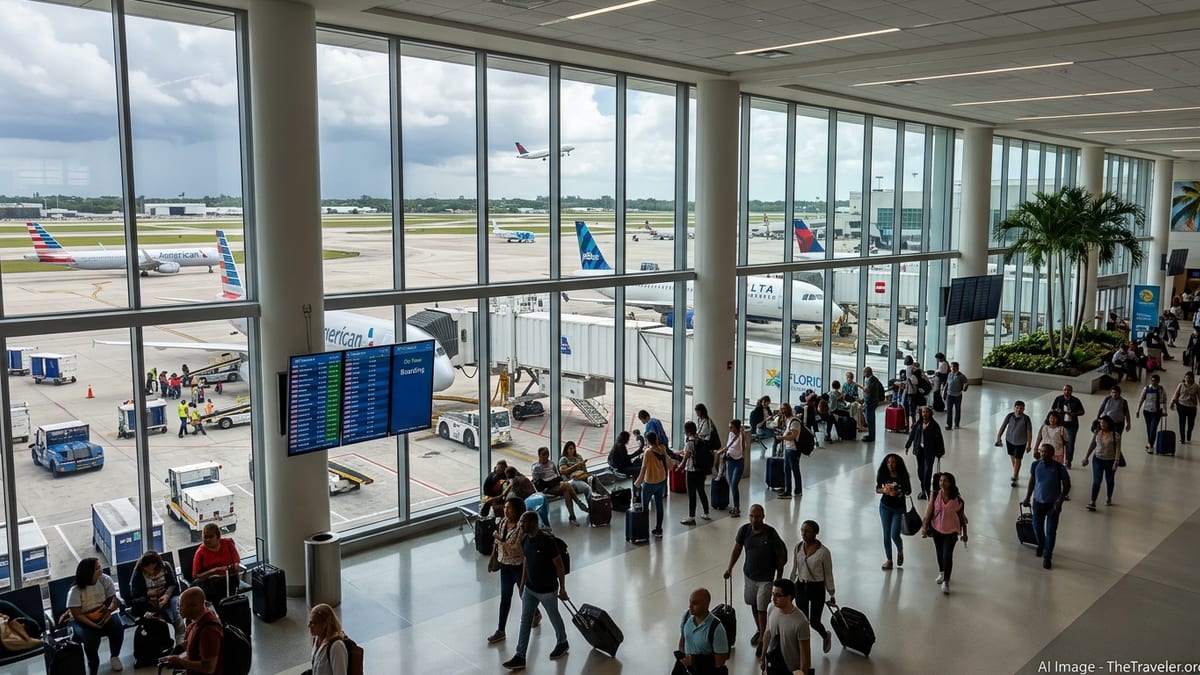
Busy but mostly normal operations at major Florida hubs
Live data from federal air traffic systems on the morning of November 24 indicate that Florida’s largest airports, including Tampa International, Orlando International and Miami International, are operating without airportwide ground stops or formal delay programs. General status pages for these airports show normal arrival and departure flows, meaning no broad restrictions have been imposed by air traffic control as of publication time. Individual flights, however, are still subject to carrier or route specific disruptions.
At Tampa International Airport, which expects one of its busiest weeks of the year, publicly available delay trackers drawing on Federal Aviation Administration feeds report no active ground stop, closure or airportwide delay program early Tuesday. That aligns with local media reports that operations at Tampa had largely normalized after a national ground stop earlier in November that snarled travel across the United States and led to knock on delays for some Tampa bound flights. Travelers are nevertheless being urged by airport officials to arrive early and monitor flight status closely, as volume on peak days is expected to be significantly higher than a typical November weekday.
Orlando International Airport, the state’s busiest by passenger volume and a key gateway for theme park visitors, is also showing a normal field condition in the FAA’s real time status system Tuesday morning. While that means no systemwide delay has been ordered for Orlando, it does not guarantee punctual departures or arrivals for all flights. Orlando’s large number of domestic connections and heavy reliance on major network carriers mean that disruptions at hubs elsewhere in the country can quickly translate into rolling delays for Florida bound travelers even when local weather is favorable.
Stormy Southeast forecast could change conditions quickly
Weather remains one of the largest variables for Thanksgiving week air travel, and current meteorological forecasts highlight the risk of deteriorating conditions across the broader Southeast, including Florida, over the coming days. National forecast guidance issued early Tuesday calls for areas of rain and embedded thunderstorms stretching from the Gulf Coast across much of Florida into parts of Georgia and the Carolinas. While most of the Florida peninsula is expected to see periods of rain rather than severe storms, pockets of heavier precipitation and low clouds could develop along key flight corridors.
For now, aviation oriented forecasts for the Tampa area indicate visual flight rules conditions around the airport at the start of the day, with good visibility and only scattered low level clouds. That is consistent with the absence of any formal delay program. However, as moisture and instability increase, particularly later Tuesday and into Wednesday, air traffic managers could slow departures and arrivals in affected regions to maintain safety margins, which may lead to stack ups and knock on delays far from any local thunderstorm.
Travelers should also keep in mind that Florida’s role as both an origin and destination market for connecting traffic can magnify the impact of weather systems in other parts of the country. Forecasts for this Thanksgiving period point to rain and potential storminess on both the East and West Coasts. Even if Florida airports avoid the worst of the weather, flights heading to or from the Northeast, Midwest or West Coast may still be delayed by conditions at those endpoints, by congestion along shared airways, or by aircraft and crew being out of position after earlier disruptions.
Lingering ripple effects from earlier November disruptions
This year’s Thanksgiving travel period comes just days after two major technology and air traffic incidents that affected airline operations nationwide. A nationwide ground stop ordered in mid November following a systems failure triggered widespread delays and cancellations across the United States, including at Florida airports. More recently, a problem with the automated weight and balance system used by a large legacy carrier led the Federal Aviation Administration to briefly halt flights bound for that airline’s primary hub in Atlanta, creating additional disruptions over the weekend immediately preceding the holiday rush.
Airlines have since reported that those technical issues have been resolved and that they are operating normal schedules again. However, both carriers and regulators have warned that the knock on effects can persist for several days, particularly when they occur so close to a peak travel period. Aircraft and crews displaced by earlier cancellations may leave thin buffers in schedules, making it harder to recover when new weather or congestion related delays arise. Passengers traveling from or through Florida on that affected carrier, or on itineraries involving Atlanta, may still see modified departure times, swapped aircraft types or tight crew scheduling that leaves little room for additional disruptions.
Local Florida coverage from Tampa and other markets has highlighted how even after national ground stops are lifted, residual delays can linger on individual routes. Some Tampa passengers earlier this month, for example, arrived after extended waits as flights worked through backlogs from out of state disruptions. With Thanksgiving demand now surging, these experiences underline why airports and airlines are advising travelers not to assume that the absence of an official ground stop means a trouble free day. Instead, they emphasize repeated status checks, flexibility and extra time at the airport as practical steps to buffer against cascading operational issues.
How Florida’s holiday flight volume compares and what it means for travelers
Nationally, the Federal Aviation Administration has forecast that the nine day period from November 23 through December 1 will see roughly 417,000 flights across the United States, the busiest Thanksgiving week in about sixteen years. Florida accounts for a significant share of that activity, with its combination of large hub airports, a dense network of domestic leisure routes and a growing slate of international services. Tampa International alone has just over 280 scheduled departures on Tuesday, November 24, spanning a mix of domestic mainline, regional and low cost carriers serving destinations throughout the eastern half of the country and beyond.
Although live performance statistics for November 24 will only be available after the fact, historical Department of Transportation data and recent monthly summaries suggest that Florida’s major airports typically see at least one in five departures leave fifteen minutes or more behind schedule during busy travel periods. For Tampa, recent figures for a non holiday month showed around one fifth of flights departing late and a small share, under 1 percent, cancelled. Orlando and Miami, which handle more complex connecting traffic and a larger long haul network, have in past seasons recorded slightly higher rates of departure delays during peak holiday windows.
For travelers, these patterns mean that the operational picture on a day like November 24 can be mixed even when airports are technically functioning normally. Many flights will push back on or near schedule, particularly early morning departures that benefit from rested crews and aircraft positioned overnight. Others, especially later in the day or those reliant on inbound aircraft from weather sensitive hubs, may encounter modest to significant holdups. Understanding that this variability is typical rather than exceptional can help passengers set realistic expectations and prepare backup plans for tight connections or time sensitive arrivals.
Practical steps for Thanksgiving fliers using Florida airports
Given the combination of heavy demand, unsettled weather and recent systemwide disruptions, travelers flying into or out of Florida on November 24 and through the remainder of Thanksgiving week may benefit from a more conservative approach to planning. Airports serving the Tampa Bay region, Orlando, South Florida and Southwest Florida have all issued pre holiday advisories in recent days urging passengers to arrive earlier than usual, factor in added time for parking and security, and rely on official airline apps and websites for the most up to date gate and schedule information.
Those still holding flexible tickets or considering last minute changes should review their carrier’s travel alerts and change fee policies. In the wake of the national ground stop earlier this month, some major airlines introduced or extended holiday period travel waivers that allow customers to move flights at no additional fee within a defined window when disruptions significantly affect particular routes. These waivers are typically tied to specific dates and airports, so travelers using Florida airports should check whether their origin or destination qualifies before making adjustments.
Looking ahead to the rest of the holiday period, forecasts indicate that Wednesday and the Sunday after Thanksgiving are likely to be the busiest travel days at many large U.S. hubs. That pattern generally holds for Florida as well, especially at major origin airports where many residents depart before the holiday and return at the weekend. While Tuesday’s operations appear relatively stable so far, conditions can evolve quickly. Travelers with upcoming flights should continue checking federal and airport status pages on the day of travel, monitor for any new travel waivers from their airline, and build extra time into ground transportation and airport processes to reduce the impact if delays or cancellations develop later in the week.