


More news on this day
More than 10.3 million airline passengers traveling on routes to, from and within Canada between December 2024 and February 2025 experienced a delayed or cancelled flight, according to new figures from compensation specialist AirHelp, underscoring how an active winter storm season and ongoing operational bottlenecks translated into widespread disruption and renewed questions about how well Canada’s passenger protection rules are working in practice.
Get the latest news straight to your inbox!
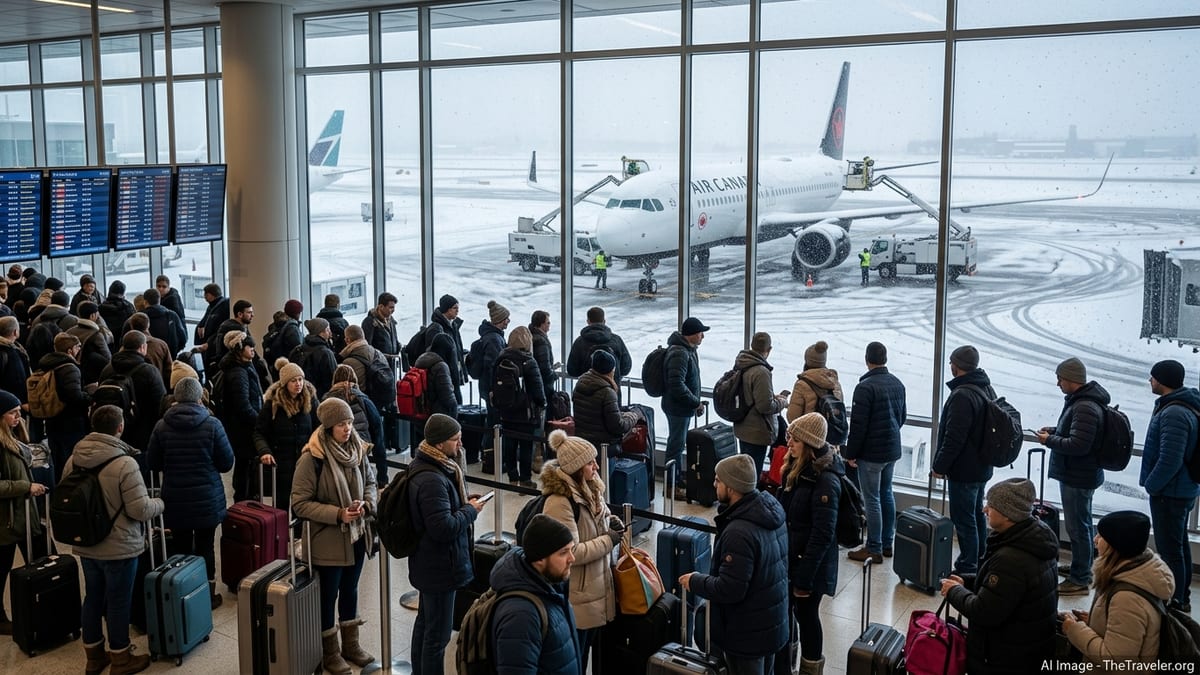
New data quantify a difficult 2024–25 winter for Canadian air travel
AirHelp, a company that pursues compensation claims on behalf of airline passengers, reported in late 2025 that approximately 10.3 million passengers on flights touching Canadian airports encountered some form of disruption during the core winter months of December 2024, January 2025 and February 2025. The figure covers domestic and international services and counts any flight that was delayed or cancelled, from relatively short schedule slips to severe knock-on delays and outright cancellations.
Within that total, AirHelp’s analysis indicates that around 580,000 passengers in Canada faced delays of more than three hours during the period, while an estimated 900,000 passengers were affected by cancellations. Although the methodology is based on the company’s processing of schedule and operational data rather than government statistics, the broad scale is consistent with the pattern of repeated storms and complaint volumes recorded by Canadian authorities over the same months.
The Canadian Transportation Agency, which enforces the Air Passenger Protection Regulations, has continued to receive record numbers of complaints related to flight disruption. In its reporting for the 2024–25 fiscal year, which runs to 31 March 2025, the Agency notes that more than 46,000 new air travel complaints were filed and that 84,398 cases remained in its backlog at year end. That is the highest backlog figure yet recorded and illustrates how service failures during peak disruption periods can take years to work through the formal complaints system.
Weather, infrastructure and staffing combined to create cascading delays
Environment and Climate Change Canada’s summaries of significant weather events for late 2024 and early 2025 point to multiple storms and cold spells that directly affected major aviation hubs. A deep cold outbreak in western Canada in January 2025 pushed temperatures low enough in parts of Alberta and Saskatchewan to limit how long ramp crews could safely work outdoors and to challenge the performance of ground equipment, including de icing rigs. When operating in such conditions, airports and airlines often slow or suspend ramp operations for safety reasons, reducing the number of flights that can be turned around each hour.
In central and eastern Canada, a sequence of winter storms in early 2025 brought heavy snow, freezing rain and strong winds to southern Ontario, Quebec and Atlantic Canada. Airports including Toronto Pearson, Montreal Trudeau, Ottawa and Halifax reported repeated cycles of plowing and de icing, with periods of reduced visibility and low clouds that forced arrival rates down. With runway and taxiway capacity constrained and de icing queues lengthening, delays multiplied quickly, and airports struggled to catch up between systems before the next storm arrived.
These weather shocks landed on a network that was already stretched. Across North America, airlines entered winter 2024–25 amid strong demand, limited spare aircraft capacity in some fleets and staffing pressure in pilot, maintenance and air traffic control roles. Under such conditions, relatively modest disruptions can propagate throughout the system. A ground stop at a U.S. hub can delay transborder flights into Canada, which in turn affects the aircraft and crews needed for subsequent domestic legs. When storms prompted Canadian or foreign carriers to cancel flights in advance based on forecasts, the aim was to reduce the risk of aircraft and crews becoming stranded, but the immediate impact for passengers was lost seats and a scramble for alternatives on already busy routes.
What Canada’s passenger protection rules currently offer
For travelers trying to interpret the AirHelp numbers in terms of their own entitlements, the key reference remains Canada’s Air Passenger Protection Regulations. These rules apply to flights that depart from, arrive in or transit through Canada and set out airlines’ obligations when a flight is delayed or cancelled or when boarding is denied. Obligations depend on whether the carrier is classified as large or small, how long a passenger arrives late at their final destination and whether the disruption is within the airline’s control, within its control but required for safety, or outside its control.
When a delay or cancellation is found to be within the airline’s control and not required for safety, passengers whose arrival is delayed by at least three hours can be entitled to monetary compensation, with higher amounts for longer delays and for large carriers. Airlines must also provide rebooking or refunds under specified conditions. By contrast, when the primary cause is outside the airline’s control, such as most instances of severe weather, airports closing for safety reasons or air traffic control restrictions, carriers still have to provide a minimum standard of treatment, including food, drink and accommodation after certain thresholds, but they are generally not required to pay cash compensation solely because of the delay.
Winter disruption often falls into that “outside the airline’s control” category, which helps explain the gap between the millions of passengers affected and the much smaller pool that may qualify for compensation. The Canadian Transportation Agency has tried to streamline how disputes are handled by creating a Complaint Resolution Office and moving to a single queue system. In its 2024–25 reporting, the Agency notes that this new office closed more than 33,600 complaints in its first full fiscal year, more than triple the number of cases resolved two years earlier, yet the backlog still rose because incoming complaints continued at record levels.
Amendments to the rules are moving through Canada’s system
Alongside the operational challenges, Canada is in the midst of adjusting the legal framework that governs air passenger rights. Following legislative changes adopted in June 2023, the Canadian Transportation Agency published proposed amendments to the Air Passenger Protection Regulations in the Canada Gazette, Part I, on 21 December 2024. That launch triggered a 75 day public consultation that closed on 6 March 2025, gathering submissions from airlines, consumer groups and other stakeholders.
The draft amendments aim to clarify carriers’ responsibilities and, in certain situations, to strengthen refund rights when flights are cancelled or significantly delayed. Among the objectives set out in the government’s statements are more consistent treatment of passengers regardless of the cause of disruption, clearer timelines for refunds and simpler complaint procedures. However, as of late 2026, these changes remain proposals until final regulations are published in the Canada Gazette, Part II and brought into force on specified dates. Until then, passengers’ rights continue to be governed by the existing rules and the Agency’s case decisions interpreting them.
The federal government has also signaled broader reforms in response to the persistent backlog. In 2026, the Minister of Transport announced the intention to introduce further legislative changes that would, among other things, allow for the use of a neutral third party dispute resolution body for some complaints, increase the maximum administrative monetary penalty for violations of the regulations and transfer responsibility for writing air passenger rules from the Agency to the Minister. These initiatives are at varying stages of development and have not yet translated into a new regime for travelers, but they underline that the regulatory framework is still evolving after the difficult winters and summers of recent years.
Business travel and regional connectivity feel the strain
The disruption recorded in winter 2024–25 affected Canadians traveling for work as well as leisure. Survey data published in 2025 by Flight Centre Travel Group, based on responses from more than 1,000 small and medium sized business owners, found that a large majority reported at least one negative impact on their operations from flight delays, cancellations or schedule changes in the previous year. Respondents cited missed client meetings, postponed site visits and projects extended because staff were unable to move between locations as originally planned.
Corporate travel managers say that during major irregular operations events, such as a multi day winter storm or a regional airspace closure, employers can quickly lose track of where traveling staff are and what support they need. Organizations that funnel bookings through a central travel management company or online booking tool tend to have better visibility of which employees are in transit, which makes it easier to prioritize rebooking and to arrange accommodation or ground transport when flights are cancelled. For companies that rely on individually booked tickets or last minute reservations, the same storm can mean days of manual work as human resources and security teams try to contact staff scattered across several hubs.
In remote and northern parts of Canada, the stakes are often higher because alternatives to air travel are limited in winter. Routes connecting remote industrial sites, mining operations or northern communities to southern hubs may operate only a few times per week. When a flight on such a route is cancelled or heavily delayed, travelers can find that the next available seat is not until the following day or later. For employers, that can mean staff stranded far from their home base and a need to arrange extra nights of lodging in locations where hotel capacity is small and quickly booked out as other passengers face the same problem.
What winter 2024–25 means for travelers planning the next cold season
Even though the AirHelp figures focus on a three month window, they suggest that winter air travel in and around Canada should be planned with substantial disruption risk in mind rather than treated as a rare exception. Environment and Climate Change Canada has highlighted that rapid, high impact winter storms and sharp swings between cold and mild spells are recurring features of recent seasons, influenced in part by broader climate variability. For aviation, that translates into a higher probability that any given travel day during mid winter will see at least local constraints on runway conditions, de icing capacity or visibility, even if major nationwide storms remain relatively infrequent.
For individual travelers, several practical responses emerge from the experience of 2024–25. Those with crucial same day commitments, such as important meetings, medical appointments or cruise departures, may wish to schedule arrival at least a day early when traveling through Canadian hubs in mid winter, particularly if their itinerary relies on tight connections or passes through airports known for lake effect snow or Atlantic systems. Choosing morning departures can leave more options to be rebooked later the same day if the first flight is cancelled, while allowing extra connection time can reduce the risk that a short delay on the first leg causes a missed long haul flight.
Travel insurance can also play a role, but coverage varies considerably between policies and providers. Many products sold in Canada include benefits for trip interruption or delay that can reimburse additional accommodation, meals and local transport up to specified limits when flights are cancelled or significantly delayed. Insurers often distinguish between weather related events and disruptions considered within an airline’s control, and may require written confirmation from the carrier about the cause and length of the delay. Before winter travel, policyholders are therefore advised to review definitions of covered events, minimum delay thresholds and exclusions so they understand when coverage would apply.
Looking ahead, travelers should watch for two types of updates. First, airlines and airports continue to invest in winter operations, including expanded de icing facilities, more resilient ground equipment and digital tools that provide more timely notifications when conditions deteriorate. Second, the federal government and the Canadian Transportation Agency are expected to advance final amendments to the Air Passenger Protection Regulations and potential legislative changes aimed at managing the complaints backlog and clarifying compensation rules. Before booking or before a peak winter trip, passengers who are concerned about disruption may wish to review the latest version of the regulations on the Agency’s website, check any weather related travel advisories from their carrier and confirm what flexibility exists to change dates if a significant storm is forecast for their planned day of travel.