


On paper, ABBA The Museum in Stockholm sounds like a niche stop: an attraction dedicated to a 1970s Swedish pop group. In reality, it behaves much more like a compact music theme park, packed with sing-along booths, hologram performances, glittering costumes and clever storytelling that routinely win over even travelers who insist they are “not really ABBA people.” If you are planning a trip to Stockholm, this is one museum that is almost guaranteed to be more fun than you expect.
Get the latest updates straight to your inbox!
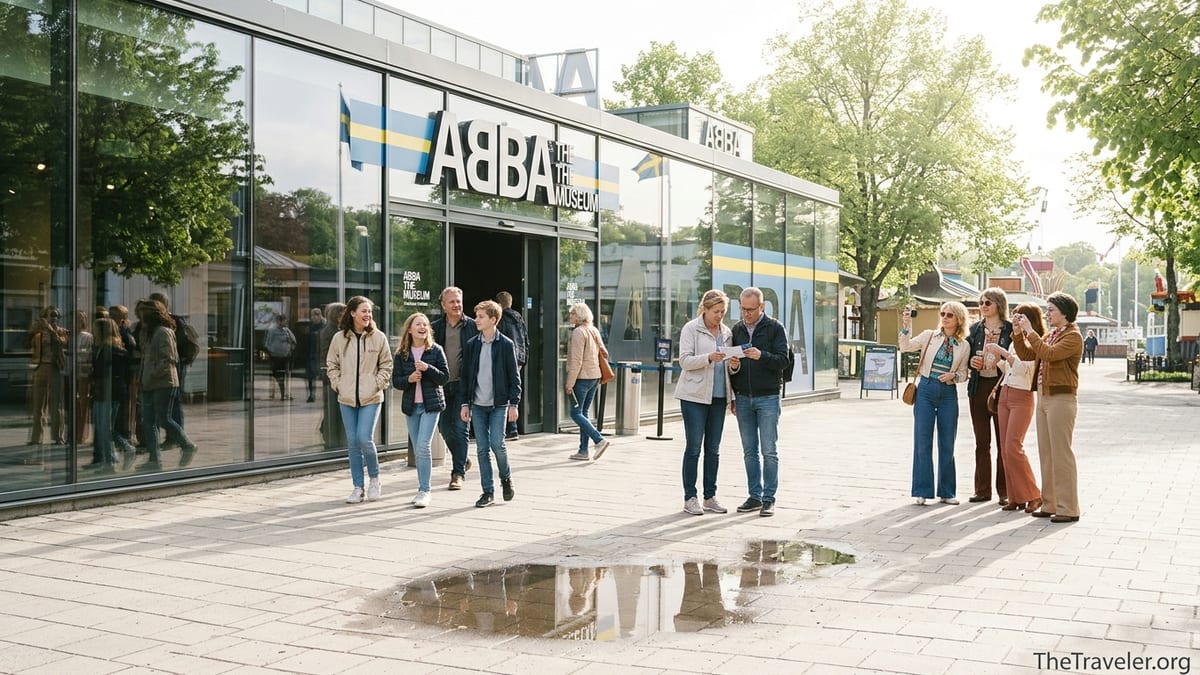
More Immersive Than a Typical Museum
Most visitors arrive expecting glass cases and quiet galleries, and instead find themselves stepping onto a stage, into recording booths, or in front of interactive screens that react as they move. ABBA The Museum was designed from the start as an interactive exhibition rather than a traditional museum, and it shows the moment you pass the ticket gates and walk into the band’s early life and Eurovision years. Instead of simply reading about how ABBA formed, you swipe your ticket to trigger audio from the band members themselves and wander through recreations of 1960s Swedish folk parks and early TV studios.
One of the most talked about spaces is the "Waterloo" area, styled like Brighton in 1974 when ABBA won the Eurovision Song Contest. Here, archival clips, press photos and replica stage elements surround you while the song booms from multiple speakers, transforming what could have been a static history panel into a full-sensory flashback. Travelers who normally speed through history sections often linger here, taking photos in front of the retro microphones or comparing the look and feel to modern Eurovision broadcasts they have watched at home.
Elsewhere, a re-created Polar Music Studio lets you step into a control room set similar to where many of ABBA’s hits were recorded. You can isolate vocal tracks, tweak simple mixes and listen through studio-style headphones. Compared with more traditional music museums that might only show you a mixing board behind glass, this setup invites you to play producer for a few minutes, and it is often the moment where non-fans suddenly recognize how meticulously those familiar pop songs were constructed.
Because every entry ticket is linked to a personal profile, many of these interactive moments can be saved. After your visit you can log in online to replay your performances or quiz scores, which adds an unexpected after-trip element that feels closer to a theme park photo service than a museum visit.
Sing, Dance and Perform With the Band
The experiences that most surprise travelers are the ones that put them directly in the spotlight. There are karaoke-style recording booths where you can sing along to songs like "Mamma Mia" or "Dancing Queen" with on-screen lyrics. The soundproof doors mean you do not have to be a confident singer to participate, and it is common to see whole families step into a booth together, treating it like a private concert. Parents who grew up with ABBA on vinyl often coax in reluctant teenagers, only for those teens to emerge laughing and replaying their tracks on the nearby screens.
A short walk away, an interactive stage area uses projection and digital avatars so that you can appear on screen as the “fifth member” of ABBA. Visitors select a song, stand on floor markers, and watch as their movements are mapped into a performance beside animated representations of Agnetha, Björn, Benny and Anni-Frid. It is not a full-scale stadium show like the ABBA Voyage experience in London, but for many travelers it scratches the same itch in a much more approachable way. People who swear they will just "watch from the side" frequently end up on stage once they see how playful the setup is.
Another highlight is the dance floor section, where classic tracks play on a loop and disco lighting encourages you to actually move. In reviews, even travelers who usually describe themselves as museum-shy talk about unexpectedly joining strangers for a few spins under the glittering lights. The space doubles as a nostalgia trigger for older visitors and a crash course in 1970s pop culture for younger ones, creating exactly the sort of intergenerational shared moment that many trips struggle to provide.
All of this is captured by cameras and sensors connected to your ticket. Later, while waiting at the airport or back at your hotel, you can log in and watch yourself performing. For many travelers, those clips become some of the most replayed souvenirs of their entire Scandinavian trip, rivaling photos of Stockholm’s Old Town.
Surprisingly Engaging Even If You Are Not an ABBA Fan
One reason ABBA The Museum exceeds expectations is that it works on multiple levels. Hardcore fans will obviously get a thrill from seeing original stage costumes, gold records and handwritten notes. Yet a large share of visitors arrive with only a vague familiarity from hearing ABBA Gold at weddings or from the "Mamma Mia" films, and many of them leave calling it one of the most enjoyable attractions in Stockholm.
The exhibit is structured as a narrative about creativity, friendship and the mechanics of pop stardom, not just a shrine to a band. You follow the four members from their separate musical beginnings through their union as ABBA, international breakthrough, and eventual split, with commentary about songwriting, recording technology, and the pressures of fame. Even travelers who do not care who won Eurovision in 1974 often find themselves drawn into the story because it is told with humor and self-awareness, often in the band members’ own voices via the audio guide.
There are also sections that broaden the scope beyond ABBA, placing them in the context of Swedish and global pop. Brief spotlights on other Swedish acts, contemporary music trends, and cultural history help non-fans understand why the band’s sound traveled so well. For a traveler trying to get a handle on Swedish culture in just a few days, this is a quick and entertaining crash course in how a small Scandinavian country came to punch far above its weight in the global music industry.
Reviews frequently mention friends or partners who "came along just to be polite" and ended up spending longer in the museum than the actual fans did. The combination of humor, interactive technology, and clear storytelling means you never have to recognize every song to enjoy yourself. This is a key difference from some artist museums elsewhere in Europe, which often assume a high level of pre-existing devotion.
Practical Details That Make a Visit Easy
For most travelers, fun also depends on logistics. ABBA The Museum scores well here too. It is located on Djurgården, the island that also hosts the Vasa Museum, Skansen open-air museum and the Gröna Lund amusement park. That means you can easily combine it with other top sights in a single day. From central Stockholm, many visitors take tram 7 or bus 67 directly to the island, or hop on a small passenger ferry from near the Old Town, which turns the journey into a short scenic boat ride.
As of early 2026, standard adult tickets bought online typically range between about 249 and 329 Swedish kronor depending on date and time slot, with students and seniors paying a bit less and children between 7 and 15 years old significantly discounted. Small children usually enter free with a paying adult. Prices vary slightly across seasons and specific offers, but for many international visitors this works out to somewhere in the 25 to 32 US dollar range, similar to major museums in other European capitals. Buying timed-entry tickets in advance is strongly recommended, especially on summer weekends or whenever cruise ships are in port, because popular late-morning and early-afternoon slots can sell out.
Opening hours shift seasonally, with shorter days in winter and extended evening hours in busier months. In 2026, for example, the museum opens from around 10 a.m. to 6 p.m. in the first months of the year, then typically stays open until about 8 p.m. during late spring and summer. It is wise to double-check the current schedule a few days before your visit and to factor in at least two to three hours inside. Many travelers underestimate the time they will want for the interactive elements, only to find they are racing through the later rooms to make other plans.
The building is modern, with elevators and step-free routes that make it relatively straightforward for visitors with limited mobility or strollers. Audio guides are offered in multiple languages, and staff at the entrance are used to helping international guests link tickets to online profiles or navigate the interactive features. There is also a café on-site, where you can grab Swedish-style open sandwiches, pastries or coffee, meaning you do not have to rush off the island hungry after singing your way through the exhibits.
Value for Time and Money Compared With Other Stockholm Museums
Stockholm is dense with high-quality museums, from the Vasa Museum’s 17th-century warship to the Skansen open-air museum and the Nobel Prize Museum in the Old Town. Travelers often worry that ABBA The Museum will feel like a lightweight, fan-only detour by comparison. In practice, many come away ranking it beside, or even ahead of, those heavyweight cultural stops in terms of pure enjoyment.
Part of this is the pace. Where some historical museums present long text-heavy exhibitions that can leave you mentally tired, ABBA The Museum keeps explanations concise and breaks up information with interactive moments. You might watch a short clip of the band in a recording session, then immediately be invited to test your own vocal range, dance moves or trivia knowledge in the next room. This constant alternation between passive and active engagement makes the two or three hours you spend inside feel fast and varied.
There is also a strong sense of production value. Stage lighting, playful set design, and thoughtfully placed soundscapes create a polished environment that feels close to what you might expect from a major music exhibition in London or New York. When you weigh the ticket price against similar interactive attractions elsewhere in Europe, ABBA The Museum holds up well. Travelers who were initially skeptical of the cost often comment afterwards that the amount of enjoyment and photo-ready moments made it feel like money well spent.
For those trying to maximize a short stay in Stockholm, a practical strategy is to pair ABBA The Museum with one other Djurgården attraction in the same day and leave a lighter, more open-ended activity like a waterfront walk or fika in a local café for the evening. That balance of structured fun and relaxed exploring makes it easier to remember the museum as one of the high points of the trip rather than as one more rushed stop.
Little Touches That Make It Feel Personal
What many travelers remember most clearly are the small, personal moments. In the recreated band dressing rooms, scuffed platforms and glittering jumpsuits hang at eye level, close enough that you can really see the stitching and sequins. There is a replica of the "Arrival" helicopter, where visitors line up to pose as if they are about to lift off onto a world tour. Even non-fans understand instinctively that they are stepping into a global pop myth, and the museum leans into that with a wink rather than reverence.
The audio guide, narrated with contributions from the band members, includes candid remarks about missteps, awkward costumes, and the toll of fame. That tone of gentle self-deprecation keeps the museum from feeling like a commercial or a one-sided fan tribute. Instead, it often feels like being guided through a scrapbook by the artists themselves, complete with jokes and reflections that older visitors nod along with and younger visitors find surprisingly relatable.
The museum also provides plenty of ways for visitors to leave their own mark. Digital quiz scores, recordings, and dance performances attached to each ticket give you a set of personalized "greatest hits" from your visit. In the gift shop, beyond the predictable T-shirts and vinyl records, you will find more playful items like replica tour posters and Christmas sweaters that often spark conversations among strangers about their favorite songs or memories attached to the music.
Staying at the adjacent Pop House Hotel, some travelers choose to immerse themselves further by booking a room on-site, turning the museum into the centerpiece of a music-themed weekend. For many, however, even a single afternoon visit is enough to feel unexpectedly connected to a band they previously only knew from background playlists.
The Takeaway
ABBA The Museum succeeds because it treats visitors not just as spectators but as potential performers, storytellers and co-creators. It pairs a well-curated collection of costumes, instruments and archival material with clever technology that encourages you to sing, dance and play, whether or not you walked in as an ABBA devotee. The result is an attraction that routinely surprises travelers who thought they would "just pop in for an hour" and instead find themselves still exploring, laughing and recording clips long after their scheduled time slot.
If your image of museums is hushed halls and long labels, this Stockholm standout will challenge that assumption in the best possible way. For families, friend groups and solo travelers alike, it offers that rare combination of cultural insight, nostalgia and pure, unselfconscious fun. In a city full of strong museums, ABBA The Museum earns its reputation not just as a must-see for fans, but as one of the most unexpectedly joyful stops on any Stockholm itinerary.
FAQ
Q1. Do I need to be a big ABBA fan to enjoy ABBA The Museum?
Many visitors arrive with only casual knowledge of ABBA and still rate the museum as one of their favorite Stockholm experiences, thanks to the interactive exhibits and engaging storytelling.
Q2. How long should I plan to spend inside the museum?
Most travelers find that two to three hours is ideal, giving enough time to see the main exhibits, sing in a booth, try the interactive stage and browse the shop without feeling rushed.
Q3. How much do tickets cost in 2026?
In early 2026, typical online adult tickets run in the region of 249 to 329 SEK depending on the time slot, with reduced prices for students, seniors and children, and free entry for very young kids.
Q4. Is it necessary to book tickets in advance?
Advance booking is strongly recommended, especially in summer, on weekends and on days when large cruise ships are in port, because popular late-morning and afternoon slots can sell out.
Q5. What is the best way to get there from central Stockholm?
Most visitors take tram 7 or bus 67 directly to Djurgården, or ride a small passenger ferry from near the city center, combining the journey with a short scenic trip across the water.
Q6. Is the museum suitable for children?
Yes, the hands-on exhibits, music, and colorful sets make it especially appealing for children, and many families report that kids enjoy recording songs and dancing on the interactive stage.
Q7. Is ABBA The Museum accessible for visitors with limited mobility?
The modern building offers elevators and step-free routes, and staff are accustomed to helping visitors with mobility needs navigate the exhibition comfortably.
Q8. Can I visit other attractions nearby on the same day?
Absolutely. The museum is on Djurgården alongside the Vasa Museum, Skansen and an amusement park, so many travelers combine two attractions on the same day.
Q9. Are there places to eat or drink at the museum?
Yes, there is an on-site café where you can order light meals, Swedish-style snacks and coffee, making it easy to fit the visit into a busy sightseeing schedule.
Q10. Can I access my recordings and performances after I leave?
When you scan your ticket at interactive stations, many of your performances and quiz results are saved to an online profile that you can log into after your visit.