


More news on this day
Two American Airlines Boeing 737-800s clipped wingtips while taxiing for departure at Ronald Reagan Washington National Airport on Friday, November 27, 2026, delaying holiday-weekend flights to Dallas–Fort Worth and Chicago O’Hare but causing no injuries, according to the Federal Aviation Administration and the airline.
Get the latest news straight to your inbox!
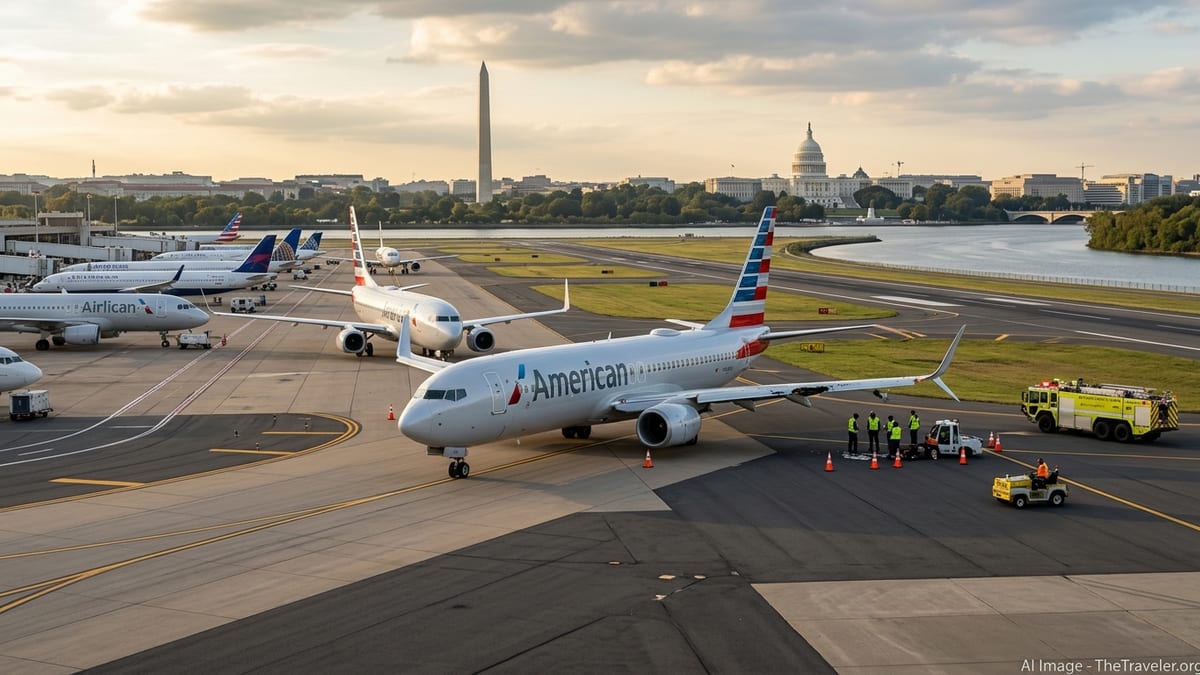
What happened on the taxiway at Reagan National
According to initial information from the Federal Aviation Administration (FAA) and multiple local news reports, the incident occurred shortly after 5 p.m. on November 27, 2026, as late-afternoon departures were queueing at Ronald Reagan Washington National Airport (DCA). Two American Airlines Boeing 737-800 aircraft, operating as Flight 638 to Dallas–Fort Worth International Airport (DFW) and Flight 2152 to Chicago O’Hare International Airport (ORD), made wingtip contact while taxiing for departure on a runway-adjacent taxiway.
Recordings of air traffic control communications indicate that the crew of one aircraft reported the contact at about 5:10 p.m. Eastern Time. Controllers subsequently advised other pilots that two American jets had clipped wings and that debris from a wingtip was present on or near the taxiway. Airport ground crews were dispatched to inspect the area and recover the broken winglet section from one of the aircraft.
Both aircraft were able to move under their own power after the minor collision and ultimately returned to the gate for inspection. Photographs and video published by local outlets show visible damage to at least one jet’s upward-curving winglet section but no apparent damage to the fuselages. Authorities and the airline have not reported any fuel leaks, fire, or injuries among passengers or crew on either aircraft.
Impact on passengers and Friday evening operations
American Airlines has confirmed that both affected flights were delayed as a result of the wingtip contact. Passengers on Flight 638 and Flight 2152 remained on the ground at DCA while maintenance teams carried out inspections and airport crews cleared debris from the taxiway. Available flight-tracking data and media reports indicate that both flights were ultimately cancelled for the evening, with customers rebooked on later departures where possible or rerouted via alternative hubs.
The incident took place at the start of one of the busiest travel weekends of the year in the United States, with federal transportation officials projecting near-record passenger volumes for the Thanksgiving period. Reagan National, which serves as a key airport for the Washington metropolitan area, typically sees heightened congestion on Friday evenings, and the temporary closure of a taxiway and the diversion of airport resources briefly added to that strain.
Air traffic control recordings suggest at least one inbound aircraft broke off its approach and initiated a go-around after controllers relayed reports of possible debris on or near the runway environment. Arriving flights were warned of potential delays while the situation was assessed. However, there is no indication from publicly available information that the incident led to a prolonged ground stop or widespread cancellations at DCA beyond the two affected American Airlines departures.
Safety procedures and the FAA investigation
The FAA has stated that it is investigating the incident, as it does with all aircraft ground collisions, whether minor or more serious. While detailed findings will only be available once that investigation is complete, the agency’s initial description classifies the event as a ground contact between the wingtip of one jet and the wing area of another while both were taxiing in line for departure. The National Transportation Safety Board (NTSB) has not, as of publication time, announced a separate major investigation, which is consistent with the lack of injuries or extensive damage.
Standard procedure after such an occurrence is for the airline’s maintenance teams to conduct thorough structural and systems inspections of the affected aircraft before they are returned to service. Even when damage appears confined to a winglet, engineers must verify that there is no deeper structural impact and that all control surfaces, wiring and fuel systems remain intact. American Airlines has not yet disclosed when the two specific airframes involved in the Reagan National incident will be cleared to fly again.
For passengers, the safety protocols mean that aircraft involved in any collision, however minor, will not simply continue with the scheduled flight. Instead, customers are usually asked to deplane while inspections are carried out, and in many cases the remainder of the journey is operated using a different aircraft. In this case, same-day rebooking options were constrained by heavy holiday loads, and some travelers are likely to have faced overnight delays or routing changes through other airports in the American network.
Context: heightened scrutiny of operations at DCA
Although minor ground contacts involving wingtips and tail sections are relatively rare on a per-flight basis, they do occur from time to time at busy, space-constrained airports. Reagan National presents a particular operational challenge because of its compact footprint, proximity to the Potomac River, and tight runway and taxiway geometry. Many aircraft movements at DCA take place with little margin for error compared with some larger, more spacious fields.
Safety at and around the airport has been under especially close scrutiny since a deadly midair collision in January 2025 between an American Airlines regional jet preparing to land at DCA and a U.S. Army helicopter flying a training mission in nearby airspace. That accident, which occurred over the Potomac River, killed all 67 people aboard both aircraft and led to a series of reviews of procedures for mixed military and civilian traffic near the nation’s capital. Subsequent regulatory steps have included tighter restrictions on helicopter operations near DCA and additional guidance for controllers managing complex traffic flows in the area.
In parallel, national data show that the volume of air travel in the United States has returned to and in some cases surpassed pre-pandemic levels, concentrating more departures and arrivals into peak hours. For a perimeter-constrained airport like Reagan National, this translates into more jets queued on taxiways at busy times, increasing the importance of precise ground handling, clear communications and adherence to taxi instructions by both pilots and ramp personnel. The Friday evening wingtip contact is likely to feed into the ongoing conversation between regulators, airlines and airport officials over how to balance capacity and safety at DCA.
What travelers should know and what happens next
For travelers scheduled to fly into or out of Reagan National in the coming days, there is no indication that the November 27 wingtip contact will lead to a broad schedule reduction or long-term disruption. The event involved two specific aircraft and two specific American Airlines departures, and the immediate operational impacts appeared to be limited to inspections, taxiway checks and brief arrival delays during the hour following the incident.
However, passengers booked on American flights 638 and 2152 for later dates should be aware that airlines sometimes substitute different aircraft types or adjust departure times in the aftermath of equipment-damaging incidents as jets rotate through maintenance. Anyone traveling on these or closely related services between Washington, Dallas–Fort Worth and Chicago in the near term may wish to monitor their booking on the airline’s app or website and allow extra time at the airport in case of gate or timing changes.
The FAA’s investigation will focus on the sequence of taxi clearances, the positions of the two aircraft, visibility and lighting conditions at the time, and any relevant cockpit and ground communications. Findings typically take weeks or months to be finalized. In the meantime, American Airlines has said it is cooperating with regulators and conducting its own internal safety review. Until official reports are released, authorities have not assigned public blame or attributed the contact to any specific cause, and available information does not support any broader conclusions about systemic risk beyond the fact of this isolated ground incident.