


More news on this day
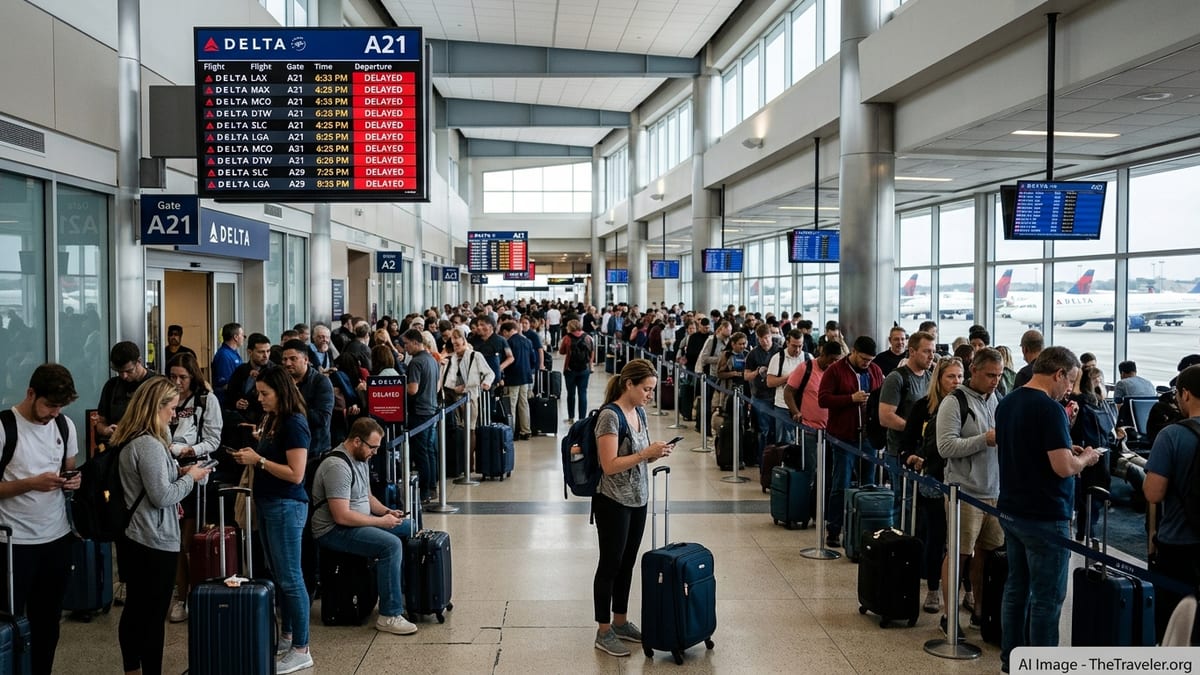
Delta Air Lines has restored a key automated system used to calculate aircraft weight and balance after a technology outage centered on its Atlanta hub delayed more than 1,600 flights across the United States on Sunday, November 22, 2026, disrupting early Thanksgiving travel and triggering a short FAA ground stop into Hartsfield-Jackson Atlanta International Airport.
Get the latest news straight to your inbox!
What happened to Delta’s automation system in Atlanta
According to statements from Delta and the Federal Aviation Administration, the issue on Sunday, November 22, involved the airline’s automated system for calculating weight and balance on departing flights. The software supports pre-departure performance calculations that help ensure aircraft are loaded within safe limits before takeoff. When the system malfunctioned early Sunday, flights that relied on those automated calculations could not be dispatched normally, particularly at Hartsfield-Jackson Atlanta International Airport, Delta’s largest hub.
Delta requested that the FAA implement a ground stop for flights bound for Atlanta while the airline worked through the problem. The FAA confirmed that it briefly halted some arrivals into Hartsfield-Jackson on Sunday morning, then shifted to a ground delay program that allowed flights to depart in a controlled, staggered flow as capacity permitted. Departures on Delta from Atlanta and other airports continued, but many were processed more slowly using manual procedures while the airline’s automation remained offline.
Through the late morning and early afternoon, Delta operations teams relied on these “manual workarounds” to calculate weight and balance data on a flight-by-flight basis. That approach allowed departures to resume but reduced the pace at which flights could be dispatched, causing growing congestion both at the Atlanta hub and across the airline’s domestic network as aircraft and crews fell out of position.
Scale of delays and impact on travelers
Data from flight-tracking services and airline statements indicate that the automation outage translated into substantial operational disruption on one of the busiest travel Sundays of the year. Industry reports place the number of delayed Delta and Delta Connection flights nationwide at more than 1,600 on November 22, with some sources citing around 2,000 delays once knock-on effects across the full day are included. The majority of affected flights either departed from or were scheduled to connect through Atlanta, although significant delays were also reported at other major Delta airports.
At Hartsfield-Jackson, congestion built quickly as aircraft waited for clearance to push back, depart or arrive. Passengers reported repeated schedule changes on Sunday, with departure times pushed back in multiple increments as flight crews waited on updated paperwork or new slots into Atlanta. While most disruptions took the form of long delays, some flights were ultimately cancelled as crew duty-time limits approached or as aircraft were needed elsewhere in the system to help stabilize the schedule.
The timing of the outage compounded its impact. The failure came less than two weeks after a separate nationwide FAA automation problem had already shaken confidence in the resilience of U.S. aviation technology infrastructure, and just days before the peak of the Thanksgiving travel period. Many travelers affected by Sunday’s Delta disruption were heading to family gatherings, with limited flexibility to shift their trips by a day or two, which heightened the practical consequences of delays and missed connections.
System restoration and Monday recovery efforts
By Sunday afternoon, Delta said that the automated weight-and-balance system had been restored and that operations were gradually recovering. The airline emphasized that the incident was not related to air traffic control issues or the earlier FAA outage, and there have been no official indications that it involved a cyberattack. Once automation returned, dispatchers and flight crews were able to revert from manual back to automated calculations, which significantly improved departure throughput.
On Monday, November 23, Delta described its operation as “stable,” stating that automation for departing-flight weight and balance calculations was fully restored. Flight-status data showed that while some residual delays and a smaller number of cancellations persisted into Monday, particularly for aircraft and crews still out of position from the prior day’s disruptions, the scale of irregular operations was markedly lower than on Sunday. Local reports from Atlanta indicated that passengers were again moving through the airport largely on schedule by late Monday afternoon.
Delta has said it is rebooking affected customers on the next available itineraries and providing meals and hotel accommodations where required by its policies, particularly for those stranded overnight due to missed connections. Travelers whose original flights were significantly delayed or cancelled have also been encouraged to use the airline’s website or mobile app to confirm rebooked itineraries and, when eligible, to adjust their plans online without visiting an airport counter.
How this outage fits into a wider season of aviation tech issues
The Delta automation failure is the second high-profile airline technology incident in the United States in little more than a week. In mid-November, a separate FAA automation issue unrelated to Delta led to the first nationwide ground stop of flights in decades, disrupting departures across the country for several hours and prompting federal reviews of the agency’s systems. Shortly afterward, United Airlines experienced its own technology problem that temporarily halted its departures, followed by this latest glitch at Delta focused on weight-and-balance automation.
Aviation regulators and industry groups have already been scrutinizing the growing dependence of airline operations on interconnected IT systems, from crew scheduling and dispatch to baggage handling and passenger reservations. Events such as Delta’s outage in Atlanta highlight how a fault in a single specialized system can cascade into large-scale delays, especially at hub airports where banks of closely timed departures and arrivals are fundamental to how the network functions. In this case, the problem was limited to one carrier’s internal system, but its effects were experienced across multiple airports given Delta’s extensive domestic reach.
For travelers, the clustering of these incidents near the Thanksgiving peak underscores the importance of building additional resilience into travel plans where possible. Although such outages remain relatively rare compared with the total number of flights operating each day, the consequences when they occur can be severe, particularly on weekends and holidays when alternative seats are limited and rebooking options quickly fill. The Delta disruption illustrates how technical issues can have a similar practical impact on passengers as severe weather, even when aircraft and crews are otherwise available.
What travelers flying Delta should do next
With Delta’s automation restored and its operation stabilizing, the airline and independent travel outlets expect schedules to normalize progressively through Tuesday, November 24, assuming no separate weather or air traffic issues arise. Even so, residual disruptions can linger longer for certain routes, particularly those that depend on specific aircraft types or tight aircraft rotations through Atlanta and other hubs. Travelers connecting through Atlanta in the first half of the week may still encounter aircraft or crews that are slightly out of position, resulting in minor delays.
Passengers booked on Delta in the days immediately following the outage are advised to monitor their flight status closely through the airline’s digital channels before leaving for the airport and again after checking in. Same-day changes, stand-by lists and rebooking options are typically presented first in the app or on the website for eligible tickets, and may give travelers more flexibility than waiting in line at a service desk. Those with critical same-day connections, particularly on international itineraries or last flights of the day, may also wish to allow extra connection time or consider earlier departures where feasible.
For travelers still seeking resolution from Sunday’s disruptions, the key next steps are to confirm any automatic rebookings, review Delta’s published customer commitments for delays and cancellations, and retain documentation of expenses such as meals and hotels incurred as a direct result of the outage. While U.S. regulations do not require compensation in the same way as some overseas regimes, airlines often provide vouchers or reimburse certain costs in significant operational disruptions. Any formal investigations or regulatory reviews into the root cause of Delta’s automation failure and its handling of affected passengers have not yet been announced, so travelers should expect any broader policy changes or clarifications, if they occur, to emerge over a longer timeframe rather than in the immediate aftermath of this event.