


More news on this day
A freight train derailed Tuesday afternoon in Bensalem Township, Pennsylvania, sending multiple cars off the tracks near the Neshaminy Falls station and prompting a shelter-in-place advisory for nearby residents as hazmat teams and emergency crews converged on the scene.
Get the latest news straight to your inbox!
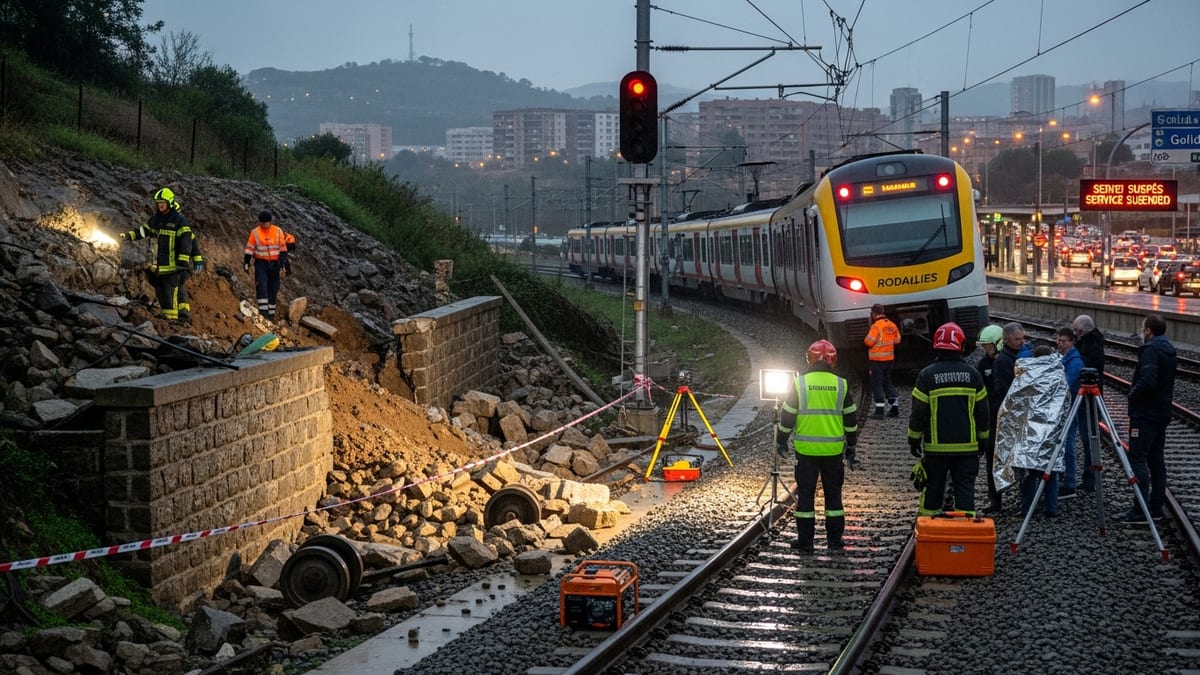
Derailment near key commuter corridor in Bucks County
Publicly available information indicates the derailment occurred between Street Road and the Neshaminy Falls train station in Bensalem, a busy corridor in Bucks County used by both freight and commuter traffic. Initial reports place the incident shortly after 2 p.m. on June 30, with local outlets describing a line of freight cars scattered and overturned along the right of way.
Aerial footage shared by regional broadcasters shows at least five to ten freight cars derailed, with some coverage suggesting the number may reach a dozen or more. Several cars appear to be on their sides, while others remain partially on the rails but visibly displaced, leaving the train stretched in a jagged pattern across the track bed.
Early accounts from the scene describe a large emergency response, with police, fire crews, medics and specialized hazardous materials teams staging along nearby roads. Access points around the derailment area were quickly restricted as responders began a methodical survey of the train’s manifest and the condition of the affected cars.
Although the line is adjacent to the Neshaminy Falls commuter station, transit agencies report that the derailed train is a freight movement and not a passenger service. Even so, nearby commuter operations on the West Trenton Line and around Feasterville and Bensalem have experienced delays and adjustments as rail managers work around the blocked infrastructure.
Shelter-in-place advisory and hazardous materials concerns
According to published coverage, Bensalem Township police and neighboring agencies issued a shelter-in-place advisory for residents in the immediate vicinity of the derailment. The precaution reflects uncertainty about the contents of several overturned cars and the potential for a hazardous materials release.
Multiple outlets report that hazmat teams are assessing tank and covered hopper cars believed to be carrying industrial products. Some accounts describe two or more railcars identified as containing hazardous material, prompting responders to keep the public at a distance while monitoring for leaks or suspicious odors.
Emergency alerts and social media posts from local agencies urge people near the scene to remain indoors, keep windows and doors closed and avoid the area until further notice. These advisories are common after rail incidents involving unknown cargo, as exposure to certain chemicals can have rapid respiratory and neurological effects even before a visible plume forms.
As of the latest available reports late Tuesday afternoon, there have been no confirmed injuries associated with the derailment and no publicly verified confirmation of a significant hazardous release. Agencies continue to emphasize that the shelter-in-place order remains a precaution while inspections and air monitoring proceed along the right of way.
Impact on regional travel and nearby communities
The derailment has an immediate impact on mobility around Bensalem, a community north of central Philadelphia that serves as a gateway between Bucks County suburbs and the city. Rail passengers on nearby commuter lines have been advised to expect service changes as dispatchers reroute trains and, in some cases, temporarily suspend movements near the damaged section of track.
Drivers have also encountered congestion and road closures around Street Road, East Bristol Road and other approaches to the Neshaminy Falls area. Detours and police checkpoints have been put in place to keep nonessential traffic away from staging zones and to ensure emergency vehicles can move freely between command posts and the derailment site.
For residents and travelers, the shelter-in-place advisory adds another layer of disruption. Visitors staying in nearby hotels, shopping at regional centers or using the corridor as a through-route are being encouraged by public messaging to remain where they are, check local news outlets for updates and avoid attempting to reach the tracks for photos or video.
The incident also resonates beyond Bucks County, as travelers increasingly weigh the reliability of mixed-use rail corridors where freight and commuter operations run in close proximity. While this derailment involves freight cars rather than passenger coaches, the shared geography highlights how infrastructure incidents can ripple across multiple modes of travel in a densely populated region.
Ongoing investigation and safety context
As crews work to stabilize the site, rail operators and government agencies are expected to open a formal investigation into what caused the train to leave the tracks. Early visual assessments circulating in local coverage and on social media point to the condition of the track and the alignment of the cars, but no official cause has yet been identified in public-facing information.
Investigations into previous freight derailments in Pennsylvania and elsewhere have often focused on factors such as track maintenance, heat-related rail buckling, train speed, wheel and axle condition, and the weight and length of freight consists. The Bensalem incident will likely be examined through a similar lens, with attention to weather conditions, inspection records and any sensor alerts that may have been triggered before the cars left the rails.
The event comes amid heightened public sensitivity around hazardous materials transport after several high-profile derailments in recent years. Communities along freight corridors have pressed for more transparency about train contents, stronger safety standards and clearer communication when incidents occur close to homes, schools and commercial centers.
In Bensalem, that broader debate now has a very local dimension, as residents wait for clarity on what the derailed cars were carrying, whether any product escaped containment and how long it will take to restore the line to normal operations. Once the immediate safety concerns are resolved, attention is likely to turn to cleanup, infrastructure repairs and potential changes to operating practices on this busy stretch of track.