


Landing at Ho Chi Minh City’s Tan Son Nhat International Airport can feel intense: long queues at immigration, heat as soon as the doors slide open, and a crowd of drivers calling "Taxi?" over the noise. The good news is that District 1, the main hotel and tourist area, is only about 6 to 8 kilometers away. The less good news is that there are several ways to get there, each with different prices, comfort levels, and levels of hassle. This guide walks you through Grab, metered taxis, airport buses 109 and 152, and private transfers, with concrete examples to help you choose the best option for your hotel and your luggage.
Get the latest updates straight to your inbox!
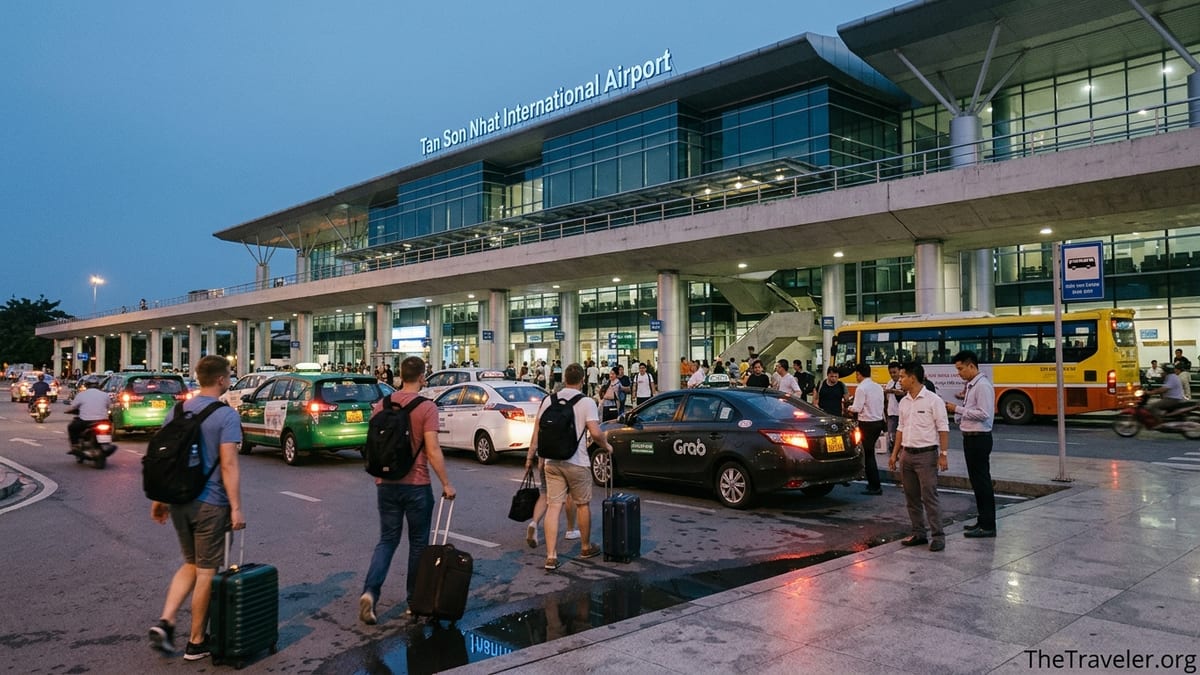
What to Expect on Arrival at Tan Son Nhat Airport
Tan Son Nhat International Airport sits in Tan Binh District, about a 20 to 45 minute drive from District 1 depending on traffic and the time of day. The airport has separate domestic and international terminals, but both feed out onto the same busy access road leading south toward the city center. After baggage claim and customs, you emerge into an arrivals hall full of money changers, mobile SIM card counters, and transport desks selling fixed price taxi and private car services.
Traffic in Ho Chi Minh City is dense, especially between roughly 7:30 to 9:30 in the morning and 4:30 to 7:30 in the evening. During these peak hours, the same airport to District 1 trip that can take 20 minutes at 10:30 at night might stretch to 40 minutes or more. The distance is short, but the bottlenecks around key junctions, such as the approach to the city center near the Saigon River, can add significant time.
Most visitors stay around District 1 landmarks like Ben Thanh Market, the backpacker streets of Bui Vien and Pham Ngu Lao, or the hotel cluster along Dong Khoi, Nguyen Hue, and Ton Duc Thang streets near the river. These areas are all within a similar distance of the airport, but traffic patterns can differ: for example, getting to riverside hotels at rush hour can mean crawling through one or two particularly busy intersections, while getting to the backpacker area often involves threading through one-way streets full of scooters.
Before deciding how to travel, it helps to be realistic about your luggage and energy level after the flight. A solo traveler with a single backpack arriving at 11:00 in the morning can comfortably use an airport bus. A family of four arriving at midnight with two large suitcases each will be far better off with a GrabCar or prebooked private transfer that drops them directly at their hotel door.
Grab and Other Ride Hailing: Flexible and Predictable
For many travelers, booking a GrabCar through the Grab app is the most comfortable balance of price, convenience, and safety. You see the price in advance, pay in cash or by card, and avoid haggling or worrying about a meter being "broken." On a typical day, a standard GrabCar from Tan Son Nhat to popular District 1 spots such as Ben Thanh Market or Nguyen Hue Walking Street might cost roughly 150,000 to 250,000 Vietnamese dong, depending on demand, time of day, and whether you choose a budget or larger vehicle category.
The main catch is pickup logistics. Grab and similar services are usually not allowed to pick up directly at the curb in front of arrivals. Instead, after you book the ride, the app will direct you to a designated ride hailing pickup area, typically in the multi level parking structure opposite the terminal. That can mean walking across a pedestrian crossing, entering the car park, and locating the specific lettered or numbered zone shown in the app. At midday in 34 degree heat, or late at night after a long-haul flight, this extra five to ten minutes can feel longer than it sounds.
You also need mobile data. Many travelers buy a local SIM card from one of the kiosks in the arrivals hall, often for a modest fee that includes several gigabytes of data valid for a few weeks. Once your SIM is activated, you can open the Grab app, enter your hotel’s name (for example, Liberty Central Saigon Citypoint near Ben Thanh, or Park Hyatt Saigon near the Opera House), and see an instant fare estimate. If you are traveling at peak time and see unusually high prices, it can be worth waiting ten to fifteen minutes inside the air conditioned terminal to see if the price drops.
As a rule of thumb, Grab works best for couples or small groups with standard luggage. A GrabCar four seater can typically handle two adults with two medium suitcases and two backpacks in comfort. If you are a group of four with four large 23 kilogram suitcases, consider booking a larger category such as a seven seater if available, or splitting into two cars. For central areas around Ben Thanh or Bui Vien, Grab drivers are used to navigating the one way streets and will usually drop you at or very close to your hotel entrance.
Traditional Taxis: Simple, Familiar, but Watch the Meter
If you prefer to walk out of the airport and get straight into a car without using an app, traditional metered taxis are easy to find. After exiting the terminal, you will see a signed taxi queue with uniformed staff directing passengers into vehicles. Well known reputable companies in Ho Chi Minh City include Vinasun taxis, usually white with green and red trim, and Mai Linh taxis, typically wrapped in green. These companies use meters, print receipts, and are widely used by locals.
A metered taxi from Tan Son Nhat to central District 1 typically costs in the range of 170,000 to 250,000 dong for most hotels near Ben Thanh Market, Dong Khoi, or Nguyen Hue, depending on traffic and any airport surcharge. The ride time is similar to Grab, often 20 to 45 minutes. For example, a trip to a hotel on Le Lai Street opposite the park near Ben Thanh might come in around the middle of that range in moderate traffic. If you hit heavy congestion on the airport access road or near the city center, the fare will rise as the meter runs while the car is barely moving.
The main risk with taxis is overcharging or scams, though the situation is better when you stick with the recognized brands. Common problems include drivers offering a flat fare that is significantly higher than the meter would show, taking long detours through back streets to inflate the distance, or adding unofficial surcharges at the end of the ride. To reduce this risk, join the official taxi queue rather than following drivers who approach you directly in the arrivals hall, insist on using the meter from the start, and check that the company name and driver ID card are clearly displayed.
For travelers arriving late at night, when airport buses are no longer running or running very infrequently, a taxi can be the most straightforward option if you do not have data for Grab. A solo traveler arriving at 1:00 in the morning with one suitcase might pay a little over 200,000 dong to reach a hotel near the Opera House. In that context, the premium over a daytime bus fare is often worth the comfort and security of a direct door to door transfer in a well lit, busy city.
Airport Bus 109: Budget Friendly Route to Central District 1
Airport bus 109 is a yellow air conditioned bus service designed specifically to connect Tan Son Nhat with the city center. It typically operates from early morning until late evening and runs between the airport and key stops in District 1, often including the central bus station area near Ben Thanh Market. The fare is modest by international standards, often quoted in the range of tens of thousands of dong rather than hundreds, making it one of the cheapest legitimate ways into town.
To find the bus, you exit the terminal, cross the first roadway, and look for the clearly marked bus stops where yellow buses pull in. Staff in uniforms may approach and call out "109 city center" to gather passengers. Once on board, you can pay the fare in cash directly to the conductor or driver. It is wise to have small notes ready, such as 10,000 and 20,000 dong denominations, as large bills can be harder to change on the spot.
In practice, the 109 works best if your hotel is within walking distance of Ben Thanh Market or the surrounding streets. For instance, if you are staying at a midrange hotel on Ly Tu Trong or Le Thanh Ton, you might step off the bus at the central stop and walk with your luggage for five to ten minutes along busy, well lit sidewalks. During the day or early evening, many solo travelers and budget conscious backpackers find this a comfortable and authentic introduction to the city.
The trade off is time and comfort. Although the bus uses a reasonably direct route, it still has multiple stops and moves at the pace of city traffic. With moderate traffic, you might expect a journey time of 40 minutes from airport to central District 1. With heavy congestion, it can approach an hour. There is typically space for hand luggage, daypacks, and a suitcase or two per traveler, but if you are carrying oversized sports equipment or multiple large cases, maneuvering on and off a public bus can be awkward.
Local Bus 152: Cheapest Option for Light Travelers
Bus 152 is a regular green city bus that also connects Tan Son Nhat with the city center, historically running between the airport and the area around Ben Thanh and onward toward other districts. Its fare is very low by foreign visitor standards, often just a handful of thousands of dong, and it is used by airport staff and local residents as much as by tourists.
Compared with the yellow airport bus 109, bus 152 typically feels more like a normal city bus, with simpler interiors, fewer signs in English, and a mix of commuters getting on and off frequently along the way. This can be an interesting slice of local life but adds time and stops to the journey. You may also find it more crowded at peak hours, with standing passengers and limited space for bulky luggage.
Bus 152 suits a certain profile of traveler. If you are arriving in daylight, speak a few words of basic Vietnamese, carry only a backpack or a small suitcase, and are staying near Ben Thanh or the southern end of District 1, the savings can be appealing. For example, a backpacker staying on Bui Vien Street who lands mid afternoon might ride bus 152 to the central bus area, then walk ten minutes down Pham Ngu Lao to their hostel, paying a fraction of what a taxi or Grab would cost.
If your flight lands late in the evening, or you feel tired, jet lagged, or uneasy about navigating local buses with signs you do not fully understand, it is more comfortable to use Grab, a metered taxi, or an airport transfer. The price difference between the cheapest bus and a shared GrabCar split between two or three people often narrows in practice, especially when weighed against the value of arriving relaxed and not worrying about where to get off.
Private Transfers and Hotel Cars: Maximum Ease, Higher Price
Private airport transfers and hotel car services offer a more expensive but highly convenient option, especially for first time visitors, families with children, or travelers arriving very late at night or very early in the morning. These services can be booked in advance through online agencies, local transport companies, or directly with your hotel. Prices vary widely, but you can expect to pay a noticeable premium over Grab or a street taxi, sometimes double or more.
In practice, a pre booked private transfer might cost the equivalent of 350,000 to 600,000 dong or more for a standard sedan, depending on the company, whether the price includes airport parking and tolls, and whether you book through a luxury hotel or a dedicated transfer service. Larger vehicles such as minivans capable of carrying four or five passengers with multiple large suitcases often cost more again. Some five star hotels along Dong Khoi and Ton Duc Thang streets offer in house car services with uniformed drivers and branded vehicles at higher rates pitched at business travelers.
The advantage lies in simplicity. A driver will typically meet you at the arrivals exit holding a sign with your name, help with luggage, and walk you directly to the vehicle. You know the price in advance, so there is no need to handle local currency immediately after landing, and if anything goes wrong, you have a booking record and a company to contact. For a family of four staying at a riverside hotel like the Majestic or a larger international brand, paying extra for this level of ease after a long intercontinental flight can feel worthwhile.
Private transfers also work well if you are carrying unusual luggage, such as golf clubs, musical instruments, or multiple large cases for an extended stay. By specifying your needs when booking, you can ensure the vehicle has adequate trunk space and that the driver expects to handle more than the standard one suitcase per person. While a standard GrabCar or street taxi might struggle to fit three large suitcases and two carry on bags, a pre arranged van has room to spare.
Best Option by Hotel Area, Luggage, and Time of Day
The best way to get from the airport to District 1 depends less on the abstract idea of "cheapest" or "fastest" and more on where exactly you are staying, how much you are carrying, and when you land. For hotels around Ben Thanh Market, such as those on Le Thanh Ton, Ly Tu Trong, or Nguyen An Ninh streets, the 109 airport bus is particularly convenient. You can ride directly to the central bus stop and then walk a short distance through busy commercial streets, which are generally well lit and crowded until late evening.
If you are staying near the backpacker center on Bui Vien or Pham Ngu Lao, both the 109 and 152 buses can work if you are traveling light and do not mind a ten to fifteen minute walk at the end. Many budget travelers choose this combination: bus from the airport, then on foot to their guesthouse. However, if you arrive in heavy rain or late at night, a GrabCar door to door to your specific alleyway off Bui Vien is far more comfortable, especially if you are carrying a full travel pack.
For riverside and luxury hotels along Ton Duc Thang, Nguyen Hue, and Dong Khoi, such as high end international chains and heritage properties, a car based option is usually preferable. Traffic in this area can be slow at peak times, but both Grab and taxis are used to navigating the one way grid, and private transfers often have drivers who know exactly where to drop guests for a smooth check in. If you are arriving during the evening rush hour, factor in the possibility that the last kilometer to your riverside hotel could take ten or fifteen minutes on its own.
Time of day also shapes your choice. Between roughly 6:00 in the morning and late evening, all options are typically available: buses, Grab, taxis, and transfers. After buses stop, usually later in the evening, your realistic choices narrow to Grab, taxis, or pre booked cars. A solo traveler landing at 2:00 in the afternoon with one suitcase and a downtown hotel can comfortably pick between an airport bus or a Grab, while a family landing at 11:30 at night with tired children will be much happier stepping straight into a waiting private car or following airport signs to the official taxi queue.
Traffic, Safety, and Practical Tips
Ho Chi Minh City’s traffic can look chaotic to new arrivals, with scooters flowing around cars, pedestrians crossing through moving vehicles, and horns used liberally. Despite appearances, the system has its own rhythms, and professional drivers are used to navigating safely. Inside a licensed taxi, GrabCar, or private vehicle, you are shielded from much of the stress. Seat belts may not always be obvious in the back seats of some taxis, but you can and should look for them and buckle up whenever possible.
From a safety and comfort standpoint, the most important decisions you make are at the point of choosing a driver or service. Avoid accepting rides from unlicensed drivers who approach you directly in the arrivals hall, and be cautious if a driver insists on turning off the meter or refuses to quote a clear flat fare that you are comfortable with. Using the Grab app or sticking to well known taxi brands goes a long way toward ensuring a normal, uneventful journey into town.
It also helps to have your hotel address written down, ideally in Vietnamese, to show to your driver or bus conductor. Many hotels in District 1 provide printable address cards on their websites in both English and Vietnamese, or reception can send you a version by email before you travel. Showing a driver a clear address like "135 Nguyen Hue, Quan 1" on paper or on your phone reduces the scope for misunderstandings, especially in noisy traffic where your pronunciation might be hard to hear.
Cash is still widely used for transport payments. ATMs are available in the arrivals hall and just outside the terminal, and exchanging a small amount of currency or withdrawing cash before you leave the airport ensures you can pay for a bus ticket or taxi without needing to find a bank straight away. If you plan to rely on Grab with card payments, it is still sensible to carry at least enough cash for one taxi ride, in case of an app issue, battery problem, or temporary lack of drivers.
The Takeaway
Getting from Tan Son Nhat International Airport to District 1 is, in distance terms, a short hop, but the right transport choice can make a big difference to how your time in Ho Chi Minh City begins. Grab offers a predictable, app based fare and direct drop off for a moderate price as long as you are comfortable finding the pickup zone in the car park. Traditional taxis deliver familiar simplicity if you stick to reputable companies and watch the meter. Airport buses 109 and 152 provide very budget friendly connections, especially for travelers staying near Ben Thanh and carrying light luggage. Private transfers add cost but strip away almost all hassle.
Think about the details of your arrival: Are you landing in the heat of mid afternoon or close to midnight? Are you alone with a backpack or with children and multiple suitcases? Is your hotel a short walk from Ben Thanh, deep in the backpacker alleys, or along the river among office towers and malls? Matching your choice of transfer to these real world factors gives you the best chance of a smooth, low stress first ride through one of Southeast Asia’s most energetic cities.
FAQ
Q1. How long does it usually take to get from Tan Son Nhat Airport to District 1?
The journey typically takes around 20 to 45 minutes by car, depending on traffic and the exact location of your hotel in District 1.
Q2. What is the approximate cost of a GrabCar from the airport to District 1?
On a normal day, a standard GrabCar to central District 1 often costs in the region of 150,000 to 250,000 dong, with prices varying by time and demand.
Q3. Are taxis from the airport safe, and which companies should I look for?
Taxis are generally safe if you choose reputable companies such as Vinasun or Mai Linh, use the official taxi queue, and insist that the meter stays on throughout the ride.
Q4. Is the airport bus 109 suitable if I have a lot of luggage?
Bus 109 can handle a suitcase and a carry on per person, but if you have multiple large bags or bulky items, a GrabCar, taxi, or private transfer is usually more comfortable.
Q5. How much does bus 109 from the airport to District 1 cost?
The fare is low by international standards, typically just a small number of tens of thousands of dong, making it the cheapest air conditioned option for reaching central District 1.
Q6. What is the main difference between buses 109 and 152 from the airport?
Bus 109 is a yellow airport focused service with clearer information for visitors, while bus 152 is a regular city bus that is cheaper but often more crowded and less clearly signed in English.
Q7. Should I book a private transfer in advance or arrange transport on arrival?
If you are arriving late at night, traveling with children, or carrying heavy luggage, pre booking a private transfer is reassuring; otherwise, Grab or taxis arranged on arrival are usually sufficient.
Q8. Is it easy to find the Grab pickup point at Tan Son Nhat Airport?
The Grab pickup is usually in the multi level car park opposite the terminal. First timers can find it slightly confusing, but following the app’s instructions and airport signs makes it manageable.
Q9. What is the best option if my hotel is near Ben Thanh Market?
For hotels around Ben Thanh, airport bus 109 is very convenient if you travel light, while Grab and taxis provide faster, door to door comfort if you have more luggage or arrive late.
Q10. Are night time transfers from the airport to District 1 safe?
Yes, night time transfers are generally safe when you use reputable taxis, Grab, or pre booked private cars, and traffic is often lighter, making the journey quicker than in daytime.