


Landing at Chicago O’Hare and heading into downtown can feel overwhelming, especially on a tight schedule or with jet‑lag and luggage in tow. The good news is that Chicago offers a clear set of options, from a 24/7 train line to predictable taxis, ride‑hail services, and private transfers. This guide walks through each option with current examples of cost, time, and what to expect in real life so you can choose the best way for your budget and bags.
Get the latest updates straight to your inbox!
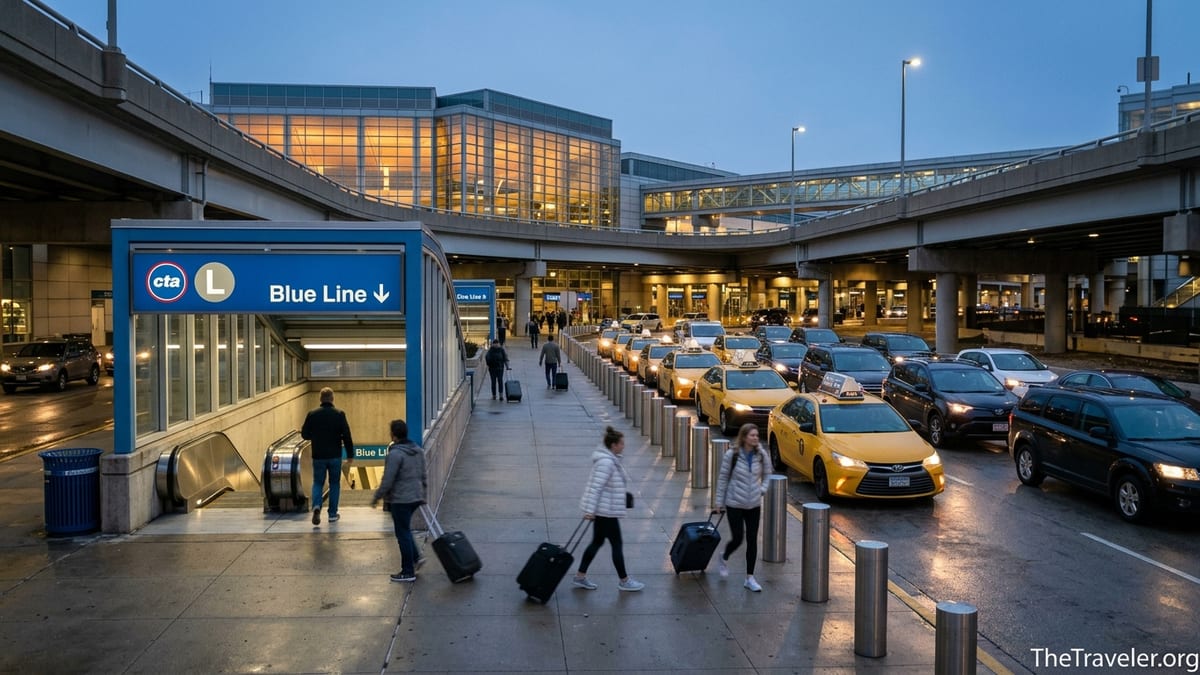
Understanding the Trip From O’Hare to Downtown
O’Hare International Airport sits on the far northwest edge of Chicago, roughly 17 to 25 miles from the Loop depending on the route and traffic. In light traffic, the drive into central downtown along the Kennedy Expressway can take about 25 to 35 minutes, but during weekday rush hours or bad weather it can easily stretch to 60 minutes or more. That variability is what makes the direct train connection particularly attractive for many travelers.
Most visitors heading “downtown” are going to the Loop business district or nearby neighborhoods such as River North, Streeterville, the West Loop, or the South Loop. From a transport perspective, all of these are considered central Chicago and are within a 5 to 15 minute cab or rideshare ride of the main Loop train stations and hotels like the Palmer House, Hyatt Regency Chicago, JW Marriott, or Fairmont.
When comparing options you will want to balance four key factors: travel time, cost, comfort, and how easy each mode is with your luggage. For example, a solo traveler with a roll‑aboard arriving at 2 p.m. on a Tuesday may find the CTA Blue Line train both faster and cheaper than a car stuck in traffic, while a family of four arriving late at night with several large suitcases may prefer the door‑to‑door convenience of a taxi or Uber even at a higher price.
Another consideration is your familiarity with big‑city transit. The Blue Line is straightforward and signed clearly inside the airport, but if the idea of navigating an unfamiliar metro after a long flight sounds stressful, budgeting for a car or pre‑arranged transfer might be worth the extra cost just for peace of mind.
CTA Blue Line: The 24/7 Budget Workhorse
The Chicago Transit Authority’s Blue Line runs directly from an underground station at O’Hare to downtown Chicago around the clock. Trains generally leave every few minutes at peak times and roughly every 10 to 15 minutes late at night. Typical travel time from O’Hare to the Loop is about 40 to 45 minutes and is largely unaffected by highway traffic, which makes the train a reliable choice during rush hour or in winter weather.
The O’Hare Blue Line station is located below the main parking structure serving Terminals 1, 2, and 3. From these terminals you follow signs for “Trains to City” down escalators and through a pedestrian tunnel. From Terminal 5 (where many international flights arrive), you ride the free Airport Transit System people‑mover to the main terminals, then walk inside to the station. Once at the station, there are clear Ventra ticket machines where you can buy a single‑ride ticket or a 1‑day or 3‑day pass if you plan to use buses and trains during your stay.
As of mid‑2026, the standard fare for most CTA train rides is around 2 to 3 dollars, but trips that originate at O’Hare station carry a higher price, about 5 dollars for a single ride from the airport into the city. That means a solo traveler can get from the airport to the Loop for roughly 5 dollars, and a couple can make the trip for about 10 dollars total, which is significantly cheaper than a taxi or Uber. Multi‑day passes typically start around the cost of one or two taxi rides and can be good value if you expect to ride the “L” and buses several times a day.
With luggage, the Blue Line is practical if you can comfortably manage your own bags up and down a few short stairways or station ramps. Most stations downtown have elevators, but at busy times you may find trains crowded, especially near rush hour when locals are commuting. For example, arriving at O’Hare at 4 p.m. on a weekday with a single carry‑on and backpack, you might board a moderately crowded train and stand for part of the 40‑minute trip, then exit at Clark/Lake or Washington and walk a few blocks to a Loop hotel. If you are carrying multiple large suitcases or traveling with young children, the tight aisles and limited luggage space on the train can be less comfortable.
Taxi: Predictable and Straightforward Door‑to‑Door Service
Chicago’s licensed taxis are a straightforward way to reach downtown directly from any terminal. Official taxi stands are clearly signposted outside the baggage claim areas, and airport staff typically direct arriving passengers into orderly lines. You do not need to book in advance; instead you simply queue, then are assigned the next available cab. Fares are set by the city, and drivers are required to take passengers to and from O’Hare upon request.
As of 2026, the average taxi fare from O’Hare to downtown Chicago is around 50 dollars before tip in normal traffic, according to the airport’s official guidance. That figure can fluctuate slightly based on exact destination, route, and traffic delays, but it is a good working estimate. Tipping 15 to 20 percent is customary in the United States, so a typical total for a solo traveler heading to a Loop hotel might be in the range of 58 to 65 dollars all‑in.
In terms of time, a taxi ride to a central Loop address in light traffic might take 30 to 35 minutes. During peak rush hours on the Kennedy Expressway, especially on weekday mornings into the city or late afternoons out of downtown, the same ride can stretch to 45 to 60 minutes or more. A visitor arriving on a Friday at 5 p.m. should plan for the longer end of that range, and understand that the meter continues to run in stop‑and‑go traffic.
For travelers with substantial luggage or mobility concerns, taxis offer a major advantage over the train: you load bags once into the trunk and step out directly at your hotel entrance. A family of four with two large checked suitcases and two roll‑aboards, arriving after an overnight international flight, may find the incremental cost compared with four Blue Line tickets worthwhile, especially if they value a quiet, private ride to recover from jet lag.
Uber, Lyft and Other Ride‑Hail Services
Ride‑hailing services such as Uber and Lyft operate extensively at O’Hare, with designated pickup zones in the airport’s ground transport areas. To use them, you will typically collect your bags, open the relevant app, enter your hotel address, then follow signs to the rideshare pickup area once a driver has been assigned. Specific pickup points can vary by terminal and may require a 5 to 10 minute walk, so it is wise to check the app’s directions carefully.
Pricing for Uber and Lyft is dynamic and depends on time of day, demand, and the vehicle category you choose. On a typical weekday midday in 2026, many travelers report seeing estimates in the ballpark of 35 to 60 dollars for a standard ride from O’Hare to central downtown, before tip. During busy periods like Monday mornings, holidays, or large conventions, surge pricing can push that closer to or above traditional taxi rates. Both companies pass through airport and city surcharges automatically, so the quote you see in the app generally reflects the final base price before any optional tip.
A common real‑world scenario might look like this: landing at 9 p.m. on a Sunday, a solo traveler checks the apps and sees UberX estimated at around 40 dollars and Lyft at 38 dollars to a hotel near Millennium Park. If the routes are similar, the traveler might choose Lyft as slightly cheaper, then walk to the shared rides pickup area, locate the car by license plate, and enjoy a 30 to 40 minute drive into the city with door‑to‑door drop‑off.
Ride‑hail services are especially useful for small groups and those staying in neighborhoods not well served by the Blue Line, such as parts of the West Loop or near McCormick Place where train access involves multiple transfers and walking. They also offer more vehicle choices. Two colleagues with carry‑ons might be comfortable in a compact car, while a group of five with large bags could select an “XL” or equivalent category at a higher price but with ample space.
Airport Shuttles and Private Transfers
Unlike some cities that offer a dedicated express bus from the main airport directly to downtown hotels, O’Hare’s shared shuttle scene is more fragmented and often oriented toward suburbs or specific hotels. The airport’s shuttle area mainly serves hotel courtesy vans, regional buses, and charter companies. Some downtown conference hotels occasionally partner with event organizers to run limited‑time shuttle services, but these are usually restricted to registered attendees and are not a regular public service.
Travelers who prefer a pre‑arranged ride with a driver holding a sign in the arrivals area generally book through private car or limousine companies. These services often price airport to downtown transfers at a fixed rate per vehicle, which can range widely depending on vehicle type, from a basic sedan to a luxury SUV or stretch limousine. For example, a standard sedan transfer from O’Hare to a Loop hotel might be quoted in the neighborhood of 70 to 120 dollars including taxes and airport fees, with gratuity sometimes added automatically.
The main advantages of a private transfer are predictability and comfort. Your driver monitors your flight, adjusts pickup for delays, and meets you in the terminal or a clearly designated area. This can be particularly attractive after a long‑haul international flight, for elderly travelers, or for executives on tight schedules who want to step directly into a waiting car without using apps or standing in taxi lines. For a group splitting the cost, such as three friends sharing an 80 dollar private SUV to River North, the per‑person price can be competitive with separate taxis.
If you are interested in this option, it is best to reserve directly with a reputable Chicago ground transportation company or through your hotel concierge in advance of travel. Because there is no single dominant provider, comparing a few quotes online and confirming what is included and where exactly you will meet your driver is important.
Driving Yourself: Rental Cars and Parking Realities
Major car rental brands maintain large facilities at O’Hare, connected to the terminals by the Airport Transit System and a consolidated rental car center. Renting a car can make sense if Chicago is just your first stop on a wider regional road trip, such as continuing on to Milwaukee, Indiana Dunes National Park, or a drive downstate. In that case, you would simply drive from O’Hare into downtown for your first nights, then continue onward.
However, for visitors who plan to stay primarily in central Chicago, a rental car is rarely the most economical or convenient way to get from the airport to downtown. Daily parking at major Loop and River North hotels commonly runs from roughly 50 to over 80 dollars per night for valet service, and self‑parking garages in the area can still cost 30 to 50 dollars per day. When you add that to the rental rate, taxes, and fuel, the total can quickly exceed the cost of taxis or ride‑hail for all your local trips.
Traffic and one‑way street patterns in downtown Chicago can also be stressful for first‑time visitors, especially in winter weather. Missing a turn near the river or on Lower Wacker Drive can mean navigating complex detours and tight merges. Locals often recommend leaving driving to professionals if your main activities are conferences, museums, and restaurants within the central neighborhoods.
There are exceptions. A family renting an SUV at O’Hare for a week‑long vacation that includes three days downtown followed by several days in the suburbs or at a lake house might accept high hotel parking charges because the vehicle will be essential later in the trip. In that case, carefully comparing weekly rental rates including airport surcharges to rates at downtown rental locations for a shorter period can sometimes reveal savings by delaying the rental until after your stay in the city center.
Choosing the Best Option for Your Budget, Time and Luggage
When deciding which mode to choose between O’Hare and downtown, start by identifying your priorities. If keeping costs low is paramount, the CTA Blue Line will almost always win for solo travelers and couples who are comfortable with urban transit. At roughly 5 dollars per person from the airport station and a predictable 40 to 45 minute journey, it is hard to beat on value. Factor in an additional short taxi or rideshare ride at the downtown end if your hotel is not within easy walking distance of a station.
If convenience and comfort with luggage are more important than saving money, door‑to‑door options like taxis, Uber, Lyft, or private cars become attractive. A single taxi or Uber typically costs the equivalent of 7 to 12 Blue Line fares, but that gap narrows when the cost is shared by three or four people. A family of four might spend about 20 dollars on Blue Line tickets versus around 55 to 65 dollars plus tip for a taxi in average conditions. In that scenario, the per‑person difference is modest, and the benefit of stepping directly from baggage claim to hotel lobby may be worth it.
Arrival time can also tip the balance. During the day and early evening, the Blue Line’s frequent service and the presence of many fellow travelers often feel reassuring for visitors. Very late at night or in the very early morning, some travelers prefer the perceived security of a door‑to‑door car service, especially if they are carrying expensive equipment or are unfamiliar with urban transit systems. On the other hand, in heavy rush‑hour traffic the train may be both calmer and faster than an expressway packed with brake lights.
Luggage and mobility are decisive factors too. If you can comfortably roll your bag and handle a few station steps, the train is usually manageable. If you are pushing a stroller, traveling with someone who uses a mobility aid, or juggling bulky items, a street‑level pickup is much easier. In practice, many visitors use a mix of modes: train on arrival when they feel fresh and have time, then splurge on a taxi or rideshare back to O’Hare for an early‑morning departure.
The Takeaway
Reaching downtown Chicago from O’Hare is simpler than it might appear from the route map. The CTA Blue Line offers a 24/7, budget‑friendly path straight into the heart of the city in about 40 to 45 minutes, ideal for cost‑conscious or solo travelers with manageable luggage. Taxis and ride‑hailing services trade higher fares for door‑to‑door convenience and can be especially appealing for families, small groups, or anyone arriving exhausted after a long flight.
Airport shuttles and private transfers fill niche needs, from conference‑specific buses to pre‑booked sedans that prioritize comfort and predictability. Rental cars, while useful for broader regional itineraries, generally provide poor value if your plans are limited to central Chicago, given parking costs and city driving stress.
Before you land, quickly think through who you are traveling with, how much you are carrying, and how comfortable you feel on public transit. Then choose the mode that best matches your budget, tolerance for traffic, and desire for a smooth, low‑stress start to your time in Chicago. With realistic expectations about time and cost, any of the main options can get you from O’Hare to the bright lights of the Loop without unnecessary drama.
FAQ
Q1. How long does it usually take to get from O’Hare to downtown on the Blue Line?
The Blue Line typically takes about 40 to 45 minutes from O’Hare to central downtown stations such as Clark/Lake, assuming normal operations.
Q2. How much does a taxi from O’Hare to downtown Chicago cost in 2026?
As of 2026, an average metered taxi fare from O’Hare to the downtown Loop area is around 50 dollars before tip, with a usual total closer to 58 to 65 dollars including gratuity.
Q3. Is the CTA Blue Line safe for travelers with luggage?
Many visitors and locals use the Blue Line with luggage every day. As in any big city, it is wise to stay aware of your surroundings, keep valuables close, and avoid leaving bags unattended, especially late at night.
Q4. Where do I catch Uber or Lyft at O’Hare?
Uber and Lyft pickups are in designated rideshare zones in the airport’s ground transportation areas. After requesting a ride in the app, follow the terminal signs and on‑screen directions to the specific pickup point for your terminal.
Q5. Is it worth renting a car just to get from O’Hare to downtown?
For most visitors staying in central Chicago, renting a car solely for the airport transfer is not cost‑effective once high downtown parking prices, taxes, and traffic stress are considered.
Q6. What is the cheapest way to get from O’Hare to downtown Chicago?
For most travelers, the cheapest practical option is the CTA Blue Line, which costs around 5 dollars per person from O’Hare station to downtown, plus any local transit you may use afterward.
Q7. Can I use a contactless bank card or phone to pay on the CTA from O’Hare?
The CTA’s Ventra system accepts dedicated transit cards, but many visitors also tap in with compatible contactless bank cards or mobile wallets at station turnstiles, simplifying payment without needing exact cash.
Q8. Are there direct airport shuttle buses from O’Hare to downtown hotels?
There is no single city‑run express shuttle from O’Hare to all downtown hotels. Some conferences and hotels may arrange limited shuttles for their guests, and private companies offer pre‑booked transfers, but these services are not universal.
Q9. How late does the Blue Line run from O’Hare into the city?
The Blue Line operates 24 hours a day between O’Hare and downtown, though trains run less frequently overnight, so you may wait longer between departures in the early morning hours.
Q10. What is the best option if I arrive very late at night with heavy luggage?
For a very late arrival with multiple or heavy bags, most travelers prefer a taxi, Uber, Lyft, or pre‑booked private car for a direct, door‑to‑door trip to their hotel, even though it costs more than the train.