


Glacier Bay National Park and Preserve sits in northern Southeast Alaska, west of Juneau and just offshore from the small gateway community of Gustavus. Managed by the U.S. National Park Service, it is a vast landscape of tidewater glaciers, fjords and temperate rainforest that is reached only by boat or plane. Most visitors see Glacier Bay from the deck of a large cruise ship on a single day of scenic glacier viewing, while a smaller but growing number travel independently to stay overnight in or near the park and explore by day boat, kayak or on foot. Understanding how access works is essential if you want to fit Glacier Bay into a broader Southeast Alaska itinerary.
Get the latest updates straight to your inbox!
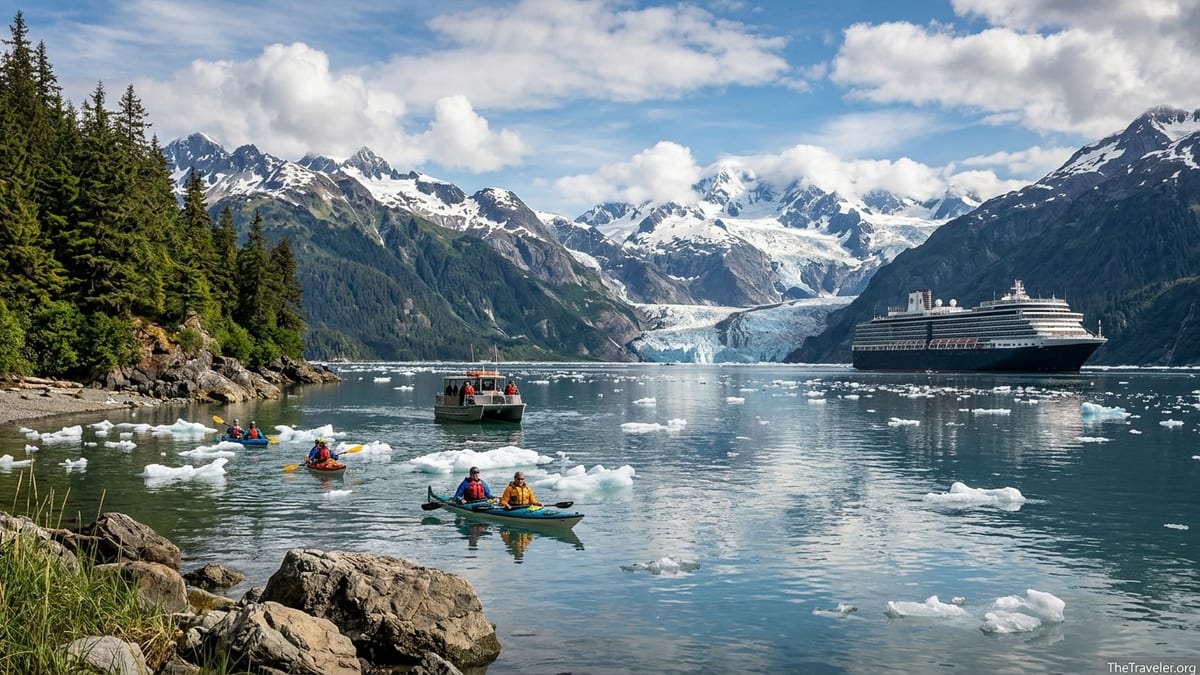
Where Glacier Bay Fits into a Southeast Alaska Trip
Glacier Bay lies at the far northern end of the Inside Passage, roughly 50 air miles west of Juneau. There are no roads into the park from the rest of Alaska or Canada. A single 10 mile road connects Gustavus and its small airport with park headquarters at Bartlett Cove on the outer edge of Glacier Bay, and everything beyond that point is accessed by water.
The National Park Service manages Glacier Bay National Park and Preserve as a remote marine park focused on both conservation and visitor experience. That means strict control of vessel traffic inside the bay, including daily limits on the number of cruise ships, tour boats, charter boats and private vessels allowed past Bartlett Cove. It also means that access for you as a visitor will almost certainly involve choosing between a large cruise ship visit or an independent trip via Gustavus that combines flights, boats and lodging.
For many travelers planning Southeast Alaska, the choice is not “whether” to go to Glacier Bay but “how.” Cruise itineraries that include Glacier Bay deliver dramatic scenery with minimal logistics. Independent visits require more planning, but they are the only way to spend multiple days inside the park, paddle among icebergs, or camp on remote beaches. Your time, budget and appetite for logistics will determine which approach is the better fit.
Glacier Bay by Cruise Ship: What to Expect
Roughly four out of five visitors to Glacier Bay arrive on large cruise ships as part of longer Inside Passage itineraries. The National Park Service issues a limited number of cruise-ship entries per day into Glacier Bay, with a maximum of two large cruise ships allowed inside the bay on a typical summer day. Cruise companies bid for these highly regulated access slots season by season, and only some lines and specific sailings include Glacier Bay rather than other glacier destinations.
On most mainstream Alaska cruises that advertise Glacier Bay, the park day appears on your itinerary as a day of “scenic cruising” rather than a port call. Ships typically enter the park early in the morning, travel up one or more of the main arms to a tidewater glacier such as Margerie Glacier, spend time slowly pivoting for views, then retrace their route and exit the park later in the day. You remain on board the entire time, moving between outdoor decks and interior lounges to watch for calving ice, mountain scenery and wildlife.
The experience on board often includes interpretation provided in partnership with the National Park Service. According to current NPS information, park rangers and cultural interpreters commonly board permitted cruise ships at Bartlett Cove for the day, offering live commentary, short presentations, junior ranger activities and informal Q&A while the ship is inside park waters. Exact programming varies by cruise line and ship, and regulations can change, so travelers should verify details with their cruise operator for their specific sailing year.
It is important to set expectations: large-ship passengers are generally not allowed to disembark anywhere inside Glacier Bay National Park during these scenic cruising days. Federal regulations restrict off-vessel activities from cruise ships unless specifically authorized, and Glacier Bay itineraries rarely include such authorizations. You should not expect shore excursions, hiking or kayaking within the park itself unless your itinerary explicitly describes them, which is uncommon on big-ship routes.
Independent Access via Gustavus and Bartlett Cove
Travelers who want more time on the water or on land inside Glacier Bay typically plan an independent visit using Gustavus and Bartlett Cove as their base. Current National Park Service guidance explains that the standard approach is to travel first to Juneau, then continue to Gustavus by small plane or, when available, by the Alaska Marine Highway ferry. From Gustavus, a short road leads to the park’s Bartlett Cove area, where you find the park visitor center, Glacier Bay Lodge, campground, dock and trailheads.
The flight from Juneau to Gustavus usually takes about 30 minutes. As of the 2026 summer season, Gustavus is served by at least one mainline carrier on a seasonal basis and by regional operators such as Alaska Seaplanes, which runs small-plane service between Juneau and several Southeast communities. Schedules, operating dates and baggage allowances can vary widely by airline and by month, so travelers need to check current timetables and weight limits before booking. Many small-plane operators enforce strict baggage caps and may charge for excess or require advance notice for bulky items like kayaks.
In some seasons, the Alaska Marine Highway System offers ferry sailings between Juneau and Gustavus. Route maps for recent years show a Juneau–Gustavus–Hoonah segment on the northern Inside Passage network, and a published 2026 summer schedule includes multiple sailings to Gustavus from Juneau during the main visitor season. Exact days of operation, frequency and the vessel used can still change year to year or even within a season, so it is essential to consult the current Alaska Marine Highway booking system or a reservations agent for your travel dates.
Once in Gustavus, you can reach Bartlett Cove and park facilities by lodge shuttle, taxi or rental vehicle. The road distance is about 10 miles. There is no entrance fee for Glacier Bay, but lodging and excursions do require advance reservations. For most summer itineraries, it makes sense to secure lodging and key activities such as the day tour boat before you book connecting flights or ferries, then match your transportation around confirmed dates.
Lodging, Campgrounds and Booking Logistics
Overnight options for Glacier Bay center on three categories: Glacier Bay Lodge in Bartlett Cove inside the park, small inns and lodges in Gustavus, and frontcountry or backcountry camping. Glacier Bay Lodge is the only hotel within park boundaries and operates under contract with the National Park Service. Approved hours and rates published for the 2026 season show the lodge, dining room and related services running on a roughly late May to early September schedule, but exact opening and closing dates can shift slightly by year.
Glacier Bay Lodge tends to book up early for peak dates, particularly June through August, and often requires deposits at the time of reservation. Because the lodge also operates the park’s sole permitted day tour boat, many guests book packages that bundle lodging, meals and the day cruise. Independent travelers who prefer more flexibility or different price points can look to small inns, B&Bs and vacation rentals in Gustavus, which range from simple cabins to higher-end wilderness lodges. Availability, minimum stays and cancellation policies vary, so careful comparison is worthwhile.
For visitors on tighter budgets or seeking a closer connection to the landscape, the National Park Service maintains a walk-in campground near Bartlett Cove. Current NPS materials indicate that sites are generally first-come, with an orientation and registration required, and that food storage must follow bear safety rules using provided cache boxes or personal bear-resistant containers. During the main summer season, a free campground shuttle typically connects Bartlett Cove with Gustavus on a limited schedule, but specifics for any given year should be verified before travel.
Backcountry camping on remote beaches deeper inside Glacier Bay is also possible but is subject to additional requirements. The park asks overnight backcountry groups to obtain permits or complete mandatory orientations, often in person at the visitor center, where rangers review tides, wildlife precautions, food storage, and boating regulations. Group size limits, campsite dispersal guidelines and seasonal closures in sensitive wildlife areas are specific to Glacier Bay and can differ from norms in other Alaska parks, so do not assume one set of rules covers them all.
Day Boat Tours and On-the-Water Experiences
For overnight visitors based in or near Bartlett Cove, the signature experience is the Glacier Bay day tour boat. According to both National Park Service planning information and the current concessioner schedule, one full-day catamaran departs Bartlett Cove each morning during the main summer visitor season for an approximately eight-hour trip up the West Arm to tidewater glaciers. Boarding typically begins shortly before 7 a.m., with the boat returning to the Bartlett Cove dock by mid to late afternoon.
Recent 2026 rate approvals list adult prices for the full-day tour in the mid-200 US dollar range, including lunch and hot drinks, with lower fares for children. The operator also uses this vessel to drop off and pick up permitted campers and kayakers at backcountry beaches along the route, subject to availability and advance arrangements. A National Park Service ranger usually provides narration on natural history, glaciology and wildlife during the cruise, and wildlife sightings can include humpback whales, harbor seals, sea otters, mountain goats and occasionally bears along shore.
In addition to the scheduled day tour, private charters and guided small-boat trips may be available through Gustavus-based outfitters. These range from half-day wildlife cruises around Icy Strait to multiday small-ship expeditions that spend extended time inside Glacier Bay and neighboring inlets. Unlike large cruise ships, these smaller vessels can sometimes anchor in more confined coves and may operate flexible itineraries within the boundaries of their permits, but they are still subject to Glacier Bay vessel quotas and route regulations.
Independent boaters arriving in their own vessels must obtain advance permits to enter Glacier Bay and comply with park-specific rules on speed limits, wildlife approach distances, quiet hours and closed areas. The park issues a limited number of daily small-vessel permits in summer, and applications generally open several months before the season. Boaters should not assume that availability or rules mirror those of other Alaska marine parks; Glacier Bay’s system is more tightly managed and updated regularly.
Kayaking, Hiking and Backcountry Options
Glacier Bay has a strong reputation among sea kayakers, but it is important to understand the logistics. Most paddlers begin their trips from Bartlett Cove or from drop-off points reached on the day tour boat, then spend several days or more exploring remote inlets. The park allows both guided and self-guided trips, but it requires backcountry campers to complete an orientation that covers tides, currents, camping regulations, and how to avoid disturbing wildlife and sensitive intertidal areas.
Guided kayaking is available through concessioners and outfitters based at Glacier Bay Lodge and in Gustavus, typically in the form of half-day or full-day paddles near Bartlett Cove or longer overnight expeditions deeper in the bay. These trips often bundle equipment, meals, permits and transportation to launch points, which can simplify planning for visitors unfamiliar with Alaskan coastal conditions. Self-guided paddlers must arrange their own boat transport for themselves and their kayaks, often by reserving camper drop-off spots on the day tour catamaran, and must ensure that all food and scented items can be stored in approved bear-resistant containers.
Hiking opportunities in Glacier Bay are more limited than in some other national parks but can still be rewarding, especially for travelers staying at Bartlett Cove. Well-established frontcountry trails near the visitor center and lodge, such as forest and shoreline loops, typically provide half-day options on maintained surfaces, with interpretive signs and occasional ranger-led walks in high season. Trail conditions and any temporary closures are updated by the park each year, so checking recent notices before arrival is wise.
Longer backcountry hikes and mountaineering routes exist in the rugged terrain beyond the shoreline, but they are suitable only for highly experienced parties with appropriate skills and equipment. Many areas are most practically reached by boat and require careful attention to tides, glacial streams and unstable terrain. The National Park Service may require registration, route consultation or additional permits for certain types of expeditions, and conditions can change rapidly from year to year as glaciers retreat and landscapes evolve.
Seasonality, Weather and Safety in Glacier Bay
Glacier Bay’s primary visitor season runs roughly from late May through early September, which is when the lodge, day tour boat, most Gustavus lodging and the full slate of cruise ship visits are active. Shoulder seasons in May and September can be quieter and sometimes less expensive but may have more limited transportation options, fewer guided activities and a higher likelihood of cool, wet weather. Winter access is possible for experienced travelers but very limited and largely unsupported by commercial services.
Weather in Glacier Bay is maritime and highly changeable even in midsummer. Visitors should be prepared for rain, low clouds, chilly winds and temperatures that often remain in the single digits Celsius, especially on the water near glaciers. Hypothermia risk is significant for anyone on or near cold water, and appropriate layered clothing, waterproof outerwear, hats and gloves are essential on day boats, in kayaks and on exposed trails. Calm, sunny days can occur and are memorable when they do, but they should be treated as a bonus rather than the baseline expectation.
Wildlife encounters also shape Glacier Bay safety practices. The park has healthy populations of both brown and black bears, as well as wolves and other predators. Current park regulations emphasize strict food storage, cooking away from sleeping areas in backcountry camps, maintaining safe distances from all wildlife, and adhering to closures near nesting seabird colonies or seal haul-outs. Boaters and kayakers must keep minimum distances from whales and other marine mammals and reduce speed in designated wildlife protection zones.
Because Glacier Bay is a dynamic glacial landscape, additional hazards include calving ice, rapidly changing tides and shifting sandbars. Large chunks of ice falling from tidewater glacier faces can generate dangerous waves and throw ice blocks well beyond the visible edge of the glacier, so both motorboats and kayaks must observe prescribed stand-off distances. Tide tables are critical planning tools for landing and launching small boats, especially in narrow inlets with strong currents or broad intertidal flats.
Choosing Between Cruise-Only and Independent Travel
Deciding how to include Glacier Bay in a Southeast Alaska trip comes down to priorities. A cruise-only visit works well for travelers who want a mostly turnkey vacation focused on scenic highlights, with Glacier Bay as one dramatic day among several along the Inside Passage. For many families, first-time Alaska visitors or those with limited mobility, viewing calving glaciers and marine wildlife from the comfort of a ship’s decks and lounges provides a satisfying overview with minimal logistical stress.
An independent trip via Gustavus makes more sense for travelers who see Glacier Bay as a primary destination rather than a side attraction. Photographers who want varied light over multiple days, paddlers hoping to camp in remote inlets, hikers seeking quiet forests and shorelines, and wildlife enthusiasts who prefer small-group experiences usually benefit from investing the extra time and planning needed to reach Bartlett Cove. The trade-off is cost and complexity: small-plane flights, ferry tickets, lodging and guided activities can add up quickly, and reservations often need to be made months in advance for peak dates.
Some travelers blend the two approaches by taking a large-ship cruise that includes Glacier Bay, then returning in a later year for a dedicated Gustavus-based visit once they know the region better. Others skip Glacier Bay on big ships in favor of routes that feature other glaciers, then allocate a separate land-and-sea segment for Glacier Bay alone. There is no single right answer, but being clear about how important on-the-ground time in the park is to you will help you choose.
Whichever option you select, treat Glacier Bay as a key anchor point when building your broader Southeast Alaska itinerary. For cruises, verify that your chosen sailing has a confirmed Glacier Bay entry. For independent travel, begin by checking the current National Park Service information for operating seasons, camping rules and advisories, then confirm Gustavus flights, any ferry sailings, and lodge or campground availability. With that foundation, you can build the rest of your Alaska trip around a Glacier Bay experience that matches your style, budget and sense of adventure.