


Manila’s Ninoy Aquino International Airport (NAIA) can confuse even frequent flyers. Four different terminals, shifting airline assignments and mixed domestic and international operations mean it is surprisingly easy to show up at the wrong building. This guide explains, in practical terms, how Terminals 1, 2, 3 and 4 work in 2026, which airlines use which terminal, and how to avoid the most common mistakes.
Get the latest updates straight to your inbox!
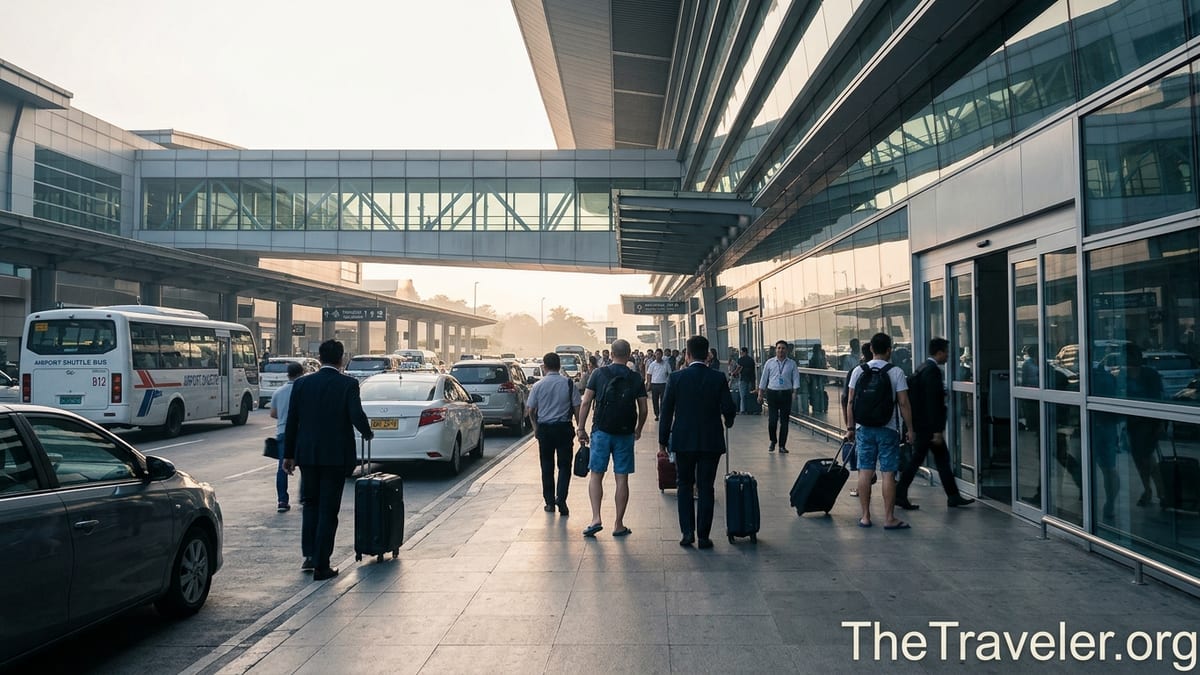
How NAIA’s Four Terminals Work Today
NAIA is one airport spread across four separate terminals that are not connected airside. Unlike airports where you can walk between piers after you clear security, moving between NAIA terminals almost always means exiting to the street and taking a shuttle, taxi or ride-hailing car. With Manila’s traffic, that can easily add 30 to 60 minutes to your journey, even though the buildings sit only a few kilometers apart.
As of mid-2026, Terminal 1 is primarily an international terminal. Philippine Airlines (PAL) has consolidated its international flights there, alongside a long list of foreign carriers from the Middle East, Europe and Asia. Terminal 2 is now mostly a domestic hub for PAL and a few partner or regional carriers. Terminal 3 is the biggest and busiest, handling most Cebu Pacific flights and many other international airlines. Terminal 4, the smallest and oldest, remains a basic domestic terminal focused on turboprop and low-cost operations.
These assignments evolve under the airport authority’s Schedule and Terminal Assignment Rationalization program, which aims to spread demand more evenly. For example, PAL’s international flights shifted from Terminal 2 to Terminal 1 in 2023, and AirAsia Philippines began moving international services from Terminal 3 to Terminal 1 in 2026. Because changes continue, always confirm your terminal on your booking, airline app or e-ticket within 24 hours of travel.
For most travelers, the key rule of thumb is simple: long-haul foreign airlines and PAL international flights usually mean Terminal 1 or 3; PAL domestic usually means Terminal 2; Cebu Pacific is overwhelmingly Terminal 3; and smaller domestic carriers or some AirAsia domestic flights may use Terminal 4. The following sections break that down in detail.
Terminal 1: PAL International and Foreign Carriers
Terminal 1, the oldest international terminal, handled nearly all of Manila’s long-haul flights for many years and still feels like a classic gateway terminal. Today it is the main home of Philippine Airlines international flights, serving routes such as Manila to Los Angeles, San Francisco, Vancouver, Sydney and many regional Asian destinations. Many foreign carriers also use Terminal 1, including several Middle Eastern airlines, European flag carriers and some large Asian airlines, depending on current assignments.
If you are flying Manila to Los Angeles on PAL, or arriving from Dubai on a Gulf carrier, you should expect to use Terminal 1. Arrivals follow a standard pattern: immigration booths line the first hall, then baggage claim carousels, customs inspection and finally the arrivals curb where airport taxis, coupons taxis and pre-booked drivers wait. Baggage reclaim here is often crowded during late evening banks of long-haul arrivals, so allow extra time if you have a tight onward connection in the city.
On departure, Terminal 1 has dedicated check-in islands for PAL international plus shared counters for foreign airlines. Economy lines can grow long before overnight flights to North America and the Middle East, so arriving 3 hours before departure is wise. Business-class and elite passengers usually have priority counters and access to PAL or partner lounges upstairs. Security and immigration are in a single combined checkpoint after check-in, so once you pass through you are airside; there is no way to reach any other terminal without exiting and repeating formalities.
A common mistake is assuming that “Philippine Airlines equals Terminal 2” because older guidebooks still describe Terminal 2 as PAL’s exclusive home. A traveler flying PAL from Tokyo to Manila and then on to Cebu might land at Terminal 1, but their separate domestic ticket on a regional airline could depart from Terminal 3 or 4. Without checking, they might tell a Manila-based friend to meet them at Terminal 2, only to realize on landing that they are in Terminal 1 and need another 20 to 40 minutes to cross the airport by road.
Terminal 2: PAL Domestic Hub and Select Regional Flights
Terminal 2, often called the Centennial Terminal, was designed as a dedicated Philippine Airlines facility. After PAL moved its international flights to Terminal 1, Terminal 2 effectively became its main domestic hub, with some partner and regional airlines also using the building as assignments shift. If you are flying PAL from Manila to Cebu, Davao, Iloilo, Bacolod or Cagayan de Oro, there is a strong chance your flight departs from Terminal 2.
Domestic departures at Terminal 2 generally feel calmer than at Terminal 3. PAL sells higher average fares than local low-cost carriers, which tends to reduce crowding slightly, though peak holiday periods can still mean long lines. Check-in counters are grouped by destination and class of service, with separate lanes for economy, premium economy and business class. Self-service kiosks are increasingly available for passengers with only hand luggage. For example, a Manila to Cebu passenger with only a backpack can often check in at a kiosk, print a boarding pass and go straight to security.
On arrival in Terminal 2, domestic passengers collect checked bags from ground-level carousels and exit directly to the curb. There is no immigration or customs for purely domestic routes, which keeps processing relatively quick. Many Manila-based business travelers choose PAL on routes such as Manila to Davao or General Santos specifically because Terminal 2 arrivals can be easier to navigate in the evening than the busier Terminal 3.
A frequent mistake involves travelers with separate tickets who assume that both segments use Terminal 2 simply because PAL operates one leg. For instance, a Canadian traveler might arrive in Manila on PAL via Terminal 1, then have a separate onward domestic ticket on Cebu Pacific from Terminal 3. If they mistakenly go to Terminal 2, expecting all domestic flights to operate there, they must backtrack across the airport complex. In heavy afternoon traffic, that detour alone can eat 30 minutes and potentially jeopardize a tight connection.
Terminal 3: Cebu Pacific Stronghold and Mixed International Traffic
Terminal 3 is the newest and largest building at NAIA and serves as the main base for Cebu Pacific, including both domestic and international flights, along with Cebgo, its regional subsidiary. It also hosts a large cluster of foreign airlines. On a typical afternoon bank you might see queues for Cebu Pacific flights to Cebu, Iloilo and Caticlan alongside check-in for international carriers operating to Singapore, Seoul, Tokyo or Dubai.
For domestic travelers, Terminal 3 is often the default experience of Manila: backpackers on Cebu Pacific flights to Siargao, families flying to Boracay via Caticlan and overseas workers heading home to provincial cities all pass through the same halls. Cebu Pacific domestic check-in counters are usually grouped in shared islands, and lines can be long, particularly for passengers who need to pay for checked baggage or have oversized luggage like surfboards bound for Siargao. Expect security screening to be strict about cabin bag size and weight, and consider pre-paying baggage online to avoid delays at the counter.
International operations at Terminal 3 encompass both Cebu Pacific and many foreign airlines. Passengers flying Cebu Pacific from Manila to Singapore, Bangkok or Hong Kong typically depart from here, going through full immigration and security. For example, a traveler from Sydney arriving on a foreign airline at Terminal 3 might connect to a domestic Cebu Pacific flight to Cebu without changing buildings, but they still need to clear immigration, collect their checked bags, exit customs and re-check in at the Cebu Pacific domestic counters upstairs.
The most common Terminal 3 mistake involves misjudging connection times. A traveler might book an international arrival at 5:00 a.m. and a domestic Cebu Pacific departure at 7:00 a.m., assuming that 2 hours is plenty because both flights use Terminal 3. In practice, if the inbound is slightly delayed, queues at immigration are long, and baggage takes 30 minutes to appear, that 2-hour buffer can evaporate quickly. Many local experts recommend at least 3 hours between an international arrival and a separate domestic ticket at Terminal 3, even if you do not plan to check luggage.
Terminal 4: Manila’s Old Domestic Terminal
Terminal 4, sometimes called the Manila Domestic Passenger Terminal or the Old Domestic Terminal, is a compact, no-frills building that serves mainly shorter domestic routes and turboprop aircraft. Carriers such as AirSWIFT, regional Cebu Pacific affiliate operations and some domestic AirAsia services have used Terminal 4, particularly for routes to smaller island airports with limited runway length, like El Nido or Busuanga.
The experience at Terminal 4 feels very different from the larger terminals. Check-in counters sit only a few steps from the entrance, security is basic but functional, and boarding often takes place via ground-level gates where passengers walk out across the tarmac to climb stairs onto the aircraft. For example, a traveler heading to El Nido on AirSWIFT might check in at a small counter area, clear security in minutes, then wait in a modest departure hall with plastic chairs and a single snack stand, far from the mall-like feel of Terminal 3.
Because Terminal 4 is older and smaller, it frequently undergoes renovation and safety upgrades, which can temporarily shift some flights to Terminals 2 or 3. During such works, airline websites usually flag the change, but third-party booking platforms and older confirmation emails might still list “Manila Domestic” without clearly saying “Terminal 4.” This is a classic recipe for confusion: a traveler looks at an old confirmation, tells a taxi driver “Domestic terminal,” and ends up at Terminal 4 even though the flight has been moved to Terminal 2 for the season.
Arrivals at Terminal 4 are straightforward: you step off the aircraft, walk across the ramp, collect baggage from a small carousel area and exit almost directly to the curb. However, onward transfers can be awkward. There is no direct airside bus to the other terminals, so anyone continuing on an international flight must exit, find the official airport shuttle or hire transport and allow at least 45 minutes to reach Terminal 1 or 3 in peak traffic.
Domestic vs International: Where Your Airline Really Flies
The biggest source of confusion at NAIA is that airlines split operations by terminal and by route type. Philippine Airlines is the clearest example: in 2026 its international flights operate from Terminal 1, while its domestic network is concentrated in Terminal 2. That means a round-trip itinerary such as Los Angeles to Manila on PAL, then Manila to Cebu on PAL, can involve arriving at Terminal 1, transferring by road to Terminal 2, and later departing Manila for Los Angeles again from Terminal 1.
Cebu Pacific mostly simplifies matters by basing both domestic and international flights in Terminal 3, but even here there are nuances. Some regional routes, operated by smaller aircraft under the Cebgo brand, might occasionally be reassigned during congestion or renovation projects. Meanwhile, AirAsia Philippines presents the opposite challenge: its domestic flights can operate from one terminal while its international flights are handled in another. In 2026, AirAsia’s international services are progressively moving to Terminal 1, while many of its domestic flights continue to use Terminal 2 or Terminal 4, depending on current phases of the reassignment program.
Smaller carriers such as AirSWIFT and some charter or boutique airlines typically use Terminal 4 for purely domestic routes to resort destinations. A traveler flying from Manila to El Nido on AirSWIFT and then connecting to an international flight on a foreign carrier faces two separate flights, from two different terminals, with no through-checking. That traveler must claim their bags at Terminal 4, find road transport to Terminal 1 or 3 and re-check in, which often requires at least 4 to 5 hours of buffer time between flights.
When booking, pay close attention to terminal information in your confirmation. Major airlines usually print “NAIA T1,” “NAIA T2,” “NAIA T3” or “NAIA T4” next to the city name. Some online travel agencies only display “Manila, Ninoy Aquino Intl” without specifying the terminal until after purchase. In practice, cross-check your airline’s official site or mobile app within a day of departure, especially if you are flying on AirAsia or via a lesser-known regional carrier, which are more likely to be affected by terminal reshuffles.
Arrivals, Departures, Baggage and Transfers in Practice
Arriving at NAIA from abroad always involves immigration, baggage claim and customs, regardless of terminal. In Terminals 1 and 3, you exit the jet bridge into immigration halls where queues can build at busy evening and early morning banks of long-haul flights. After passport control, baggage claim areas sit just beyond. Baggage delivery times vary; during peak hours bags can take 30 minutes or more to reach the belt, particularly when several wide-body aircraft arrive close together.
On domestic arrivals into Terminals 2, 3 or 4, there is no immigration or customs. Passengers walk from the aircraft into a small arrivals concourse, collect bags at nearby carousels and exit into public areas. For example, a traveler arriving from Davao on PAL into Terminal 2 might be curbside within 20 minutes of landing during off-peak times, whereas a traveler arriving from Dubai into Terminal 3 at sunrise may spend that long simply queuing at immigration before even reaching baggage claim.
Departures follow a similar pattern across terminals: you enter the building, proceed to your airline’s check-in counter, clear security (and immigration for international flights) and then wait in the departure hall. At Terminal 3, Cebu Pacific international passengers must often stop at check-in counters even if they have checked in online, because immigration officers require a physically printed boarding pass. In contrast, many Cebu Pacific domestic passengers can go straight to security with a mobile or self-printed boarding pass if they have no checked baggage.
Transfers between terminals are where many itineraries unravel. NAIA operates an official airside shuttle for true connecting passengers on a single ticket and a separate landside shuttle linking terminals for the public. However, these services can be irregular, and many travelers simply use metered taxis or ride-hailing apps. For a self-connecting traveler arriving at Terminal 4 and departing from Terminal 3, a realistic minimum connection time is around 3 hours: 15 to 30 minutes to deplane and collect baggage, 15 to 45 minutes for road transfer depending on traffic, and 1.5 to 2 hours for check-in and security at the next terminal.
Common Wrong-Terminal Mistakes and How to Avoid Them
By far the most common mistake at NAIA is assuming that all flights on a given airline use the same terminal. A traveler might know that Cebu Pacific uses Terminal 3 and then book a domestic AirAsia flight, only to show up at Terminal 3 by habit even though their ticket clearly says Terminal 2 or 4. In Manila’s midday heat, hauling luggage between terminals after catching this error can be a frustrating start to any trip.
Another frequent error involves outdated advice from friends or older online posts. For example, someone who flew PAL internationally several years ago might swear that “PAL is Terminal 2 only,” not realizing that the carrier’s international flights shifted to Terminal 1. A traveler could accept that well-meaning advice, tell a hotel taxi to drop them at Terminal 2 for a Manila to Vancouver flight, and then face a rushed 40-minute cross-airport transfer to Terminal 1 after check-in agents break the news.
A third trap lies in vague references to the “domestic terminal.” Some confirmation emails, especially from smaller carriers or tour operators packaging charter flights to resort islands, still refer to “Manila Domestic” without spelling out “Terminal 4.” A traveler arriving in Manila from Hong Kong into Terminal 3, holding a separate ticket from “Manila Domestic” to El Nido, might mistakenly think their domestic flight leaves from Terminal 3 as well. In reality, they must travel to Terminal 4, which can add a stressful hour of transfers just when they least expect it.
The solutions are simple but require discipline. First, always read beyond “Manila” on your ticket and look for “T1, T2, T3 or T4” in the fine print. Second, re-check your terminal on the airline’s official app or website on the day before you fly, because terminal reshuffles often occur with a few weeks’ notice. Third, if you are unsure, budget extra time. Paying for an extra hour in an airport cafe is far better than missing a flight because you guessed the wrong terminal.
The Takeaway
Manila’s Ninoy Aquino International Airport is more complex than it appears on the route map. Four separate terminals, each with its own mix of airlines and flights, mean that simply knowing you are flying “to Manila” is not enough. You need to know exactly which NAIA terminal your airline uses on the specific date and route you are flying.
As of 2026, Terminal 1 handles Philippine Airlines international and many foreign carriers, Terminal 2 focuses on PAL domestic and select partners, Terminal 3 is the main base for Cebu Pacific and a host of international airlines, and Terminal 4 serves as a compact domestic terminal for turboprops and some low-cost services. Arrivals and departures follow broadly similar patterns across the airport, but transfers between terminals are entirely landside and vulnerable to Manila traffic.
For travelers, the practical steps are clear: verify your terminal directly with the airline close to departure, allow generous connection times if you must change terminals and be especially careful when flying carriers like AirAsia or regional boutique airlines whose terminal assignments are more likely to shift. With a bit of planning and realistic expectations, NAIA’s four-terminal puzzle becomes manageable and your time in Manila can start or end on a far more relaxed note.
FAQ
Q1. How do I know which NAIA terminal my flight uses?
Check your booking confirmation or e-ticket for “NAIA T1, T2, T3 or T4” next to Manila, then confirm again on your airline’s website or app within 24 hours of travel.
Q2. Do Philippine Airlines flights always use the same terminal?
No. In 2026, PAL international flights use Terminal 1, while most PAL domestic flights use Terminal 2. Always check your specific route, as assignments can change.
Q3. Which terminal does Cebu Pacific use in Manila?
Cebu Pacific and its regional brand Cebgo mainly operate from Terminal 3 for both domestic and international flights, though occasional adjustments are possible during congestion or works.
Q4. Is there a direct walkway between NAIA terminals?
No. The terminals are separate buildings. You must exit to the street and transfer by shuttle, taxi or ride-hailing car, so allow 30 to 60 minutes for inter-terminal travel.
Q5. How much connection time should I allow between international and domestic flights at NAIA?
If you are on separate tickets or changing terminals, aim for at least 3 hours. For complex transfers involving Terminal 4 or rush-hour traffic, 4 hours or more is safer.
Q6. Are domestic and international flights of the same airline always in the same terminal?
Not always. PAL splits international and domestic between Terminals 1 and 2, and AirAsia can use different terminals for domestic and international services. Cebu Pacific is more consistent in Terminal 3.
Q7. What happens if I go to the wrong terminal in Manila?
You must travel by road to the correct terminal, which can take 30 to 60 minutes in traffic. If you arrive late, the airline may refuse boarding or charge rebooking fees.
Q8. Is Terminal 4 only for budget airlines?
Terminal 4 primarily serves domestic flights, including some low-cost and regional carriers using smaller aircraft, but assignments depend on airport planning rather than ticket price alone.
Q9. Can I stay airside when connecting between NAIA terminals?
In most cases, no. You must clear immigration and customs (if arriving internationally), collect baggage, exit and then re-check in at the next terminal, unless you have a rare through-checked single-ticket connection.
Q10. Is it safe to rely on old online posts for NAIA terminal information?
It is risky. Terminal assignments have changed several times in recent years. Always rely on your airline’s latest information rather than forum posts or old guides.