


More news on this day
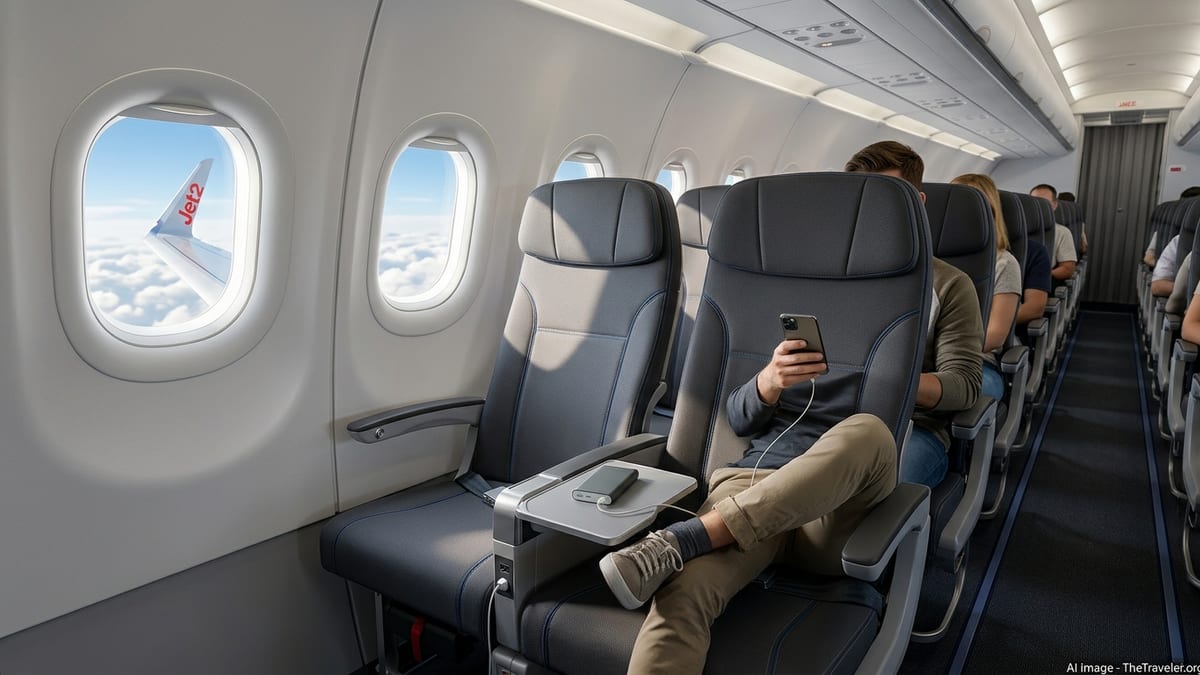
Jet2 has started flying new ultra-lightweight Mirus Kestrel economy seats on part of its Airbus A321neo fleet, adding in-seat device charging and what the airline describes as up to two inches of additional legroom, while also targeting fuel and emissions cuts.
Get the latest news straight to your inbox!
Where the new seats are flying and what is changing on board
The first Jet2 flight with Kestrel seats operated on 19 November 2026 between Manchester and Tenerife on an Airbus A321neo. Jet2 confirmed in a 20 November statement that the seats have now “come into operation” and will be rolled out gradually across its A321neo fleet over several years. At this stage the change is limited to A321neo aircraft; Jet2’s Boeing 737-800s and older A321-200s are not included in the announced programme.
For passengers, the most immediate change is that these A321neos introduce in-seat power on Jet2 for the first time, allowing phones and tablets to be charged during the flight. Jet2 has not yet said what type of sockets are fitted or the power output, so travellers should still carry fully charged devices and a power bank until more technical details are published.
The new seats remain part of Jet2’s regular economy cabin rather than a separate premium-economy section. Standard extra-legroom and exit-row seats are still sold as a paid upgrade and are not part of this Kestrel launch, so customers looking for the largest possible space will continue to need to select and pay for those specific rows where available.
Legroom gains from a slimmer design, not a new pitch standard
Jet2 says the Kestrel’s slimline, sculpted seatback provides up to two inches of additional legroom compared with its previous economy seats. This is described in terms of usable knee room created by the thinner, re-shaped seat structure rather than a published change to seat pitch across the cabin. The airline has not released new pitch figures, and independent coverage of the launch also notes that the announcement does not include any cabin layout or pitch range data.
Because of this, travellers should not assume that every seat on a Kestrel-equipped aircraft gains a full two inches of pitch, or that seat maps will immediately reflect any change in spacing. The practical effect for most passengers is likely to be a slightly more open feeling around the knees and shins, helped by the revised seatback contouring, while overall cabin density remains typical of a short- and medium-haul leisure configuration.
Until Jet2 provides more detail, there is also no confirmation of whether the new seats recline, or whether any rows have been configured differently from the airline’s earlier A321neo interiors. For now, the Kestrel seat should be viewed as an incremental comfort improvement within standard economy rather than a reclassification of part of the cabin.
Sustainability claims and aircraft weight savings
Alongside the comfort updates, Jet2 is emphasising the Kestrel’s role in its sustainability plans. According to the airline, fitting the new ultra-lightweight seats reduces the weight of each equipped aircraft by around 420 kg. Jet2 estimates that this will save approximately 40 tonnes of fuel and about 125 tonnes of CO₂ equivalent per aircraft per year once the seats are in regular operation.
The Kestrel is manufactured in Norfolk by Mirus Aircraft Seating, which markets the model as a very lightweight economy seat intended to help airlines cut fuel burn and emissions. Jet2 presents the installation as complementary to earlier efficiency measures such as winglet retrofits and lightweight paint on other parts of its fleet, though those programmes are separate from the A321neo seat refit.
These figures are estimates rather than audited results, and they depend on aircraft utilisation and route patterns. However, they give an indication of why Jet2 is willing to invest in a new seat across a fleet that, according to its own planning documents, is set to grow to more than 140 A321neos delivered through the next decade.
What Jet2 passengers should check before they fly
Because the rollout has only just begun and will take several years, most Jet2 flights will not yet feature Kestrel seats. Even within the A321neo fleet, only some aircraft are currently equipped. Jet2 has not published a route list or a schedule for when specific aircraft will be refitted, and independent reporting confirms that there is no public timeline, including for key travel periods such as summer 2027.
Travellers who want to maximise their chances of getting the new seats should first check that their booking shows an Airbus A321neo. This is a necessary condition for Kestrel seating but not a guarantee, since some A321neos are still flying with the previous interior. Updated seat maps that clearly show in-seat power can provide another clue, although these may lag behind the physical installations while the rollout is still in its early stages.
Jet2 has not announced any changes to seat reservation pricing linked to the Kestrel launch, and there is no guarantee of in-seat charging on other Jet2 aircraft types. Passengers should therefore treat in-seat power and extra legroom as specific to certain A321neo aircraft rather than a fleetwide standard, at least for now.
What happens next with Kestrel seats at Jet2 and beyond
Jet2’s 20 November announcement frames the Kestrel installation as part of a long-term programme that will ultimately cover its full ordered A321neo fleet as those aircraft are delivered. The airline has not, however, committed publicly to a firm completion date for retrofitting existing A321neos, nor has it indicated that other types such as the 737-800 will receive the same seat.
Outside Jet2, Mirus has separately announced Kestrel orders from other European carriers for future Airbus narrowbody deliveries, indicating that similar lightweight, charging-equipped economy cabins are likely to appear on more airlines later this decade. For now these are announced plans rather than operational products, and Jet2 remains the first UK airline to fly the Kestrel in service.
For holidaymakers, the practical takeaway is that a subset of Jet2’s A321neo flights already offer in-seat power and slightly more usable legroom in standard economy, with more aircraft to follow if the programme proceeds as outlined. As the rollout expands, passengers booking Jet2’s A321neo services should watch for updated aircraft information and seat maps that confirm whether their specific flight is equipped with the new Kestrel interior.