


More news on this day
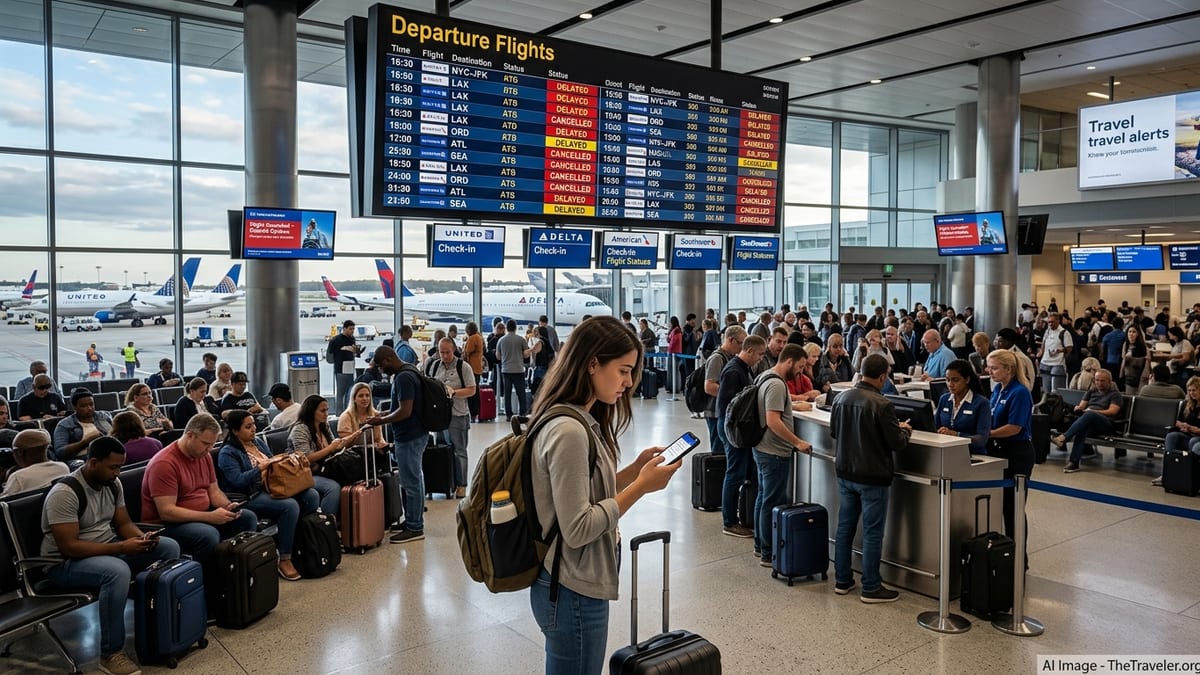
A nationwide Federal Aviation Administration ground stop on November 13 and separate technology failures at United Airlines and Delta Air Lines in the days since have raised fresh concerns about the resilience of U.S. air travel just as millions of people head to the airports for Thanksgiving. With federal officials reviewing what went wrong and carriers still smoothing out recoveries, travelers this week face a higher-than-usual risk of delays and cancellations, but there are concrete steps they can take to reduce disruption and protect their rights.
Get the latest news straight to your inbox!
What went wrong in the skies this month
The first and most far-reaching disruption came on November 13, when the FAA ordered a rare nationwide ground stop after a telecommunications failure affected systems used by air traffic control facilities. According to the agency, instability in parts of its communications and radar network led it to halt most departures for safety while engineers isolated and resolved the problem. The stop began in the late afternoon Eastern time and lasted close to five hours before flights were gradually allowed to resume.
Federal updates since then indicate the ground stop and subsequent recovery triggered several days of knock-on disruption. The Department of Transportation has said that aircraft operators canceled or significantly delayed many thousands of flights between November 13 and November 16 as airlines worked through the backlog created while planes were kept on the ground. Not all of those cancellations were directly caused by the FAA failure, but the event sharply reduced available capacity at the start of one of the busiest travel periods of the year.
On November 16, United Airlines experienced its own, separate technology outage affecting systems used in flight preparation. The airline has said the problem delayed departures for roughly an hour before systems were restored. Flight tracking data and airport reports show that the glitch led to hundreds of late departures at major United hubs, including Chicago O’Hare, Denver and San Francisco, although planes already in the air were able to continue flying.
The most recent issue came on Sunday, November 22, when Delta Air Lines reported a failure in its automated aircraft weight-and-balance system. That software helps calculate critical load and balance information used for safe takeoff. At Delta’s request, the FAA briefly imposed a ground stop for Delta flights bound for the carrier’s main hub in Atlanta, then shifted to a ground delay program as the airline began working through the backlog. Flight status data from Sunday showed more than a thousand Delta flights delayed, with disruptions concentrated in Atlanta but reported across the airline’s domestic network.
Government and airline responses ahead of Thanksgiving
Federal officials have moved quickly to address concerns that the November 13 ground stop could be a sign of deeper fragility in the national air traffic control system. The Transportation Department and FAA have opened a review into the telecommunications failure and have said they are working with outside vendors to prevent a repeat. Officials have stressed that some communications and radar feeds remained available and that the ground stop was imposed as a precaution while engineers confirmed the stability of the affected systems.
The White House has also convened a multiagency group including the FAA, Transportation Department, Defense Department and elements of the intelligence community. According to federal briefings, the group has been meeting daily since the outage to identify vulnerabilities in federal air traffic infrastructure, prioritize upgrades and confirm contingency plans. Officials have not reported any evidence that the November 13 failure or the subsequent airline-specific outages were caused by a cyberattack, but they have acknowledged that heavy data loads and aging equipment were contributing factors in the FAA event.
United Airlines has said its November 16 incident was unrelated to the FAA problem and that internal software issues were to blame. In public statements and regulatory filings, the carrier has described the outage as a short-lived disruption that forced it to hold some departures until dispatchers and pilots could receive the data they needed to safely plan flights. The airline has not reported ongoing effects into Thanksgiving week beyond the usual operational challenges of peak-season flying.
Delta has stated that its automated weight-and-balance system was restored on Sunday afternoon and that flights were again being dispatched using normal processes. The airline has acknowledged that a large share of its Sunday delays and cancellations were directly linked to the system failure, with the rest primarily related to bad weather. Travelers and crew members reported that some flights were temporarily handled using manual weight and balance calculations while the automated system was offline, a fallback procedure that is slower but permitted under safety rules.
How to reduce your risk of holiday flight disruption
For passengers traveling over the Thanksgiving period, the cluster of recent outages means it is especially important to monitor flights closely and build flexibility into plans. Airline and federal officials are not forecasting a repeat of the nationwide halt, but they have acknowledged that the air travel system is running near capacity, which can cause relatively small problems to result in large ripple effects.
One of the most effective steps travelers can take is to use official airline tools for real-time information. Downloading the carrier’s mobile app, enabling push notifications and checking flight status before leaving for the airport allows passengers to spot emerging delays or gate changes earlier. Many apps now also show the status of the specific aircraft assigned to a flight, which can be especially useful on days when aircraft and crew rotations are tight.
Independent flight tracking sites provide an additional layer of situational awareness. By entering a flight number, travelers can often see whether their incoming aircraft has departed its previous city on time, whether an airport is experiencing widespread delays or whether a carrier is using ground delay programs in cooperation with the FAA. This context can help passengers decide whether to proceed to the airport, adjust ground transportation or contact the airline about alternative options.
Planning backup options can further reduce the chance that a single disruption will upend holiday gatherings. Passenger advocates suggest travelers consider earlier departures on peak days, especially if they have connections or must arrive by a set time. An early-morning nonstop flight typically has the best chance of departing as scheduled and leaves more room later in the day for rebooking if something goes wrong.
What U.S. airlines currently owe passengers
Under current U.S. Department of Transportation rules, passengers whose flight is canceled or significantly changed are often entitled to a cash refund if they choose not to travel. Federal guidance defines a significant schedule change on domestic itineraries as arriving at least three hours later than originally booked and on international itineraries as arriving at least six hours later. In those situations, if a passenger declines the airline’s alternative flight, the carrier is generally required to refund the unused portion of the ticket price.
Travelers who accept a replacement flight and ultimately complete their trip are usually not eligible for a refund of the ticket price itself, even if they arrive many hours late. However, airlines may offer additional assistance when a cancellation or long delay is within their control. Each major U.S. carrier publishes customer service commitments that spell out what they will provide in cases such as equipment problems, certain staffing issues or internal technology failures.
In practice, when a disruption is considered controllable, many airlines promise meal vouchers after specified delay thresholds and hotel accommodations when a passenger is forced to stay overnight away from home. These commitments typically do not apply when the primary cause is weather, air traffic control limitations or events that regulators classify as outside the airline’s control. Because the recent FAA ground stop originated with federal infrastructure and the United and Delta outages stemmed from airline systems, different rules may apply depending on which issue disrupted a particular passenger’s trip.
The Transportation Department maintains a public comparison of what each U.S. airline pledges to offer during controllable cancellations and delays. Passengers who experience problems around Thanksgiving can use that information, along with the terms of their ticket, to decide whether to accept vouchers, insist on a refund or seek reimbursement for reasonable out-of-pocket costs. In all cases, keeping detailed records, including confirmation numbers, notifications and receipts, will make it easier to pursue claims later.
Protecting yourself from scams and handling extra costs
Spikes in airline disruption often attract scammers who attempt to impersonate carriers or travel agents. Consumer advocates report that during previous major outages, some passengers lost hundreds or even thousands of dollars after calling phone numbers they found through search results or social media posts that turned out not to belong to the airline. With more people than usual potentially seeking rebooking help this week, the risk of such schemes is elevated.
To reduce that risk, travelers should contact airlines only through official channels, such as phone numbers listed on the carrier’s own website or inside its mobile app. Many airlines also offer secure direct messaging through their verified accounts on major social platforms or within the app itself. Passengers should be cautious about sharing payment information with third parties that claim they can “guarantee” rebooking or upgrades, especially if they demand immediate wire transfers or gift card payments.
Even when working directly with an airline, disruptions can generate substantial incidental expenses. Meals at the airport, hotels for unexpected overnight stays and alternative ground transport can add up quickly. Saving receipts for these costs is essential, because they may be needed both for reimbursement requests to the airline and for any travel insurance or credit card protection claims.
Several major credit cards include trip delay, trip interruption or missed connection benefits when travel is purchased with the card, although the terms vary widely. Coverage often applies when a flight is delayed by a set number of hours or requires an unplanned overnight stay, and it may reimburse reasonable expenses like meals and lodging up to a daily or per-trip cap. Standalone travel insurance policies can provide another layer of protection, but they generally must be purchased before a disruption becomes publicly known and may exclude certain causes, so travelers should read conditions closely.
Practical steps at the airport and what to watch next
Once at the airport, small preparations can make long waits more manageable if delays occur. Packing essential medications, important documents, chargers and at least a change of clothes in carry-on luggage ensures that passengers can cope with an unexpected overnight away from home even if checked bags are not immediately accessible. For families with children, keeping snacks, entertainment and any comfort items within reach can make extended time in the terminal or on the tarmac less stressful.
When a delay stretches, it can be worth speaking with an airline agent in person while simultaneously using digital channels. Mobile apps often offer options to rebook onto alternate flights without waiting in line, but gate agents or customer service staff may have additional discretion to reroute travelers through different hubs or place them on partner airlines when things go wrong. If a significant disruption appears likely, requesting to be moved to a later flight that is still expected to operate can sometimes be more reliable than holding onto an increasingly delayed departure.
Looking beyond the immediate Thanksgiving period, regulators and airlines are under pressure to demonstrate that lessons will be learned from this month’s events. The FAA has asked Congress for additional funding to accelerate modernization of key parts of the air traffic control system, including the telecommunications infrastructure implicated in the November 13 ground stop. Lawmakers are likely to question agency leaders about redundancy, vendor oversight and contingency planning in upcoming hearings.
For travelers, that means the broader debate over infrastructure and airline technology will likely continue well after the holiday rush has subsided. In the near term, passengers planning trips through the end of the year would be wise to keep building extra time into connections, favoring nonstop flights where possible and checking flight status frequently in the 24 hours before departure. While the recent outages have been resolved, the combination of peak-season crowds, winter weather and complex technology means that preparation remains the best defense against an unwelcome surprise at the airport.