


More news on this day
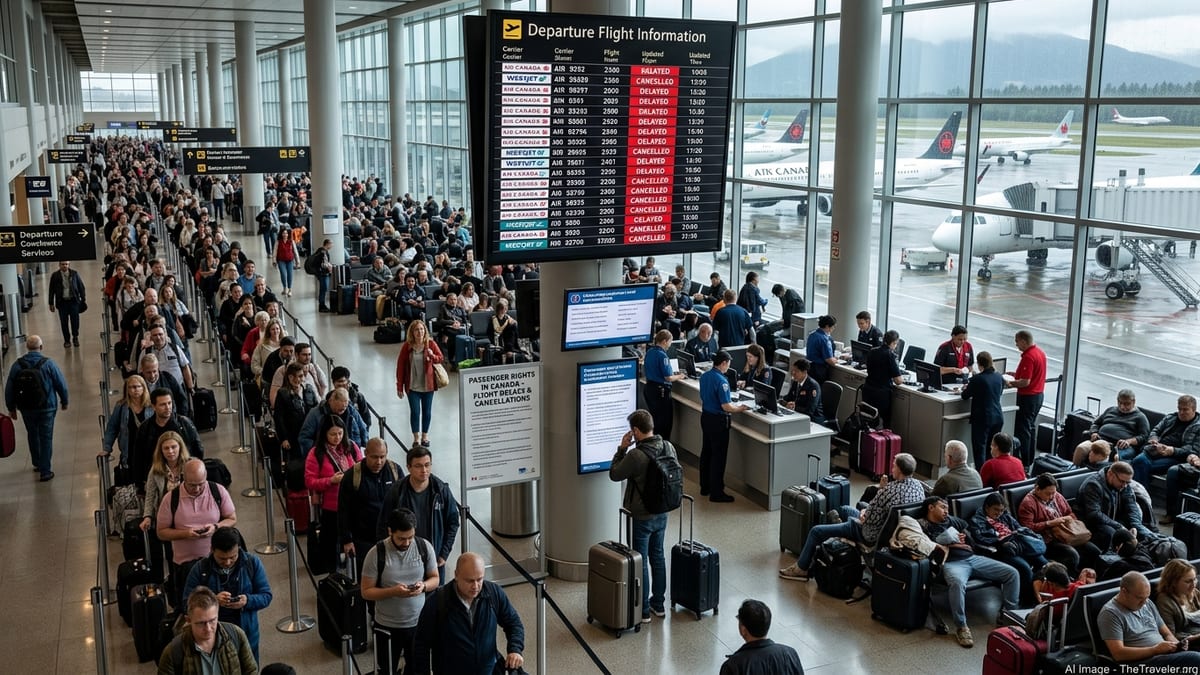
Recent system outages, staffing strains and weather disruptions are colliding with record air travel demand, exposing gaps between airlines’ disruption-management promises and what passengers experience at airports, while new surveys in North America and Europe suggest many travelers still doubt that carriers are prepared to protect them when flights go wrong.
Get the latest news straight to your inbox!
Operational Disruptions Highlight Ongoing Vulnerabilities
In the weeks leading up to the late-November 2026 holiday rush in the United States, a series of automation problems and system outages at major carriers triggered hundreds of delays and cancellations, underscoring how vulnerable tightly scheduled airline operations remain to even short-lived technical failures. Delta Air Lines reported an automation system issue in mid-November that it linked to the majority of same-day disruptions, while United Airlines confirmed it had resolved what it called a widespread system outage that briefly halted departures across its network. Both carriers resumed normal operations within hours and stated they were assisting passengers with rebooking and, where applicable, hotel and meal support, but the incidents added to a year in which weather, congestion and technology have repeatedly combined to snarl travel at short notice.
U.S. Department of Transportation data for the 2025 holiday season, analyzed this month by independent media, indicated that nearly one in four domestic flights in November and December 2025 arrived at least 15 minutes late, a performance that left many travelers expecting more turbulence in 2026. Regulators and industry groups have also noted that delays have grown faster than scheduled capacity since the pandemic, contributing to billions of dollars in time and productivity losses for airlines and passengers over the past decade. The recent outages did not approach the scale of earlier nationwide ground stops, but they have renewed questions about how quickly airlines can recover when highly automated systems fail during peak periods.
For airlines, these events highlight a continuing tension between running tightly optimized schedules and building in enough slack, backup systems and staff to absorb shocks. While most carriers now emphasize that safety remains the overriding concern, even small disruptions can quickly cascade across a network when aircraft, crews and airport resources are scheduled close to their limits. These operational realities form the backdrop to growing public scrutiny of how airlines plan for irregular operations and how they communicate with affected passengers in real time.
Surveys Show Confidence Gap Between Passengers and Providers
As disruption events continue, several recent surveys suggest that travelers’ confidence in airlines’ readiness, and in their own ability to navigate disruptions, remains mixed. A 2024 passenger-rights Eurobarometer survey commissioned by the European Commission found that around 30 percent of air travelers in the European Union reported at least one disruption in the previous 12 months, such as a significant delay or cancellation. At the same time, only about one in three EU citizens said they were aware of their passenger rights, indicating that many affected travelers may not know what assistance or compensation they are entitled to request when flights are disrupted.
In Canada, research published in 2024 for the Canadian Transportation Agency and federal transport authorities reported that fewer than half of surveyed passengers said they were confident airlines would deliver a satisfactory solution if there were a serious problem with their flight. Awareness of the regulator’s role in resolving complaints was also limited, with roughly one third of respondents indicating they knew the agency could intervene. The findings came as Canada’s own Air Passenger Protection Regulations have been tested by large complaint backlogs and legal challenges over the scope of airlines’ obligations during uncontrollable events.
Global survey data from private organizations point in a similar direction. A 2025 study by AirHelp, a claims management company operating primarily in Europe and the UK, reported that while 81 percent of respondents believed they understood their rights, 79 percent were unable to correctly answer questions about what they were actually entitled to in cases of long delays or cancellations. Around 61 percent said they wanted stronger passenger rights overall. These results are not official statistics and may reflect self-selection among respondents who have experienced problems, but they illustrate a widespread confidence gap between what travelers think airlines and regulators will deliver in a disruption and what the rules actually guarantee.
Regulators Tighten Transparency on Passenger Rights
Authorities in several major markets are responding to this confidence gap by tightening transparency requirements rather than immediately expanding compensation rules. In the United States, the Department of Transportation created an Airline Cancellation and Delay Dashboard in 2022, and has been updating it to provide a consolidated summary of what each large U.S. carrier commits to offer during airline-controlled delays and cancellations. These commitments, which sit alongside carriers’ individual customer service plans, detail whether a particular airline will, for example, provide meal vouchers, hotel accommodation or complimentary rebooking on its own or partner services when disruptions are within the airline’s control.
Congress has since embedded the dashboard concept in federal law. Title 49 of the U.S. Code now requires large, medium and small hub airports with scheduled service to display posters outlining key passenger rights, including those related to cancellations and long tarmac delays, and to clearly signpost the federal dashboards that summarize airline commitments. U.S. rules still do not obligate airlines to provide cash compensation for domestic delays or cancellations, and the Department of Transportation continues to stress that passengers are entitled to refunds only when flights are cancelled or significantly changed and the traveler chooses not to travel. However, by making airline-by-airline policies easier to compare, regulators hope to increase competitive pressure on carriers to improve customer care during disruptions.
In the European Union, the long-standing Regulation (EC) No 261/2004 already grants passengers fixed cash compensation and care in certain cases of cancellations, long delays and denied boarding, when the disruption is not caused by extraordinary circumstances. In July 2024, the European Commission issued new interpretative guidelines on air passenger rights together with a fresh Eurobarometer survey, seeking to clarify grey areas that have generated disputes, such as missed connections on separate tickets and responsibilities in multimodal journeys. The Commission also reiterated earlier legislative proposals aimed at strengthening enforcement and updating rules for trips that use a mix of transport modes, but these proposals remain under negotiation by EU legislators and are not yet law.
Airlines Invest in Technology, But End-to-End Readiness Lags
Industry data suggest airlines are investing heavily in technology to manage disruptions more effectively, yet relatively few believe they have a fully integrated solution in place today. A 2024 Travel Technology Investment Trends report by Amadeus, based on a survey of airline executives, found that only about 35 percent of participating carriers were confident they had end-to-end disruption management tools that could simultaneously rebuild schedules, re-accommodate passengers and proactively manage flights when irregular operations occur. About 63 percent said they planned to have such capabilities in place by 2030, and nearly six in ten cited improving passenger experience as a major driver for their technology investments.
These systems aim to do more than simply rebook passengers after an event. Integrated disruption platforms are designed to help airlines predict which flights and connections are at greatest risk, adjust crew and aircraft rotations in near real time, and generate individualized offers for affected passengers, such as rerouting through alternative hubs or automatically issuing meal and hotel vouchers via mobile apps. In theory, such tools should shorten recovery times and reduce the number of travelers left without clear guidance at airports. In practice, the speed and usefulness of these responses still depend on underlying schedules, staffing levels and agreements with partner carriers, which vary widely among airlines and regions.
The limitations of current systems become most visible during peak periods or when disruptions hit multiple carriers at once, for example during major storms or region-wide airspace restrictions. Even if one airline has invested in strong internal tools, it may struggle to secure spare seats or hotel rooms when neighboring carriers are also affected. Travelers caught in such events often report long queues, overloaded call centers and inconsistent information across digital channels and airport staff. While anecdotal, these experiences align with survey findings that many passengers remain skeptical about whether airlines are ready to support them from the first notification of a delay through to final arrival.
What Travelers Can Do Now When Disruption Hits
For passengers, the current landscape means that preparation and awareness remain crucial while regulatory and technology improvements continue to evolve. In the United States, the Department of Transportation advises travelers to review both the Airline Customer Service Dashboard and the specific customer service plan of their carrier before travel, particularly during seasons prone to weather-related disruption. Knowing in advance whether an airline promises hotel accommodation, meal vouchers or complimentary rebooking during airline-controlled disruptions can speed up conversations at the airport when problems arise.
In Europe, passengers facing significant delays or cancellations on flights departing from the EU, or on EU carriers flying into the bloc, can consult official summaries of Regulation 261 and national enforcement body guidance to understand when they may be entitled to fixed cash compensation and assistance such as meals or accommodation. However, the precise applicability of compensation still depends on the cause of the disruption and the specific itinerary, and some disputes continue to be settled through courts or national regulators. Travelers booking complex itineraries that combine different modes of transport or separate tickets may need to read conditions of carriage carefully, as current EU rules on multimodal trips and intermediaries are still being debated.
Across regions, regulators consistently recommend that passengers first seek a resolution directly with the airline, keeping written records of delay notifications, receipts and any communication. If this fails, consumers can escalate complaints to national enforcement bodies or transport agencies, which use complaint data to identify patterns and, in some cases, pursue enforcement actions. Given that new transparency rules, proposed legislation and technology rollouts will take years to fully bed in, the near-term reality for many travelers is that disruptions are likely to remain a regular feature of air travel, and personal readiness, clear documentation and familiarity with local passenger-rights frameworks are still the most reliable tools to navigate them.