


More news on this day
A rare nationwide ground stop earlier this month, a separate United Airlines system outage on November 16 and unusually high king tides around San Francisco Bay are converging just as Thanksgiving air travel peaks, leaving millions of U.S. passengers facing a higher risk of delays and cancellations and raising urgent questions about what rights travelers have and how they can still reach their holiday plans.
Get the latest news straight to your inbox!
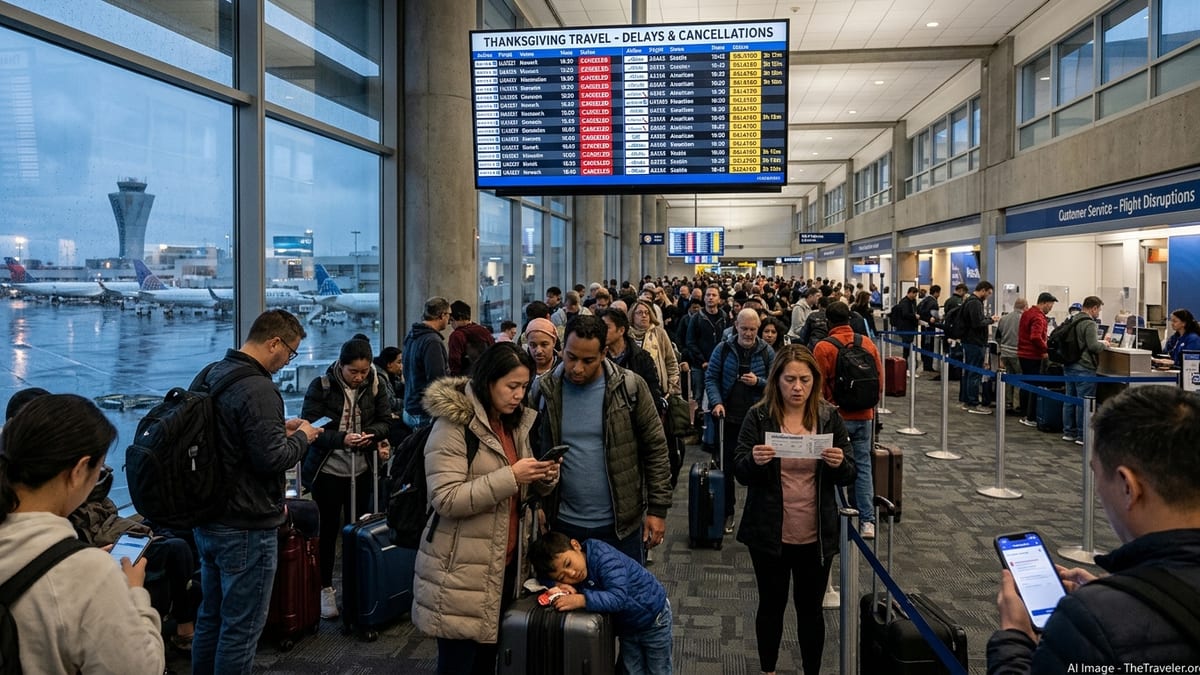
Why this Thanksgiving is especially fragile for air travel
The Federal Aviation Administration ordered a nationwide ground stop on November 13 after a telecommunications failure disrupted key air traffic systems, leading airlines to cancel or delay thousands of flights while safety checks were completed. In a public Q&A, the agency said about 12,400 flights were canceled that day, including more than 9,000 by major U.S. carriers, underscoring how dependent the system is on aging infrastructure and a still-ongoing modernization program.
Only three days later, on November 16, United Airlines reported what it called a widespread system outage that affected departing flights across its network. The airline and multiple news outlets described the event as a short-lived but significant problem that forced temporary holds on some departures until weight-and-balance and other operational systems were restored. United later said the issue was resolved that evening, with no impact on flights already in the air, but the disruption added to a week of high-profile failures across different industries.
These technical setbacks are colliding with one of the busiest travel periods of the year. AAA now projects about 81.5 million Americans will travel at least 50 miles from home for Thanksgiving between November 24 and November 30, including roughly 6 million by air. At the same time, the FAA expects U.S. airlines to operate more than 417,000 flights over the nine-day period from November 23 to December 1, its highest Thanksgiving-week volume in more than a decade.
Weather is adding another layer of uncertainty. Forecasters with the National Weather Service have highlighted a strong Pacific storm and exceptionally high astronomical tides affecting the San Francisco Bay shoreline this week, prompting coastal flood advisories for low-lying areas. That has put attention on San Francisco International Airport and Oakland International Airport, both located beside the bay, although San Francisco’s mayor said late Monday that updated projections show the airport’s seawall is not expected to be breached, reducing the likelihood of flood-related ground stops there.
How to quickly assess a delay or cancellation
If your Thanksgiving flight is delayed or canceled, the first step is to determine whether the problem is limited to your individual flight or part of a broader disruption. Travelers can do this by comparing their flight status with others at the same airport and by checking systemwide maps provided by the FAA and the major airlines. When the nationwide ground stop was in effect on November 13, for example, departure boards at major hubs filled with delays and cancellations across many carriers at once, while real-time status tools showed backlogs building in multiple regions.
Airlines are required to tell passengers when a flight is delayed or canceled, but the speed and clarity of those notifications can vary. Most large U.S. carriers now push alerts through their apps, text messages and email, and many also publish estimated departure times and explanations such as weather, crew availability or mechanical issues. Speaking with an airport agent can still be useful, particularly if you have a tight connection, because they can see protected rebooking options and, in some cases, priority space on later flights that does not yet appear in consumer apps.
Travelers should pay attention not only to the posted delay length but also to how often it changes. Short, repeated pushes of 15 or 20 minutes may indicate the airline is waiting on updated information about incoming crews, maintenance or air traffic flow. A sudden extension of several hours, or a conversion of a delay into a cancellation, usually reflects a more structural problem with aircraft or crew positioning. During the United outage on November 16, for instance, many departures were initially held rather than immediately canceled while the airline worked to restore its technology systems; only later did some flights drop from schedules altogether as crews and aircraft fell out of their original positions.
Because this Thanksgiving week is operating close to capacity, especially on peak days like Wednesday and Sunday, even a single canceled flight on a busy route can be difficult to absorb. Flights may go out nearly full for hours at a time, leaving few empty seats for passengers from disrupted services. That is why experts advise starting to explore alternatives as soon as it becomes clear your original itinerary is at serious risk, instead of waiting for a final cancellation announcement when thousands of other travelers may be searching for the same remaining options.
New federal refund rules and what “significant delay” means
For U.S. passengers, one major change this holiday season is a new Department of Transportation rule that more clearly defines when airlines must provide a refund rather than a voucher. Under regulations finalized in 2024, passengers are entitled to a full and prompt refund of the airfare, plus taxes and paid ancillary fees, when a flight to, from or within the United States is canceled or experiences what regulators call a significant change and the traveler chooses not to accept alternative transportation.
For schedule disruptions, the rule sets specific thresholds. On domestic itineraries within the United States, a departure or arrival delay of at least three hours compared with the original schedule is considered significant. On international itineraries to or from the United States, the threshold is six hours. Other triggers include a change to a different origin or destination airport, an increase in the number of connections compared with the original ticket, or a downgrade to a lower service class than the one the passenger purchased.
To qualify for a cash refund under these standards, passengers must decline any alternative flights or transportation offered by the airline and must not accept vouchers, credits or other compensation in lieu of money back. Once a traveler chooses to take an alternative itinerary, the airline can treat the original purchase as fulfilled, although carriers may still provide additional goodwill compensation depending on their policies and the cause of the disruption.
Refunds must also be timely. For tickets bought by credit card where the airline is the merchant of record, federal rules specify that refunds should be processed within seven business days. For tickets purchased by other methods, such as cash or check, the window is 20 calendar days. Separate provisions require airlines to refund baggage fees when checked bags are significantly delayed and to return fees for ancillary services such as seat selection or onboard Wi-Fi when those services are not provided.
Should you stick with your airline, switch, or abandon the trip?
When delays stretch into hours or a cancellation is confirmed, travelers face a practical choice between waiting for a new flight on the same ticket, asking to be moved to another carrier, or canceling and requesting a refund. The right option depends on how essential the trip is, how flexible your plans are and what alternatives genuinely exist at that moment, especially during a peak period like Thanksgiving when spare capacity is limited.
In many cases, staying with your original airline will offer the most straightforward path to your destination, because carriers prioritize reaccommodating their own customers and can often rebook onto later departures from the same hub. Major network airlines may also have interline agreements that allow them to move passengers to partner or competitor flights at negotiated rates during irregular operations. For example, United, American, Delta, Alaska and JetBlue have various interline and codeshare arrangements that can occasionally be used in disruptions, although availability is not guaranteed and is generally controlled by agents behind the scenes.
Other airlines, including large low-cost carriers, do not participate in such broad interline networks. In those cases, rebooking will usually be limited to the airline’s own flights, which may mean waiting until the following day or longer if a route has limited frequency. If you decide that timing will no longer work and you qualify for a refund under the federal rule, you can decline new flights and ask for your money back. You would then need to purchase a fresh ticket on another carrier, which during Thanksgiving week could be substantially more expensive than your original fare.
Canceling the air portion altogether and turning to driving or rail can make sense for some regional trips, particularly in corridors like California’s Bay Area to Los Angeles or along the Northeast between Boston, New York and Washington, where road and train options are well developed. However, rental car availability around major airports can tighten quickly once weather or technology issues begin causing large numbers of cancellations. If you plan to switch modes, it is prudent to secure a car or train seat as soon as you decide, rather than assuming last-minute capacity will be available at a reasonable price.
Rebooking strategies, standby realities and what airlines will (and will not) cover
For travelers choosing to continue their trip by air, rebooking strategy can have an outsize impact on how quickly they arrive. Working with both digital tools and human agents often yields the best results. Airline apps can show a wide range of options and sometimes allow self-service changes when a disruption is officially recognized, but phone and airport agents can sometimes access protected inventory, partner flights or creative routings that are not visible to customers.
One tactic is to ask agents to search not only your original airport pair but also nearby airports that you can realistically reach on your own. In the Bay Area, for example, serious weather can affect runways at San Francisco International more severely than at Oakland or San Jose because of the layout of SFO’s closely spaced parallel runways, which are more constrained by low clouds and crosswinds. If conditions allow and seats exist, flying to or from one of the other regional airports may be faster than waiting for backlogged operations at San Francisco to clear.
However, passengers should be prepared to cover their own costs for getting between airports, whether by rail, public transit, rideshare or private car. In the United States, airlines are generally not required to pay for ground transportation during weather or air traffic control disruptions, and even during technology failures they often frame assistance as discretionary. Hotel and meal vouchers likewise depend heavily on the cause of the disruption and the airline’s policies. Weather-related cancellations typically do not come with overnight accommodation from U.S. carriers, whereas mechanical problems sometimes do, especially when passengers are stranded away from home.
If confirmed seats are unavailable, airlines may add you to a standby list. Being early and present at the gate can meaningfully improve your odds, because agents usually begin clearing standbys in the final 20 to 40 minutes before departure as they reconcile no-shows, last-minute misconnects and weight limits. If you are not at the gate when your name is called, agents will move to the next passenger on the list. At busy hubs this process can move quickly, and missing a call can mean waiting hours for another opportunity.
Airlines also retain the right to deny boarding to passengers who appear intoxicated or disruptive, something that occasionally becomes relevant during long delays. Federal rules allow carriers to refuse transport if they reasonably believe a person’s behavior or condition could endanger the safety or comfort of others. For frustrated travelers, that makes moderation important. Staying hydrated, taking breaks away from crowded gate areas and rotating responsibilities within a family or group can help manage stress while you wait for updates.
What travelers should watch in the coming days
Through the rest of Thanksgiving week, the key variables for U.S. air travel will be weather, staffing and the lingering effects of earlier disruptions. On the West Coast, forecasters will be watching king tides and accompanying storms that could bring heavy rain, strong winds and minor flooding to coastal airports and access roads, even if primary runway systems remain protected. In the Northeast and Midwest, shifting storm tracks could affect visibility and deicing operations, which often trigger ground delay programs that ripple across the network.
From a technology standpoint, both the FAA and major airlines are working to reassure travelers and policymakers after the mid-November outages. The FAA has said it is accelerating parts of its modernization program, while carriers like United have promised internal reviews of their software and redundancy systems. For passengers in airport terminals, the practical steps remain the same: monitor official channels for status updates, keep boarding passes and identification handy and be prepared for schedules to change quickly.
Anyone flying over the next several days should confirm their flight status repeatedly before leaving for the airport, including checking for gate changes and new connection times. Building extra time into ground journeys, avoiding the last flight of the day when possible and carrying essential medications and a change of clothing in a carry-on bag can help reduce the impact if your checked luggage or final segment is delayed.
Finally, travelers who experience cancellations or long delays during this period may need to follow up after the trip to enforce their rights. Keeping records of schedule changes, receipts for unreimbursed expenses and any communication from the airline will make it easier to request refunds or file complaints with the Department of Transportation if necessary. With formal definitions of significant delay now in place, regulators have clearer standards for evaluating such complaints, which may shape how airlines handle disruptions in future holiday seasons.