


More news on this day
A growing body of travel advice is converging on a simple idea: spending two focused minutes checking live flight and airport status before leaving home can spare travelers from some of the most frustrating airport delays.
Get the latest news straight to your inbox!
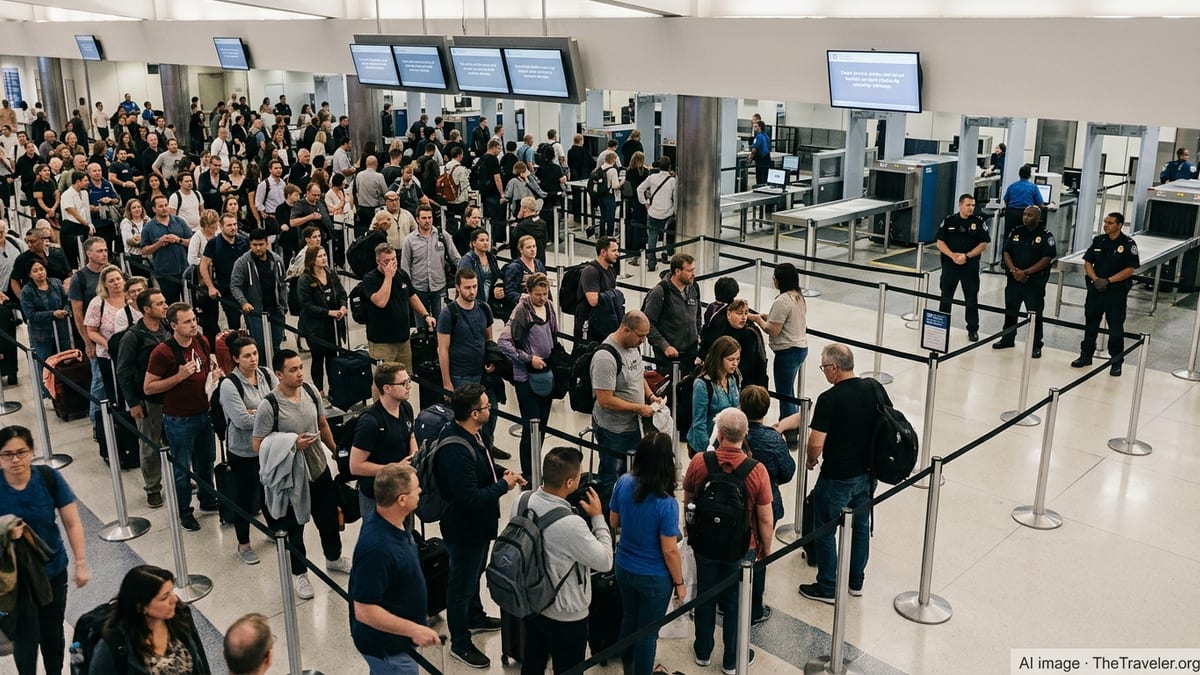
How a Tiny Pre-Trip Ritual Reduces the Risk of Big Delays
Air travel disruptions remain a persistent feature of busy seasons in the United States, with tens of thousands of delays regularly logged over peak holiday weekends. According to recent coverage of summer travel patterns, early-morning departures still have the best odds of leaving on time, but even those flights can be reshuffled by weather, crew issues, or congestion. Reports increasingly point to preparation on the traveler’s side, not just airline performance, as a key factor in avoiding the worst impacts of schedule changes.
One tactic gaining attention among frequent travelers is a brief but deliberate flight-status check before even picking up car keys or booking a ride to the airport. The basic habit takes about two minutes: open a trusted source for live flight data, confirm departure time and terminal, check for gate changes, and scan for wider airport or airspace delays. If anything looks off, there is still time to adjust departure from home, rebook, or plan a different connection through the airline.
Publicly available guidance on “defensive flying” from the U.S. Department of Transportation already encourages passengers to go online in the days before travel to confirm that flight times and itineraries have not changed. Extending that concept to a focused two-minute check just before leaving home turns a general recommendation into a repeatable habit that fits easily into a busy morning.
By treating this micro-routine as seriously as packing a passport or wallet, travelers create a last-minute safety net. A gate swap posted after check-in, a creeping delay on the incoming aircraft, or a weather program affecting a hub airport becomes visible while there is still space to make decisions at home instead of in a crowded terminal.
What to Check in Those Two Minutes
The most effective two-minute checks focus on three areas: the individual flight, the broader airport picture, and personal logistics. Flight-specific details are the starting point. Airline websites and apps, as well as independent trackers, display scheduled and estimated departure times, aircraft arrival status, and sometimes the reason for a delay, such as late inbound planes or weather constraints. Some popular tracking tools highlight these elements clearly so that travelers can quickly spot whether their departure is still running close to schedule.
Travel-technology coverage notes that dedicated flight-tracking apps now often push delay and cancellation alerts faster than many airline apps. Several services heavily marketed to frequent flyers monitor inbound aircraft, issue early warnings when a plane is running late, and forecast potential issues hours before the airline updates its own systems. These tools can be opened in seconds, allowing travelers to scan for any yellow or red flags before they commit to leaving for the airport.
Beyond the specific flight, it is increasingly easy to check live airport conditions. Public dashboards and some consumer apps aggregate wait times at security, show traffic bottlenecks approaching major hubs, and display maps of ground stops or flow-control programs in effect across the national airspace. A quick look at these overviews can signal whether an extra buffer is needed for the drive or check-in, particularly at large or weather-prone airports.
Finally, travelers can use part of the two-minute window to confirm personal logistics: that the confirmation number is stored offline, boarding passes are downloaded, and alternative flights or routes are bookmarked. Technology writers have pointed out that relying on a single airline app can be risky when systems go offline; keeping key details in a notes app or screenshot form makes it easier to rebook quickly if that two-minute check uncovers a fresh problem.
The Tech Behind Faster Warnings
The usefulness of a two-minute status check is closely tied to the quality of the information it draws on. In recent years, a wave of consumer-focused flight intelligence tools has emerged, drawing on the same operational feeds used by airlines and air-traffic agencies. Some trackers emphasize speed, advertising delay alerts that can arrive many minutes before carrier apps, and in some cases up to a day or more before cancellation notices are formally issued. This allows passengers to be first in line for rebooking options when flights begin to unravel.
Guides from travel publications highlight that modern trackers can display inbound aircraft locations, historical on-time performance, and even typical taxi times at specific airports. When opened during the pre-departure two-minute window, these features provide more than a simple “on time” or “delayed” label. For example, a flight that is technically on time but relies on an inbound aircraft that is still at another airport can signal a higher risk of later slippage.
Other tools specialize in airport intelligence. Queue-estimate platforms compile live and historical data to show current security and immigration wait times, as well as delay maps across the United States. Travelers who check these services before heading out can choose different security checkpoints, leave earlier than planned, or brace for longer lines if there is no flexibility. This proactive view contrasts with learning about congestion only after reaching the back of a slow-moving queue.
The growth of these tools does not remove the need to verify details with the airline itself, as several flight-planning apps explicitly emphasize in their documentation. Instead, they serve as early-warning systems that make those two minutes of attention far more powerful. With both airline and third-party views open, inconsistencies become visible, prompting travelers to call customer service or seek clarification before time runs short.
Why Timing Before Leaving Home Matters
Travel experts frequently stress the importance of arriving at the airport with generous buffers, noting that check-in and boarding cutoffs can be unforgiving. Department of Transportation consumer materials point out that failing to check in early enough or reach the gate on time can result in loss of a seat or even the entire reservation, regardless of whether the passenger has already paid. In this environment, learning about a schedule change only after joining a long security line can quickly cascade into missed flights.
Running the two-minute check just before departure from home addresses this problem at its source. If a delay appears that pushes the departure far into the future, travelers might choose to leave later, avoid hours in a crowded terminal, or negotiate a rebooking from the comfort of home. If boarding is suddenly moved forward or a gate changes to a distant concourse, they can instead leave earlier or adjust ground transport to preserve their margins.
Recent analysis of flight-tracking tools also suggests that early awareness of disruptions improves the odds of securing better alternatives. When a cancellation or significant delay is forecast well ahead of time, rebooking inventory is still relatively open. Travelers who wait to react until they see an updated departure board in the terminal may find that the most convenient replacement flights have already been taken by those who acted earlier from their phones or laptops.
This approach is especially useful for complex itineraries with tight connections through busy hubs. Knowing that an inbound flight is trending late, or that weather is snarling departures at a key connection point, can inform same-day decisions about rerouting or voluntary changes. The two-minute habit does not eliminate uncertainty, but it shifts the timing of that uncertainty to a point when travelers still have options.
Turning the Two-Minute Check into a Travel Routine
For the habit to work reliably, travel planners recommend treating it as a fixed step in the pre-departure sequence rather than an occasional extra. Some digital tools support this by turning confirmation emails or screenshots into countdown timelines that highlight when to check in, when to leave for the airport, and when to expect boarding. Other platforms integrate with calendar apps, surfacing reminders to review flight status as the departure time approaches.
Establishing a consistent order of actions can make the process nearly automatic. Travelers might, for example, confirm flight and gate details in both the airline and a third-party tracker, glance at airport delay or queue maps, and then check that offline copies of boarding passes and confirmation numbers are stored on their phones. Over time, this brief sequence becomes as routine as locking the front door.
Industry guides on “defensive flying” also encourage passengers to pair these checks with broader strategies, such as favoring earlier departures, avoiding tight connections when possible, and allowing extra time at unfamiliar airports. The two-minute status review does not replace those longer-term choices, but it serves as the final verification step that captures last-minute changes that did not appear when the trip was booked.
As travel volumes continue to increase and extreme weather events cause more frequent operational disruptions, small habits that improve situational awareness are drawing more attention from road warriors and occasional travelers alike. A focused two-minute check of flight and airport status, carried out just before leaving for the airport, is emerging as one of the simplest ways to turn that awareness into fewer surprises at the gate.
U.S. Department of Transportation: Defensive Flying Tips
The Points Guy: Best Tools for Tracking Flights