


For many long-haul travelers, the first decision about Germany happens long before they see a half-timbered house or order a pretzel: should you fly through Munich Airport or Frankfurt Airport? Both are major Lufthansa hubs with extensive connections across Europe and beyond, but they feel very different in scale, layout, and stress level. Picking the right one for your itinerary can save you precious time, reduce missed-connection anxiety, and even shape how much of Germany you experience on a stopover.
Get the latest updates straight to your inbox!
Overview: Two Very Different German Gateways
Frankfurt Airport is Germany’s busiest international airport and one of Europe’s largest hubs, handling well over 50 million passengers in a typical year. It is the primary global hub for Lufthansa and a major Star Alliance transfer point, with sprawling terminals and a dense schedule of long-haul flights to North America, Asia, Africa, and the Middle East. Its scale means excellent connectivity, but also crowds, longer walks, and more frequent pinch points at security and passport control.
Munich Airport, by contrast, is smaller yet still substantial, with traffic in the low-to-mid forty million range in recent years. It functions as Lufthansa’s second major hub, particularly strong for connections to Southern and Eastern Europe, as well as seasonal long-haul routes to destinations such as San Francisco, Los Angeles, Tokyo, Bangkok, and Johannesburg. The airport markets itself as a more relaxed, efficient alternative to Frankfurt, and frequent flyers often describe it as easier to navigate and generally calmer.
Both airports offer modern terminals, extensive shopping and dining, and strong ground transport. The key differences emerge in how stressful connections feel, how reliably flights run on time, and how quickly you can get into the city if you decide to turn a layover into a short urban break.
In practice, many travelers do not choose the airport directly but pick flights by price and schedule. Still, when you do have a choice between routing via Munich or Frankfurt, understanding how each hub performs on delays, transfers, and convenience can help you make a smarter booking.
Flight Networks and Lufthansa Hub Operations
Frankfurt remains Lufthansa’s flagship hub, with the widest range of intercontinental services. If you are flying from North America to secondary cities in Eastern Europe or to niche destinations in Africa or the Middle East, Frankfurt will often offer more daily frequencies and more combinations. For example, a traveler from Chicago heading to Vilnius may find multiple daily options via Frankfurt but only one daily connection, or none at all, via Munich on any given date.
Munich’s strength lies in its combination of a strong European network with a curated set of long-haul routes. In recent seasons Lufthansa and partner airlines have operated nonstops from Munich to major U.S. gateways like New York, Boston, Washington, San Francisco, and Los Angeles, as well as to hubs in Asia such as Seoul and Singapore and leisure-heavy routes like Bangkok and Phuket. Some routes, such as Munich to São Paulo or Johannesburg, have been operated year-round in recent years, indicating growing confidence in Munich as a long-haul hub.
From a traveler’s perspective, Frankfurt maximizes your chances of finding a flight at precisely the time you want, especially if you are booking close to departure or need a very specific connection. Munich, while smaller, often delivers a more balanced experience: plenty of choice to most major European capitals and key long-haul destinations without the feeling that the airport is at perpetual saturation.
For Star Alliance loyalists, both airports offer rich connection options. However, codeshare and alliance partners sometimes cluster more heavily in Frankfurt. For example, United Airlines and Air Canada funnel more North American flights into Frankfurt than Munich in many seasons, which can matter if you are trying to earn or burn miles on specific carriers, or if you are combining a European itinerary with a transatlantic leg on a North American partner.
Transfer Experience and Minimum Connection Times
Where the two airports diverge most clearly is in the transfer experience. Frankfurt’s terminals are large, segmented, and in some parts older, with a mix of A, B, C, and Z gates for non-Schengen and Schengen flights, and significant distances between some concourses. Official minimum connection times can be as low as 45 to 60 minutes on a single ticket, yet many travelers report that such tight windows feel stressful, especially when you have to clear passport control and possibly security again.
Recent anecdotes from 2025 and 2026 show passengers with 60 to 75 minute connections in Frankfurt missing onward flights because of long lines at the new Entry/Exit System for third-country nationals or bottlenecks at security when changing from a non-Schengen arrival (for example from the United States) to a Schengen departure to elsewhere in Europe. While some connections work smoothly, the variance is high: one traveler may walk straight through passport control in 10 minutes, while another, arriving at a peak afternoon bank of transatlantic flights, might wait close to an hour.
Munich’s layout is generally more compact and intuitive, especially within Lufthansa’s Terminal 2 and the satellite building. Many connecting journeys between Schengen flights involve shorter walks and fewer level changes. Travelers report that a 60 to 75 minute connection in Munich typically feels achievable, even when switching from an intercontinental flight to a European one. This does not mean a 45-minute connection is risk-free, but Munich tends to be the airport where frequent flyers say, “If I have to do a short connection anywhere in Europe, I’d pick Munich.”
If you are booking a complex itinerary, think about your risk tolerance. For example, a New York to Frankfurt to Athens ticket with a 65-minute layover in Frankfurt in the late morning might technically meet the airline’s standards, but if you are traveling with children or checked bags, you may prefer a routing via Munich with a 90-minute layover instead, even if it arrives slightly later. In both airports, traveling with only hand luggage significantly increases your chances of making tight connections.
Delays, Reliability, and Stress Levels
Neither Frankfurt nor Munich is immune to delays. Weather, air traffic control restrictions over central Europe, and periodic strikes can disrupt schedules at both hubs. However, in normal operations, Munich often earns a reputation among frequent travelers as the more punctual and less chaotic of the two. Smaller scale, more compact infrastructure, and slightly lower passenger volumes contribute to smoother flows at security and passport control during many parts of the day.
Frankfurt, by contrast, is more exposed to congestion effects. With hundreds of daily movements and a packed runway schedule, even modest disruptions can ripple through the system. When arrival banks run late, outbound flights may need to wait for connecting passengers, which in turn delays subsequent rotations. On busy Friday afternoons in summer, this can translate into long queues at security and packed gate areas, especially in the Z concourse serving many long-haul departures.
Real-world accounts illustrate the difference. In Munich, travelers in recent months frequently report clearing passport control on an intercontinental to Schengen connection in around 15 to 25 minutes, even at busy times, and often arriving at the gate while boarding is still underway. In Frankfurt, experiences are more polarized: some passengers breeze through in 20 minutes, but others, especially non-EU nationals heading to or from North America, report 60 to 90 minutes spent in lines and multiple missed connections on itineraries that technically met official minimum times.
This variability affects trip planning. If you are connecting to a once-daily flight to a smaller destination, such as a Greek island or a secondary city in Eastern Europe, missing that connection can mean an overnight delay. In such cases, routing via Munich, even with a slightly longer overall travel time, can be the lower-stress choice. Conversely, if you are connecting to a busy trunk route like Frankfurt to London or Frankfurt to Paris with many daily flights, the impact of a missed connection may be less severe because rebooking options are more plentiful.
Getting into the City: S-Bahn, Trains, and Time
Access to the city is a crucial factor for travelers planning a stopover or overnight stay. Munich Airport sits about 35 kilometers northeast of the city center and is connected by S-Bahn suburban trains S1 and S8. These lines run roughly every 10 minutes combined and take about 40 to 45 minutes to reach central stations such as Marienplatz and Hauptbahnhof, depending on the route. For a visitor staying near Munich’s historic center, it is realistic to step off a plane, clear immigration, and be at a hotel reception in Altstadt within about 70 to 90 minutes, assuming no major queues.
Ticketing in Munich is straightforward. The regional transport association sells airport day tickets that cover travel into the city and unlimited public transport for the rest of the day. As of mid-2026, many visitors choose an all-zones day ticket or a group day ticket if traveling as a family, which often works out cheaper than buying separate one-way fares. Airport buses also serve certain districts and hotels, but for most tourists the S-Bahn remains the default option.
Frankfurt Airport has arguably the best rail connectivity of any airport in Germany. Two train stations sit directly at the terminals: the regional station, serving S-Bahn lines S8 and S9 plus regional trains into downtown Frankfurt and nearby towns, and the long-distance station, where Intercity (IC) and Intercity Express (ICE) trains depart to major German and neighboring cities. The S-Bahn ride to Frankfurt Hauptbahnhof takes around 12 to 15 minutes, much faster than the Munich equivalent, and regional trains can be even quicker on some runs.
For travelers, this means that a late-afternoon arrival into Frankfurt can still allow for an evening stroll along the Main River in the city center, or even the possibility of skipping a domestic flight altogether and continuing by ICE train to cities like Cologne, Stuttgart, or even Berlin. Some passengers landing in Frankfurt from North America choose to end their air journey there and continue by high-speed rail, for example taking a direct ICE from the airport station to Nuremberg or Hamburg, avoiding an additional short-haul flight and an extra connection.
Comfort, Amenities, and Overall Atmosphere
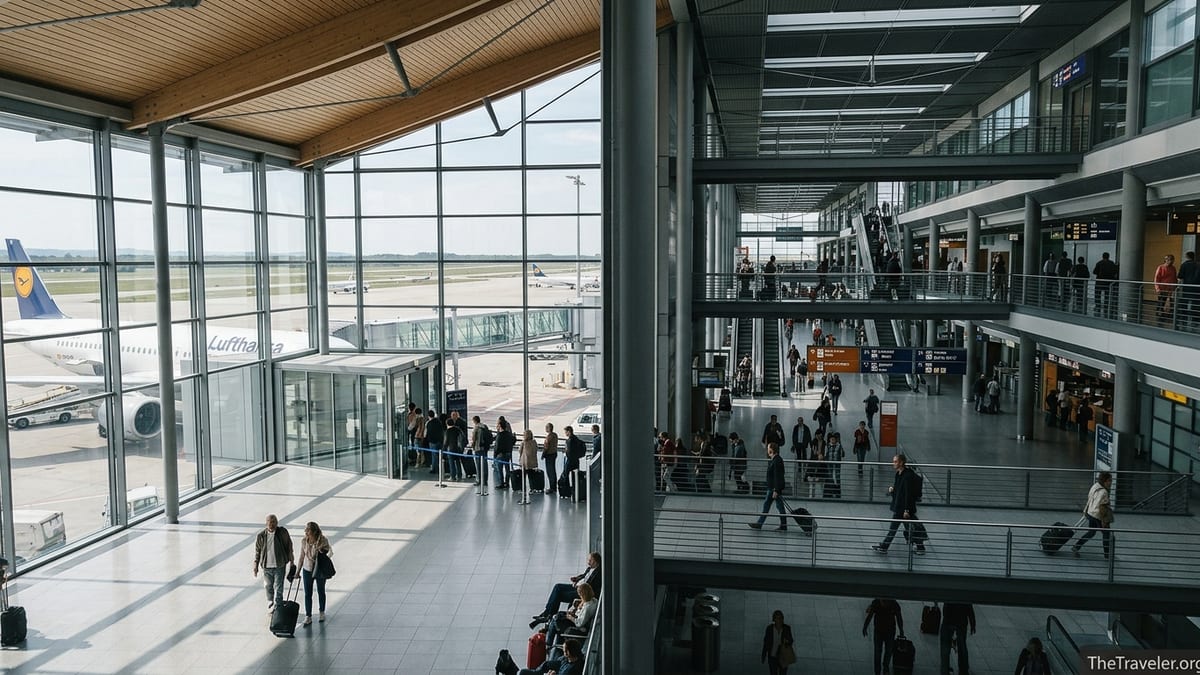
Inside the terminals, the feel of each airport is distinct. Munich is often praised for its airy architecture, clear signage, and generally calmer vibe. Terminal 2 and its satellite, largely used by Lufthansa and Star Alliance partners, feature high ceilings, large windows, and relatively modern seating areas. Between the terminals sits an open-air plaza with cafes, seasonal events like winter markets or big sports screenings, and an overall atmosphere that feels more like a shopping center than an industrial transport node.
Frankfurt, by comparison, can feel denser and more utilitarian, especially in some older concourses. While there have been significant modernizations and new lounges, the overall impression for many travelers is functional rather than relaxing. Signage has improved over the years, but given the airport’s size and complexity, first-time visitors may still find navigation confusing, particularly when shuttle trains or bus transfers between remote stands and terminals come into play.
Both airports offer a full suite of amenities: duty-free shops, pharmacies, supermarkets, business centers, and a wide range of restaurants and cafes catering to different budgets. Lufthansa and its partners operate multiple lounges in both hubs, with premium cabins and Star Alliance Gold members gaining access. Reports from frequent flyers often rate Munich’s main Lufthansa lounges as slightly more pleasant on average, simply because crowding is less severe during normal operations.
For families, Munich can feel more manageable. Play areas, clearer sightlines, and slightly less frenetic gate areas make it easier to keep track of children and luggage. Frankfurt does have family facilities as well, but because of the airport’s size and busier feel, shepherding a group from one end of a concourse to another on a short layover can be more stressful, particularly if your arriving aircraft parks at a remote stand requiring a bus transfer.
City Break Potential and Stopover Choices
Choosing a hub also shapes what kind of city you might experience on a long layover or planned stopover. Munich offers a classic Bavarian gateway: historic squares like Marienplatz, beer gardens in the Englischer Garten, and easy day trips into the Alps or to castles such as Neuschwanstein with an early start. Travelers landing in Munich in the morning can realistically drop their bags at a central hotel by late morning and spend an afternoon exploring pedestrian-friendly Old Town streets.
Frankfurt presents a different kind of stopover experience. The city is a major financial center with a modern skyline, but it also has a compact historic core around Römerberg, riverside promenades along the Main, and excellent museums in the Museumsufer district. Because the S-Bahn ride from the airport to the central station is so short, it is entirely feasible to leave the airport on a six-hour layover, have a proper meal and a walk along the river, and be back at security without cutting things too close.
If your long-haul flight lands early in the morning and your onward journey does not depart until late evening, either city can work for a quick immersion into German life. However, the practicality differs. From Frankfurt, you can be sitting in a café near the Hauptbahnhof within about 40 minutes of stepping off the plane in light traffic conditions. From Munich, the longer S-Bahn journey eats more into your layover, so leaving the airport becomes more attractive on layovers of eight hours or more rather than four to six.
Travelers planning a multi-night stay should also consider how onward transport connects. For example, someone spending three nights in Munich before catching an early flight to a Mediterranean destination might appreciate waking up in a city that feels more relaxed, with direct S-Bahn access to the airport and quick regional trains to places like Salzburg or Garmisch-Partenkirchen. In Frankfurt, three nights can easily be filled with museum visits and day trips along the Rhine to towns like Rüdesheim or Koblenz, with the advantage that your homebound flight or train will depart from an airport that doubles as a national rail hub.
Which Hub Suits Which Traveler?
Not every traveler values the same things. For business travelers with tight schedules, Frankfurt’s denser long-haul network and shorter rail trip into the city center are strong advantages. A consultant flying from New York to Frankfurt for morning meetings, for instance, can realistically land at 7:00, clear immigration, take the S-Bahn, and be in a downtown office before 9:00. For this use case, the occasional extra stress at passport control may be an acceptable trade-off for maximal flight options and the ability to swap flights at relatively short notice.
Leisure travelers and families, on the other hand, often prioritize a smoother and more predictable journey over sheer connectivity. For them, Munich’s reputation for easier transfers and a calmer atmosphere can be decisive. A family flying from Los Angeles to Rome might choose a routing via Munich with a 2.5-hour layover, trusting that security and passport control will be more manageable with small children, even if that means arriving in Rome an hour later than an equivalent routing via Frankfurt.
For frequent flyers trying to maximize miles, both hubs serve Star Alliance traffic well. Yet, if you tend to take many European weekend trips or short-haul flights, routing via Frankfurt might unlock more options to tap into partner schedules, while Munich can be the better choice if your trips skew towards Alpine, Central European, and Mediterranean destinations that are particularly well-served from there.
A practical rule of thumb emerges from countless traveler reports: if you must accept a tight connection of under 75 minutes in Germany, try to do it in Munich rather than Frankfurt. If you have a flexible schedule and want the widest array of departure times and backup flights, Frankfurt’s mega-hub setup is hard to beat. When prices are similar and schedules workable via either hub, many travelers quietly gravitate to Munich for the lower stress.
The Takeaway
Munich and Frankfurt are both capable, well-connected German hubs, but they deliver different experiences. Frankfurt excels as a powerhouse intercontinental gateway with unmatched rail and flight connectivity, particularly suited to business travelers and anyone who values maximum schedule flexibility. Its short train ride into the city and direct ICE links to the rest of Germany make it an efficient springboard for both urban stays and multi-city itineraries, at the cost of more frequent bottlenecks and higher stress during peak times.
Munich, while slightly smaller, shines in passenger experience. Its more compact layout, generally smoother transfers, and calmer ambiance make it a favorite among many frequent flyers, especially for families and leisure travelers. The longer ride into the city is a modest trade-off for an airport that often feels more human in scale, with a pleasant central plaza and intuitive wayfinding.
When choosing between the two, consider the specific realities of your trip: how tight your connections are, whether you need to clear passport control between flights, how easily you could be rebooked if something goes wrong, and whether a quick city visit is part of your plan. For tight or first-time European connections, Munich often offers a safer and more comfortable bet. For maximum choice of flights and onward trains, Frankfurt remains Germany’s heavyweight champion.
In the end, there is no single “best” hub for all travelers, only a better match for your particular route and risk tolerance. Understanding how Munich and Frankfurt differ in flight networks, transfer dynamics, city access, and overall convenience will help you pick the German gateway that turns your layover from a source of stress into a smooth stepping stone on your journey.
FAQ
Q1. Which airport is better for short connections, Munich or Frankfurt?
Munich is generally better for short connections thanks to its more compact layout and typically faster passport control. Frankfurt can work for tight layovers too, but you face more variables such as longer walks, bus transfers from remote stands, and heavier queues at security and immigration, especially at peak times.
Q2. How long should I allow for a connection in Frankfurt Airport?
Even if your ticket is sold with a 45 to 60 minute minimum connection time, aiming for at least 90 minutes is prudent, and 2 hours is more comfortable if you must clear passport control or change terminals. Longer buffers are especially wise for non-EU nationals connecting between long-haul and Schengen flights during busy morning and afternoon waves.
Q3. How long does it take to get from Munich Airport to the city center?
The S-Bahn lines S1 and S8 take about 40 to 45 minutes to reach central Munich stations like Marienplatz or Hauptbahnhof. Factoring in walking, ticket purchase, and potential short waits, most travelers reach central hotels within about 70 to 90 minutes of leaving the terminal if immigration and baggage claim are smooth.
Q4. How long does it take to get from Frankfurt Airport to downtown Frankfurt?
The S-Bahn and regional trains from Frankfurt Airport’s regional station reach Frankfurt Hauptbahnhof in around 12 to 15 minutes. Including transfer time within the terminal and a short walk at the destination, many travelers can be at a hotel near the central station roughly 40 to 60 minutes after landing, depending on queues at passport control.
Q5. Which hub gives me more long-haul flight options?
Frankfurt usually offers more long-haul destinations and higher frequencies, especially to North America, Africa, and the Middle East. Munich still has a strong selection of transatlantic and Asian routes, but if you need very specific times, niche destinations, or more backup options in case of disruption, Frankfurt’s larger network typically wins.
Q6. Is one airport noticeably more comfortable or less stressful?
Many travelers find Munich noticeably less stressful, thanks to brighter, newer terminals and a more human-scale layout. Frankfurt is functional and improving, but busy concourses, long walking distances, and crowds at peak banks can make it feel more hectic, particularly for infrequent flyers or those traveling with families.
Q7. Which airport is better for a quick city stopover?
For very short stopovers of four to six hours, Frankfurt is often better because the train ride into the city center is so quick. You can realistically enjoy a walk along the Main River or a meal near the old town and return to the airport without rushing. For longer layovers or overnight stays, both cities work well, with Munich offering a more traditional Bavarian atmosphere and Frankfurt a mix of modern skyline and compact historic core.
Q8. How do delays compare between Munich and Frankfurt?
Both airports can suffer delays due to weather, airspace congestion, or strikes, but Munich tends to feel more predictable and less chaotic day-to-day. Frankfurt’s heavy traffic and complex operations mean that small disruptions can snowball into longer queues and missed connections more easily, especially during peak travel seasons.
Q9. Which hub should families with children prefer?
Families often do better in Munich, where shorter walking distances, clearer signage, and slightly calmer gate areas make moving with children and luggage easier. Frankfurt has good facilities too, but the scale, frequent bus transfers, and denser crowds can make the experience more tiring with young kids, particularly on short layovers.
Q10. If price and schedule are similar, which airport should I choose?
If all else is equal on price and timing, many travelers opt for Munich for its smoother transfer experience and calmer atmosphere. However, if you value backup options, such as having multiple flights per day to your final destination or an easy switch to long-distance trains, Frankfurt’s larger network and integrated rail hub can be a compelling reason to choose it instead.