


More news on this day
Disruption management specialist Value Group plans to use the 27th Annual GHI Conference at Olympia London from 1 to 3 December 2026 to show how its RUBIK technology platform, global supplier network and 24/7 operations control centre can give airlines and ground handlers a more structured way to manage irregular operations while reflecting the constraints and options at each airport on the network.
Get the latest news straight to your inbox!
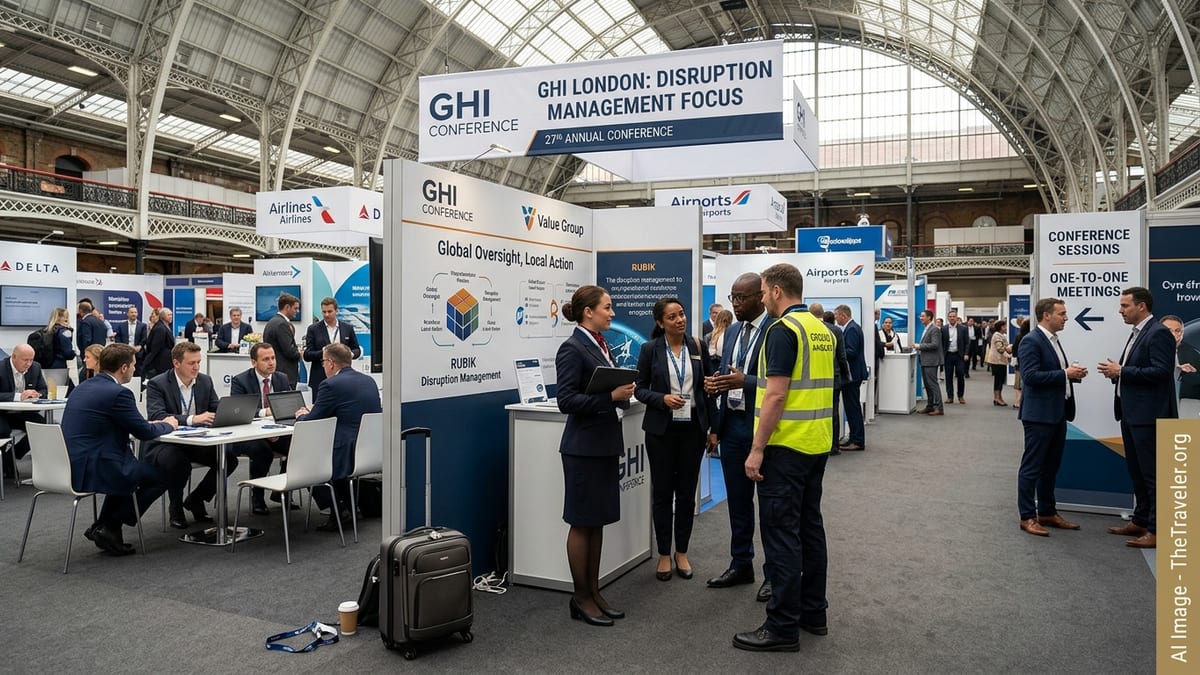
GHI London 2026 as a focal point for IROPS solutions
The 27th Annual GHI Conference is scheduled to take place at Olympia London from 1 to 3 December 2026, with organisers Ground Handling International confirming the event as their flagship annual forum for the ground handling sector. Public listings for the conference indicate that it will again combine conference sessions, a trade exhibition, one to one meetings and networking events, with a delegate profile spanning airlines, airports, ground handlers, ground support equipment manufacturers and IT suppliers.
Event information verified in late 2026 shows that the London edition is expected to attract a similar scale of attendance to recent years, with promotional material referencing more than 1,000 participants, over 100 airline representatives and around 90 exhibiting suppliers at the prior edition. For the 2026 conference, advance communications from the organiser and partner sites highlight that the programme will be structured across three days around ground handling practices, safety and wellness on the ramp, and technology and innovation, including sessions on future regulatory changes, human performance and the role of automation and digital tools in ramp operations.
Within this context, Value Group is positioning its presence in London around irregular operations management, using its stand and scheduled meetings to present live demonstrations of its RUBIK digital ecosystem and its model for coordinating flight disruption responses between airline control rooms, airport stations, ground handlers and local suppliers. While the company has not published a separate, detailed conference timetable, its latest pre event information indicates that it will present specific disruption scenarios at Olympia to show how its tools and contracted local partners are deployed when cancellations, long delays or missed connections affect passengers across one or more airports.
How the “Global Oversight, Local Action” model is structured
Value Group describes its disruption management approach as “Global Oversight, Local Action,” a formulation intended to give airlines central visibility over network wide irregular operations while preserving decision making flexibility for local teams. According to the company’s latest public materials on its services, this model rests on three primary components: the RUBIK technology ecosystem, a round the clock Operations Control Center and a network of pre contracted local providers for accommodation, transport and other services in markets where it operates.
In this framework, the Operations Control Center is responsible for monitoring disruptions across participating airline networks at all hours, coordinating recovery options, and relaying decisions and information between airline operations control, airports, ground handlers and service suppliers. RUBIK, described by Value Group as its core technology platform, is used to automate tasks that have traditionally been handled manually during irregular operations, such as allocating hotel rooms, arranging ground transport, creating and transmitting meal vouchers, and recording which passengers have accepted or adjusted proposed solutions.
The “local action” component is delivered by ground handling companies and other station level partners, who implement recovery plans on the airport side and interact directly with disrupted passengers. Value Group indicates that its system is designed to connect these frontline teams with both airline decision makers and local suppliers in real time, making it possible to view live hotel and transport capacity, confirm bookings and track changing passenger circumstances. The intention is to reduce fragmented handovers that can occur when separate airline call centres, airport desks and third party vendors must coordinate care independently during high volume disruption events.
RUBIK and RUBIK GO: combining digital self service with assisted care
RUBIK is presented by Value Group as a modular digital ecosystem that can support both passenger self service and assisted disruption recovery, depending on how an airline chooses to integrate the platform into its own systems. Company descriptions of the service state that, for many disrupted passengers, airlines can use RUBIK to enable digital self handling, in which travellers receive disruption notifications, rebooking choices, accommodation offers and transport details on their personal devices and can confirm or decline options without joining physical queues at service desks.
The specific digital experience is expected to depend on each carrier’s implementation decisions, including whether access is provided through an airline mobile app, a web portal, SMS links or a combination of channels. Whatever the interface, Value Group portrays RUBIK as working behind the scenes to manage inventory, secure rooms and vehicles with local partners, and capture passenger responses in a way that is visible to both central operations and airport stations. The company’s materials also refer to disruption forecasting for predictable events, such as major weather systems or planned airspace closures, where monitoring of local accommodation and transport capacity can be used to pre alert suppliers and prepare contingency resources before the peak of the disruption.
For passengers requiring more personalised support, Value Group emphasises that its platform is intended to supplement rather than replace human assistance. In addition to the airline’s own staff and ground handlers, the company offers RUBIK GO, a service described as providing on the ground operational support where digital self service alone may not be sufficient. In practice, this can include coordinating with station teams when helping passengers with reduced mobility, unaccompanied minors or travellers facing language barriers, although the exact deployment model is determined by each airline customer and is not standardised across the sector.
Role of ground handlers and implications for passenger experience
Across its published information, Value Group consistently identifies ground handling companies as key operational partners in its integrated disruption management model. Handlers and station agents are typically the first point of in person contact for passengers at airports when flights are cancelled or heavily delayed, but they often depend on approvals and information from airline network control and commercial teams before confirming hotels, transport or alternative routings. By linking these stakeholders through RUBIK and the Operations Control Center, the company argues that more decisions can be made within a common framework at the airport, supported by real time visibility of contracted supplier capacity and agreed airline policies.
For travellers, the impact of an airline choosing to work with a third party disruption management provider is likely to be felt in how quickly and consistently care options are communicated rather than in any visible change of branding. Passengers may notice that notifications about accommodation, transport and rebooking options arrive earlier in the disruption process through digital channels, or that airport agents have clearer information on what can be offered. However, Value Group’s tools do not override airline specific rules on eligibility for hotels or meal vouchers, nor do they change legal entitlements to refunds or compensation under passenger rights regulations such as EU rules or equivalent frameworks in other regions.
Value Group has not published independently verified performance statistics on resolution times or comparative passenger satisfaction for disruptions managed through its ecosystem. Available public communications instead focus on qualitative benefits for operational teams, such as reducing repetitive manual tasks for handlers and enabling frontline staff to devote more attention to complex cases while more routine disruptions are processed digitally. Without data from airlines or regulators, it is not possible at present to quantify the extent to which this model shortens queues or improves outcomes, so such claims remain indicative rather than proven.
What airlines and handlers can expect in London and next steps
At Olympia London from 1 to 3 December 2026, Value Group is expected to use its stand and pre arranged meetings at the GHI Annual Conference to walk airline and ground handling delegates through concrete irregular operations scenarios, such as weather related cancellations or multi flight misconnections at a hub. While the full exhibitor list and panel line up for the conference continues to be updated in the run up to the event, published programme outlines confirm a dedicated focus on technology and innovation on the final day, alongside sessions on regulation, safety and workforce topics, which will provide wider context for discussions about integrated disruption management models.
For airlines and handlers evaluating potential collaboration, one of the main practical considerations is technical integration. RUBIK must connect with existing reservation, departure control and customer communication systems, as well as with airport processes and local supplier contracts. Decisions about whether to proceed, which parts of a network to include, and how quickly to deploy would typically be taken after the conference, following internal trials, security and data protection assessments, and commercial negotiations. As of late November 2026, Value Group’s public announcements around the GHI event focus on presenting its capabilities rather than revealing new airline customers tied specifically to the London conference.
Travellers will not see immediate changes solely because the GHI Annual Conference is taking place. Any shifts in disruption handling will occur gradually if and when airlines expand or introduce services such as RUBIK and RUBIK GO. Passengers flying in late 2026 and into 2027 who are concerned about potential irregular operations should continue to ensure that their contact details are up to date in airline bookings, monitor airline communications during disruption prone periods such as winter weather, and familiarise themselves with applicable passenger rights rules in the regions where they travel, since eligibility for rerouting, accommodation or compensation is determined by regulation and carrier policy rather than by third party providers.