


Landing in the Maldives after a long overnight flight can be disorienting, especially if you arrive late in the evening and still have a resort transfer ahead of you. The good news is that Velana International Airport (MLE) is only a short drive from Hulhumalé, a modern island that has quickly become the country’s main hub for airport hotels, overnight stays and convenient layovers. This guide explains exactly how to get from the airport to Hulhumalé, what to expect from taxis and buses, where to sleep if your seaplane or speedboat runs the next morning, and whether you are better off staying in Malé or Hulhumalé for a transit night.
Get the latest updates straight to your inbox!
Understanding the Airport Layout and Arrival Process
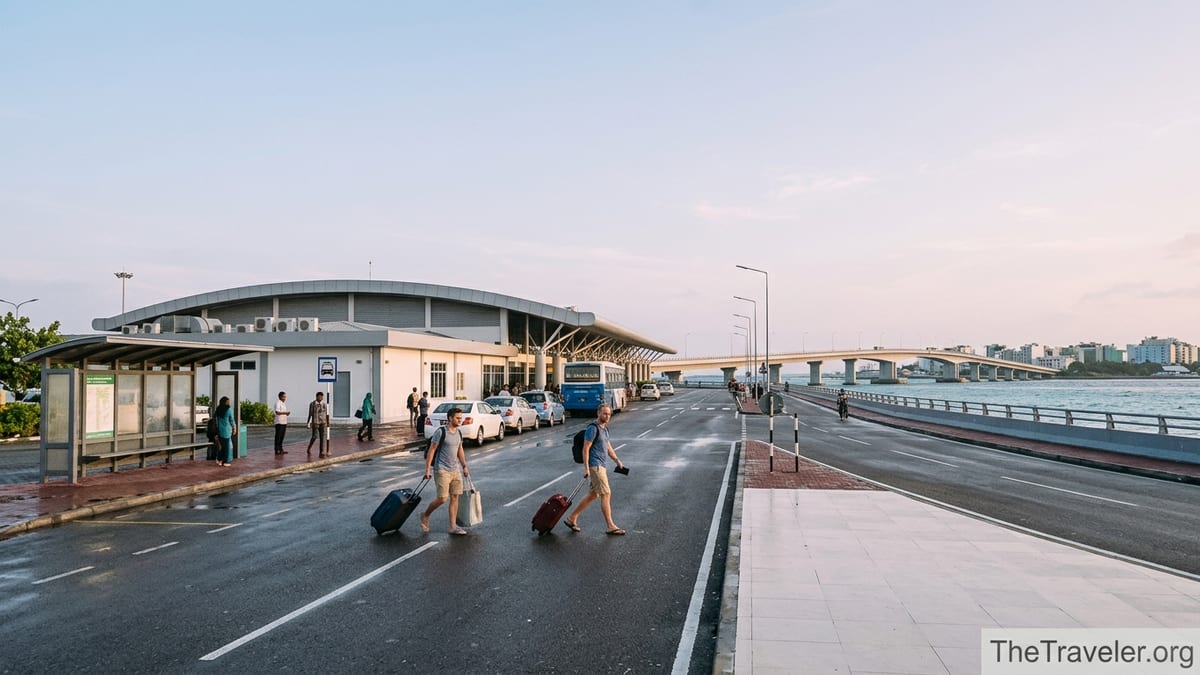
Velana International Airport sits on its own island, Hulhulé, between the capital Malé and the reclaimed island of Hulhumalé. After immigration and customs you exit straight into a compact arrivals hall with resort transfer counters along one side, a small café area and doors leading out to the taxi rank and bus stop. You do not need a separate domestic terminal or long walks just to reach ground transport; everything for Malé and Hulhumalé is directly outside the international arrivals area.
Most visitors heading to private resorts will be met by a resort representative holding a sign just after customs. If your resort uses a speedboat, you are usually escorted across the road to the marina on the same island. If it relies on seaplanes or domestic flights, you are guided to a check-in counter or shuttle. Problems arise when international flights land after the operational hours of seaplane companies, typically in the late afternoon to early evening, or when bad weather grounds transfers. In those cases you will need an overnight near the airport, which is where Hulhumalé and Malé hotels come in.
For transit guests, the key point to understand is that Hulhumalé is physically connected to the airport island by the Sinamalé Bridge and a link road. That turns what used to be a mandatory boat crossing into a 10 to 20 minute road journey. In practical terms, this means a late landing at 22:30, for example, still leaves plenty of time to clear immigration, grab a taxi and check into a Hulhumalé guesthouse before midnight without any boats or complicated transfers.
Taxi and Bus Options from Velana to Hulhumalé
The most straightforward way to reach Hulhumalé is by taxi. Airport taxis wait in a signed rank just outside arrivals, and the ride over the Sinamalé Bridge and along the causeway takes around 10 to 15 minutes in light traffic. Recent guidance suggests typical fares from the airport to Hulhumalé of about MVR 100 to 200, which is roughly the price of a short urban ride in Malé, though passengers arriving at peak times have reported being quoted around MVR 170 for the same trip. The difference usually comes from vehicle type, time of day and any luggage surcharges, so it is worth confirming the fare before you load bags.
Taxis operate 24 hours a day. After midnight there can be short queues, especially if several wide-body flights land close together or if rain is driving everyone under the same shelter. During busy periods, some travelers pre-book a car or van through their hotel or a local transfer company, which often results in a pre-agreed rate similar to or slightly below what you might pay at the curb. This can be helpful for families or small groups who need a larger vehicle and do not want to negotiate on the spot with sleepy children and multiple suitcases.
For budget-conscious travelers, a public bus service connects the airport to both Malé and Hulhumalé. Buses generally cost noticeably less than a taxi for solo passengers, and there is space for regular luggage, though very large dive gear or surfboards can be awkward at busy times. Services run throughout the day and evening on fixed routes over the Sinamalé Bridge, and the ride time is only slightly longer than by taxi. The trade-off is less flexibility in departure times and perhaps some waiting at the stop just outside the terminal.
As a rule of thumb, if you are arriving with two or more people, a taxi quickly becomes economical relative to the bus. A couple landing at 21:00 with two checked bags will usually appreciate the door-to-door ride directly to a Hulhumalé hotel entrance, while a solo backpacker with a light bag and plenty of time may find the bus perfectly adequate and worth the savings.
Choosing Between Hulhumalé and Malé for an Overnight Stay
Both Hulhumalé and Malé are within easy reach of Velana International Airport, but they offer very different atmospheres. Hulhumalé is a planned island with wide streets, a long eastern beach and a growing strip of small hotels and cafés aimed squarely at transit guests and short-stay visitors. Malé is the dense historic capital, packed with offices, local shops, markets and mosques, with far fewer beachfront properties and more limited space for luggage-laden travelers to move around comfortably.
For most people flying in late and leaving on a resort transfer the next morning, Hulhumalé is the more practical choice. Many guesthouses and small hotels there are designed around very short stays: they offer 24-hour reception or flexible check-in, paid airport pick-ups, and simple breakfasts that start early enough to catch first seaplane or speedboat departures. Properties close to the beach allow you to stretch your legs and grab a quick dinner at a seafront café before an early night, which is a welcome contrast after being in the air for 10 hours or more.
Malé can make sense if you have a full free day, or if your interests lean toward exploring local culture. The fish market, the Friday Mosque and small tea shops offer a snapshot of everyday Maldivian life you will not see on a resort island. The airport connection is still easy via taxi or ferry plus taxi, but streets are narrow and busy, and hauling large suitcases through afternoon heat is not ideal after a long-haul flight. That is why many visitors with only an overnight to spare now bypass Malé entirely and sleep in Hulhumalé instead.
A useful way to think about it is this: if your priority is a smooth, low-stress connection between your international flight and your resort transfer, Hulhumalé is generally better. If you have at least a full day to spare and want to see a slice of city life, Malé becomes more attractive, though you may still prefer to keep your main luggage in your hotel and explore with a light daypack.
Airport Hotels and Concrete Examples in Hulhumalé
Hulhumalé’s hotel scene has expanded quickly, with dozens of small properties aimed at transit passengers. These range from simple guesthouses above local shops to more polished boutique hotels with beachfront terraces. A typical mid-range example is a small hotel or guesthouse a 10 to 15 minute drive from the airport, offering air-conditioned rooms with private bathrooms, basic Wi-Fi and breakfast included. Room rates for such properties commonly start around the equivalent of 60 to 90 US dollars per night for two people, depending on the season and how far in advance you book.
Another concrete scenario is a beachfront guesthouse just a few minutes’ drive from the bridge, where guests highlight the benefit of being less than a kilometer from the airport while still waking up to sea views. This kind of property often includes a paid shuttle or inexpensive taxi arrangement from arrivals, and guests frequently remark that being “near the airport made logistics so easy” compared with taking a late-night speedboat or trying to cross to another atoll after dark.
Larger hotels sometimes heavily market themselves as “airport hotels” without being on the airport island itself. A hotel in Hulhumalé that mentions a 10-minute drive to the airport and advertises its proximity as ideal for transit guests is typical. Many of them will arrange not only pick-ups and drop-offs for international flights but also early-morning runs back to the terminal so guests can meet seaplane or domestic transfer teams at their counters by 06:00 or 07:00.
When evaluating Hulhumalé properties, it is worth reading recent traveler comments to confirm whether late check-ins are genuinely available, whether airport pick-ups are punctual, and how early breakfast is served. For instance, if you have a seaplane check-in at 06:00, staying at a guesthouse that only starts breakfast at 07:30 is less useful than one that offers a simple takeaway snack or coffee from 05:00.
Late Arrivals, Seaplanes and Why Overnight Stays Are Often Required
One of the most common surprises for first-time visitors is discovering that seaplanes in the Maldives only operate during daylight hours. While exact cut-off times can vary slightly by operator and season, the practical pattern remains similar: if your international flight lands after mid to late afternoon, you are unlikely to make a same-day seaplane to a remote atoll resort. Many resort booking confirmations now spell this out clearly and advise guests arriving after around 15:00 to arrange an overnight near the airport and continue the next morning.
Speedboat and domestic flight transfers are slightly more flexible. Many speedboats serving nearby atolls run well into the evening, and some operate through the night, albeit often with surcharges or tighter schedules. Domestic flights to regional airports can also depart after dark, followed by short speedboat hops to certain resorts. However, weather and sea conditions in the monsoon seasons can disrupt late transfers, and live reports from travelers show that it is not unusual for guests to be asked to stay in Hulhumalé overnight rather than risk a bumpy crossing in poor conditions.
A typical real-world example: a couple flying from Europe arrives in Malé around 21:30 with a reservation at a resort accessible only by seaplane. Their resort confirmation notes that seaplane transfers operate roughly between early morning and late afternoon, so the couple has already booked a Hulhumalé hotel for their first night. After clearing immigration and customs, they meet a resort representative who confirms the plan, then take a taxi for around 10 minutes to their guesthouse. The next morning they check out by 07:00, return to the airport, hand their luggage to the resort seaplane counter and are in the air shortly after.
Many divers and liveaboard guests follow a similar pattern. They time their arrival for late afternoon, stay in Hulhumalé or Malé overnight, and join their boat or connecting domestic flight the next day. This approach not only removes the risk of missing a transfer but also gives the body a chance to rest and hydrate after long-haul travel before boarding small planes or fast boats.
Managing Luggage, Transfers and Early-Morning Departures
Luggage logistics are generally straightforward at Velana but can catch people out on seaplane routes. Seaplane companies and domestic carriers typically have lower checked and hand baggage allowances than long-haul airlines and may impose extra charges for overweight bags. Some resort documentation warns that these fees must be paid directly to the seaplane operator at check-in. For travelers with bulky dive gear or camera equipment, it is worth verifying the current allowance and likely excess charges before you fly.
If you are overnighting in Hulhumalé, you take all your luggage with you in the taxi or bus. There is no left-luggage service directly tied to seaplanes for transit nights; your resort transfer only effectively begins when you check in at the relevant counter on the day you fly out. For this reason, guests who plan to explore Malé or stroll around Hulhumalé sometimes bring a small daypack and leave the bulk of their belongings in their hotel room until it is time to return to the airport.
On the morning of departure to a resort, resort instructions usually tell you to meet their representative in the arrivals hall or at a clearly numbered counter in the check-in area. Typically you will be asked to be present 1.5 to 3 hours before the planned seaplane departure, especially if you are traveling in high season. For speedboat transfers, some resorts group guests on shared boats departing at fixed windows. In those cases, overnighting nearby helps ensure you do not miss a once-daily departure that might be scheduled mid-morning.
Travelers catching early international departures, such as flights leaving around 09:00 or earlier, also often choose Hulhumalé for their final night. A 06:00 taxi ride from a Hulhumalé hotel to the airport is predictable and short, removing the stress of crossing from an outer island or waiting on inter-island ferries before check-in closes. Many resorts are experienced in organizing such returns, but building in a buffer night near the airport is a common tactic for risk-averse guests.
Is Hulhumalé Really Better Than Malé Before or After a Resort?
Whether Hulhumalé is “better” than Malé depends on what you need from your stay, but for pure transit convenience it increasingly has the edge. The island was planned with broad streets and residential blocks, and the seaside promenade in Hulhumalé Phase 1 and Phase 2 has become lined with casual restaurants and coffee shops. You can land at 23:00, check in by midnight, and still find a late snack on the beachfront within a short walk of many hotels.
Malé, by contrast, offers the cultural heart of the Maldives. You can wander past the National Museum, watch the bustle at the fish market or sit in a corner café sipping a sweet milk tea among office workers and students. For visitors who care about seeing the capital’s life beyond the resort bubble, a day in Malé can be rewarding. However, the city’s compact size and high population density mean pavements are narrow, traffic is constant and green spaces are limited. It is not always the easiest environment for jet-lagged travelers dragging wheelie suitcases after midnight.
Concrete traveler patterns reflect these trade-offs. Honeymooners and families arriving from long-haul flights are now far more likely to be booked into Hulhumalé for their first night, sometimes on their resort’s recommendation. Guests with longer stays, such as business travelers attending meetings in government offices or NGOs, may choose Malé for daytime access and then move to Hulhumalé or a resort for rest. Divers boarding liveaboards often split the difference: they stay in Hulhumalé to be close to the marina where many boats embark, but still hop over to Malé for a few hours of sightseeing in the afternoon.
In short, if you imagine your transit time as an extension of your resort holiday, Hulhumalé’s beach, quieter streets and airport-focused services make it feel like a soft landing. If you see it as a chance to understand the country’s real urban center, Malé’s markets and mosques are worth at least a short visit, even if you ultimately choose to sleep in Hulhumalé for the sake of easy transfers.
Practical Tips for Smooth Late-Night and Transit Stays
A little preparation goes a long way when dealing with late-night arrivals and early-morning departures. One important step is to confirm your transfer type and schedule with your resort before you travel. If your reservation states “seaplane transfer” and your international flight is scheduled to land after mid-afternoon, ask explicitly whether a same-day transfer is feasible. Many resorts now respond by recommending or even pre-arranging a Hulhumalé hotel and adding the overnight to your quote upon request.
It is also wise to carry a small amount of Maldivian rufiyaa or a credit card that works internationally. While some taxis and hotels accept foreign currency for small payments, fares and incidentals are normally quoted locally, and using a card or local cash avoids awkward change calculations at midnight. Buying a bottle of water or a snack at the airport or a nearby shop before heading to your hotel can spare you from hunting for open stores later, particularly during Ramadan or on public holidays when hours may differ.
For families, consider booking a slightly larger room or adjoining rooms in Hulhumalé rather than trying to sleep four people in a tiny city hotel in Malé. Being able to spread out luggage, repack resort outfits and let children nap undisturbed can make a huge difference before boarding an early boat or seaplane. Some properties near the beach offer family rooms or small suites at prices only marginally higher than two separate standard rooms, which can end up good value when you factor in convenience.
Finally, keep weather and seasonality in mind. During the wetter monsoon months, afternoon storms can disrupt both seaplanes and speedboats. In practice, this means building flexibility into your first and last nights is prudent. If your budget allows, proactively adding a Hulhumalé overnight at the start of your trip rather than trying to push through on the same day can turn what might be a stressful scramble into a relaxed start to your holiday.
FAQ
Q1. How long does it take to travel from Velana International Airport to Hulhumalé?
The drive from the airport island to most Hulhumalé hotels typically takes around 10 to 20 minutes by taxi, depending on traffic and which part of the island you are staying in.
Q2. How much does a taxi from the airport to Hulhumalé usually cost?
Recent reports suggest fixed-style fares of roughly MVR 100 to 200 for a standard taxi from the airport to Hulhumalé, with slight variations for larger vehicles, late-night surcharges or extra luggage.
Q3. Is there a bus from Velana Airport to Hulhumalé?
Yes, public buses operate between the airport, Malé and Hulhumalé over the Sinamalé Bridge. They are cheaper than taxis and suitable for travelers with moderate luggage who do not mind a short wait at the bus stop.
Q4. Can I catch a seaplane to my resort if I land in the evening?
Seaplane operators generally fly only during daylight hours, so passengers arriving after mid to late afternoon are usually required to stay overnight near the airport and continue to their resort the following morning.
Q5. Is Hulhumalé or Malé better for a one-night airport layover?
For most transit passengers, Hulhumalé is more convenient because it is quieter, closer to beachside hotels and designed with easy road access to the airport. Malé is better if you specifically want to explore the capital’s markets, mosques and local culture.
Q6. Are there true “airport hotels” on the airport island itself?
There has historically been at least one hotel on the airport island aimed at transit guests, but most visitors now choose Hulhumalé because it offers a wider range of accommodation, more dining options and only a short taxi ride to the terminal.
Q7. What happens to my luggage if I overnight before a resort transfer?
If you stay in Hulhumalé or Malé, you keep your luggage with you at your hotel. The next morning you bring it back to the airport and hand it over at the resort’s seaplane, domestic flight or speedboat counter when you check in for your transfer.
Q8. How early do I need to be at the airport for a seaplane transfer?
Resorts commonly ask guests to be at the airport or their dedicated counter 1.5 to 3 hours before the expected seaplane departure, especially in high season, to allow time for check-in, weighing bags and organizing shared flights.
Q9. Is it safe to arrive in the Maldives late at night and still reach Hulhumalé?
Yes, taxis and buses run through the evening and into the night, and the route to Hulhumalé is entirely by road over the Sinamalé Bridge. Many flights land around midnight, and it is routine for travelers to check into Hulhumalé hotels at that hour.
Q10. Can I stay in Hulhumalé and still visit Malé for a few hours?
Yes, taxis and buses link the two islands, so you can sleep in Hulhumalé, then make a short daytime trip to Malé to see the markets and main sights before returning to your hotel for an early night or onward transfer.