


Snowfall in Japan is famously generous but increasingly variable, and no article can guarantee what any given winter will look like. The guidance below compares Hakuba Valley and Nozawa Onsen using long-term climate data, resort season histories and recent operating patterns, but you should always cross-check your specific season against current forecasts and official resort announcements before locking in flights and non‑refundable bookings.
Get the latest updates straight to your inbox!
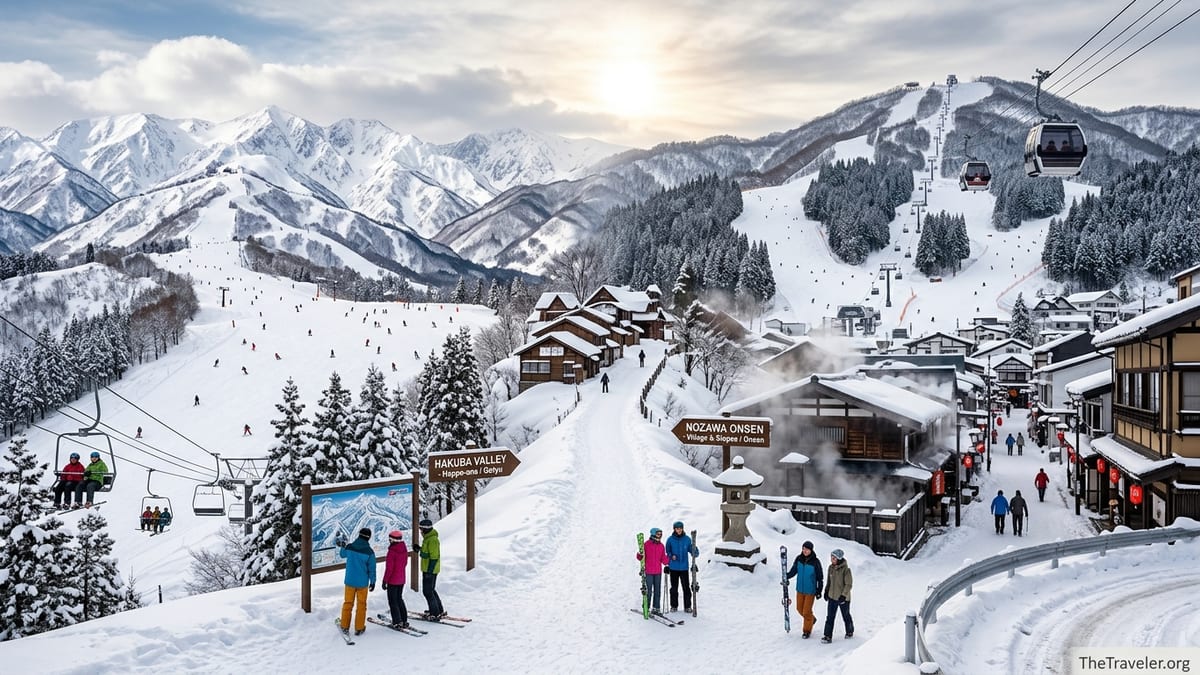
Big Picture: How Hakuba and Nozawa Onsen Seasons Usually Unfold
Both Hakuba Valley, in Nagano’s northern Alps, and Nozawa Onsen, in northern Nagano, are classically snow-rich Japanese resorts, with typical seasons running from early or mid December into late March, and in good years into April or even early May on higher lifts. Hakuba sits in a wide valley ringed by 3,000 meter peaks and averages around 6 to 7 meters of snowfall each winter, with the heaviest falls usually in January and February. Nozawa Onsen is known for deep natural snow as well, with Japan’s national tourism organization describing seasonal totals in excess of roughly 10 meters, though this can vary significantly from year to year.
For a first-time visitor, the key differences are elevation, layout and village feel. Hakuba is a collection of separate ski areas spread along the valley, from lower, family-oriented hills to big, alpine-style mountains like Happo-one and Goryu that reach close to or above 1,800 meters at the top. That gives Hakuba access to more high, north-facing terrain that can hold snow later into spring. Nozawa Onsen is a single large resort rising directly above a compact hot-spring village, with beginner slopes both near the base and on mid-mountain plateaus that can offer good snow even when the lower village feels milder.
Climate data from the Japan Meteorological Agency shows Hakuba’s village averaging below freezing in midwinter, with January mean temperatures around minus 3 degrees Celsius and relatively cool conditions from late December through February. Nozawa’s base sits at a similar or slightly lower elevation, and typically experiences comparable midwinter cold, though both areas can see brief thaws or rain, especially at lower elevations later in the season. These patterns set the backdrop for deciding when to go, but the details by month matter a great deal.
It is also important to remember that holidays and international demand now shape crowd patterns almost as much as snow. New Year in Japan, Chinese New Year, and Nozawa’s famous Dosojin fire festival in mid January all create pronounced peaks in bookings and lift lines. Ski schools and rental shops in both Hakuba and Nozawa increasingly sell out during these windows, so realistic timing has to weigh snow conditions against availability and budget.
Early Season: Late November to Christmas
Early season is the riskiest window in both Hakuba and Nozawa Onsen. Historically, some Hakuba Valley areas target late November or very early December openings on limited terrain, often on high or north-facing slopes that can hold man-made and natural snow more easily than lower runs. Recent season schedules compiled by local operators and travel companies show resorts like Goryu, Hakuba47 and Happo-one frequently among the first to operate, sometimes with just one or two main lifts and narrow strips of snow while surrounding slopes remain brown. In strong snowfall years a surprising portion of upper-mountain terrain can be skiable before mid December, but warm or dry starts have pushed meaningful openings closer to Christmas in some recent winters.
Nozawa Onsen typically plans a December opening as well, often marked by a formal season-opening event on the second weekend of the month. Resort histories that track actual operating days show that in good years Nozawa has managed to open some runs as early as late November, while in leaner seasons the resort has relied on a smaller high-elevation area before the full mountain connects. For first-timers, this means that while early December skiing at Nozawa is possible, it should not be treated as guaranteed, especially if your group needs wide beginner slopes and gentle progression terrain rather than one or two narrow pistes.
A crucial distinction in early season is that Hakuba’s higher and more north-facing terrain can sometimes offer a slightly better chance of cold temperatures and early cover than the lower parts of Nozawa. However, this advantage mainly benefits confident intermediates and above who can handle steeper pitches and narrower early-season runs. Beginners who need green slopes near base villages should be wary of assuming that early December will deliver full operations in either destination. If you are tied to pre-Christmas travel, it is worth contacting specific resorts in Hakuba Valley and the Nozawa Onsen tourism office in autumn to check their recent opening dates, snowmaking capabilities, and typical terrain coverage before committing.
In terms of crowds and prices, early December is usually one of the quieter and more affordable times, with lower accommodation rates and good lesson and rental availability on weekdays. The exception is the Christmas to New Year period, when both Hakuba and Nozawa start to fill rapidly with international visitors, even if conditions are still developing. If you are flexible and comfortable with the risk of limited terrain, early season can be an economical introduction, but it is not the safest choice for absolute beginners expecting midwinter-quality snow.
Holiday Peaks: New Year and Lunar New Year
The New Year period in Japan, roughly from December 29 to January 3, is one of the biggest domestic travel peaks of the year, and both Hakuba and Nozawa Onsen feel the impact strongly. By this stage of winter, mid-mountain and upper slopes in both areas are usually open and often in good condition, though some seasons see a slower build-up and a few key runs may still be thin or reliant on artificial snow. Temperatures at base level in Hakuba and Nozawa are generally below freezing during this window, with frequent snowfalls at elevation and occasional rain or wet snow in the valleys when warm fronts pass through.
Hakuba’s size spreads skiers across multiple resorts, but the main bases such as Happo-one, Goryu, Iwatake and Cortina experience pronounced morning queues and busy mid-mountain arteries over New Year and during weekends around this period. International tour groups, especially from Australia and East Asia, are particularly visible in Hakuba, contributing to crowded ski schools and popular rental shops that may require advance booking weeks or months out. Village restaurants and shuttle buses can feel stretched, and prices for accommodation are among the highest of the season.
Nozawa Onsen, with its compact layout and single lift system, can feel even more intense during New Year despite being smaller overall. The village streets fill with day and overnight visitors, lift lines extend at main gondolas and key chairs, and onsen baths are busy from afternoon into late evening. The resort’s terrain, however, tends to handle crowds reasonably well once you get away from the principal access points. Many beginner and intermediate runs fan out across the mountain, and mid-mountain plateaus can be less congested than the base beginner zones.
Lunar New Year, which shifts between late January and mid February depending on the year, brings a second peak. Hakuba, already a well-established destination for East Asian travelers, often sees a noticeable spike in occupancy and lift-line length around this window. Nozawa also experiences higher demand, though the impact can vary more depending on flight and package offerings in each season. For both destinations, families or groups bound to New Year or Lunar New Year should budget for higher nightly rates, stricter minimum stays, and the need to pre-book lessons and rentals as soon as bookings open.
Core Powder Months: January and February Weekdays vs Weekends
From early January through late February, both Hakuba and Nozawa Onsen are usually in full winter mode. Climate normals for Hakuba show average daily temperatures in January below freezing, with substantial snowfall and the deepest snowpack typically building in February. Similar midwinter cold and regular snowfalls are the norm at Nozawa, with the resort and national tourism sources characterizing January through March as the most reliable period for good coverage and frequent powder days.
This is also when crowd patterns diverge most clearly between weekdays and weekends. In Hakuba, weekdays in mid January often offer an appealing balance: plenty of terrain open, regular fresh snow, and manageable lines at most lifts. Weekends and public holiday periods, on the other hand, can bring heavy usage, especially at high-profile areas like Happo-one and Goryu. Shuttle buses and parking lots fill early, and popular off-piste and sidecountry routes see heavy traffic from guided groups and confident intermediates. The village atmosphere is lively, with a wide choice of bars and restaurants, but waits can be long without reservations.
Nozawa Onsen’s midwinter weekdays can feel comparatively mellow, with locals and long-stay guests enjoying short lift lines and space to roam across the hill. Weekends and the week surrounding the Dosojin fire festival on January 15 tell a different story. The festival is one of the village’s most important traditional events, held every January 15 and accompanied by associated rituals from January 13 to 15. Local and national tourism organizations note that accommodation during this period often books out many months in advance, and recent reports suggest some properties are filled almost a year ahead by repeat guests. Prices rise, and even visitors not primarily interested in the festival feel the pressure on availability.
For first-time skiers, lesson and rental availability closely tracks these peaks. In Hakuba, large multi-lingual ski schools serve many resorts, but peak weeks around New Year, Lunar New Year and late January school holidays in key overseas markets still see group lessons selling out and prime-time private instructors fully booked. Nozawa has fewer providers but also fewer total visitors, yet its schools and rental shops can be fully committed around the fire festival, New Year, and popular Australian school holiday weeks. If your priority is learning in calm conditions, mid to late January weekdays outside these holiday and festival windows in either destination generally offer the best balance of snow quality and manageable crowds.
Spring Transition: March and Early April
March marks a clear shift in both Hakuba and Nozawa Onsen. Days grow longer, sunshine becomes more frequent, and while storms still arrive, especially early in the month, the snowpack begins to settle. In Hakuba, high-elevation resorts such as Happo-one, Goryu and Hakuba47 commonly plan operations into late March and, in many recent seasons, into April and even early May on their upper lifts. Season date summaries from local operators show that while some smaller valley resorts close in late March or early April, at least a few of the higher, north-facing areas continue running for spring skiing as long as conditions allow.
Nozawa Onsen also often operates into April, and in strong snow years has managed to keep upper runs open into early May. Official descriptions of the resort mention a season stretching from December to May, with January to March generally considered the sweet spot and April framed as a spring-skiing period with softer snow and quieter slopes. Recent season histories confirm that even when lower runs start to thin, mid and upper-mountain pistes can remain viable for weeks longer, especially those above the main gondola mid-station.
For beginners, March can be a particularly attractive time. Temperatures at base level in both Hakuba and Nozawa usually climb closer to or above freezing on many days, which makes time on the snow less harsh, especially for children. The trade-off is that snow quality becomes more variable, with a higher chance of rain at village level, freeze-thaw cycles, and heavier spring snow in the afternoons. Morning conditions are often firm and fast, softening through the day. Provided you are comfortable with these spring characteristics, March offers a good compromise between comfort and coverage.
In terms of pricing and crowds, March generally brings more availability and friendlier rates. After the peak of February, many international travelers taper off, and domestic demand shifts as well. Accommodation options open up in both destinations, and ski schools and rental shops have far better capacity. The first half of March often still feels wintry at mid and upper elevations, while late March and early April tilt more towards sunny, relaxed spring skiing. Because closing dates depend heavily on each season’s snowpack, it is essential to confirm planned and actual lift schedules for your target year rather than relying on past calendars.
Late Season: Mid April to Closing
Late season, from mid April towards the final lift days, is where Hakuba’s vertical and north aspects usually give it an edge in longevity. In many recent winters, upper lifts at Happo-one, Goryu and Hakuba47 have planned operations into late April or the opening days of May, though not every run remains open and snow conditions are firmly spring-like. Lower slopes may be closed or offer only narrow ribbons of snow, and ski-in, ski-out convenience is less reliable. Weather at village level is typically mild, with daytime highs comfortably above freezing and occasional rain.
Nozawa Onsen’s late-season operating pattern is similar but slightly more compressed. High runs above the mid-mountain plateau can often remain skiable into April, and in good years lifts have run close to or into Golden Week in early May. However, the lower village-facing runs usually show bare patches and may close earlier, requiring downloading on gondolas or chairlifts at the end of the day. While the resort promotes the appeal of quiet spring skiing and the chance to enjoy both snow and early hints of green season, visitors at this time need to be realistic about limited terrain and highly variable surface conditions.
Crowds in both Hakuba and Nozawa are usually light in late April, with the exception of any overlap with Japan’s Golden Week holidays at the turn of April and May, when domestic tourism picks up across the country. Budget-conscious travelers willing to accept slushy snow and partial operations can find attractive accommodation rates and easy last-minute availability for rentals and lessons, though not all services run at full capacity. Some restaurants and shops start shifting to off-season hours.
For true first-timers, very late season is generally not ideal unless the goal is a gentle introduction to the feel of sliding on snow rather than maximizing terrain. Warmer temperatures are appealing, but thin cover, potential rain, and early closures of beginner zones can frustrate progress. If you are seeking a safe first-ski experience with predictable facilities, March or early April is usually a better compromise than the final weeks of operation.
Weather Basics for First-Timers: Temperatures, Storms and Rain
Understanding typical weather at base elevations helps set expectations, especially for families and beginners. Long-term climate figures for Hakuba show average January temperatures around minus 3 degrees Celsius at village level, with daytime highs often just below or around freezing and nights dropping several degrees lower. February remains similarly cold, while December and March are slightly milder but still wintery. Nozawa Onsen, at comparable altitude, experiences a similar pattern: consistently cold midwinter conditions, a transition in March, and increasingly mild afternoons by April.
Storm days are part of the Japanese snow experience. Both Hakuba and Nozawa can see intense snowfall accompanied by strong winds, especially on higher lifts and exposed ridges. On such days, resorts sometimes suspend gondolas or upper chairs while keeping lower lifts running. Multi-year operating histories and local reporting suggest that complete resort-wide closures are relatively rare, but partial shutdowns for wind or heavy snow are regular events each winter. Planning a longer stay of five to seven days, rather than two or three, reduces the chance that your entire visit coincides with adverse weather.
Rain is an increasing concern later in the season and occasionally during warm events in midwinter. At base level in Hakuba and Nozawa, a few days each winter may see rain rather than snow, especially in March and April. Higher elevations often still receive snow in these events, but surfaces can become heavier and more challenging for beginners. Because climate trends and year-to-year variability are significant, it is wise to review multi-year monthly summaries for your travel window and monitor medium-range forecasts in the weeks before you arrive.
Clothing and comfort follow naturally from these patterns. In January and February, both destinations require full winter gear, including waterproof outer layers, insulated gloves and proper face protection. March softens slightly, and many guests appreciate being able to take frequent breaks in sunny on-mountain cafes without the deep chill of midwinter. For first-timers, especially children, these comfort differences can strongly shape how enjoyable the learning experience feels.
Lessons, Rentals and Booking Strategy by Traveler Type
As Japan’s ski boom has gathered pace, lesson and rental demand in Hakuba and Nozawa has become more concentrated around key peaks. English-language ski schools in Hakuba, serving multiple resorts across the valley, report selling out of group classes and prime private lesson slots during New Year, Lunar New Year, and popular overseas school holiday weeks in January and February. Rental shops close to main gondolas see similar surges, and the most convenient ski-in, ski-out properties now expect guests to pre-book equipment packages.
Nozawa Onsen’s lesson and rental infrastructure is smaller but still substantial, and the compression of visitors into a single village can make peak weeks feel more intense. Operators and recent traveler reports highlight that around the January 15 fire festival, as well as over New Year and busy Australian holiday weeks, ski schools and rental outlets reach capacity. Outside these windows, particularly on weekdays in late January, February and March, beginners can find more flexible scheduling and more individual attention.
Families tied to school holidays face the toughest trade-offs. If you must travel over Christmas, New Year or Lunar New Year, both destinations are realistic, but you should expect to pay top rates, book accommodation 9 to 12 months ahead for Nozawa around the fire festival, and secure lessons and rentals as soon as providers open their calendars. Hakuba may offer more accommodation variety and multiple school options, while Nozawa offers a tight-knit village with easy logistics once you are there, but less slack in capacity at the very busiest times.
Couples or small groups with flexible dates are in the strongest position. For deep snow with manageable crowds, target mid to late January or early February weekdays, avoiding the New Year and Lunar New Year windows and steering clear of January 13 to 15 in Nozawa unless you specifically want the festival atmosphere and are ready to commit far in advance. Budget-focused travelers might consider late February into early or mid March, when snow coverage usually remains good on most terrain but prices soften and availability improves. Absolute beginners who value comfort over maximum powder should lean towards March, when temperatures are gentler and lesson environments calmer, while still aiming for the first half of the month for better surface conditions.
Summary: Matching Your Dates to Each Destination
Hakuba and Nozawa Onsen both offer long, snow-rich seasons, but their patterns of snow, crowds and pricing differ enough that timing can be as important as choosing the destination itself. Hakuba’s expansive terrain and higher, often north-facing slopes give it an edge in season length and variety, particularly for confident intermediates who want options in late March and April. Nozawa Onsen’s single-mountain layout above a traditional hot-spring village creates an immersive atmosphere and easy logistics, with strong midwinter snow reliability and a pronounced spike in demand around the January 15 Dosojin fire festival.
For first trips, the safest balance of snow and crowds in both areas usually falls between early January and late February, skewing towards weekdays and away from New Year, Lunar New Year and major festival dates. March is an excellent option for beginners and budget-conscious travelers willing to accept more variable snow in exchange for softer temperatures and easier bookings. Early December and very late season require more risk tolerance and careful checking of recent opening and closing patterns at specific resorts.
Before you commit, it is essential to review current-season resort announcements on planned opening and closing dates, check recent years’ actual operating histories for your chosen month, and cross-check long-range forecasts once they become available. Conditions in Japan can shift quickly from season to season, and even within a single winter, but using historical patterns as a guide will help you choose dates that match your priorities, whether that means deep powder, gentle sunshine, festival excitement or quiet progression on wide beginner slopes.
Below is a concise comparison of typical conditions and pressures for first-time visitors. Treat it as a starting point rather than a promise, and always verify details for your specific year.
Quick Comparison Table: Hakuba vs Nozawa Onsen by Season
Early season (late November to Christmas): Hakuba often opens some high, north-facing terrain first, but coverage is limited and better suited to intermediates. Nozawa may open in early or mid December with partial operations. Snow reliability is moderate at best, crowd levels are generally low except around Christmas, and prices are relatively soft. For a first trip, this window is higher risk in both destinations, especially for beginners needing extensive green terrain.
Holiday peaks (Christmas to early January, Lunar New Year): Both areas usually have good coverage on most main runs, with cold temperatures and frequent snowfalls. Crowds are very high, particularly in Hakuba’s main resorts and throughout Nozawa’s compact village. Prices are at their seasonal maximum and lesson and rental slots can sell out long in advance. Suitable for families tied to school breaks who can book early and tolerate queues, less ideal for those seeking a relaxed introduction.
Core midwinter (early January to late February outside major holidays): Snow reliability is highest in both destinations, with deep bases and regular top-ups. Weekday crowd levels are moderate, weekends busier but manageable in Hakuba’s spread-out resorts and Nozawa’s extensive terrain. Price pressure is significant but below peak-holiday extremes. This is generally the best window for first trips focused on snow quality, with Hakuba feeling more international and spread out and Nozawa offering a more traditional village vibe with one integrated ski area.
Spring (March to early April): Snow remains good on mid and upper slopes, though more variable at base with a higher chance of rain and freeze-thaw cycles. Crowds drop markedly, especially after the first half of March, and prices and availability improve in both destinations. Hakuba’s higher resorts and Nozawa’s upper runs usually stay open longer than low-elevation areas. This window is particularly suitable for beginners and budget-conscious travelers who prioritize comfort and space over the very deepest powder.
Late season (mid April to closing): Operations contract to higher lifts and selected runs. Snow is firmly spring-like, with slush, bare patches and potential rain at lower elevations. Crowds are low outside any overlap with Golden Week, and prices are generally attractive. Hakuba typically maintains more late-season options on its highest slopes, while Nozawa offers a quieter, end-of-season atmosphere with convenient access to hot springs. Best for repeat visitors and relaxed cruisers rather than first-timers seeking classic midwinter conditions.