


Set on the open prairie of southern Saskatchewan, Regina is a compact capital city with a surprisingly green heart. Centered on the broad sweep of Wascana Centre urban park and a low-rise downtown core, it works well as a short city break, a stop on a cross-Canada road trip, or a base for exploring lakes and provincial parks across the region.
Get the latest updates straight to your inbox!
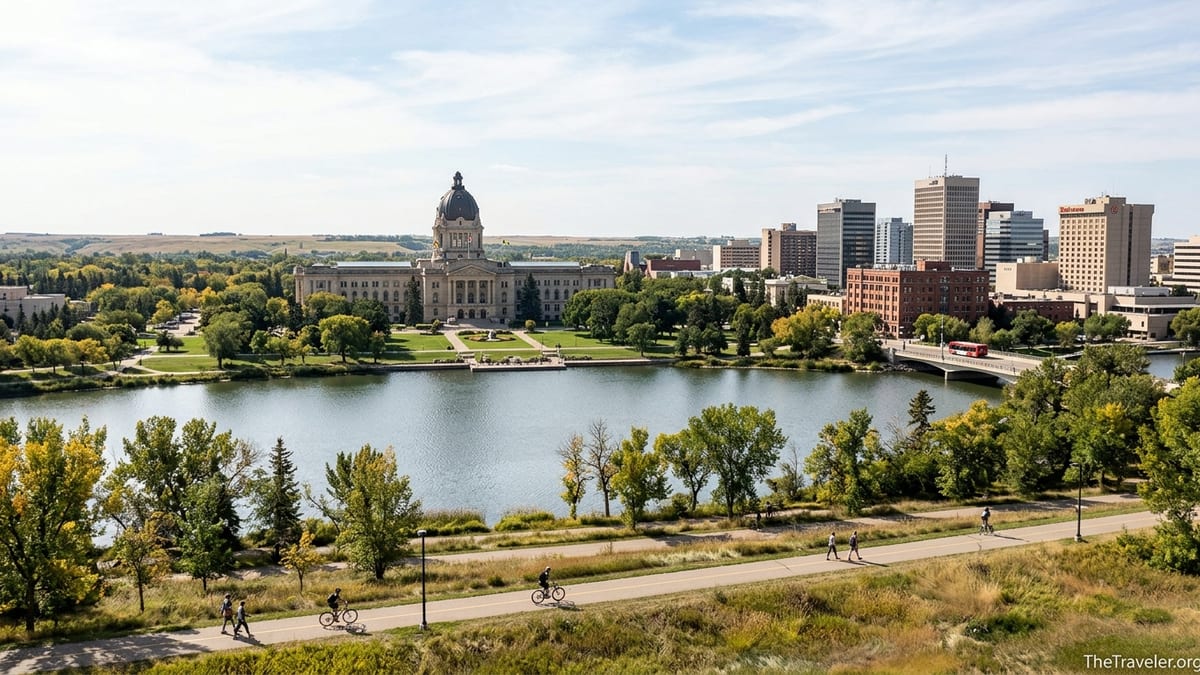
Orientation: Downtown, Wascana Centre and Visitor Districts
Regina’s downtown sits just north of Wascana Centre, the city’s 930-hectare park laid out around Wascana Lake. Downtown runs roughly between Saskatchewan Drive and Victoria Avenue, and from Albert Street across to Broad Street, with office towers, hotels, the city’s main casino and Victoria Park at its core. From most downtown hotels you can walk to the lakefront trails of Wascana Centre in about 10 to 20 minutes, which makes it easy to combine urban exploring with time in the park.
Wascana Centre itself stretches south and east from the Legislative Building along the lakeshore to the University of Regina and the Saskatchewan Science Centre. Key cultural sites including the Royal Saskatchewan Museum and MacKenzie Art Gallery sit on or near the park’s edges, so it is common to spend a full morning or afternoon here without leaving the green space. The park is bordered by established residential neighbourhoods, and visitors should expect long but pleasant walking routes between clusters of attractions.
West of downtown, the Cathedral neighbourhood offers a different feel. Centered on 13th Avenue west of Albert Street, Cathedral Village is a low-rise, walkable area known for independent cafes, bakeries, vintage and book shops, small restaurants and arts venues. It makes a good base if you prioritize local character over high-rise hotels. North and northwest of downtown, the REAL District and Mosaic Stadium form a major events and sports hub that also connects to the historic Warehouse or Dewdney Avenue area, where many nightlife spots, pubs and breweries have traditionally clustered. These districts are close in distance but separated by wide arterial roads, so most visitors combine walking with short drives or rideshares.
Regina International Airport lies a short drive west of downtown. Under typical traffic conditions, the airport to the city center is around 10 to 15 minutes by car or taxi, which means even short visits are not eaten up by airport transfers. There is no rail transit from the airport, so plan on a vehicle or pre-arranged pickup on arrival.
Getting There: Highways and Air Access
Regina sits on the primary east–west route across the southern Prairies, the Trans Canada Highway (Highway 1). If you are driving across Canada, Highway 1 approaches from Moose Jaw to the west and from the direction of Brandon and Winnipeg to the east, skirting the southern edge of the city before connecting into urban arterials such as Victoria Avenue and Dewdney Avenue. Road conditions are typically straightforward, though winter storms can bring icy stretches and reduced visibility, so it is important to check provincial highway advisories before setting out in the colder months.
Several regional routes link Regina with lake and valley country. North and northeast, Highways 10 and 56 provide access to the Qu’Appelle Valley and lakes such as Echo and Katepwa, with travel times from Regina usually in the range of 45 minutes to just over an hour, depending on your exact destination. South and southeast, other provincial highways lead toward Moose Mountain Provincial Park and the Kenosee Lake area, often reached in roughly two to two and a half hours. Fuel and basic services are available in small communities along the way, but distances between towns can feel long, so topping up in the city is sensible.
Regina International Airport handles flights from major Canadian hubs and some seasonal services. Specific airline lineups and routes change frequently, particularly for regional and cross-border flights, so travelers should verify current schedules and connections for their travel dates rather than relying on past information. The terminal is compact and straightforward to navigate, and rental car counters, taxis and rideshare pick-up areas are located just outside arrivals, which simplifies onward travel into town.
Getting Around: Cars, Transit and Walkable Pockets
Regina covers a broad footprint but remains relatively low-density, which means many visitors find a car the most convenient way to move between districts, especially if they plan to visit outlying attractions, provincial parks or lakes. Driving across most of the urban area typically takes 20 to 30 minutes outside of peak periods, and parking is generally easy to find compared with larger Canadian cities. Downtown has a mix of paid street parking and parkades, while Wascana Centre, the RCMP Heritage Centre and major venues in the REAL District offer on-site or adjacent parking lots.
The city operates a municipal bus network that connects residential neighbourhoods with downtown, the university area and major shopping districts. For short stays, buses can be useful for straightforward point-to-point trips such as downtown to the University of Regina area near Wascana Centre, although services may be less frequent in evenings or on weekends. Schedules and route maps are updated periodically, so it is important to consult the latest information from the transit authority when planning journeys.
Taxis and app-based rideshare services operate across Regina and are widely used for airport transfers, evenings out or short hops between central districts. In winter cold snaps or during major events at Mosaic Stadium or the REAL District, demand can spike and wait times lengthen, so allow extra time or consider walking for shorter distances where sidewalks are cleared. Within downtown and Cathedral Village, many sights, restaurants and cafes are close enough together that confident pedestrians can explore primarily on foot once they are in the area.
Expectation-setting is helpful. You can certainly visit without renting a car if you plan to focus on downtown, Cathedral and Wascana Centre, using a mix of walking, buses and rideshares. However, if your plans include day trips into the Qu’Appelle Valley, lake communities or provincial parks, or you are sensitive to cold-weather walking, having your own vehicle will add flexibility.
Top Attractions: Museums, Wascana Centre and RCMP Heritage
Wascana Centre is Regina’s signature attraction. The park encircles Wascana Lake with multi-use paths popular with runners, cyclists and walkers in warmer months, and it hosts several of the city’s main institutions. On the northwestern edge of the park, the Royal Saskatchewan Museum presents exhibits on natural history and Indigenous cultures of the province. South of the lake in the park’s western section, the Saskatchewan Legislative Building anchors manicured lawns and gardens. Free guided tours are typically offered on selected days, but security procedures, hours and tour availability can change, so visitors should confirm current arrangements in advance.
On the southern shore of the lake and toward the park’s eastern end, the Saskatchewan Science Centre is a family-friendly stop that features interactive exhibits and an IMAX theatre. Nearby, playgrounds such as Candy Cane Park and open lawns give children room to burn off energy. The MacKenzie Art Gallery, near the park’s southwest, showcases rotating exhibitions of Canadian and international art and often programs talks or community events. Museum and gallery opening hours, admission policies and any timed-entry requirements can shift season to season, so checking directly with each venue shortly before travel is vital.
West of the core, the RCMP Heritage Centre sits adjacent to the historic Depot Division training academy. The museum explores the history and evolving role of the Royal Canadian Mounted Police through artifacts and multimedia exhibits, and it typically charges an admission fee that varies by age group. Public access to some ceremonial events on the Depot grounds, such as the Sergeant Major’s Parade and periodic memorial or sunset ceremonies, has continued, but security protocols and schedules are reviewed regularly. Travelers interested in seeing a parade or special ceremony should use the Heritage Centre and RCMP official information to confirm if public viewing is available on their dates and whether advance registration or photo identification is required.
Back toward the city center, the REAL District and Mosaic Stadium host large concerts, trade shows, agricultural fairs and sporting events. Depending on timing, visitors might encounter a Canadian Football League home game, a touring music festival or seasonal agricultural exhibitions. These major events can add energy to a visit but also influence hotel availability and traffic, so it is sensible to check listings for the REAL District and stadium when planning dates.
Festivals and Events: Planning Around the Calendar
Regina’s festival calendar is active from late spring through early fall, but specific dates and even branding can evolve, so any plan built around a particular event should be double-checked close to the year of travel. The Cathedral Village Arts Festival, centered in the Cathedral neighbourhood, typically runs in late May with live music, visual arts, theatre and a popular street fair along 13th Avenue. Organizers have confirmed ongoing editions in recent years, with announcements for upcoming programs appearing well ahead of the festival season, yet formats and exact dates can shift.
Queen City Pride is Regina’s annual Pride festival, usually held in early June with a parade, concerts and community events across downtown and Wascana Centre. Travelers interested in attending should verify the current year’s schedule and any changes to parade routes or main stage locations, as these can move between years to accommodate construction or other events. Accommodation near downtown often books up more quickly over parade weekend.
Later in the summer, the Regina Folk Festival traditionally brings artists and audiences to Victoria Park for a weekend of outdoor performances. Similarly, Mosaic, the city’s long-running multicultural festival, has celebrated Regina’s diverse communities with pavilions offering food, dance and cultural displays. In recent years some large festivals across Canada have experimented with new formats or rebranding, so if your visit hinges on attending Mosaic or the folk festival, use the most recent festival communications to confirm that the event is running, under what name, and on which dates.
Beyond these core highlights, various smaller events take place at the Conexus Arts Centre, MacKenzie Art Gallery, university venues and neighborhood hubs like the Artesian in Cathedral Village. Travelers who enjoy arts and culture will benefit from checking local listings for concerts, theatre and gallery openings that coincide with their stay, bearing in mind that small venues may update schedules only a few months in advance.
Day Trips and Prairie Escapes from Regina
Regina’s position on the flat prairie makes the dramatic green trench of the Qu’Appelle Valley feel especially striking. About 45 minutes to one hour northeast by car, the valley holds a chain of lakes, small resort communities and several provincial parks. Echo Valley Provincial Park, near Fort Qu’Appelle, is one of the most accessible options from the city, with beaches, picnic areas, trails and campgrounds. Facilities typically include playgrounds and basic services, but offerings can vary from season to season, so travelers should check the current provincial parks information for details on campground reservations, day-use fees and any seasonal closures.
Regina Beach on Last Mountain Lake, roughly 40 minutes northwest of the city, offers a sandy lakeshore, a small commercial strip and a relaxed cottage-community atmosphere in summer. It is a popular day-trip choice for residents on hot days. South and east of the city, Moose Mountain Provincial Park around Kenosee Lake provides forested trails, a lakeside beach area, golf and camping in a more heavily wooded setting. Travel times from Regina are usually in the range of two to two and a half hours one way, which makes Moose Mountain suitable as either a long day trip or, more comfortably, an overnight stay.
Weather has a major impact on these outings. Summer brings warm temperatures that support swimming, paddling and hiking, but mosquitoes can be intense after heavy rain. Shoulder seasons such as late May to June and September often offer pleasant temperatures and fewer crowds, though some seasonal concessions and activities may not yet be fully operating. In winter, some parks maintain groomed trails for snowshoeing or cross-country skiing, while lake communities quiet down substantially. Road conditions into the valley or parks can be affected by snow, ice or heavy rain, so it is wise to monitor highway and park advisories during colder months.
Because services and facilities at provincial and regional parks are reviewed each year, travelers planning camping or specific activities should verify current regulations, reservation systems, fire restrictions and pet policies before setting out. This is especially important on holiday weekends, when campgrounds near Regina can approach capacity.
Where to Stay: Downtown, Wascana, Airport and Highways
Downtown Regina offers the most classic city-break base. Staying near Victoria Park or along major downtown streets puts you within walking distance of office towers, the main casino, several pubs and restaurants, and frequent bus services. From these hotels it is feasible to walk to Wascana Centre via Albert Street or Broad Street, though winter cold or summer heat may make a short rideshare more appealing. Downtown has the liveliest weekday atmosphere and the greatest choice of full-service properties, but late-night noise and event traffic can be higher on busy weekends.
Just south of downtown, areas bordering Wascana Centre and the University of Regina offer a quieter, more residential feel with immediate access to lakeside paths and green space. Accommodations here can be attractive for runners, families and visitors attending events at the university or Conexus Arts Centre. Walking into the core from this side of the park is possible for those comfortable with 20 to 30 minute walks, though bus routes and rideshares provide backup on cold or wet days. Parking tends to be straightforward, which suits road trippers.
Near the airport, several mid-range hotels cluster along major roads that feed directly into the terminal. This area is practical for one-night stopovers, early flights or travelers who prioritize quick highway access over urban character. While sidewalks exist, it is not usually thought of as a strolling district, and most guests rely on hotel shuttles, taxis or rental cars. Dining options may be limited to in-house restaurants and nearby chains.
Along the main highways at the city’s edges you will find typical roadside motels and larger chain properties. These are convenient for drivers who prefer to avoid navigating central streets or who plan early departures to other parts of Saskatchewan. Walkability is minimal, so expect to drive to restaurants or attractions. On the positive side, parking is generally abundant and included, and reaching routes toward Moose Jaw, Saskatoon, the Qu’Appelle Valley or Moose Mountain is straightforward from these outer locations.
Dining, Cafes and Nightlife Districts
Regina’s food scene is centered on a few compact districts. Downtown hosts a mix of pubs, steakhouses, casual restaurants and coffee shops concentrated around Victoria Avenue, Hamilton Street and adjacent blocks. This is the most convenient dining area if you are staying in a central hotel or attending events at Victoria Park or the nearby casino. Lunch spots cater to office workers on weekdays, while evenings bring more of a pre-theatre and nightlife crowd, especially during festivals or major concerts.
In the Cathedral neighbourhood, 13th Avenue serves as the main strip for independent eateries, bakeries, cafes and small bars. The character here is more bohemian, with heritage houses lining side streets and venues such as the Artesian programming performances and community events. It is one of the best areas in the city for relaxed coffee shop hopping or browsing local boutiques between meals. The streets are generally walkable by day and into the evening, though, as in any city, visitors should use sensible urban awareness.
North of downtown, the historic Warehouse District and stretches of Dewdney Avenue have long been the focus of Regina’s nightlife, with a concentration of pubs, clubs, breweries and live music rooms in repurposed industrial buildings. Activity levels can ebb and flow as venues open and close, so before planning a night out it is a good idea to look up which bars or music spaces are currently operating and whether they have cover charges or ticketed events. On large event nights at Mosaic Stadium or the REAL District, pre- and post-game crowds can fill spots in this area, adding atmosphere as well as longer waits.
Across the city, many restaurants support local producers and offer menus that reflect prairie comfort food alongside international influences. Reservations can be helpful on weekend evenings and during festival periods, especially in smaller, chef-driven spaces. For visitors with dietary restrictions, checking individual menus in advance is sensible, as provisions for vegetarian, vegan or gluten-sensitive diners vary by establishment.
When to Go and How Long to Stay
Regina experiences four distinct seasons, and trip planning benefits from understanding their impact. Winters are cold and snowy, with temperatures often well below freezing. The city continues to function, but walking long distances can be uncomfortable, and some outdoor attractions shift to reduced operations. Museum-going, indoor performances and watching a snow-dusted sunset over Wascana Lake can still be rewarding, but visitors should pack serious winter clothing and allow time for slower travel in icy conditions.
Spring and fall are shoulder seasons that bring changeable weather. Late April to early June and September to early October can offer comfortable temperatures and fewer crowds, though lingering snow or sudden cold snaps are possible at the start and end of these periods. Many festivals, including arts and Pride events, cluster in late spring and summer, so shoulder season visits may be quieter but less event-focused. Summer, from roughly late June through August, is the busiest period, with warm to hot days, long evenings and the full slate of lake activities and outdoor events in both the city and nearby provincial parks.
CFL home games at Mosaic Stadium and major events at the REAL District are important considerations. When the local team plays at home, hotels near downtown, the stadium and the REAL District can see higher prices and tighter availability, and restaurant reservations become more important. Large concerts, trade shows and festivals at the same venues have similar effects. Schedules are set on a season-by-season basis and can change from year to year, so travelers who wish either to attend or to avoid these events should consult the latest league fixtures and events calendars when choosing dates.
For most visitors focused on Regina itself, one to two full days is enough time to walk downtown, explore Cathedral Village, spend several hours in Wascana Centre and visit a couple of key museums such as the Royal Saskatchewan Museum or RCMP Heritage Centre. Travelers who enjoy a slower pace, wish to add day trips to the Qu’Appelle Valley or Regina Beach, or plan to attend festivals or sporting events will find three to four days more comfortable. Regina also works well as part of a wider itinerary that includes other Saskatchewan destinations, using the city as a hub for flights and road connections further afield.