


Many big-ship cruises through Southeast Alaska include only two to four port days, and independent travelers often have just a week or two in the region. With names like Juneau, Ketchikan, Sitka, Skagway, Haines, Wrangell and Petersburg all competing for space on an itinerary, it can be hard to know where to focus. While cruise passengers usually take what the schedule gives them, anyone using the Alaska Marine Highway ferries, regional flights or a road trip through the Yukon can make more deliberate choices. Each community offers distinct strengths, and understanding those differences is the key to turning a confusing list of ports into a satisfying, well paced route.
Get the latest updates straight to your inbox!
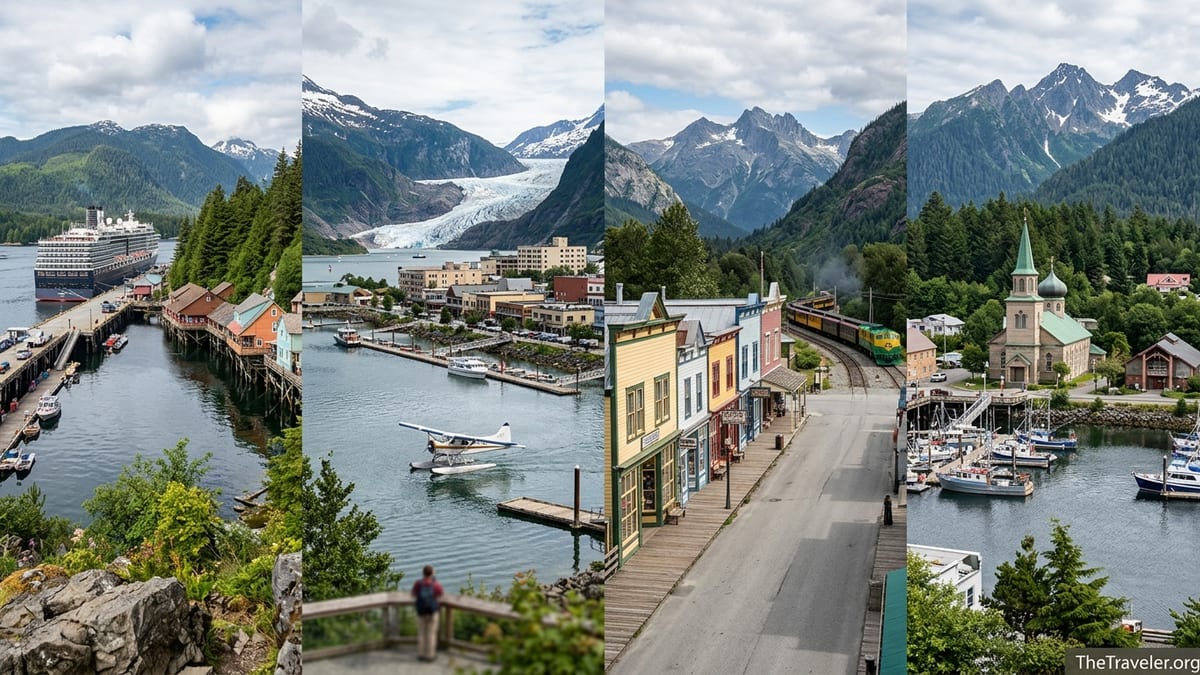
How the main Southeast Alaska towns differ
Juneau, Alaska’s capital, combines a compact downtown with fast access to glaciers and whale-rich channels. Cruise ships dock close to the historic core, and a short drive or shuttle ride brings you to Mendenhall Glacier or to harbors where day boats head toward Stephens Passage and Auke Bay to look for humpbacks and orcas. Juneau works both as a cruise port and as an independent base, with year-round air connections and year-round but variable ferry service. Most independent visitors spend two to four days here to balance town time with several major day tours.
Ketchikan brands itself as Alaska’s “First City” and “Salmon Capital of the World,” reflected in a waterfront lined with canneries, Creek Street’s restored stilt buildings and easy access to totem parks and rainforest trails. It remains one of the busiest cruise ports in the state, with multiple berths fronting downtown where visitors can walk directly into the historic district and pick up self-guided maps to public totem poles and museums. Independent travelers still come for fishing charters and kayaking, but the feel in high season is firmly cruise oriented, and one to two full days usually covers the main sights.
Sitka feels different from the start. Perched on Baranof Island and only reachable by air or sea, it blends deep Tlingit roots with Russian colonial history. Sitka National Historical Park protects the site of the 1804 conflict between Tlingit fighters and Russian forces and features a coastal totem trail and a visitor center with cultural exhibits. The Russian Bishop’s House and other historic buildings in town underscore Sitka’s past as the capital of Russian America and early U.S. Alaska. Cruise ships and ferries bring many summer visitors, yet Sitka also functions as a genuine community and a rewarding independent base, with travelers often staying two to three days.
Skagway is the classic Gold Rush town, sitting at the head of Lynn Canal with steep peaks on either side and the Canadian border a short drive away. Its historic core has boardwalks and preserved facades tied to the Klondike Gold Rush, and most visitors ride the White Pass & Yukon Route Railway along the original stampeders’ route, with summer departures geared heavily to cruise schedules. Skagway is primarily a cruise port, though it connects by road to the Yukon and the Alaska Highway and also has regular ferry links. Independent travelers often spend one or two nights, while day visitors from ships may only scratch the surface in a few hours.
Haines lies across Lynn Canal from Skagway but offers a contrasting atmosphere. It is connected to the North American road network via the Haines Highway and also served by state ferries and regional flights. The town looks out on dramatic fjord scenery and is known for brown bear viewing along the Chilkoot River in late summer and for large concentrations of bald eagles along the Chilkat River in late autumn. Local tourism offices emphasize that Haines welcomes only a limited number of large cruise ships, often one at a time, which keeps crowd levels lower while still supporting small tour operators and cultural attractions. As a result it functions more as an independent base than a mass cruise port, and two to four days is common for travelers who build it into a broader road or ferry loop.
Choosing by access and logistics
Access is a practical starting point for narrowing down towns. Juneau, Ketchikan and Sitka have regular jet service from Anchorage and Seattle, which makes them convenient entry or exit points. They also sit on the Alaska Marine Highway System, though ferry frequencies have fluctuated in recent years and current schedules should always be checked close to travel time. For many independent visitors pairing ferries with regional flights, these three cities form the core transportation triangle of Southeast Alaska.
Skagway and Haines share a different advantage: road access. Both connect to the Alaska Highway via scenic mountain routes that pass through Canada. That makes them attractive add-ons for travelers already road-tripping the Yukon or mainland Alaska and willing to coordinate an international border crossing. It also gives budget-conscious travelers the option to bring a vehicle in on the highway and reduce reliance on flights and rental cars. However, road conditions, border regulations and seasonal closures can change, so travelers should confirm the latest requirements and advisories rather than assuming summer norms.
From a cruise perspective, Juneau, Ketchikan, Sitka and Skagway regularly host large ships, with several vessels sometimes calling in a single day in peak summer. Haines, Wrangell and Petersburg see fewer big-ship visits, though small-ship and expedition cruises often include them specifically for that quieter feel. If your main access is via cruise line, your choice will be largely dictated by the itinerary; if you are building a route on ferries or by air, you can intentionally include a mix of busier hubs and smaller ports to suit your tolerance for crowds.
As a base for independent exploration, Juneau and Sitka stand out for their combination of flight options, tour variety and in-town services, while Haines excels for travelers with a vehicle who want access to both road and water-based adventures. Ketchikan is very workable for independent stays of a few nights, especially for anglers and kayakers, but its infrastructure is heavily patterned around short cruise calls. Skagway is convenient for those focused on history and the White Pass railway or using it as a stepping stone to the Yukon, rather than as a place to linger for a week.
Day tours, DIY exploring and crowd levels
Juneau and Ketchikan offer the broadest menus of structured day tours, especially tailored to cruise passengers. In Juneau, visitors can purchase combination excursions that link Mendenhall Glacier viewpoints with whale watching in nearby channels or trips up the Goldbelt Tramway for mountain vistas. Independent travelers can still book these directly with local operators or arrange car rentals, but the overall model assumes that many guests have limited hours off a ship. Ketchikan’s waterfront is dense with operators selling wildlife viewing, fishing, flightseeing over Misty Fjords and cultural tours to nearby totem parks, and much of this is designed to be walkable from the pier.
Sitka strikes more of a balance between guided tours and self-guided options. Sitka National Historical Park’s totem trails and visitor center are an easy walk from the central harbor, and downtown streets link Russian-era buildings, small museums and coastal viewpoints. Boat-based wildlife and marine tours target sea otters, seabirds and seasonal whales and can be arranged as day trips, but it is also possible to spend a day or two in Sitka enjoying walking, cafes and local events without booking a formal excursion. This makes Sitka appealing to slower travelers who value cultural depth over a string of packaged activities.
Skagway on a busy summer day can feel entirely shaped by cruise traffic. The White Pass & Yukon Route Railway runs multiple departures keyed to ship schedules, and the narrow downtown streets fill when several ships are in port. That influx brings energy and a wide choice of tours, including hiking-and-rail combinations and bus excursions into the Yukon, but it also means that independent visitors should expect higher prices and need to reserve popular tours well in advance. Haines, by contrast, promotes an “uncrowded” experience, with local tourism information emphasizing that only a limited number of large cruise ships call here and that many days see no big ships at all. That allows for a slower pace on riverside walks, museum visits and wildlife viewing, though some specialized tours only operate on ship days.
Do-it-yourself sightseeing is easiest in the compact cores of all five towns, where harbors and airports sit within a short drive or reasonable walk of basic services. Juneau and Ketchikan concentrate their main visitor sights close to the waterfront but often require a shuttle or taxi for marquee attractions such as Mendenhall Glacier or more distant totem parks. Sitka, Skagway and Haines reward simple wandering: trails from town lead to forest viewpoints and beaches, and local museums and cultural centers cluster near the main streets. Travelers who prefer flexibility and free time over booked excursions may find Sitka and Haines particularly suited to their style.
Walkability, accommodation and the reality of high season
All five towns have highly walkable central areas by Alaskan standards, especially for cruise passengers who step off piers into dense historic districts. Juneau’s cruise docks lie just below the state capitol and the steep hillside neighborhoods, making it easy to roam shops, museums and viewpoints on foot before heading farther out for glacier or whale tours. Ketchikan’s downtown waterfront, Creek Street and nearby museums are also tightly clustered along the shoreline and hillside, with public stairways and boardwalks adding character.
Sitka’s core curves around a small harbor, with the National Historical Park, Russian-era sites and modern cultural venues such as the Sitka Fine Arts Campus all reachable on foot from the central dock and hotel strip. Skagway’s historic district extends in a simple grid from the pier, and visitors can walk past preserved Gold Rush buildings into neighborhoods at the base of surrounding peaks. Haines features a slightly more spread-out layout between Fort Seward, the small boat harbor and Main Street, but most visitor services remain within a modest walking area, though some travelers appreciate having a car or bicycle to reach trailheads, the Chilkoot and Chilkat valleys and the ferry terminal.
Accommodation options follow a similar pattern across the region: small hotels and motels, independent inns, bed-and-breakfasts, seasonal lodges and a growing number of vacation rentals. Juneau and Ketchikan have the broadest traditional hotel choices, along with chain properties near their airports. Sitka, Skagway and Haines lean more heavily on smaller lodges and independent properties. In every case, room availability can shrink and prices can spike on days with multiple cruise ship calls or during festivals and events. Because inventory in these small communities is limited, it is important to check recent booking data and secure critical nights well ahead of time rather than assuming that rooms will be available on arrival.
For travelers on tighter budgets, Haines and some smaller communities like Wrangell or Petersburg can sometimes offer better value than the biggest cruise hubs, particularly outside the absolute peak weeks of midsummer. On the other hand, those smaller towns may have fewer dining options and limited evening activities, which might matter to some visitors. Examining sample dates across several booking platforms, without fixating on a single quoted rate, is the best way to understand current price patterns and identify more affordable combinations of towns and dates.
Weather, seasonality and hiking potential
Southeast Alaska spans a large swath of temperate rainforest, and conditions are often wetter and cooler than many visitors expect, even in mid-summer. Ketchikan and nearby Misty Fjords, for example, are known for frequent rain and low clouds that can affect both hiking conditions and flightseeing reliability. Juneau and Sitka also experience regular precipitation, while Haines and Skagway, sitting farther north and partly in rain shadow zones, sometimes see relatively drier spells but can still receive steady rain and low ceilings. Because climate patterns shift over time, current seasonal norms should be checked rather than relying solely on decades-old averages.
Weather should factor into destination choice, especially for travelers who prioritize hiking and photography. Juneau offers an extensive trail network that climbs into alpine terrain above the city and around Mendenhall Glacier, along with shoulder-season options when snowline allows. Sitka’s trails mix coastal paths with forest climbs and boardwalks through muskeg, giving hikers a range of distances directly from town. Ketchikan’s popular trails tend to be steeper and can become slick in prolonged rain, though excellent views and rainforest scenery reward those prepared with proper gear.
Skagway and Haines provide strong hiking options for those willing to manage changeable mountain weather. Trails near Skagway link to historic Gold Rush routes and alpine basins, and some hikes connect with railway stops or highway pullouts for one-way routes when transport is arranged. Haines offers a mix of river valley walks, coastal viewpoints and more strenuous mountain climbs within driving distance of town. Shoulder seasons such as late May and early September can be appealing in all five communities for travelers who accept cooler temperatures in exchange for somewhat fewer visitors and, in some cases, better wildlife visibility.
Regardless of town, packing waterproof outerwear, layers and footwear suitable for mud and slippery boardwalks is essential. Cloudy days can still deliver excellent photography light across the region’s glaciers, forests and fjords, and visitors who plan flexible indoor options, such as museums or cultural centers, alongside outdoor goals tend to enjoy Southeast Alaska more fully, whatever the forecast brings.
Smaller communities: Wrangell and Petersburg in context
Wrangell and Petersburg rarely top big-ship cruise brochures, but they are worth considering for independent or small-ship itineraries. Wrangell sits between Ketchikan and Juneau on the Inside Passage and sees fewer cruise ships than major ports, though expedition vessels and state ferries stop there. Visitors use Wrangell as a jumping-off point for Stikine River journeys, bear viewing during peak salmon runs and trips to nearby glaciers. The town has a modest grid of streets, a handful of lodgings and tour companies that are less tied to daily cruise cycles, which appeals to travelers seeking a quieter, more local experience.
Petersburg, sometimes nicknamed “Little Norway” for its Scandinavian heritage, lies on Mitkof Island and also connects via ferries and small planes rather than large ships. Its economy remains rooted in commercial fishing, and visitor numbers stay relatively modest compared with Juneau or Ketchikan. Independent travelers come for marine wildlife viewing, nearby glaciers and a sense of everyday coastal life. Both Wrangell and Petersburg can be combined with one or two of the larger hubs for travelers who prioritize authenticity and do not mind more complex ferry or flight logistics.
These smaller towns generally have fewer tour options, limited evening dining and a narrow range of accommodations that can fill quickly during certain fishing or festival periods. At the same time, they offer a chance to see Southeast Alaska without the overlay of several thousand cruise passengers arriving and departing in a single day. For some visitors, that trade-off of simplicity and quiet over sheer activity range is exactly what they are seeking.
Putting it all together: a qualitative comparison
When comparing Juneau, Ketchikan, Sitka, Skagway and Haines side by side, a few themes emerge. For ease of access, Juneau, Ketchikan and Sitka rank high thanks to their scheduled jet service and established roles in the ferry network. Skagway and Haines add the valuable feature of highway access, which matters particularly for road trippers and those hoping to avoid multiple flights. As bases for independent travel, Juneau and Sitka stand out for their mix of services, tour variety and cultural depth, while Haines shines for travelers with vehicles or those who want a quieter setting.
In terms of day tour variety, Juneau and Ketchikan offer the widest arrays of glacier, whale watching, cultural and fishing excursions, heavily tied to cruise timetables. Sitka’s menu is smaller in absolute numbers but strong in quality, especially for history and marine wildlife. Skagway focuses strongly on rail and Gold Rush themed excursions, with additional options into the Yukon, while Haines leans toward wildlife, river excursions and small-scale cultural tours. Walkability from harbors and airports is generally strong across the board, with Juneau, Ketchikan, Sitka and Skagway especially convenient for those willing to explore on foot.
Crowd levels provide one of the clearest dividing lines. Juneau, Ketchikan and Skagway can feel very busy on peak cruise days, when several large ships call simultaneously and streets, viewpoints and popular trails fill quickly. Sitka experiences cruise surges too but often retains a more balanced community feel, in part because many residents continue about their daily routines around visiting groups. Haines, Wrangell and Petersburg tend to receive fewer large ships and highlight that smaller scale as part of their tourism identity, though this can also mean fewer daily departures for some tours. Travelers who are sensitive to heavy crowds might focus more on Sitka and Haines as primary bases, using the bigger ports for specific must-see attractions.
Accommodation and costs track these patterns. Hubs like Juneau and Ketchikan have a wider range of properties at a broad span of price points but also see the sharpest price swings tied to cruise schedules and limited high-season inventory. Smaller communities may appear less expensive on certain dates but can sell out even faster because total room counts are low. An effective planning approach is to identify two or three priority towns, sketch likely dates, then test availability before locking in ferries, flights or nonrefundable tours.
Example traveler profiles and recommended towns
A history-focused traveler interested in Indigenous culture and the colonial era will find Juneau, Sitka and Skagway particularly rewarding. Juneau’s museums and state institutions provide context for Alaska’s political and social history, while Sitka layers Tlingit heritage with Russian and American chapters in a compact, walkable setting anchored by its national historical park. Skagway adds the drama of the Klondike Gold Rush, with preserved streetscapes and interpretive sites that tell the story of stampeders heading for the Yukon. Wrangell, with its links to the Tlingit and multiple flag histories, can be a thoughtful addition for those with extra time.
A wildlife photographer or naturalist might prioritize Juneau, Sitka and Haines. Juneau offers relatively reliable summer whale watching, access to Mendenhall Glacier and opportunities for bear sightings on certain trails and salmon streams. Sitka combines seabird, sea otter and marine mammal viewing with rich coastal scenery, while Haines is known for brown bear activity along the Chilkoot River in late summer and bald eagle concentrations in the wider Chilkat Valley later in the year. Smaller communities such as Wrangell can also be rewarding during peak salmon and bear seasons, but reaching them requires close attention to ferry and flight schedules.
A family with children who value convenience and lots of structured activities may do best with Juneau, Ketchikan and Skagway. All three offer short, high-impact tours suitable for limited attention spans, such as tram rides, lumberjack shows, short glacier viewpoints, historic re-enactments and scenic rail journeys, plus easy access to ice cream shops, casual dining and waterfront promenades. Families on independent itineraries might base in Juneau for three or four nights and then add a night or two in either Sitka or Ketchikan to experience a different style of coastal town.
Budget-conscious backpackers or slow travelers often gravitate toward Haines, Sitka and the smaller communities. Haines and Sitka both offer hostels or budget-friendly lodgings in some seasons and allow for rewarding days built around walking, local events and lower-cost excursions such as day hikes and museum visits. Wrangell and Petersburg can also fit this profile for those willing to adapt to sparse schedules and fewer nightlife options. Combining one major hub, such as Juneau for flights and glacier access, with one quieter town often yields a rich experience without the cost of hopping between too many high-demand cruise ports.
Ultimately, there is no single best town in Southeast Alaska, only better and worse fits for specific priorities. By thinking in terms of access, crowd tolerance, appetite for tours versus independent exploration and interest in history, wildlife or family-friendly activities, travelers can use Juneau, Ketchikan, Sitka, Skagway and Haines as building blocks to craft an itinerary that matches both their dreams and their practical realities.