


Zadar packs Roman ruins, sea-view promenades and beachy suburbs into a compact stretch of Dalmatian coast, but choosing where to stay can completely change how your trip feels. Whether you want to step out of your apartment straight into the marble lanes of the Old Town, wake up beside a family-friendly beach in Borik, or base yourself with a rental car for easy day trips to islands and national parks, your neighborhood choice matters just as much as your hotel. This guide compares Zadar’s main areas and accommodation types so you can match your base to your style, budget and transport plan.
Get the latest updates straight to your inbox!
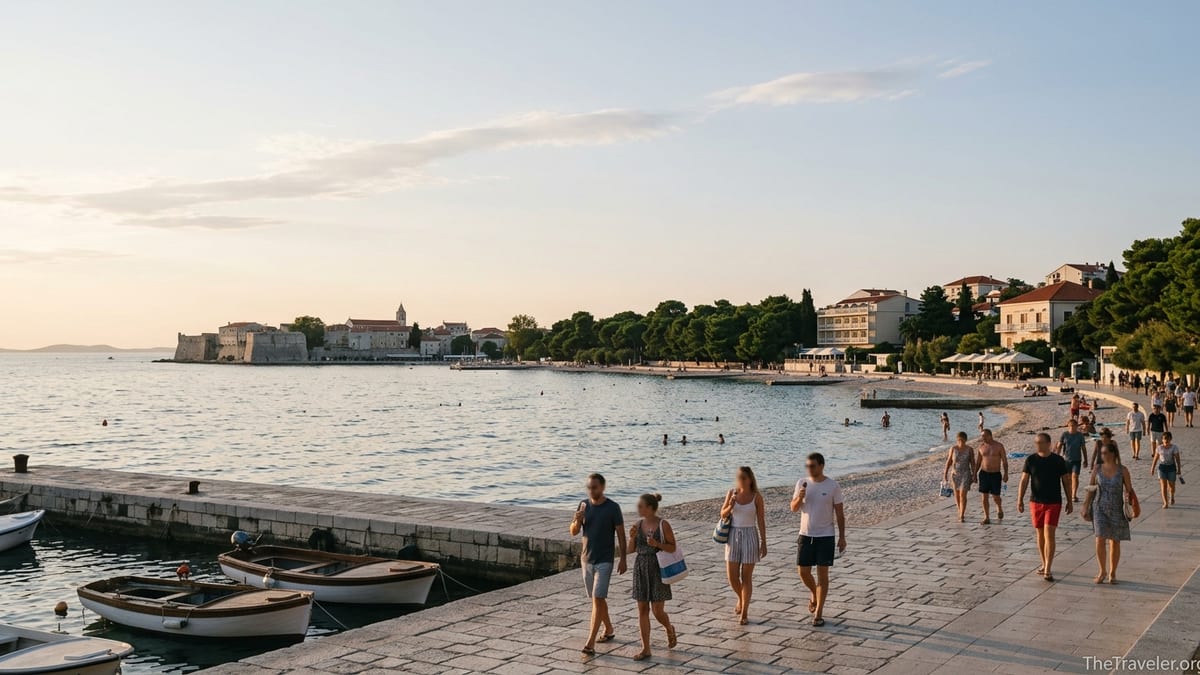
How Zadar is Laid Out and How Long to Stay
Zadar is essentially a historic peninsula Old Town surrounded by newer districts that string along the coast and inland. The walled Old Town sits on its own compact finger of land, with the main bus station and most supermarkets on the mainland side, and beach suburbs like Kolovare to the southeast and Borik, Puntamika and Diklo stretching northwest along the shore. Zadar Airport is about 12 kilometers east of the center, roughly a 15 to 25 minute drive depending on traffic and where exactly you stay.
For a first visit, three nights is usually enough to see the Old Town highlights, enjoy a sunset at the Sea Organ and squeeze in one day trip, for example to the islands of Ugljan or Dugi Otok. If you want to combine several national parks, boat trips and lazy beach days, five to seven nights works better, especially if you stay in a beach district like Borik or Diklo where you can treat the city as both a cultural and seaside base.
Hotel and apartment prices fluctuate with season, but as a rough guide in July and August a simple private room in a guesthouse might start around 70 to 90 euros per night, midrange hotels often sit in the 130 to 200 euro range, and larger beach resorts can run higher, especially if they include pools and half-board. Outside peak summer, prices can drop significantly, which is worth keeping in mind if you are flexible on dates.
Zadar’s public buses link most coastal districts to the Old Town in roughly 10 to 20 minutes, though services thin out late at night. That means you can usually stay outside the center without needing a car for in-town sightseeing, then decide separately whether you want a rental car for regional day trips to places like Plitvice Lakes, Krka National Park or Paklenica.
Staying in Zadar Old Town: Atmosphere vs Convenience
The Old Town on the peninsula is the most atmospheric place to stay in Zadar. Here you stroll along polished stone alleys, hear church bells echo across Roman ruins and reach the Sea Organ and Greeting to the Sun in a few minutes on foot. Boutique hotels and apartments are usually tucked into centuries-old buildings, so you might sleep in a stone house above a café or in a renovated townhouse on a narrow lane.
Typical stays here include small design hotels in former palaces, family-run guesthouses and self-catering apartments carved out of old residential buildings. A double room in a well-rated boutique hotel in high season commonly sits somewhere around 150 to 230 euros per night, while apartments might be slightly cheaper, especially if you book a few streets back from the waterfront. Many properties offer efficient air conditioning and modern bathrooms even when exteriors look ancient.
The main trade-off is logistics. Cars are heavily restricted inside the Old Town and many lanes are stepped or cobbled, so you may need to roll suitcases from a taxi drop-off point at the bridge or city gate. Parking lots on the mainland side of the bridge exist, but daily charges add up and spaces can be tight in peak months. If you are traveling with heavy luggage, small children in pushchairs or mobility issues, the romance of a top-floor stone apartment may come with too many stairs.
Old Town bases work best for travelers planning mostly car-free city breaks or boat-based excursions, where you can walk to the marina, local ferries and most restaurants. If your priority is nightlife, bar-hopping and historic sights, this is the most convenient option. If you are imagining long beach days or planning to drive out of town most mornings, however, another district can be more practical.
Kolovare and Arbanasi: City Beaches within Walking Distance
Southeast of the Old Town, the Kolovare and Arbanasi areas give you a more residential feel while keeping you close to both the center and the sea. Kolovare Beach is one of Zadar’s main city beaches, a managed pebble and partly sandy stretch backed by greenery, promenades and beach bars. From many guesthouses in this district, you can walk to the beach in five to ten minutes and reach the Old Town in about 15 to 20 minutes on foot along the waterfront.
Accommodation here includes midrange hotels such as a long-running seafront hotel by the Kolovare Beach, smaller local hotels a few blocks back, and plenty of apartments in low-rise houses. In high season, hotel doubles might run around 120 to 180 euros per night, while basic but clean apartments often come in under 120 euros, especially if you stay just inland of the main coastal road. Some properties highlight free on-site parking, which can be a real advantage if you arrive with a car but still want to walk into town.
This area suits travelers who want to swim daily without giving up Old Town access. A couple in their 50s who like morning swims, afternoon sightseeing and dinner in the center, for instance, might stay near Kolovare so they can stroll to the beach after breakfast, then walk or take a short taxi ride into the Old Town in the evening. Families often appreciate being slightly outside the noisiest streets while still keeping transfer times from the airport relatively short.
Kolovare and Arbanasi also work well for overnight stays before an early-morning bus or onward ferry, since you are closer to the main bus station and main coastal road than if you stayed deep in the Old Town. If you plan a car-based road trip up or down the coast, basing here for a night or two can avoid the hassle of Old Town parking while still letting you enjoy sunset walks along the promenade.
Borik and Puntamika: Classic Beach Districts and Family Resorts
Northwest of the Old Town, the Borik and Puntamika areas form Zadar’s main beach hotel strip. This coastal stretch has several pebbly and partly sandy beaches, small marinas and a mix of large resort-style hotels and smaller seafront guesthouses. Public buses connect Borik and Puntamika to the Old Town in roughly 15 to 20 minutes, and there is also a small passenger boat in season from the Puntamika side that crosses to the Old Town waterfront, turning the commute into a short scenic hop.
In Borik you find some of the city’s best-known resort hotels, including large family-friendly properties with pools, kids’ clubs and half-board options, as well as spa hotels that cater to couples. These often price from around 200 euros per night in high season for standard rooms, with suites and sea views costing more. Puntamika, slightly closer to the Old Town, has smaller hotels and bed-and-breakfasts that might range from roughly 120 to 180 euros per night, plus many privately owned apartments overlooking the water.
These districts are ideal for families who want a straightforward beach holiday with city access as a bonus. For example, parents with children aged 6 and 9 might book a resort in Borik where the kids can spend mornings in the pool and afternoons on the beach, then take a short bus or taxi into the Old Town on one or two evenings for dinner and the Sea Organ. The presence of playgrounds, casual pizzerias and ice cream stands makes it easy to keep children entertained without elaborate planning.
Couples who like a more relaxed pace often choose Puntamika or the quieter edges of Borik, especially in shoulder seasons like May, June or September when sea temperatures are pleasant but crowds thinner. Here you can walk the coastal promenade, stop at simple beach bars with plastic chairs, and watch Zadar’s famous sunsets with fewer people around than on the Old Town waterfront. Just keep in mind that nightlife here is limited to hotel bars and local cafés, so if you want live music and busier bars every night you will likely be heading into the Old Town regularly.
Diklo and Northern Suburbs: Space, Parking and Sea Views
Continuing north from Borik, the low-rise coastal suburb of Diklo feels more like a string of seaside villas than a typical resort strip. The shoreline here is lined with small pebble and concrete beaches, jetties and a long seafront road that locals use for evening walks and jogging. It is noticeably quieter than central Borik or the Old Town, and accommodation is dominated by apartments in houses rather than large hotels.
Diklo works particularly well if you want space and easy parking. Many apartments advertise private parking and terraces with sea views, and weekly stays are common. Prices can be competitive compared with the Old Town, especially if you travel as a group. A two-bedroom apartment sleeping four might be a similar price to or cheaper than two midrange hotel rooms closer to the center, which can make a big difference for extended stays.
Public buses run between Diklo and the Old Town, though services are less frequent late at night, so you should assume a commute of 20 to 30 minutes door to door. Because of that, this area is often chosen by visitors who either rent a car for the whole stay or do not mind planning their evenings a bit around bus timetables. For instance, a group of friends on a road trip could book a large apartment in Diklo, spend some days driving to nearby spots such as Nin, Vir or the inland villages, and still head into the Old Town for one or two evenings.
The trade-off here is that you are not in the middle of Zadar’s main sights, and you will probably not pop back to your room during the day. However, if your idea of a holiday is slower mornings on a balcony, swims from less crowded local beaches and occasional forays into town or out to the islands, Diklo can be a very pleasant and good-value base.
Airport-Area, Inland and One-Night Stays
Zadar’s airport sits inland near Zemunik, surrounded mainly by fields and small settlements rather than a built-up hotel district. There are a few simple guesthouses and private rooms scattered in nearby villages and along the main road into town, and occasionally hosts offer airport pickup or drop-off for an extra fee. However, the majority of visitors still choose to stay in or near the city and use taxis or the airport bus for transfers.
Transfers between Zadar Airport and the center usually cost less than in bigger European cities simply because the distance is short. The official shuttle bus links the terminal and the city, stopping near the main bus station and closer to the Old Town; tickets are typically priced at a modest flat fare per adult, and run times are often coordinated with arrivals and departures during the main season. Taxis from the airport to districts like the Old Town or Borik can be priced in the region of a few tens of euros depending on time of day and traffic, which often becomes competitive if you are two or more people sharing.
Staying near the airport only really makes sense if you have a very late arrival or very early departure and want maximum sleep. Even then, many travelers still choose a room in Kolovare, Arbanasi or the mainland side of the Old Town and book a predawn taxi rather than overnighting in a village guesthouse. If you have a rental car and plan long drives inland, such as to Plitvice Lakes and back, a one-night stop at a rural guesthouse on your loop could also be pleasant, but this is more of a road-trip choice than a Zadar city base.
For bus travelers arriving from elsewhere in Croatia, choosing a hotel on the mainland side of the Old Town bridge, in Kolovare or near the main road can shorten the walk with luggage from the bus station. Some midrange hotels in the newer parts of town may not have sea views but can offer good value, straightforward parking and easy bus connections, which is useful for business travelers or those passing through Zadar as part of a longer itinerary.
Hotels vs Apartments: What Suits Zadar Best
Zadar’s accommodation market is heavy on private apartments and guesthouses, with hotels clustered mainly in the Old Town edge, Borik and along the main coastal and access roads. Choosing between a hotel and an apartment changes the feel of your stay, particularly when it comes to meals, space and social contact.
Hotels work well if you want predictable services like daily housekeeping, on-site breakfast and a staffed reception that can arrange tours or airport transfers. Beach hotels in Borik, for example, often package meals with stays and make it easy to book boat trips, massage appointments or activities through the front desk. In the Old Town, boutique hotels sometimes include locally sourced breakfasts and personalized restaurant recommendations, valuable if you only have a couple of nights and do not want to spend time researching.
Apartments are often better value for families and longer stays. A one-bedroom apartment with a sofa bed in Kolovare or Puntamika can sleep parents and one or two children more cheaply than two hotel rooms, and having a kitchen means you can prepare simple breakfasts or cook with produce from Zadar’s market. This is particularly appealing in high summer, when eating every meal in restaurants can quickly add up. It also lets you keep different routines: teenagers can sleep in while you have coffee on the balcony.
There are some practical considerations in older buildings. In the Old Town, apartments above shops or bars can get noisy until late, and staircases may be narrow and steep. Always read recent guest reviews to see if noise or heat are recurring complaints, and check whether the property clearly states air conditioning and which floor it is on. In newer districts like Borik or Diklo, apartments are usually in more modern blocks or houses, with easier access and better parking, though sometimes less charm.
Car-Free vs Car-Based Trips: How Your Base Changes
Your decision to rent a car or not has a big impact on where makes sense to stay. Zadar is small enough to enjoy without a car, but regional highlights are scattered across coast and mountains, so you gain flexibility if you have your own wheels. The good news is that several accommodation choices work well for both approaches.
If you are traveling car-free, prioritize walkability and public transport. The Old Town is ideal if your focus is city sights, short boat trips and perhaps one or two organized excursions to places like Krka or Plitvice, which local agencies commonly run. From an Old Town apartment you can walk to the ferry pier for day trips to Ugljan or to a tour boat heading to Kornati National Park, and in the evenings everything from gelato to wine bars is on your doorstep. Kolovare and Puntamika also work without a car, as both have beaches, cafés and regular buses into the center.
For car-based trips, look at areas where parking is simple and driving in and out is quick. Borik, Puntamika, Diklo and the inland side of Kolovare all offer many apartments and some hotels with on-site parking, sparing you the stress of Old Town garages and pedestrian zones. This makes day trips much smoother: you can set off early for Paklenica National Park or Nin’s lagoon beaches, return mid-afternoon, park at your accommodation and then decide whether to drive or take a taxi into the Old Town for dinner.
One practical strategy some travelers use is to split their stay. For example, you might spend two nights in an Old Town boutique hotel, exploring Zadar on foot and doing a boat trip, then pick up a rental car and move to an apartment in Borik or Diklo for another three nights focused on beaches and national parks. This avoids paying for parking in the Old Town and gives you both urban and resort flavors in one holiday.
Whichever approach you choose, think about your daily rhythm. If you imagine early coffee on a quiet balcony and driving off before the heat builds, then a suburban apartment with parking makes more sense. If you picture strolling out after dinner to listen to street musicians and watching locals play basketball by the sea, then a car-free base in or very near the Old Town is hard to beat.
The Takeaway
Zadar’s compact layout makes it easy to combine history, beaches and day trips, but each district has a distinct personality. The Old Town is best for first-timers who value atmosphere, walkability and evening buzz, while Kolovare and Arbanasi offer a sweet spot between city and sea, with easier access to the main roads. Borik and Puntamika are the classic beach choices, especially good for families and anyone who values pools and kid-friendly facilities, and Diklo and the northern suburbs suit longer stays, space and quiet.
Your accommodation type and transport plan should match your travel style. Hotels streamline short breaks and family holidays with built-in services, while apartments stretch budgets and give you more living space. Car-free travelers do best in or near the Old Town or in well-connected beach suburbs, and drivers should lean toward areas where parking is straightforward. With a clear sense of your priorities, you can pick a base that turns Zadar from a simple city stop into a relaxed hub for islands, national parks and memorable Adriatic sunsets.
FAQ
Q1. Is it better to stay in Zadar Old Town or by the beach?
The Old Town is best for atmosphere, restaurants and nightlife, while areas like Borik, Puntamika and Kolovare are better if you want easy daily beach access and more space.
Q2. How far are Borik and Puntamika from Zadar Old Town?
By public bus or taxi, Borik and Puntamika are usually around 15 to 20 minutes from the Old Town. In practice, that means you can spend the day on the beach and still head into the center easily for dinner.
Q3. Do I need a car to enjoy Zadar and the nearby islands?
No, you can explore the Old Town, local beaches and nearby islands like Ugljan without a car by using ferries, tour boats and buses. A rental car becomes helpful if you want flexible day trips to national parks and smaller coastal towns.
Q4. Which area is best for families with young children?
Borik, Puntamika and Kolovare are popular with families because they offer beaches within walking distance, a mix of apartments and hotels, and relatively easy access to supermarkets, playgrounds and public transport.
Q5. Where should I stay in Zadar for nightlife and dining?
Staying in or right next to the Old Town is ideal for nightlife and dining, since most bars, wine bars and restaurants are packed into the peninsula and nearby streets on the mainland side of the bridge.
Q6. Are there good options for budget travelers?
Yes, budget travelers often choose simple guesthouses or apartments a few streets back from the water in Kolovare, Arbanasi, Puntamika or the mainland side of the Old Town, where prices are generally lower than right on the seafront.
Q7. Is parking difficult in Zadar?
Parking can be challenging and relatively expensive near the Old Town in high season, but it is much easier in suburbs like Borik, Puntamika and Diklo, where many apartments include free on-site parking.
Q8. How long should I stay in Zadar?
Three nights is usually enough for the main Old Town sights and one day trip, while five to seven nights works well if you want a mix of city time, beaches and visits to national parks or islands.
Q9. Is it worth staying near Zadar Airport for an early flight?
Most visitors still prefer to stay in the city and book an early taxi or shuttle. Airport-area rooms can be convenient for very early departures, but the surroundings lack the atmosphere and amenities of the coastal districts.
Q10. Which area is best if I plan several road trips from Zadar?
If you will drive often, basing in Borik, Puntamika, Diklo or the inland side of Kolovare makes sense, since these areas typically offer easier parking and quicker access to main roads than the Old Town.