


For many travelers, an Alaska cruise is only half the dream. Glaciers and coastal towns are unforgettable, but the real heart of Alaska lies inland: Denali’s broad valleys, the chance to glimpse North America’s highest peak, and long summer evenings in small rail towns and frontier cities. The good news is that it is entirely possible to weave these worlds together by combining a classic cruise with a Denali and interior land tour.
Get the latest updates straight to your inbox!
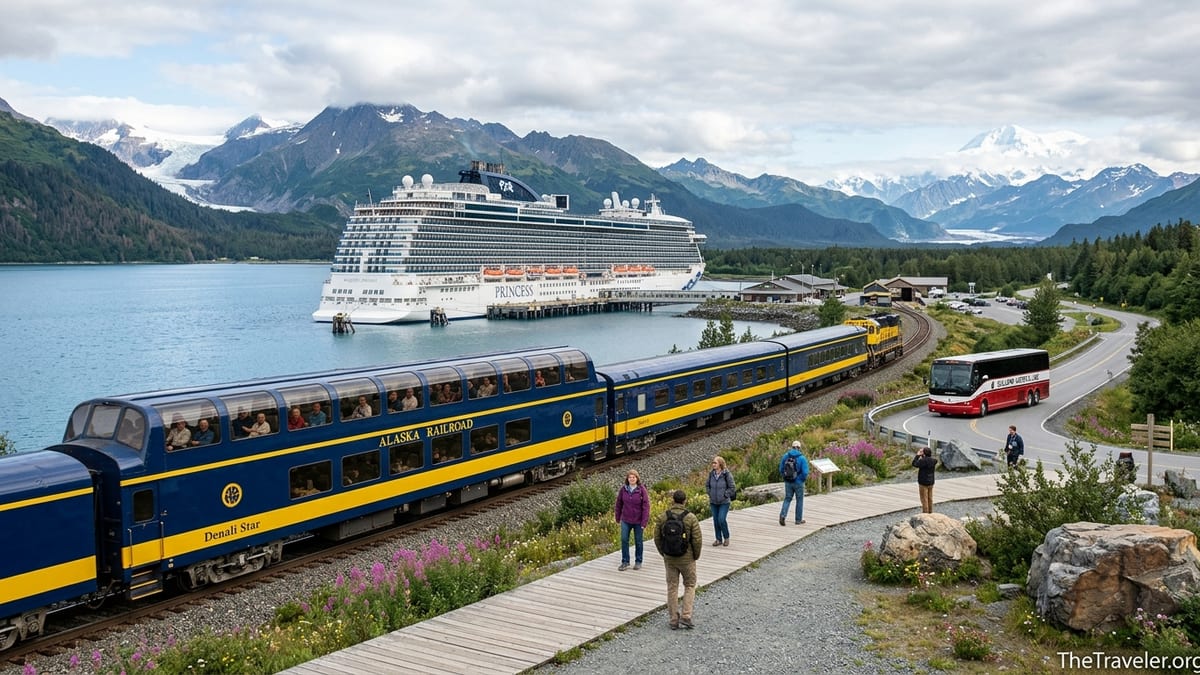
What Cruise Tours and Land–Sea Packages Actually Are
In Alaska, the term cruise tour usually refers to a bundled itinerary that combines a conventional one week or similar cruise with a pre or post trip on land. Major cruise lines package several nights in the interior together with rail or coach transfers and market it as a single product, often under names like “Denali Explorer” or “Alaska Cruisetours.” You book once, pay once, and the operator links ship, trains, buses and hotels into a continuous journey.
Most of these bundled trips are built on a one way Gulf of Alaska route. You sail between Vancouver and either Whittier or Seward, then spend roughly three to seven or more nights traveling inland. The land portion typically uses a mix of the Alaska Railroad’s Denali Star train, motorcoaches and stays at branded wilderness lodges or partner hotels near Denali National Park, Talkeetna, Fairbanks, or regions such as Copper River or the Kenai Peninsula.
Princess Cruises is a leading example. Its Alaska cruisetours generally pair a seven day Voyage of the Glaciers sailing that includes Glacier Bay or College Fjord with inland stays at company operated Princess lodges near Denali and on the Kenai, using rail segments between Anchorage, Talkeetna and Denali along with motorcoaches to and from Whittier or Copper River. Holland America Line offers similar Gulf of Alaska cruises tied to two or three night Denali stays at its own McKinley Chalet Resort and other properties, with rail or coach links to Fairbanks and Anchorage and optional extensions to the Yukon.
Inclusions vary not only by brand but by individual package. Some itineraries emphasize scenic rail, with daytime rail legs between Anchorage, Talkeetna, Denali and Fairbanks. Others rely more on highway coaches for flexibility and cost control. Lodges and even specific train segments can change seasonally, so it is important to verify, at the time of booking, which trains are operating, which lodges are used and how many hours per day you will actually spend on the move.
Typical Structures: From Glacier Voyages to Denali and Beyond
Most cruise tours follow a recognizable structure. You start or end with a one way coastal cruise that calls in Inside Passage ports like Ketchikan, Juneau and Skagway before transiting the Gulf of Alaska to Whittier or Seward. From there, your land segment begins, often in Anchorage, with an overnight or a short transfer straight to the interior. The Alaska Railroad’s Denali Star train generally operates between mid May and mid September on the Anchorage Talkeetna Denali Fairbanks route, giving cruise lines a predictable backbone for summer combinations.
Princess cruisetours often route guests by rail from Anchorage to Denali via Talkeetna for one or two nights near the park, then continue to Fairbanks by train or coach before flying home. Other Princess options reverse the order, starting in Fairbanks and working south by rail to Denali and on to the ship. Holland America features its own portfolio of “Double Denali” or “Triple Denali” itineraries that add extra nights near the park and include the Tundra Wilderness Tour, a longer bus excursion deeper into Denali that is folded into the package price on many two and three night Denali stays.
Beyond Denali, longer land heavy packages extend to Fairbanks for riverboat cruises on the Chena or Chena and Tanana rivers, to Copper River for lodge stays and fishing, or to the Kenai Peninsula with overnights near Kenai Fjords or on the coast for marine wildlife and glacier day cruises. Holland America is also known for bundles that stretch into Canada’s Yukon Territory, pairing Denali with Dawson City and Whitehorse for a gold rush themed circuit before returning to the ship.
Travel days on these itineraries are substantial. Rail journeys between Anchorage and Denali are usually eight to eight and a half hours, and Denali to Fairbanks by train takes roughly four hours. Coach transfers between Anchorage and Seward or Whittier typically run about three to four hours depending on stops. Understanding these time commitments is crucial when comparing a short three night land add on with a more immersive six or seven night itinerary that includes multiple rail days and one or two relatively stationary days at each lodge.
Key Inland Highlights on Cruise Tours
Denali National Park is the star of almost every land and sea combination. The 92 mile Denali Park Road is the only vehicle access corridor into the park’s heart, and the National Park Service strictly controls traffic. Private vehicles can usually drive only the first 15 miles in the main summer season, with limited shoulder season openings farther, such as to Teklanika at about mile 30 when conditions allow. Beyond that, access is by park approved shuttle and tour buses that run varying distances into the backcountry.
For several years, a major landslide known as Pretty Rocks forced the closure of the park road around mile 43 and limited buses to the eastern half of the route. In 2026 the Pretty Rocks bridge project was completed and road access was restored toward the west side of the park, including iconic destinations like Polychrome Overlook and Eielson Visitor Center. Because the park is still clearing deferred maintenance after the closure, visitors should always check the latest National Park Service guidance just before travel to confirm how far buses are running in the year they visit.
Even with restored access, it is important to set expectations. Denali, the mountain, creates its own weather, and clear summit views are never guaranteed. Many travelers build in two or three nights near the park precisely because that increases the odds of catching the mountain in full view at least once. Cruise tour itineraries that include two or more Denali nights, or that schedule a second Denali viewing opportunity from Talkeetna by flightseeing, offer a better chance of that postcard shot.
Fairbanks serves as the interior’s largest hub and features on many cruise tours as either the starting or ending city for the land segment. Guests typically visit Gold Rush era attractions, pan for gold, ride a sternwheel riverboat on the Chena and learn about Alaska Native cultures at local museums and cultural centers. Optional excursions can include evening aurora outings in late season or small plane flights toward the Arctic Circle. Smaller towns like Talkeetna act as quirky, walkable bases for Denali flightseeing trips, jet boat tours and relaxed days between train segments. Some longer cruise tours or independent add ons also route guests toward the Kenai or Copper River regions for world class salmon and halibut fishing, rafting, and scenery that blends mountains with tidal inlets and braided rivers.
Decision Point One: Cruise Heavy or Land Heavy
The first major choice is the balance between time at sea and time inland. A typical entry level cruise tour pairs a seven day Voyage of the Glaciers sailing with about three land days, usually a night in Anchorage and one or two nights at or near Denali. This gives a “taste” of the interior with a single Denali bus excursion and perhaps a rail segment, while keeping total trip length around ten to eleven nights.
Land heavy itineraries stretch the interior portion to five, six or even seven nights or more. They might add a second or third night at Denali, incorporate Talkeetna or Fairbanks, and sometimes include the Kenai or Copper River regions. These trips can run twelve to fifteen nights door to door, with multiple full travel days on trains and coaches. They suit travelers who want Alaska’s national parks, landscapes and wildlife to be the main event with the cruise as a scenic bonus rather than the core of the holiday.
Budget and energy level are central to this decision. Land days are usually more expensive on a per day basis than cruise days because they include lodges, excursions and ground transport instead of the ship’s economies of scale. Longer inland segments also mean more hotel check ins and early morning departures. Travelers who are primarily cruise oriented or who have tighter schedules may prefer a shorter land add on, while those willing to invest more time and money for deeper exploration will find longer cruise tours or a custom land trip more rewarding.
Decision Point Two: Northbound or Southbound Order
The second key choice is itinerary direction. Northbound trips usually sail from Vancouver or Seattle up through the Inside Passage before traveling to Whittier or Seward and then heading inland. Southbound cruise tours reverse that order, beginning with the land portion in Fairbanks or Anchorage and finishing with the coastal cruise back to Vancouver or Seattle.
Starting with the cruise can be gentler for travelers who want to recover from long flights and jet lag. A week at sea with mostly one port call per day allows time to adjust before early morning land departures and long rail days. It can also be psychologically satisfying to end the trip in the interior after days of watching mountains and glaciers from the deck.
Beginning inland and ending with the cruise has its own advantages. You tackle the more active portion, with early mornings, bus journeys and variable weather, while you are freshest. The cruise that follows can feel like a reward and a decompression chamber, especially for travelers who value ship amenities and relaxed evenings after an intense land tour. Southbound sequences can also align better with certain flight patterns or with the timing of the Alaska Railroad schedule for your chosen year.
Because seasonality affects both park access and sea conditions, it is also worth considering the calendar. Rail services like the Denali Star generally run only from about mid May to mid September, while some cruise lines operate coastal sailings from late April into October. Shoulder season trips near those edges might have limited land options or cooler, wetter weather inland, so carefully check which specific northbound or southbound cruise tour dates line up with the current summer rail and park operations.
Decision Point Three: Packaged Cruise Tour or DIY Land Extension
Once you know your preferred balance and direction, the next decision is whether to book a fully packaged cruise tour or to arrange your own land extension. Packaged options from Princess, Holland America and a few other operators wrap nearly everything into one confirmation: your cabin, inland hotels or lodges, rail and coach transfers, most luggage handling and at least one Denali bus excursion such as the Tundra Wilderness Tour. Prices for a combined seven day cruise plus three to six nights on land often start in the low to mid two thousand dollar range per person for inside cabins in shoulder season and climb significantly for peak summer departures, balcony cabins or longer land segments.
The appeal of these bundles is simplicity. The cruise line moves your large suitcases point to point, often directly between ship and interior lodges, while you carry a smaller overnight bag on trains and buses. A tour director or local staff keep you on schedule, and missed connections due to weather or delays become the company’s problem, not yours. For first time visitors and for older travelers who value low stress logistics, this peace of mind can be worth the premium over piecing the trip together yourself.
A do it yourself land extension involves booking your own Alaska Railroad tickets, arranging hotels near Denali, Talkeetna and Anchorage or Fairbanks, and possibly renting a car for parts of the journey. It allows you to choose exactly how many nights to spend in each place and which Denali bus option to book, whether that is a park run transit shuttle or a narrated tour. You can also mix in off the beaten path lodges or longer stays tailored to photography, hiking or fishing. Costs can be lower or higher than a cruise tour depending on your lodging choices, but you assume the burden of coordinating schedules and connection buffers.
Given ongoing changes in rail timetables and seasonal operations, anyone pursuing a DIY trip should build plans around the latest Alaska Railroad schedules and Denali National Park bus offerings for the specific summer they intend to visit. Check for dynamic fuel surcharges or seasonal fare spikes on both train tickets and rental cars, and be prepared for popular dates in late June and July to sell out months in advance whether you opt for a package or independent travel.
Logistics: Gateways, Luggage and Seasons
Most Alaska cruise and land combinations use three primary gateways. Vancouver and occasionally Seattle serve as southern embarkation or debarkation ports for the coastal cruise, while Anchorage and Fairbanks anchor the interior. Northbound cruise tours often start in Vancouver, end their sailing in Whittier or Seward, then connect by coach or rail to Anchorage before continuing inland. Southbound versions may begin in Fairbanks or Anchorage, travel by rail and coach through Denali and Talkeetna, and then board the ship for the journey south.
Luggage handling is a notable advantage of organized cruise tours. On Princess and Holland America itineraries, for example, guests typically tag one main suitcase that the company transfers between the ship, trains and remote lodges. Travelers carry a smaller overnight or hand luggage on coaches and rail cars, easing the strain of frequent moves. Independent travelers, by contrast, must manage their own bags on and off trains and into hotels or rental cars, which is manageable but worth factoring into decisions for anyone with mobility issues.
Seasonality is another critical layer. While large ship cruises along the Alaska coast may run from late April into early October, many interior operations have a shorter window. The Denali Star summer train and the full schedule of Denali tour and shuttle buses typically run from mid May to mid or late September. Shoulder season trips at the edges may encounter lingering snow, partial park services or limited excursions, though they can also offer lower prices and fewer crowds. Popular activities such as Kenai Peninsula fishing or Copper River lodge stays are concentrated in high summer and prime salmon runs, and operations can shift year to year, so it is important to confirm the season dates that apply when you are planning.
Travel times inside Alaska are longer than maps might suggest. Plan on most of a day for Anchorage to Denali by train, a half day for Denali to Fairbanks, and several hours to reach Seward or Whittier from Anchorage by road. Weather and wildlife can slow coaches, and rail journeys are deliberately paced for scenery. Travelers should be realistic about how many locations they can meaningfully experience in three, five or seven inland days without turning the trip into a constant packing and unpacking exercise.
Who Should Choose Bundled Cruise Tours vs Independent Add Ons
Bundled cruise tours work best for travelers who value convenience and a clear structure. First time visitors to Alaska, multigenerational families coordinating different ages and abilities, and older travelers who prefer escorted logistics tend to benefit from having the cruise line handle trains, buses, bags and most Denali park arrangements. These travelers often appreciate having a tour director or lodge staff ready to answer questions and help with optional excursions.
Independent add ons appeal strongly to repeat visitors who have already taken a cruise tour, to photographers seeking flexible light chasing schedules, to hikers or anglers who want more time in fewer places, and to families who appreciate control over mealtimes, room configurations and activity intensity. Renting a car for part of the trip, for example on the Kenai Peninsula, lets you build in spontaneous stops and adjust easily for weather, something that is harder on tightly timed group itineraries.
That said, the distinction is not absolute. Some travelers choose a cruise line’s rail or coach transfers between Anchorage and Denali but book their own Denali lodging and park shuttles. Others book a standard cruise tour but add extra independent nights at the beginning or end in Anchorage, Fairbanks or Vancouver. The right solution often blends packaged and DIY elements to match comfort levels with logistics and desired depth of exploration.
How to Choose the Right Alaska Cruise and Land Combination
The most effective way to plan is to work step by step. First, decide whether your priority is a coastal cruise experience with a brief interior sample or a land focused exploration with a cruise attached. If glacier viewing, ship amenities and coastal ports are central, a seven day cruise with a concise three night land segment may be ideal. If Denali, Fairbanks and perhaps Kenai or Copper River are the highlights you care about most, look at five to seven night land programs or consider a custom itinerary anchored by the Alaska Railroad schedule.
Next, weigh northbound versus southbound order in light of your energy levels and flight patterns. Visualize where you want to end your trip: watching glaciers calve while you relax on deck, or scanning Denali’s ridgelines from a railcar dome. Then determine whether you prefer the simplicity of a bundled cruisetour from a brand like Princess or Holland America or the flexibility of arranging your own land hotels, rail tickets and excursions.
Finally, ground your plans in current realities. For your intended travel year, confirm Denali National Park bus routes and how far into the park visitors are allowed to go, taking into account any lingering road work west of Pretty Rocks or other maintenance. Check the latest Alaska Railroad timetables and season dates, and verify which lodges or partner hotels the cruise line is actively using that year. Ask about approximate price ranges, any fuel surcharges and how luggage will be handled between the ship and the interior. With those pieces in place, you can confidently design an Alaska journey that links the drama of the coast with the deep, wild interior that makes the state so compelling.