


Kilimanjaro International Airport may be small, but how you plan your first and last nights here can make or break a safari or summit attempt. Late arrivals, pre-dawn departures, gear repacking, and tight safari pickups all hinge on a simple decision: do you stay right by the terminal, or base yourself in Arusha or Moshi instead? This guide breaks down the best real-world options around Kilimanjaro International Airport, with practical examples to help you book confidently.
Get the latest updates straight to your inbox!
Understanding Kilimanjaro International Airport and Arrival Logistics
Kilimanjaro International Airport (JRO) sits roughly midway between Arusha and Moshi, serving as the main international gateway for northern Tanzania safaris and Kilimanjaro climbs. Driving from JRO to Arusha usually takes about 60 to 90 minutes depending on traffic, while Moshi is typically 45 to 60 minutes away. After a long intercontinental flight, that extra hour on the road late at night can feel much longer than it looks on a map.
Most long-haul flights from Europe and the Middle East arrive in the evening or late at night, and some land just after midnight. Travelers often still need to obtain visas on arrival, clear immigration, collect bags, and pass through a simple but sometimes slow customs process. Even when things run smoothly, it is common to step out of the terminal 60 to 90 minutes after landing, which is why airport-area hotels and shuttles are so valuable.
Almost all safari operators and Kilimanjaro outfitters offer airport transfers and will pick up from hotels near the terminal, in Arusha, or in Moshi. However, they sometimes have preferred properties where they routinely meet guests. For example, a group might land at JRO at 22:30, walk five minutes to a pre-booked pickup point, and be in a nearby lodge within 15 minutes, avoiding the need for a dark, unfamiliar highway drive to town.
The key is to match your arrival time, fatigue level, and next-day plans with the right base. If you land after 22:00 and start a climb the following morning, staying near JRO can preserve sleep and reduce stress. If you arrive in the afternoon and do not depart on safari for a day or two, you will likely enjoy the restaurants, shops, and outfitters in Arusha or Moshi more than an isolated airport property.
Staying Right by the Terminal: Kia Lodge and Kilimanjaro Airport Lodge
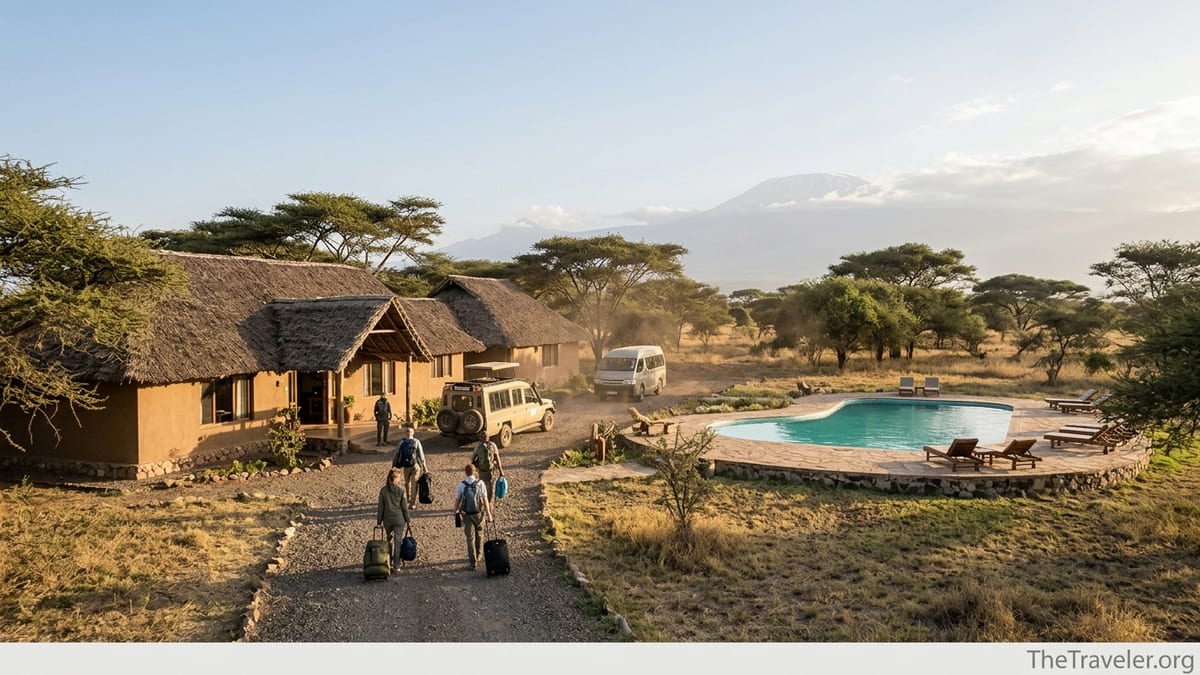
The closest and best known property to JRO is Kia Lodge, often described by operators as the “airport lodge” because it sits just a few minutes from the runway. The lodge is on a low hill surrounded by savannah, about four kilometers from the terminal, and many descriptions emphasize that it is under a five minute drive from the airport. Rooms are simple thatched cottages, and the standout feature is a hilltop swimming pool with wide views toward Mount Kilimanjaro and Mount Meru when skies are clear.
Kia Lodge is set up specifically for transit guests on safaris and climbs. Airport transfers are usually straightforward to arrange through the lodge or your tour operator, with short shuttle rides that are particularly welcome for those arriving near or after midnight. Guests often use day rooms here after Kilimanjaro climbs for showers and repacking before evening international flights. A typical pattern is to finish the trek around midday, transfer down to the lodge by late afternoon, shower, have an early dinner, and then take the five minute drive back to the airport.
Pricing at Kia Lodge is typically mid-range by Tanzanian standards rather than budget. Recent online rates often show total nightly costs in the low to mid hundreds of US dollars for a double room with breakfast, though prices fluctuate with season and booking channel. Travelers balancing cost and convenience sometimes accept a slightly higher rate in exchange for the near-terminal location, views, and ability to get extra rest before or after demanding travel or climbing days.
Just off the airport road, Kilimanjaro Airport Lodge is another near-terminal option that tends to come in cheaper than Kia Lodge. It usually offers basic but adequate rooms, simple meals, and paid shuttle transfers. Travelers who only want a place to sleep for a few hours after a 01:00 arrival or before a 05:00 check-in may find this property perfectly acceptable, especially if they plan to transfer to Arusha or Moshi immediately the next morning. Reviews often highlight its proximity to the terminal and value for money, while noting that amenities are more modest than the larger, resort-style airport lodges.
Airport Planet Lodge and Other Near-JRO Bases
Airport Planet Lodge sits along the main highway between JRO and Arusha, usually a 10 to 15 minute drive from the airport depending on traffic. It has become a favorite among safari groups and Kilimanjaro climbers who want something more comfortable and resort-like than a purely functional airport hotel, but who still prefer to stay near JRO rather than in Arusha itself on the night of arrival or departure.
The lodge is set in landscaped gardens with bungalow-style rooms, a pool, and a main building that houses reception, a bar, and dining areas. Travelers frequently mention complimentary or pre-arranged shuttle transfers from JRO, which are often included in package rates or offered at no cost for guests booked through partner tour companies. For example, one safari itinerary for 2024 listed Airport Planet Lodge as the first-night stay after a late-night arrival, with shared airport transfers included both ways and a simple in-by-17:00, out-by-10:00 schedule clearly communicated in advance.
Because Airport Planet Lodge is on the Arusha side of JRO, it also works well as a stepping stone for those heading into town the next day. A common pattern is to fly into JRO late at night, sleep at Airport Planet Lodge, enjoy breakfast and a quick swim or gear reorganization in the morning, and then transfer to an Arusha city hotel or directly onto the first safari stop by late morning or lunch time. Some Kilimanjaro climbers also use it as a post-climb base to shower and rest before catching late flights, often combining a day room there with a final transfer to JRO in the evening.
Several smaller guesthouses and lodges line the JRO–Arusha corridor, usually at lower price points and with simpler facilities. These can make sense for budget-conscious travelers or independent self-drivers, but they are less routinely used by mainstream safari operators. If you choose one of these, confirm in writing that your tour company is willing to pick up there, and check whether the property offers 24-hour reception and reliable airport transfers for very early or very late flights.
Should You Stay Near JRO, in Arusha, or in Moshi?
The biggest strategic decision for most itineraries is whether to base yourself near the airport, in Arusha, or in Moshi. The best choice depends on your arrival time, the start and finish times of your safari or climb, and how much city atmosphere or comfort you want around those key days.
Arusha is the main safari hub for northern Tanzania, with a wide range of hotels from simple guesthouses to upscale lodges. Many Serengeti and Ngorongoro safaris begin and end here, and tour companies are used to collecting guests from well known hotels around the city. For example, a traveler who lands at JRO at 15:00 might transfer directly to a comfortable lodge in Arusha, enjoy a relaxed dinner, pick up any last-minute gear or pharmaceuticals the next morning, and depart on safari by late morning. If you have at least one full day between landing and starting your safari, Arusha often offers the best combination of amenities and tour logistics.
Moshi is the natural base for Mount Kilimanjaro climbs, especially on popular routes such as Machame and Marangu. Many trekking outfitters include at least one night in a Moshi hotel before the climb for gear checks and pre-trek briefings, plus another night after descent. For instance, a climber might fly into JRO in the afternoon, transfer 45 to 60 minutes to a Moshi hotel, meet their guide in the evening, and start the trail early the next morning. After coming down from the mountain, they might shower, celebrate, and spend one last night in Moshi before heading back to JRO or on to safari.
Staying near JRO itself tends to make the most sense in two scenarios: when you have a very late arrival or very early departure, and when you only need a quick overnight in transit between a climb and an onward safari or international flight. A couple arriving at 00:30 with a safari pickup at 08:30 the same day will preserve several hours of sleep by staying at Kia Lodge or Airport Planet Lodge instead of driving an hour to Arusha in the middle of the night. Likewise, climbers finishing on the mountain in the afternoon may prefer a near-airport lodge with day rooms and pool access before a 21:00 or 23:00 international flight.
Planning for Late Arrivals, Early Departures, and Shuttles
Late-night arrivals and pre-dawn departures are common at Kilimanjaro International Airport, so it is crucial to match your hotel choice with the realities of your flight schedule. If you land after 22:00, especially on a long-haul from Europe or North America, protect your rest by booking a property that explicitly offers reliable 24-hour airport transfers. Kia Lodge and Airport Planet Lodge, for example, are regularly referenced by safari itineraries and tour companies as standard late-arrival bases precisely because they understand the rhythms of the international flight schedule.
Similarly, if your onward flight departs between 03:00 and 07:00, you may be better off sleeping near JRO the night before rather than attempting a 60 to 90 minute drive from Arusha or a 45 to 60 minute drive from Moshi in the middle of the night. One practical scenario: a climber finishes a Kilimanjaro trek, returns to Moshi for a hot shower and celebratory dinner, then transfers to an airport lodge by 22:00 to rest for a 04:00 wake up and 06:30 international departure. The short final transfer in the pre-dawn hours is far less stressful than a longer highway drive from town.
Shuttle and transfer arrangements should always be confirmed in writing before travel. Some lodges around JRO advertise free shared shuttles from the airport, while others quote a per-vehicle transfer fee. Tour companies sometimes include these transfers in their package pricing even when booking guests into airport hotels. For instance, a 7-day safari might list “shared airport transfer to airport hotel, overnight at Airport Planet Lodge” on day one, with no separate line item for the shuttle. To avoid confusion, email both the lodge and your operator with your flight number and arrival time, then ask who will be waiting for you in the arrivals area.
When connections are tight, consider paying a little extra for a hotel with strong reviews for punctual pickups. A frequent pattern described by past guests is arriving exhausted after midnight, finding a lodge representative holding a name sign immediately outside baggage claim, and being in bed within 30 minutes of exiting the terminal. That small time saving can mean an additional hour or more of sleep before an early briefing or long day on the road.
Using Airport Hotels for Safari Pickups and Climb Preparation
Many safari operators and Kilimanjaro outfitters are flexible about pickup locations around JRO, Arusha, and Moshi, but airport-proximate hotels have a particular advantage for early-morning starts. If your safari vehicle is scheduled to depart around sunrise for Tarangire, Lake Manyara, or the Serengeti, staying closer to JRO can shave 30 to 60 minutes off your road time compared to starting in Arusha, depending on the direction of travel and current road conditions.
For Kilimanjaro climbs, some guides are happy to meet guests at airport hotels for pre-climb briefings and gear checks, especially if a late arrival makes an immediate transfer to Moshi impractical. In such cases, the guide may visit the lodge in the early evening, spread gear across a room or patio table, and then arrange for a shared transfer to Moshi or directly to the trailhead the following morning. This approach can work well if your flight lands after dark but you still plan to begin the climb within 24 hours.
Airport hotels also double as practical staging points for luggage storage, repacking, and showers. For example, a traveler might arrive at JRO with both safari duffels and climbing gear, but only want to carry one bag on the mountain. An airport or Moshi hotel can store excess luggage while you are on your trek or safari, and tour companies often coordinate with these properties to shuttle gear between city hotels, airport lodges, and trailheads. Many climbers use airport properties for day rooms on the final day of a trek so they can shower and reorganize before boarding overnight flights back to Europe or the Middle East.
When planning logistics, share your full flight, safari, and climb itineraries with both your tour operator and your chosen hotel. For instance, if you know you will finish a safari in the Ngorongoro area in the afternoon and have a 23:00 flight from JRO, you can ask your operator to drop you at an airport lodge by early evening, giving you a chance to have dinner and freshen up before the last short transfer to the terminal.
Budgeting, Comfort Levels, and Realistic Expectations
Prices around Kilimanjaro International Airport vary widely, from basic guesthouses to mid-range lodges that cost as much per night as some high-end city hotels. Kia Lodge and Airport Planet Lodge typically sit in the mid-range segment, with rates for double rooms that often fall in the low to mid hundreds of US dollars, depending on season and booking method. Kilimanjaro Airport Lodge and smaller roadside guesthouses near the JRO–Arusha corridor usually come in lower, appealing to backpackers or travelers who prioritize price over ambiance.
In terms of comfort, it is helpful to set realistic expectations. Even the more polished airport lodges are designed as transit properties rather than destination resorts. Rooms are generally clean and functional, often in low-slung cottages or bungalows with fans or air-conditioning, mosquito nets, and simple but adequate bathrooms. Public spaces may include a pool, a bar, and a restaurant serving a mix of local and international dishes, but nightlife is limited and surroundings are quiet once the sun goes down.
For travelers who want more atmosphere, dining options, and services like ATMs or gear shops, Arusha and Moshi are better bets. Arusha offers a broader culinary scene, from cafes and pizza restaurants to hotel buffets and rooftop bars. Moshi, while smaller, has a strong trekking culture and a scattering of gear-rental shops, climbing-focused cafes, and tour offices. A common compromise is to spend the first and last night of a longer trip in town, but use an airport lodge exclusively for awkwardly timed flights or as a day-room base between a climb and international departure.
When budgeting, remember to factor in airport transfer costs if they are not already included in your package. A private vehicle between JRO and Arusha or Moshi can represent a noticeable addition to your overall spend, especially on short stays. In some cases, paying slightly more for a room at an airport lodge with a complimentary shuttle can be more economical than a cheaper room plus separate transfers in both directions.
The Takeaway
Choosing where to stay around Kilimanjaro International Airport is less about star ratings and more about timing, logistics, and energy management. Airport-proximate lodges like Kia Lodge, Airport Planet Lodge, and Kilimanjaro Airport Lodge excel at absorbing late arrivals, awkwardly timed flights, and quick turnarounds between safaris and climbs. Arusha works best as a vibrant hub for safaris when you have at least a full day on the ground before or after your wilderness days, while Moshi remains the natural base for Kilimanjaro trekkers who want time for briefings, gear checks, and post-climb recovery.
When planning, map your flights, safari days, and climb schedule on a simple timeline, then drop your overnight stays where they minimize pre-dawn road transfers and maximize sleep. Confirm shuttle details in writing, share your flight times with both your hotel and tour operator, and give yourself enough buffer around summit days and long drives. With a little foresight, your time around JRO can feel like a smooth bridge into Tanzania’s national parks and mountain trails, rather than an exhausting obstacle at the start or end of your adventure.
FAQ
Q1. How far is Kilimanjaro International Airport from Arusha and Moshi?
Typical drive times are around 60 to 90 minutes between JRO and Arusha and roughly 45 to 60 minutes between JRO and Moshi, depending on traffic and time of day.
Q2. Which is the closest hotel to Kilimanjaro International Airport?
Kia Lodge is one of the closest and best known options, sitting on a hill a few kilometers from the terminal and generally reached in under five minutes by car.
Q3. Is it worth staying near the airport if I arrive late at night?
Yes, if your flight lands after about 22:00, staying at an airport lodge often saves an hour or more of night driving and gives you extra rest before an early safari or climb.
Q4. Do airport hotels around JRO offer free shuttle transfers?
Some do, especially when booked through safari or trekking packages, while others charge a per-vehicle fee. Always confirm in writing whether shuttle costs are included.
Q5. Should Kilimanjaro climbers stay in Moshi or near JRO before the trek?
If you arrive in the afternoon or earlier, Moshi is usually better for briefings and gear checks. For very late arrivals, a night near JRO followed by transfer to Moshi the next morning can be more realistic.
Q6. Is Arusha or Moshi better as a base for safaris?
Arusha is the primary safari hub for northern Tanzania, with more hotel choices and services. Most classic Serengeti and Ngorongoro itineraries begin and end there rather than Moshi.
Q7. Can my safari or trekking company pick me up at an airport hotel?
In most cases yes, as long as you choose a recognized property and share details in advance. Many operators routinely meet guests at Kia Lodge, Airport Planet Lodge, and similar hotels.
Q8. Are airport-area hotels suitable for day rooms after a Kilimanjaro climb?
Yes. Many climbers book day rooms at airport lodges to shower, repack, and rest after descending from the mountain before evening or late-night flights.
Q9. How far in advance should I book a hotel near Kilimanjaro Airport?
During peak climbing and safari seasons it is wise to book several months ahead, especially if you want a specific lodge or need family rooms close to the terminal.
Q10. Are budget options available near Kilimanjaro International Airport?
Yes. In addition to mid-range lodges, there are simpler guesthouses and smaller hotels along the JRO–Arusha road that suit tighter budgets, though amenities are more basic.