


More news on this day
Delta Air Lines’ weekend technology outage at its Atlanta hub caused widespread delays across the United States at the start of Thanksgiving week, but operations at Nashville International Airport remained relatively stable, with only scattered disruptions and airport officials advising travelers to keep allowing extra time.
Get the latest news straight to your inbox!
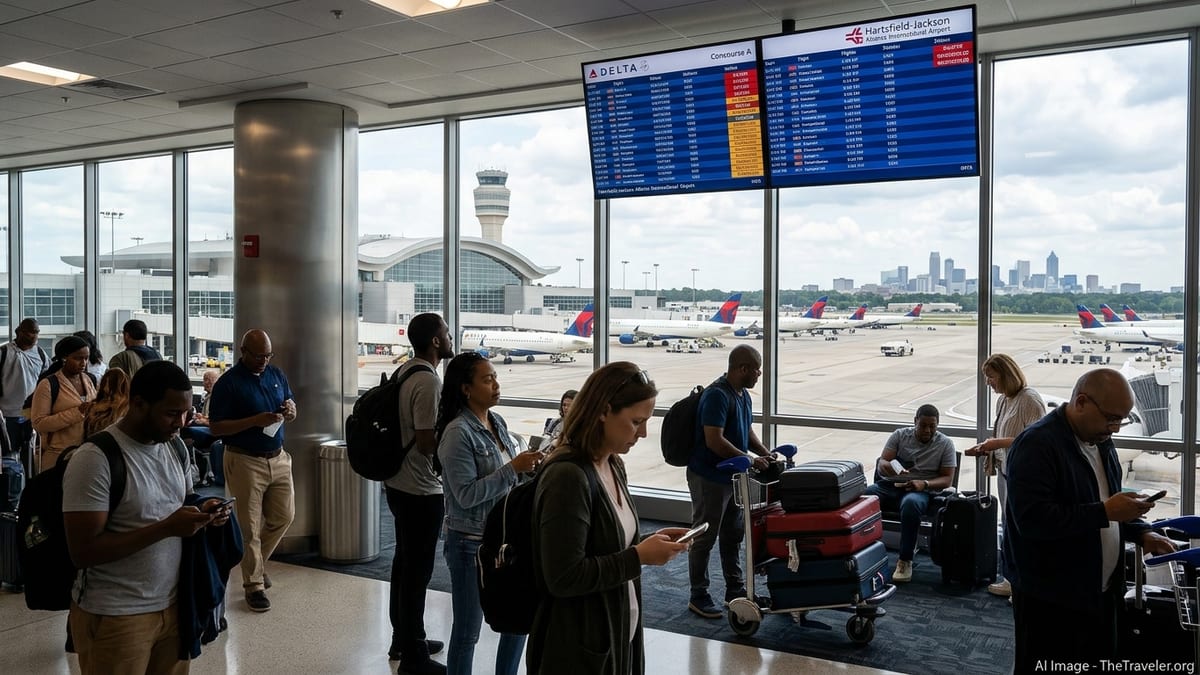
Delta’s Atlanta outage and how it spread nationwide
On Sunday 22 November 2026, Delta Air Lines experienced a problem with the automated system it uses to calculate aircraft weight and balance, a safety-critical step before departure. The airline confirmed that the issue affected flights at its main hub, Hartsfield-Jackson Atlanta International Airport, and led to knock-on delays across its network as the busy Thanksgiving travel period was ramping up.
The Federal Aviation Administration briefly issued a ground stop for some flights bound for Atlanta on Sunday morning while the problem was addressed. During the outage, Delta said its teams were using manual workarounds to complete weight and balance checks so that departures could continue, but the shift from automated to manual processes reduced throughput and contributed to growing delays.
Flight-tracking data showed that more than 1,000 Delta flights were delayed on Sunday and a smaller number were canceled, with Atlanta seeing the largest concentration of disruption as aircraft and crews fell out of position. Airports around the country, including Nashville, reported passengers experiencing late departures or missed connections linked to the outage, even where local weather and airport systems were operating normally.
Limited operational impact at Nashville International Airport
In Nashville, the effect of Delta’s system failure was visible but constrained compared with some larger Delta stations. By Monday morning, Nashville International Airport was reporting only one Delta cancellation and a limited number of delays directly tied to the weekend outage, and operations across most airlines were close to normal.
Airport officials indicated that the bulk of Delta’s schedule at Nashville continued to operate, albeit with some passengers rebooked via different hubs as the airline worked to reposition aircraft. Some travelers reported being rerouted on more indirect routings than usual as Delta prioritized restoring its core hub operation in Atlanta.
Despite the technology incident and a broader pattern of recent aviation-system problems, Nashville’s airport authority has not forecast an exceptional surge in passenger numbers solely due to the outage. Instead, it has characterized the impact on the airport’s day-to-day operation as manageable, with security screening, ground handling and terminal services functioning as usual while the airline worked through its backlog.
How BNA is preparing for Thanksgiving week
The Delta issue landed in the middle of a busy stretch for U.S. aviation, coming just days after a nationwide FAA ground stop linked to a telecommunications failure and a separate internal outage at United Airlines. With those events still fresh, travelers are paying close attention to how airports such as Nashville will cope if bad weather and further glitches intersect later in the week.
Metro Nashville Airport Authority officials say that, despite the national headlines, Thanksgiving is not typically one of the airport’s peak periods. On a standard day in 2026, between 30,000 and 40,000 passengers move through Nashville International, and current projections suggest that volumes through the holiday period will remain broadly in line with those everyday levels rather than spiking sharply.
Statewide, AAA expects nearly two million Tennesseans to travel for Thanksgiving this year, the majority of them by car. Only a small fraction are expected to fly, which translates into fewer than 50,000 air travelers linked to the holiday period across the state. That balance helps explain why airport leaders in Nashville are planning for steady but not extraordinary crowds, even as they build in resilience for potential weather or system-related disruption beyond their control.
Passenger experiences and coping strategies
For individual travelers, the network effects of Delta’s outage have tended to show up as longer itineraries and missed nonstops rather than scenes of gridlock at Nashville itself. Some passengers have reported having to accept indirect routings in order to complete trips, particularly when connecting on Delta to or from its Atlanta hub shortly after the system failure.
Others flying through Nashville at the start of Thanksgiving week have described largely routine experiences, noting that security queues and boarding processes at the airport have remained relatively orderly. With many holiday travelers only flying once or twice a year, perceptions of disruption can vary sharply depending on whether a particular itinerary touches one of the more heavily affected hubs.
Regular fliers and touring musicians based in or passing through Nashville are adjusting their habits by building in extra buffer time before departure and paying closer attention to airline mobile apps. Airline and airport apps now commonly push alerts about gate changes, delays, rebooking options and even walk times between gates, which can be particularly helpful when a technical incident or weather system triggers rolling schedule adjustments across multiple airports.
What travelers using Nashville should do next
With Delta’s weight and balance automation system restored and the airline’s operation in Atlanta stabilizing on Monday 23 November, conditions across the carrier’s network are improving, but residual delays remain possible as aircraft and crews return to their planned positions. Travelers booked on Delta flights to or from Nashville over the next several days should keep checking their flight status regularly, especially if they are connecting via Atlanta or other large hubs that absorbed the brunt of Sunday’s disruption.
Nashville International Airport is continuing to advise passengers to arrive at least two hours before scheduled departure for domestic flights and three hours for international journeys, even if an airline app currently lists the flight as delayed. Because departure times can be moved forward again once operations normalize, arriving early reduces the risk of missing a flight that leaves earlier than expected after a schedule update.
Given the recent sequence of national aviation system incidents and the potential for disruptive weather systems during the Thanksgiving period, travelers may also wish to review the flexibility built into their tickets and consider whether additional travel insurance meets their needs. Policies and airline waivers vary, but in some cases they can offset costs linked to overnight stays, missed connections or rebooked itineraries if further unforeseen problems arise while the aviation system continues to work through a busy holiday travel week.