


More news on this day
Thanksgiving 2026 is shaping up to be the busiest U.S. holiday air week in 16 years, yet new research and a string of recent outages show most UK and U.S. travelers still doubt airlines’ ability to manage large-scale disruption when it matters most.
Get the latest news straight to your inbox!
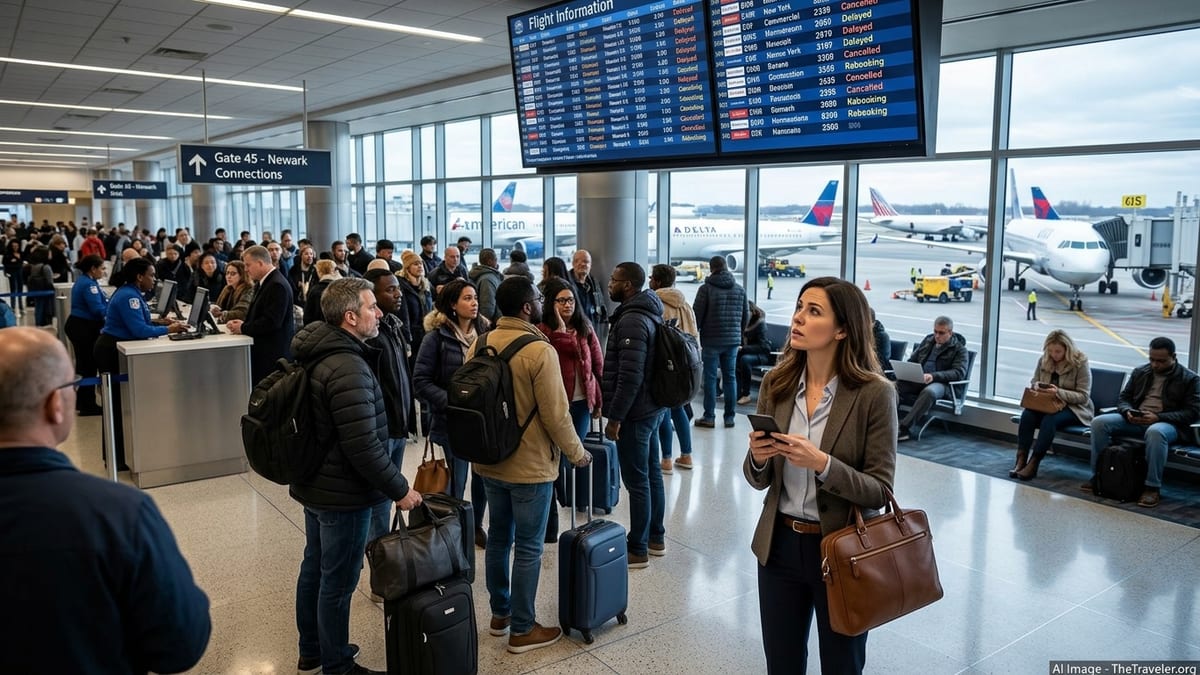
New survey highlights deep divide on disruption readiness
Fresh research commissioned by travel technology provider IBS Software and carried out by Censuswide in November 2026 points to a sharp disconnect between airline leaders and their customers on disruption preparedness. In the study, based on 2,000 UK and U.S. consumers and 500 airline leaders, just 26% of travelers agreed that the airline industry is well prepared to handle large-scale disruption events, while roughly two thirds of airline executives rated both their own carrier and the wider industry as well prepared.
The survey, published on 19 November 2026, defines disruption broadly as irregular operations caused by severe weather, air traffic control restrictions, system outages, staffing shortages and other shocks that can ripple through networks. Among C-suite respondents, 54% estimated that disruption costs their airline between 5 million and 10 million U.S. dollars per year, covering additional operating expenses, passenger care, rebooking and support, along with potential damage to loyalty. IBS Software stresses that these are estimates rather than audited data, but they underline that disruption is now treated as a recurring budget item rather than an occasional exception.
The timing of the findings is significant for UK-based travelers heading to the United States for business or leisure. On 24 November 2026, the U.S. Federal Aviation Administration (FAA) released its Thanksgiving holiday outlook, projecting more than 417,000 flights over the nine-day period from 23 November to 1 December, which it described as the busiest Thanksgiving week in 16 years. Airlines for America, representing leading U.S. carriers, separately forecast nearly 29 million air travelers over the broader Thanksgiving period, with major airlines such as American and Delta publicly flagging near-record passenger loads and dense schedules in key hubs.
Slow passenger alerts and aging systems fuel unease
One of the clearest friction points identified in the IBS Software study is the speed and consistency with which airlines can notify customers once a disruption has been detected internally. Only 1% of surveyed airline leaders said their organization can contact all affected passengers immediately. A further 10% reported they can do so within 1 to 15 minutes. The largest group, 45%, said it typically takes between 16 and 30 minutes to notify everyone booked on the disrupted service, implying that a substantial minority take even longer.
Passengers report feeling those delays acutely. Around a third of consumers in the same survey cited the lack of timely updates as one of the most frustrating aspects of disruption and a similar share said clear, prompt information is the single most important factor once plans change. Parallel consumer research by the UK Civil Aviation Authority (CAA), published separately, has reached comparable conclusions, finding that only a small minority of passengers feel fully informed about their rights in disruption and that many want both more frequent and more understandable communication when flights are delayed or cancelled.
The concern about communication has been intensified by events earlier in November 2026. On Friday 13 November, the FAA ordered a rare nationwide ground stop for all departures at U.S. airports after communications issues affected multiple Air Route Traffic Control Centers. According to a U.S. Department of Transportation briefing and an FAA question-and-answer document published on 15 November, the ground stop lasted around four hours and forty-five minutes and affected 17 of the 22 en-route centers, leading to thousands of delays and cancellations. Officials from the Department of Transportation, the FAA and the Department of Homeland Security later said there was no evidence of a cyberattack, attributing the problem to telecommunications equipment and router issues in the air traffic control communications network.
Although the incident did not originate with airlines, the disruption cascaded through carrier operations and highlighted how quickly schedules can unravel during peak travel times. In recovery updates, individual airlines confirmed that it took days for some schedules to normalize at major hubs. For passengers, the episode illustrated that during a large-scale systems event, early access to accurate information and alternative options is often decisive in securing a replacement seat or rerouted itinerary.
Record Thanksgiving traffic collides with new operational pressures
This year’s Thanksgiving travel period combines multiple sources of operational stress for U.S. and transatlantic flyers. The FAA’s 2026 forecast, released on 24 November, anticipates more than 417,000 flights over the nine days from 23 November to 1 December, a level of activity not seen since before the global financial crisis. Trade group projections suggest air passenger numbers will be close to or slightly above last year’s already high volumes, while AAA expects more than 80 million Americans to travel at least 50 miles from home for the holiday by all modes, including road and rail.
The high demand comes just days after the nationwide ground stop and in the wake of a separate technology outage affecting a major U.S. airline, which U.S. broadcast outlets reported on 23 November as having delayed more than 1,600 flights in a single day. While airlines have said those issues were resolved and operations have largely stabilized, they remain fresh in the minds of travelers and corporate travel managers finalizing Thanksgiving-week itineraries.
Adding to the complexity, the FAA is phasing in a new departure management approach that affects how many aircraft can taxi from the gate toward the runway at busy airports when certain spacing or flow-management conditions apply. The policy, part of a wider effort to reduce long queues of aircraft idling near runways and to improve surface safety, gives controllers clearer tools to hold departures at the gate when arrival and departure streams are not aligned. U.S. media reports in November quoting air traffic controllers and union representatives have indicated that, depending on staffing levels and weather, the change could mean longer waits at the gate at heavily used hubs around New York, Washington and other major cities, even when official departure times remain listed as on schedule.
For travelers connecting through the United States during the Thanksgiving period, these overlapping factors mean a smaller margin for error. Alternative options for missed or heavily delayed flights may sell out quickly once disruptions appear in reservation systems. Those flying into secondary cities or onward to Latin America, Asia or Europe via U.S. hubs may find it harder to rebook same-day if tight connections are lost, particularly on traditionally busy travel days such as the Wednesday before Thanksgiving and the Sunday after the holiday.
Business travel programs tighten disruption monitoring
The IBS Software survey was partly designed to inform corporate travel programs, and its results suggest that many business-focused buyers are reassessing how they monitor and respond to disruption. Travel management companies and in-house travel teams increasingly connect multiple data sources, from global distribution systems and airline operational feeds to specialist delay-tracking providers, into centralized platforms that can flag risk to traveler itineraries in near real time.
Several large corporate travel programs now set internal response targets for contacting travelers whose flights appear at heightened risk of disruption, whether through automated app alerts, emails or live-agent outreach from 24-hour service centers. Vendors have also started to introduce tools that use rules-based engines or artificial intelligence to generate suggested alternative routings within seconds of a change hitting the system. The goal is to allow companies to move faster than general customer service queues, particularly when senior executives are traveling or when critical meetings are at stake.
For individual business travelers, the near-record traffic and recent infrastructure problems have sharpened the focus on personal preparation. Many corporate policies now recommend that travelers regularly check the status of the aircraft scheduled to operate their flight, either in the airline app or on airport information systems, and that they monitor real-time airport and airspace conditions on official FAA and airport status pages before leaving for the airport. Some companies have temporarily adjusted their internal guidelines to include longer connection times at known congestion points during the Thanksgiving window, or to encourage departures a day earlier where key meetings cannot easily be rescheduled.
Passenger rights, practical checks and what to watch after Thanksgiving
The IBS Software and CAA research both highlight that many passengers remain uncertain about their entitlements when disruption occurs, especially when a trip involves more than one jurisdiction. For UK-based travelers flying to or from the United States over Thanksgiving week, the applicable rules depend on where the journey starts, which airline operates the flight and what caused the disruption. Under retained UK and EU law, flights departing the UK or EU, as well as flights into the UK or EU on UK or EU carriers, may trigger obligations for care, rerouting and, in some cases, fixed-sum compensation if long delays or cancellations are not caused by extraordinary circumstances such as severe weather or certain air traffic control restrictions.
For flights departing the United States on non-UK or non-EU airlines, U.S. Department of Transportation regulations focus on refund rights when a flight is cancelled or significantly changed and on requiring truthful advertising and prompt processing of refunds that are due. They do not currently provide the same standardized compensation structure for long delays that exists in UK and EU legislation. The U.S. Department of Transportation has, however, pushed airlines to clarify their policies on meals, hotel accommodation and rebooking during controllable disruptions, and maintains a comparison dashboard showing what each major U.S. carrier commits to providing in different scenarios.
Ahead of travel, therefore, passengers with Thanksgiving itineraries that touch the United States may benefit from verifying three elements in particular. First, they should ensure that their contact details are accurate in airline profiles and bookings so that disruption alerts reach the correct phone number or email address without delay. Second, they should check the conditions of carriage for the airline operating each sector, along with any travel insurance policies, to understand what support may be available for missed connections, extra accommodation or alternative transport. Third, those traveling on business should confirm what their employer or travel management company will provide during major disruptions, including whether there is a dedicated out-of-hours contact point.
Looking beyond the immediate Thanksgiving period, the combination of near-record traffic, the November 13 nationwide ground stop, and high-profile airline technology outages is likely to shape industry discussions well into 2027. Corporate travel buyers are already signaling that disruption performance will feature more prominently in upcoming contract negotiations, with some asking carriers for more granular data on average rebooking times, the proportion of affected passengers re-accommodated automatically, and typical communication intervals during irregular operations.
For their part, airlines and the FAA have promised reviews of the recent incidents. The FAA has said it will publish further findings on the root causes of the ground stop and on planned investments in communications resilience, while carriers continue to roll out new disruption management platforms, additional standby crews and schedule buffers at key hubs. Whether those measures translate into shorter delays, faster passenger notifications and a narrower trust gap by the next major holiday travel peak will depend on how they perform in live conditions, starting with the busy Thanksgiving 2026 week now under way.