


The Cyclades are a sunlit cluster of more than 20 inhabited islands in the central Aegean Sea, scattered between Athens and Crete. Names like Santorini, Mykonos, Naxos, Paros, Milos, Sifnos, Ios, Syros, Tinos, Amorgos, Serifos, Koufonisia and Folegandros appear on many wish lists, but each offers a very different experience. This guide explains how the Cyclades fit together, which islands suit different types of trips, and how to build a realistic itinerary that matches your time, budget and travel style.
Get the latest updates straight to your inbox!
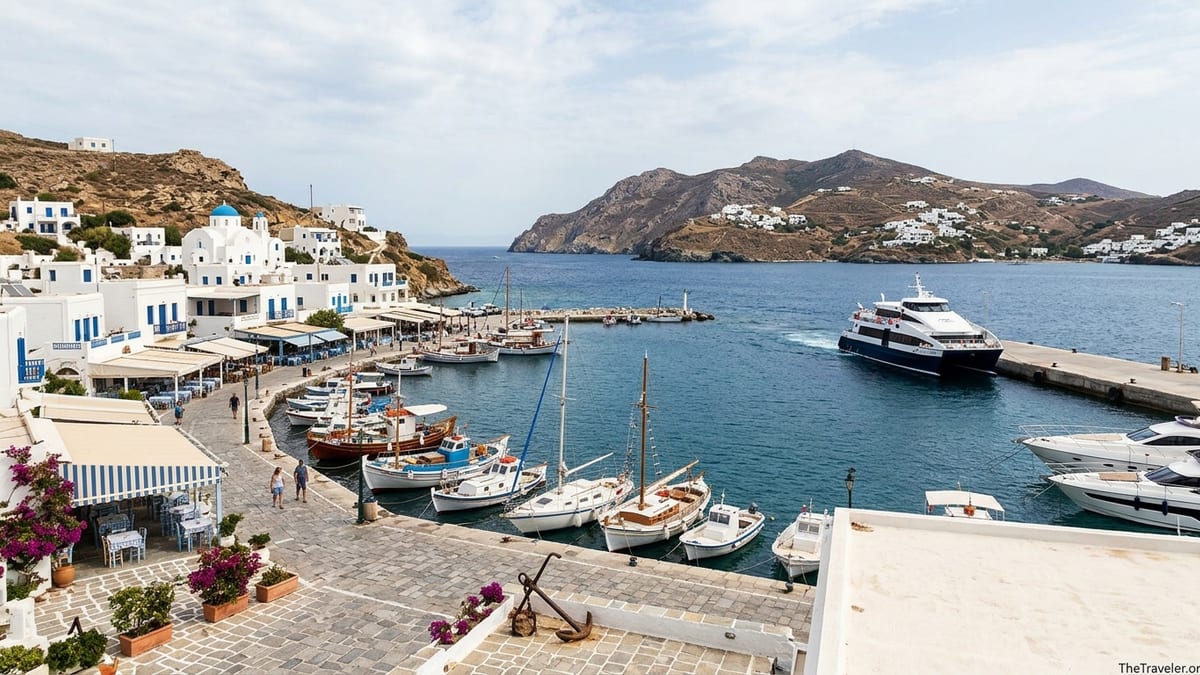
Understanding the Cyclades and How They Differ
The Cyclades form a compact archipelago south of mainland Greece, roughly encircling the sacred island of Delos. Most visitors focus on a core group of islands: Santorini and Mykonos for dramatic scenery and nightlife, Naxos and Paros for beaches and villages, Milos and Sifnos for coastal landscapes and food, Ios for parties and coves, Syros and Tinos for lived-in Greek towns, plus quieter outliers such as Amorgos, Serifos, Folegandros and the tiny Koufonisia. There are many smaller islands too, often reached by local ferries that mostly run in summer.
Broadly, the Cyclades divide into livelier hubs and quieter escapes, beach-focused islands and those better for walking and village life, and destinations that skew to luxury compared with islands prized for good value. Mykonos, Santorini and increasingly Paros attract luxury hotels, beach clubs and international crowds, while islands such as Naxos, Sifnos, Serifos and Tinos still offer a strong midrange and self-catering scene. Smaller or more rugged islands like Amorgos and Folegandros lean towards low-rise accommodations and a slower pace rather than big resorts.
Access also shapes your experience. Six Cyclades islands currently have airports: Santorini, Mykonos, Paros, Naxos, Milos and Syros, all connected to Athens and, in the case of Santorini and Mykonos, to seasonal international flights. Other islands are reached only by ferries from Athens-area ports or from larger islands. This matters most in April, May, late September and October, when ferry timetables thin out and a flight can make a marginal itinerary workable.
Finally, it helps to be realistic about distances. On a map the Cyclades look tightly clustered, but ferries are not point-to-point shuttles. Many routes run in arcs, stopping at multiple islands. In high season there are fast catamarans as well as slower conventional ferries; both can be affected by the strong summer meltemi winds, which can delay or cancel crossings, particularly in July and August. Building buffers into your plan is part of travelling the Cyclades sensibly.
Key Islands and What They Are Best For
Santorini is the Cyclades poster child, known for its caldera views, white villages clinging to cliffs and romantic sunsets. It suits first-time visitors who prioritise scenery and couples willing to spend more on terraces and boutique hotels. Constraints include high prices for caldera-view lodging, heavy crowds in peak months and limited beaches that are mostly black or red volcanic sand. The island is compact, with a basic bus network, but traffic and cruise ship days can make villages feel very busy.
Mykonos is the archipelago’s nightlife and beach-club capital, popular with partygoers, LGBTQ+ travellers and those seeking upscale dining and shopping. Expect stylish hotels, fashionable beach clubs on the south coast and an Old Town packed with bars and boutiques. It can also work as a short stopover for island-hopping thanks to its airport and frequent ferries. Typical drawbacks are some of the highest room and dining prices in the Cyclades, crowds in July and August, and a party-oriented atmosphere in certain areas that may not suit everyone.
Naxos is often recommended to families and travellers who want long sandy beaches combined with traditional villages and hiking. The main town, Chora, mixes Venetian castle lanes with a busy seafront, while the nearby southwest coast has shallow beaches well suited to children. Inland you find stone farmhouses, mountain villages and ancient sites. Prices are generally lower than on Mykonos or Santorini for similar standards, though costs have risen in recent years. The island is large enough that a rental car is useful for exploring beyond the main bus routes.
Paros balances buzzy harbour towns with easy day trips. Naoussa and Parikia offer waterfront dining, nightlife at a smaller scale than Mykonos, and fast access to good beaches and nearby Antiparos. The island attracts couples, friends’ trips and kitesurfers, and is a useful ferry hub in the central Cyclades. As its popularity grows, prices and summer crowds have increased, especially around Naoussa, yet you can still find quieter bases in smaller villages or on Antiparos if you book early.
Quieter and Characterful Alternatives
Milos has become well known for its unusual rock formations, sea caves and vividly coloured cliffs, with boat trips around the island a major highlight. Beaches range from lunar white Sarakiniko to sheltered coves and fishing-village inlets. It appeals to photography lovers, couples and independent travellers more than party seekers. Milos has an airport with flights from Athens, but public transport is limited and many remote spots are best reached by car or organised boat tour.
Sifnos is a favourite among food-focused travellers and walkers. Its network of marked trails links whitewashed villages, monasteries and bays, while the island has a strong culinary reputation in relation to its size. Sifnos tends to attract couples, solo travellers and groups of friends looking for a relaxed, authentic feel rather than late-night clubs. Accommodation is largely small hotels and apartments, and while prices are not as low as on some mainland destinations, they are typically below Santorini and Mykonos for similar quality.
Folegandros offers perhaps the archetypal Cycladic hilltop village, with a car-free main Chora perched above cliffs and linked by paths to chapels and viewpoints. It works best for travellers who value atmosphere, quiet beaches and long dinners over a packed sightseeing schedule. Nightlife is low-key, and the island’s small size and limited bus routes mean you will either walk a lot or rely on taxis or a rented vehicle. Ferries are less frequent than to the major islands and are especially seasonal, so you need to check current schedules before counting on specific connections.
Amorgos, Serifos, Syros, Tinos, Ios and the Small Cyclades, including Koufonisia, each bring a distinct flavour. Amorgos attracts hikers with dramatic ridges and old paths between villages. Serifos is loved for its combination of sand beaches and a striking hill town. Syros, as the regional capital, feels more like a working Greek island, with neoclassical Ermoupoli and year-round life. Tinos mixes pilgrimage sites with excellent food and surfing spots, while Ios combines nightlife with beautiful beaches. Koufonisia and neighbouring islets are tiny, relaxed and best for travellers who prioritise swimming, simple tavernas and a car-free lifestyle in summer.
How Long to Stay and How Many Islands to Visit
For most first-time visitors, a week in the Cyclades is best spent on one island, perhaps two at most. A “one-island week” lets you settle into a routine, explore beaches and inland villages and adjust for any ferry or flight changes without stress. This pattern works well for families, honeymooners and anyone visiting in April, May, late September or October, when ferries are less frequent and weather can be more variable.
With 10 days, a “two-island 10-day” plan is realistic. You might pair Mykonos with Naxos, Santorini with Milos, or Paros with Naxos, dividing your time so that travel days do not feel rushed. Allow for at least four nights per island so you have three full days after arrival, especially if you are relying on ferries that may leave later in the day. Changing accommodation always costs a half-day in packing, check-out, port transfer and check-in, which is easy to underestimate.
Two weeks can comfortably include a “three-island 14-day” circuit. One common pattern is an Athens arrival, followed by a flight or ferry to a hub island, then shorter hops between nearby neighbours before returning to the mainland. The trade-off is between variety and downtime: every extra island means another set of logistics and another opportunity for wind-related delays. Whatever your trip length, avoid scheduling any island transfer on the same day as a long-haul flight home; spend your final night near Athens or on a major island with reliable flights to your departure city.
Getting In and Around: Ferries, Flights and Ports
Athens has three main ports serving the Cyclades: Piraeus, Rafina and Lavrio. Piraeus is the largest and busiest, with year-round ferries to major islands such as Paros, Naxos, Mykonos and Santorini, operated by companies including Blue Star Ferries, Seajets, Fast Ferries and others. Rafina, northeast of Athens, is particularly important for routes to Andros, Tinos and Mykonos, especially in summer, while Lavrio handles some services to Kea, Kythnos and lesser-visited Cyclades. Schedules evolve each year and can change within a season, so always check current timetables for your month of travel before committing to non-refundable accommodation.
Ferry options range from conventional vessels that take cars and offer open decks, generally slower but more stable, to high-speed catamarans that shorten travel times but can be more sensitive to the meltemi winds and offer less outdoor space. As an example, typical fastest sailings between Piraeus and Paros or Naxos in mid-season are around 2.5 to 3.5 hours on fast ferries and longer on conventional boats, while routes to Santorini commonly take from about 4.5 hours upwards depending on stops and vessel. Operators adjust frequencies according to demand, with more departures in June, July, August and early September and significantly fewer in shoulder months.
Flights can save time or provide a backup when seas are rough. Santorini, Mykonos, Paros, Naxos, Milos and Syros all have airports; domestic flights connect them to Athens, and Mykonos and Santorini also receive seasonal direct services from various European cities. These routes, especially the international ones, are highly seasonal and airlines regularly tweak them, so check what actually runs for your exact dates rather than relying on previous years’ patterns. Inter-island flights are limited and often require a change in Athens, which is why most island-hopping still relies on the ferry network.
When planning logistics, factor in check-in and transfer times. Reaching Piraeus or Rafina from central Athens usually takes at least 45 to 90 minutes depending on traffic and mode of transport. Many islands have their main towns right by the port, but some popular beach areas are 20 to 40 minutes’ drive away. Booking a ferry that arrives mid-afternoon allows you to check in before evening, while late-night arrivals may mean fewer buses or taxis. In peak summer, strong meltemi winds can cause delays or cancellations, so keep an eye on your operator’s notifications and maintain at least one buffer day before international flights.
Seasons, Weather and When to Go
From late April to October, the Cyclades follow a broadly Mediterranean pattern, with dry, sunny summers and milder, wetter winters. April and early May often bring cooler evenings, some windy or unsettled days and sea temperatures that many travellers still find brisk. On the plus side, there are fewer crowds and flowers in the countryside, but ferry schedules can be limited, especially to smaller islands. Not all hotels, beach bars or excursion companies open before the Orthodox Easter period or early May, so you should confirm what is operating for your dates.
June and September are popular months for balanced conditions: typically warm enough for regular swimming without the most intense crowds and heat. Ferry frequencies are higher, buses and boat tours run more often, and a wide range of accommodations and restaurants are open. July and August bring peak heat and visitor numbers alongside the meltemi, the seasonal northerly winds of the Aegean that are strongest in the Cyclades. These winds can be refreshing on the beach but may also lead to choppy seas and occasional ferry disruptions, particularly for high-speed catamarans.
By October, sea temperatures can remain pleasant, but weather patterns become more mixed, with a greater chance of storms and cooler nights. Many seasonal hotels and restaurants start to close gradually after the first half of the month, and ferry timetables shrink accordingly. Outside the April to October window, the Cyclades are very quiet, with limited tourism services, reduced flights, fewer ferry connections and higher chances of weather-related changes. Travel at this time can be rewarding for experienced, flexible visitors who prioritise local life and do not mind closures, but first-timers usually find late spring through early autumn more straightforward.
Budgets and Relative Costs Between Islands
Overall costs in the Cyclades vary significantly between islands and by season. Mykonos and Santorini generally have the highest prices for accommodation, dining and in-demand activities, particularly in July and August. Mid-range double rooms on these islands often cost noticeably more in peak months than comparable lodgings on Naxos, Paros or Sifnos, and restaurant bills reflect the same pattern. On less famous islands or in shoulder season, travellers can often secure better value for similar comfort.
Central islands such as Naxos, Paros, Sifnos, Serifos and Tinos usually offer a broad spectrum of apartments, small hotels and guesthouses, along with traditional tavernas where costs stay closer to typical Greek tourist destinations. Even so, demand has pushed prices higher in popular weeks, and beachfront areas or especially stylish properties can approach big-name island rates. Smaller, quieter islands like Amorgos, Folegandros or Koufonisia may have fewer options overall; some stays feel keenly priced for what is on offer, while a handful of boutique properties charge premium rates tied to their isolation and charm.
When budgeting, remember to factor in ferries, local transport and seasonal variation. A series of short hops between nearby islands can add up, especially on high-speed services, while car rental or frequent taxis will increase daily costs on larger islands without dense bus networks. Because prices change regularly, it is wise to check recent, reliable sources for example nightly rates, car rental ranges and ferry fare bands for the specific month and year of your trip, then adjust your plan if necessary. As a rough rule, visiting in late May, June, September or the first half of October often gives a better balance of price and availability than the height of summer.
Island-Hopping Patterns That Work
Certain island combinations work particularly well because they share ferry routes and travel times that are reasonable in a single day. The Paros–Naxos–Small Cyclades triangle is a classic example, with frequent summer sailings linking Paros and Naxos and local boats or ferries connecting on to Koufonisia, Iraklia or Schinoussa. This route suits travellers who want a mix of lively harbour towns, family-friendly beaches and one very small island for slow days by the sea. As always, check what runs in the month you intend to travel, as some connections that are daily in August may be weekly or not operate at all in shoulder seasons.
Another common pattern is Mykonos–Paros–Naxos, which strings together a party-forward hub, a fashionable central island and a more relaxed but sizable base. Ferries between these three typically operate much of the season, often with several options a day in high summer. Travellers who want iconic caldera views plus varied beaches often choose Santorini paired with Milos or Naxos. In this case, you might fly into or out of Santorini and use a ferry to link the second island, comparing both direct routes and those with a connection on Paros or Naxos if necessary.
For quieter trips, itineraries such as Syros–Tinos–Andros or Sifnos–Serifos–Milos provide a mix of working-island atmosphere, villages, hiking and beaches, often with shorter hops between ports. These chains are more sensitive to seasonal timetable adjustments, so it is essential to verify that your intended sequence is realistic before booking non-refundable stays. Avoid overcomplicating your plans with long diagonal routes across the archipelago; instead, think in arcs or clusters, moving steadily north to south or west to east rather than criss-crossing.
Where to Stay on Each Island
On most Cyclades islands you can choose between staying in the main town, a beach village or an inland village, each giving a different feel. Main towns like Fira in Santorini, Mykonos Town, Parikia in Paros or the Chora in Naxos place you near ports, shops and many dining options, which simplifies logistics, especially if you are using buses. These areas feel lively and convenient but can be noisier and busier in high season, and on some islands the most dramatic views also come with higher price tags.
Beach villages appeal to travellers who plan to swim daily and value being able to walk between room, sand and taverna. Examples include the southwest beaches of Naxos, areas like Plaka and Agia Anna, or coastal spots on Paros such as Golden Beach or Santa Maria. Here you often trade some evening bustle and choice of restaurants for easy sea access and a holiday-resort atmosphere. Buses may run frequently in summer but thin out in shoulder months, so consider how you will reach the port or inland sites.
Inland villages, from marble-paved mountain settlements on Naxos to hilltop Choras on islands like Serifos or Folegandros, give a stronger sense of traditional life and can be cooler in the evenings. They are ideal for travellers interested in walking, local festivals and tavernas that cater more to residents than day-trippers. The trade-off is that you will usually rely on a car or taxi to reach beaches and ports, and some lanes or steps can be steep, which may not suit all visitors. Whichever setting you prefer, early booking is advisable for July, August and key holiday weeks, particularly on small islands with limited beds.
Example Trip Ideas and How This Guide Helps
A classic first-timer itinerary might look like three or four nights in Santorini for caldera views, followed by five to seven nights on Naxos or Paros for beaches and villages. This structure delivers the famous postcard scenery, then space to relax, swim and explore at a gentler pace. A variation is to fly into Mykonos for one or two nights, then continue to Naxos, Paros or a quieter island, using the good flight and ferry links as your gateway.
For a family beach break, a single base on Naxos, Paros or Sifnos for a full week or more can work very well. Choosing accommodation in a beach area with shallow water, easy access to simple tavernas and a bus or short drive to the main town keeps logistics manageable with children. Families who enjoy some exploration could add a smaller island such as Koufonisia or a few nights on Milos, provided the ferry timetables align and there is enough buffer for weather-related changes.
Travellers interested in food, walking and quieter evenings might design a route such as Syros–Tinos–Andros or Sifnos–Serifos–Milos, with at least four nights in each place. These combinations prioritise characterful towns, traditional tavernas and marked trails over nightlife. In all cases, the goal of this guide is to help you decide which Cyclades islands align with your budget and interests, how many to include given your available days, in what order to visit them based on realistic connections, and at what time of year your preferred experience is most likely. Once those decisions are clear, you can turn to current ferry schedules, seasonal hotel openings and domestic flight options to finalise a plan that works for your specific travel dates.