


Reykjavik is a compact, walkable capital where most major sights cluster around the central 101 district, the waterfront and nearby parks. Visitors can comfortably explore on foot, using local buses or occasional taxis for pools and outlying sites. Walking time between key landmarks is short in normal conditions: it typically takes about 10–15 minutes to walk from Hallgrímskirkja down to Harpa Concert Hall, and a further 5 minutes brings you to the Old Harbour. Always confirm current walking times on a digital map before you set out, especially in winter when ice and wind can slow your pace.
Get the latest updates straight to your inbox!
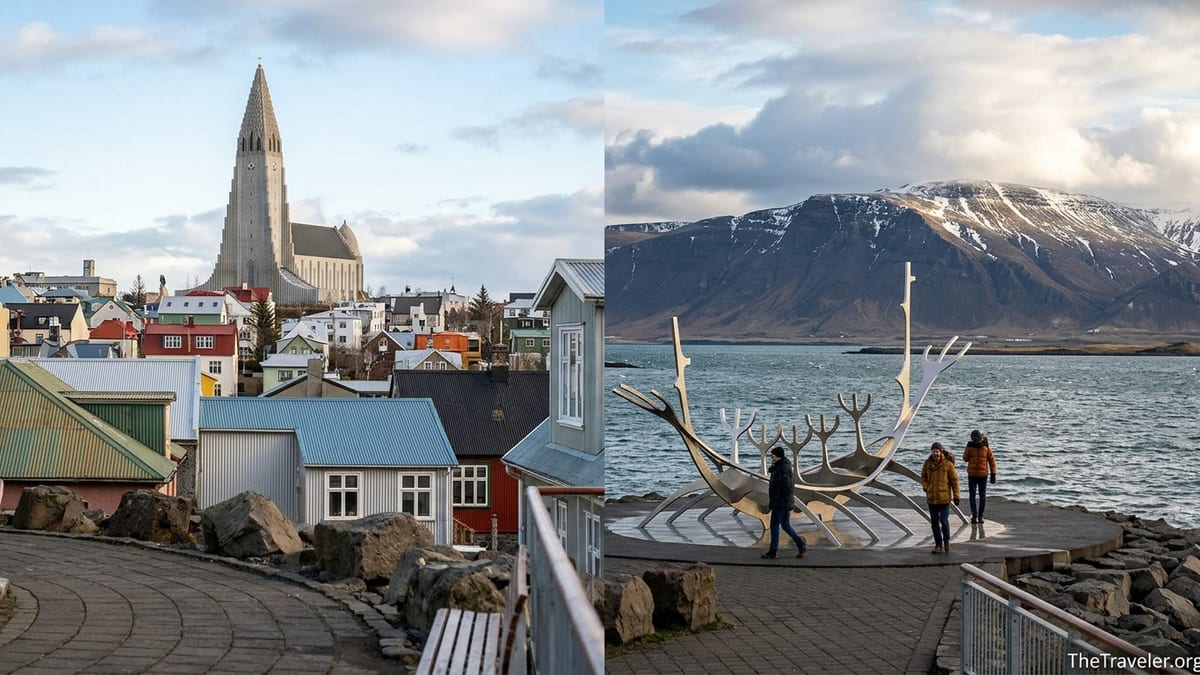
Essential Landmarks and Views
Hallgrímskirkja is Reykjavik’s most recognisable landmark, rising on a hill at the top of Skólavörðustígur. The church itself is free to enter, but access to the tower viewpoint is ticketed. As of late 2026, adult tower tickets are typically priced around 1,400 Icelandic krónur, with reduced rates for children, but visitors should check the church’s official information for the latest prices and any family or group options. Opening hours vary by season, with shorter hours in winter and occasional closures for services, concerts and private events, so it is important to confirm the day’s schedule before you climb.
The views from Hallgrímskirkja’s tower are among the best ways to get your bearings without leaving the city. On clear days you can see the colourful corrugated rooftops of 101 Reykjavik, the working harbour, Harpa sparkling by the water and, across the bay, the bulk of Mount Esja. In winter, visibility changes quickly with weather fronts, so consider visiting on the first clear window of your trip rather than saving it for the final day.
From the church, a gentle downhill walk leads through the shopping streets toward the waterfront and the Sun Voyager, a gleaming stainless-steel sculpture that has become one of Reykjavik’s most photographed sights. This stylised “dreamboat” is set on a low platform beside the coastal path, with open views across Faxaflói Bay to Mount Esja. It is especially atmospheric at sunrise or late on a bright evening in summer. Be prepared for very strong wind here in all seasons, and in winter watch for icy patches on the paved path.
Continue along the waterfront and you reach Harpa Concert Hall, a modern glass building that now anchors the eastern end of the Old Harbour. Harpa is both an architectural showpiece and a working performance venue, with a calendar that ranges from symphony concerts to comedy and festivals. You can freely enter the public spaces, wander the atrium and upper balconies, and enjoy harbour views even if you do not hold a ticket. For events, tours and current opening hours, check the official programme in advance, and consider timing a coffee break at Harpa between other sights since its indoor spaces offer shelter from wind and rain.
Museums and Culture
Reykjavik’s museums are compact and manageable, making them ideal anchor points for one to three city days. The National Museum of Iceland, located just west of the centre near the university, gives a broad overview of Icelandic history from settlement to the present day. Exhibits typically include Viking Age artefacts, religious objects, household tools and modern photography. Because special exhibitions change regularly and combination tickets sometimes link the National Museum with other institutions, visitors should always confirm current displays, ticket bundles and any free-entry days directly from official sources before planning a visit.
Within the city centre, several Reykjavik City Museum sites explore more focused aspects of local life. The Settlement Exhibition in Aðalstræti is built around the excavated remains of a Viking longhouse and uses interactive displays to show how the first settlers lived. Additional City Museum locations include open-air or harbourfront exhibits that interpret Reykjavik’s development from a fishing town to modern capital. Information on multi-site tickets, seasonal opening times and temporary closures is best taken from the city museum’s own visitor information, which is updated regularly.
Travellers with a particular interest in everyday Icelandic life may appreciate smaller cultural stops such as local art museums, photography galleries and historic houses within walking distance of the 101 district. These venues often host temporary exhibitions by contemporary Icelandic artists, and some participate in free or discounted days each month. Schedules shift throughout the year, so it is sensible to check current exhibitions and whether advance booking is required, especially during major festivals and busy summer weeks.
For evening culture, Harpa frequently hosts classical concerts, film events and international performers, while smaller theatres and independent cinemas spread across downtown stage local productions, stand-up comedy and live music. Because many shows sell out, especially on weekends, it is worth scanning the events calendar once your travel dates are fixed and purchasing tickets early if there is something you particularly want to see.
Geothermal Pools and Relaxation
Swimming pools are central to Icelandic daily life, and Reykjavik gives visitors a chance to experience this culture alongside locals. Classic public pools such as Laugardalslaug in Laugardalur valley and Sundhöllin near the city centre typically offer a mix of outdoor hot tubs, lap pools and children’s areas. Entry prices are modest by Icelandic standards and usually lower than spa-style lagoons. City pools follow municipal rules on admission and hygiene, including mandatory naked showering with soap before entering any pool or hot tub. This is a strict health requirement rather than a suggestion, and staff may ask guests who skip the shower to return to the changing area.
Most public pools in Reykjavik provide at least some private or semi-private shower cubicles, which can make the process more comfortable for nervous visitors, but you should still expect shared changing rooms and a relaxed, non-judgmental attitude to bodies of all kinds. Family facilities are generally good, with shallow pools, slides at some locations and free use of flotation toys. Exact opening hours, admission prices, and details on accessibility features such as lifts, ramps and accessible changing rooms vary by pool and should be confirmed on the city’s official swimming pool information before visiting.
In recent years, spa-style geothermal experiences have appeared close to the city. Sky Lagoon, on the Kársnes peninsula in the neighbouring municipality of Kópavogur, offers an infinity-style hot pool overlooking the ocean, with an optional multi-step ritual that includes cold plunges and steam. It lies within the capital area but not in the walkable 101 district, so most visitors use shuttle buses or short taxi rides to reach it. Admission packages differ in what they include, from basic pool access to premium options with the full ritual, towels and sometimes a drink, so travellers should check the operator’s current price tiers, age limits and shuttle arrangements.
By contrast, the famous Blue Lagoon is not in Reykjavik at all. It is located in the lava fields of the Reykjanes Peninsula near Keflavik International Airport and is best treated as a separate day trip or a stop between the airport and city. Transfers can be booked from Reykjavik or directly from the airport, and because visiting typically takes several hours once travel time is included, it is not realistic to squeeze Blue Lagoon into a busy half-day of city sightseeing. This article focuses on pools within or near the capital area; countryside lagoons and spa complexes are better covered in dedicated day-trip planning.
Urban Nature and Easy Walks
Reykjavik’s modest size means that access to water, birdlife and green spaces is never far away, even for visitors without a car. The coastal paths that run along the northern shore of 101 Reykjavik offer wide views over Faxaflói Bay and Mount Esja, with benches and viewpoints spaced along the way. Sections between the Old Harbour, the Sun Voyager sculpture and further west toward residential areas are paved and mostly flat, making them suitable for gentle strolls in sturdy shoes. Wind can be fierce here in all seasons, so a windproof outer layer and something to protect your ears and hands are advisable even on seemingly calm days.
Closer to the heart of the city, Tjörnin, the city pond beside the City Hall and the Parliament, is a favourite spot for short walks. In summer, it is ringed by lawns, sculptures and colourful houses, with abundant birdlife including ducks and geese. In winter, parts of the pond often freeze and can look postcard-perfect under fresh snow, but surfaces away from maintained paths may be extremely slippery. Footwear with good grip, and in mid-winter possibly slip-on traction devices, will make walking more secure when pavements are icy.
Laugardalur valley, east of the centre and easily reached by bus or a longer walk, combines sports facilities, Laugardalslaug pool, gardens and family-friendly open space. In summer, the parkland is suitable for picnics and casual play; in winter, paths are usually maintained but can still be icy or snow-covered. The area also hosts events and festivals at certain times of year, so it is worth checking local listings during your stay.
Beyond the immediate downtown, nature reserves and coastal areas within the wider capital region, such as parts of Seltjarnarnes or Heiðmörk, offer light hiking, birdwatching and lava landscapes. Many are reachable by city bus from central Reykjavik. Trail difficulty is generally modest but conditions can change quickly with rain, snow or wind. Waterproof footwear and layered clothing are sensible year-round, with particular attention to warmth and daylight hours if you are walking in November, December or January when days are short.
Food, Drink and Nightlife
Dining in Reykjavik blends traditional Icelandic ingredients with contemporary restaurant styles. Visitors who want to sample local flavours might look for dishes featuring lamb, North Atlantic fish, langoustine, skyr dairy products, cod tongues or plokkfiskur, a comforting fish stew. Some menus include more adventurous heritage items such as fermented shark or sheep’s head, but these are not everyday foods for most residents and often appear in tasting menus or specialty venues rather than standard casual restaurants.
Coffee culture is strong, and independent cafés are scattered throughout the 101 district. Many double as bakeries, serving pastries such as snúður cinnamon rolls, kleinur and various rye breads. They are excellent places to warm up on cold days and watch city life go by. Opening hours are usually generous during the day, though some smaller spots close early in the evening or on Sundays. Cashless payments are widely accepted, with most locals using cards or mobile pay for even small purchases.
Reykjavik has an active craft beer and bar scene, particularly along and around Laugavegur and Hverfisgata. Prices for alcohol are high by many visitors’ standards because of taxes and Iceland’s restrictive alcohol policy. The legal age to buy alcohol in Iceland is 20 years, and proof of age is often requested, so travellers should carry valid photo identification. Stronger alcohol for home consumption is sold only through state-run Vínbúðin liquor stores rather than in regular supermarkets, and these stores keep limited daytime and early evening hours and are closed on some days. Beer and cocktails served in bars and restaurants follow their own licensing rules and tend to be available later into the night.
Nightlife typically peaks on Friday and Saturday, when many bars stay busy into the early hours and locals may start the evening relatively late. For those who prefer a quieter experience, weeknights or earlier evening visits offer a more relaxed atmosphere. Noise levels on central streets can rise noticeably on weekend nights, so travellers who value early sleep may want to choose accommodation slightly away from the loudest stretches of downtown or bring earplugs.
Tours Beyond the City: What Starts in Reykjavik but Happens Elsewhere
Many of the most famous Icelandic experiences start with pickups or departures in Reykjavik but actually take place in rural areas. Northern Lights tours, for example, typically drive out of the city to darker locations on the Reykjanes Peninsula, in South Iceland or inland valleys. These tours are highly dependent on both solar activity and weather, and operators may cancel or reschedule on short notice if conditions are poor. Most run between roughly late August and mid-April, although the core season is the darkest months from September through March.
Whale watching and seasonal puffin cruises commonly depart from Reykjavik’s Old Harbour, yet the wildlife encounters occur out on Faxaflói Bay or nearby islands rather than within the city itself. Whale-watching trips operate much of the year, with peak diversity often in summer, while puffin-focused tours usually run from late spring through mid or late summer when the birds are nesting. Sea conditions can be choppy even on clear days, so seasickness precautions and warm, windproof clothing are strongly recommended.
Other popular excursions marketed in Reykjavik include Golden Circle sightseeing loops, glacier walks, volcano and lava tours and countryside hot spring trips. These require vehicle transport and are best treated as separate day trips rather than something to squeeze into a half-day of city sightseeing. For detailed guidance on choosing and combining such tours, travellers should consult a dedicated day-trips guide and always verify pickup points, timings, cancellation policies and what clothing or equipment operators provide.
Because so many tours are weather-dependent, especially in autumn and winter, it is wise to build some flexibility into your schedule. Avoid planning an unmovable must-do excursion for the final evening of your trip if possible, as high winds, heavy snow or poor visibility can force cancellations. Check your email or tour app regularly on the day of travel and have a backup plan for how to spend an unexpected free evening in the city.
Safety, Weather and Seasonal Comfort
Reykjavik is generally considered a safe city with low violent crime, and walking between major sights during the day and early evening is straightforward. The main safety challenges for visitors tend to be weather-related. In winter and shoulder seasons, pavements can become very icy, especially on side streets and sloping routes such as the hill below Hallgrímskirkja. Traction aids that slip over shoes, along with sturdy footwear and caution at road crossings, can significantly reduce the risk of falls.
Wind is another factor that shapes daily life. Strong gusts along the waterfront, near Harpa and the Sun Voyager, can be startling and, at times, make walking difficult. Even in milder seasons, a windproof outer layer, hat and gloves can make city exploration much more comfortable. In mid-winter, daylight hours are extremely limited, with only a few hours of usable light around midday; by contrast, late spring and summer bring long evenings and, near the solstice, near-continuous light. Adjust your sightseeing plans and sleep routines accordingly, considering eye masks in summer and reflective accessories in the darker months.
For outdoor pools and coastal walks, hypothermia risk is low if you dress appropriately and respect posted guidance, but wind chill can be deceptive. Always dry off thoroughly before stepping outside pool buildings, use provided robes where available and avoid walking significant distances outdoors in swimwear. When joining boat tours or longer excursions, listen carefully to safety briefings, wear any flotation devices provided and follow crew or guide instructions closely.
Finally, weather-driven tour cancellations are a normal part of travel in Iceland. High winds, heavy seas or blizzards can all lead operators to adjust or cancel departures, often on the day itself. Build some redundancy into your plans, read booking conditions before you pay, and keep an eye on local forecasts and any alerts issued by tour companies or local authorities.
One-Day and Two-Day Itineraries Without a Car
For travellers with just one full day in Reykjavik, focus on a compact, walkable loop through the city’s core. Start in the morning at Hallgrímskirkja, aiming for an early tower visit before potential crowds and checking that the tower is open that day. Walk down Skólavörðustígur into the heart of 101, pausing at shops or cafés as you descend. Continue toward Austurvöllur square and Tjörnin for a short loop around the pond and a glimpse of everyday city life.
In the afternoon, head to the Old Harbour area. Visit a nearby museum or the Settlement Exhibition depending on your interests and energy. From there, walk along the waterfront to Harpa and on to the Sun Voyager sculpture for late-day views over the bay. Plan coffee or an early dinner near the harbour, then either return to your accommodation or, in season, join an evening Northern Lights or whale-watching tour that departs from central pick-up points.
With two days, you can combine more cultural visits with geothermal relaxation. On day one, follow the city-centre circuit above, adding time for the National Museum of Iceland or another major museum in the late morning or early afternoon. In the evening, consider attending a performance at Harpa or exploring Reykjavik’s bar and craft beer scene, bearing in mind that weekends run late and that alcohol is expensive and age-restricted.
On day two, dedicate several hours to the pool culture that locals enjoy year-round. After breakfast, travel by city bus or taxi to a public pool such as Laugardalslaug or to a spa-style venue like Sky Lagoon in the capital area, having checked admission times, included services, and hygiene and age rules the day before. Pack swimwear, toiletries and a small bag that is easy to store in lockers. After soaking and warming up, return to town for lunch and an easy afternoon of urban nature, perhaps completing a longer coastal walk or revisiting favourite viewpoints for photographs. If you have a third day, that is an ideal time to devote to a full-day countryside tour or to the Blue Lagoon, treating those as separate experiences rather than trying to compress them into a packed city itinerary.